fact or fiction
Is it a fact or is it merely fiction? Fact or Fiction explores relationship myths and truths to get your head out of the clouds and back into romantic reality.
The Love Renaissance: What Gen Z's Relationships Reveal About Modern Connection
Are Gen Zers sabotaging the true essence of romance or redefining it? Or they simply might be building something more intentional, resilient, and emotionally intelligent than any generation before. Once upon a time, romance came with rules. Handwritten letters, carefully curated phone calls, and silent nods of the elderly were the foundational stance of old-school love. But now, emojis, dating apps, and Instagram reels document love stories.
By Hridya Sharmaabout a year ago in Humans
The Forgotten Millions: Homelessness in a Modern World
The Life of a Homeless Person and the Global Homelessness Crisis Homelessness is one of the most visible signs of inequality and social failure in the modern world. It affects millions of people globally, cutting across age, race, gender, and nationality. A homeless person, often portrayed as someone sleeping on park benches or under bridges, is usually someone who has fallen through the cracks of society. But homelessness is not just a lack of shelter—it is a complex condition influenced by economic, social, psychological, and political factors. Understanding Homelessness A homeless person is someone who does not have a stable, safe, or adequate place to live. This includes people sleeping rough on the streets, staying in shelters, living in cars, or temporarily housed with friends or family (often called "couch surfing"). The reasons someone becomes homeless vary, but common causes include: Poverty and Unemployment: Loss of income or job can lead to inability to pay rent or mortgages. Mental Illness and Addiction: Numerous homeless people have substance abuse disorders or mental health issues that have not been treated. Family Breakdown or Domestic Violence: Victims, especially women and children, may leave abusive homes without a place to go. Lack of Affordable Housing: In many cities, housing prices have skyrocketed while wages remain stagnant. Natural Disasters and Conflicts: Refugees and internally displaced persons (IDPs) due to war, floods, or earthquakes often face homelessness. A Day in the Life of a Homeless Person Life on the streets is not only hard—it’s dangerous, unpredictable, and dehumanizing. Finding a safe place to sleep may be the first task of a typical day, which is frequently interrupted by the police or other individuals. A significant obstacle is hygiene. Access to showers, clean clothes, and restrooms is limited. Many rely on public facilities, charity organizations, or shelters. Finding food is another daily concern. Homeless people often eat from soup kitchens, food banks, or even trash bins. Some beg for money, while others do odd jobs, collect recyclables, or sell handmade items. Social isolation is intense. Many people avoid or ignore homeless individuals, making them feel invisible. Mental stress, humiliation, and hopelessness are constant companions. Despite this, many still hold onto dreams of a better life and show resilience in the face of hardship. Global Homelessness: A Major Problem Homelessness exists in every country, although it may appear in different forms. Let’s take a look at some examples from around the world: United States According to the U.S. Department of Housing and Urban Development (HUD), over 650,000 people were experiencing homelessness on a single night in 2023. Major cities like Los Angeles, San Francisco, and New York have witnessed an alarming rise in encampments and rough sleepers. The housing crisis, high rent, opioid epidemic, and mental health issues have contributed to this surge. Europe In the UK, homelessness has increased by more than 50% since 2010. Many homeless people in London and other cities are migrants or young adults leaving the foster care system. France, Germany, and Spain are also struggling with homelessness, especially among refugees and asylum seekers. In Scandinavian countries like Finland, however, the “Housing First” model—where people are given homes before addressing other problems—has successfully reduced homelessness. Asia In countries like India, Bangladesh, and the Philippines, homelessness is a major issue due to poverty, rapid urbanization, and weak infrastructure. Slums and makeshift homes are common in big cities. Many people live without any legal title to their homes, making them vulnerable to eviction. Japan, although economically strong, has a hidden homeless population. Many stay in 24-hour cafes or public parks, and the issue is often masked by social stigma and shame. Africa African countries face homelessness as a result of poverty, war, and displacement. In Nigeria, South Africa, and Kenya, urban centers have large numbers of street children and adults living in slums. Government support is often minimal, and NGOs fill in the gap. Latin America In Brazil and Mexico, homelessness is linked to violence, drugs, and economic inequality. Particularly vulnerable to exploitation and abuse are street children. Although governments have launched housing projects, corruption and bureaucracy often stall progress. The Impact of COVID-19 The COVID-19 pandemic had a significant impact on homeless populations. Many shelters closed or reduced capacity due to social distancing rules. Homeless people had limited access to healthcare, hygiene, or vaccination. At the same time, the economic fallout pushed many into homelessness for the first time. Interestingly, some governments offered temporary housing during the pandemic, proving that with political will, solutions are possible. However, many of these programs were short-term. Solutions and What Can Be Done Homelessness is solvable, but it requires coordinated efforts from governments, non-profits, and communities. Key strategies include: 1. Affordable Housing: Governments must invest in low-income housing and control rent prices in expensive cities. 2. Mental Health and Addiction Services: Outreach programs to treat mental illness and addiction can help prevent long-term homelessness. 3. Employment Programs: Job training and employment opportunities can help people regain independence. 4. Housing First Model: Providing housing first, without conditions, and then offering support services has proven effective in many places. 5. Public Awareness and Compassion: Reducing stigma and promoting empathy through education can foster community support and policy changes. Voices from the Streets Every homeless person has a story. John, a former IT worker in California, became homeless after losing his job and failing to afford his rent. "It just spiraled. One month I had a car and a laptop, next I was sleeping in a tent,” he says. Now he volunteers at a shelter, helping others get back on their feet. In Dhaka, Bangladesh, 19-year-old Rafiq lives on the footpath near a railway station. Orphaned at a young age, he sells water bottles to survive. “I want to open a tea stall one day,” he says, smiling. These stories show that homeless people are not lazy or broken—they are often victims of circumstances beyond their control. Given a chance, many work hard to change their lives. Conclusion Homelessness is a complex and painful issue that reflects deeper cracks in our societies. It is a human crisis—not just a housing problem. While the causes may differ by region, the suffering is universal. But with the right policies, compassion, and support, homelessness is not inevitable. It is a problem we can solve. We just need the courage to act, the will to invest, and the humanity to care.
By Abraham Lopezabout a year ago in Humans
Twin Souls Unveiled: Discovering the Powerful Connection That Transcends Time
Twin Souls: A Love Story Written in the Stars Have you ever met somebody with whom you fairly clicked, like your soul, as if you had known them a long time, even though you had only met them recently? That's not just fate being cute. You might've just run into your twin soul. And no, this isn't your normal love story with butterflies and candlelight suppers. This is something deeper—sacred, even. It's the kind of connection that shakes you up from the inside out and strengthens you to develop in ways you didn't know you required.
By Milan Milicabout a year ago in Humans
The Empty Bench: A Heart-Touching Story About Time, Regret, and Redemption.
🌳 "The Empty Bench" — A Story That Will Stay With You Forever Every morning at exactly 7:00 AM, a frail man in his late 50s would walk to a quiet park, sit on an old wooden bench under a neem tree, and simply... sit. He never used his phone, never read a newspaper. He would just watch the world pass by, with a half-smile on his face.
By Hamad Haiderabout a year ago in Humans
Understanding and Supporting People Who Are Mute
Understanding and Supporting People Who Are Mute Have you ever met someone who couldn’t speak? A person who cannot speak is often called "mute." This word can sound a little old-fashioned, and today, many people prefer to say someone is "nonverbal" or "unable to speak." No matter what word you use, it's important to understand what this means and how we can support people who live without the ability to talk.
By Jeno Treshan about a year ago in Humans
The Magnetic Power of Her: Why Women Own the Art of Attraction
From the sway of her hips to the quiet fire in her eyes, there is something deeply magnetic about a woman. Throughout history, art, poetry, music, and even the very foundations of culture have revolved around the allure of the feminine. But what exactly makes women so captivating, so endlessly desirable? Why do so many songs sing her praises, why do men fantasize, dream, chase, and even lose themselves for her?
By Lovely Diyaabout a year ago in Humans
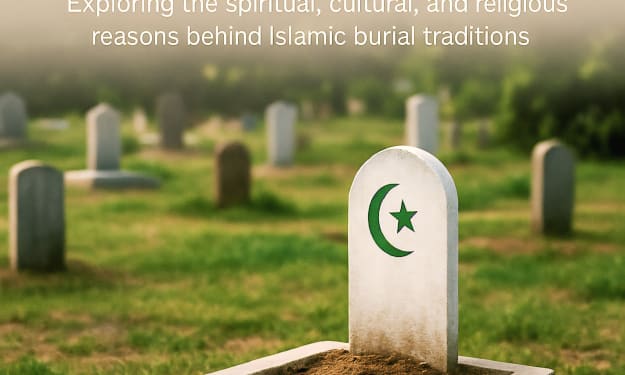
“Resting In Faith: Why Muslims Are Buried In Graveyards”
When someone dies, it is always a moment of sadness. People cry, pray, and remember the life that has ended. In Islam, death is not the end. It is the beginning of another life — the life of the soul. That is why Muslims have certain rules and traditions when a person dies, especially about the graveyard. This article explains why Muslims are buried in graveyards, what Islam teaches about the grave, and how this simple act reflects deep faith. --- The Body Belongs to Allah In Islam, every part of our life belongs to Allah (God), including our body. When a person dies, their soul leaves the body. But Muslims believe the body still deserves respect and care. We are not allowed to burn it or throw it away. Instead, the body is cleaned, wrapped in white cloth (called kafan), and buried in the ground. This is because the Prophet Muhammad (peace be upon him) taught us to return the body to the earth — the same earth from which we were created. “From the earth We created you, and into it We will return you.” (Qur’an, Surah Ta-Ha, 20:55) --- Why a Graveyard? Some people ask: why not keep the body at home or in a special room? Why not build a fancy tomb? Islam teaches us to be simple and humble. The graveyard is a place where many people are buried together. There is no need for big decorations or buildings. Every Muslim, rich or poor, is equal in death. Graveyards also help the living remember death. When Muslims visit the graveyard, they remember their own end and pray for others. It softens the heart and makes us live better lives. The Prophet (peace be upon him) said: “Visit the graves, for they remind you of the Hereafter.” (Sunan Ibn Majah) --- What Happens in the Grave? Muslims believe that after burial, the soul begins a new stage called Barzakh. This is the time between death and the Day of Judgment. The grave becomes a place of peace or a place of hardship, depending on how the person lived. Two angels, Munkar and Nakir, come to ask the person questions: Who is your Lord? What is your religion? Who is your Prophet? If the person answered with faith in life, Allah will help them answer in the grave. Their grave becomes wide and full of light. But if they rejected faith, the grave becomes tight and dark. This shows that the grave is not just a hole in the ground. It is the first stop on the journey after death. --- Simple Burials Are Sunnah In many places, people spend a lot of money on burials — gold coffins, marble graves, flowers, and statues. But in Islam, this is not necessary. The Prophet Muhammad (peace be upon him) was buried in a simple grave with no big signs or stones. Islam teaches us to avoid pride and waste, even in death. The burial is quick, respectful, and peaceful. Family members or community people dig the grave, lay the body on its right side facing the Qiblah (direction of Mecca), and pray Salat al-Janazah (the funeral prayer). The simplicity is beautiful — it reflects that what matters is not what we leave behind, but what we send ahead in good deeds. --- Visiting the Graves Muslims are encouraged to visit graveyards. We greet the dead with peace: “Peace be upon you, O people of the graves. You are the forerunners, and we, if Allah wills, will follow you.” We pray for them and ask Allah to forgive them. This is not only for the dead — it helps the living too. It reminds us that life is short and we must prepare for the Hereafter. But Islam also gives clear rules: we are not allowed to worship at graves, ask help from the dead, or cry loudly and hurt ourselves in grief. Respect, prayer, and silence are part of Islamic manners at the graveyard. --- A Story of Peace Fatima was only 12 years old when she went to a graveyard for the first time. Her grandfather had passed away. She held her father’s hand tightly as they entered the calm, green graveyard. The air was still. There were no loud voices, no music, no decorations. Just rows of simple graves. She asked her father, “Why don’t we build a statue for Grandpa?” Her father smiled gently. “Because in Islam, we remember with prayer, not statues. Grandpa’s soul is with Allah now. We pray for him, and that is better than anything made of stone.” Fatima stood quietly beside the fresh grave. She whispered a short prayer she had learned at school. In that moment, she felt something she couldn’t explain — peace, softness, and faith. She knew the grave was not the end. It was just the next step. --- Moral of the Story In Islam, the graveyard is not a scary place. It is a place of rest, reflection, and remembrance. Muslims bury their dead in graveyards because it follows the teachings of the Prophet, respects the body given by Allah, and prepares us for the next life. Burial is not just about the dead. It is also a lesson for the living — a reminder to live with kindness, prayer, and purpose. For Muslims, death is not the end of the story. It is the doorway to eternal life.
By Inam Zohanabout a year ago in Humans
Anxious, Exhausted, and Overwhelmed? The Silent Mental Health Crisis No One Talks About. AI-Generated.
You wake up tired. Your mind is already racing. There’s a tightness in your chest, a never-ending to-do list in your head, and a sinking feeling that you’re already behind. You scroll your phone to distract yourself — but instead, you feel worse. Everyone else seems to be doing great. So why do you feel anxious, exhausted, and barely holding it together?
By David Andrewsabout a year ago in Humans