fact or fiction
Is it a fact or is it merely fiction? Fact or Fiction explores relationship myths and truths to get your head out of the clouds and back into romantic reality.
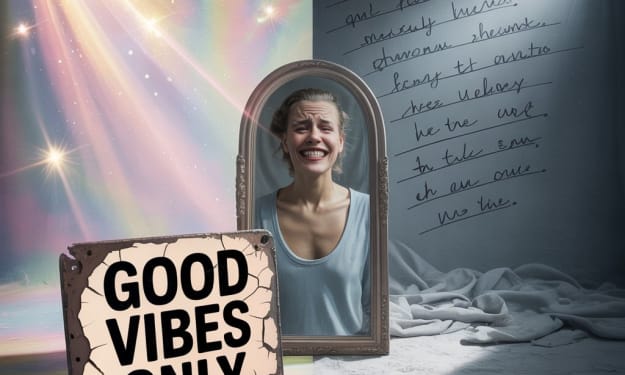
Read This Before You Betray Yourself Again
I didn’t wake up one day and decide to betray myself. It happened slowly. Quietly. In the spaces where I said “yes” when I wanted to say “no.” In the moments I stayed silent when my heart screamed to speak. In the thousand small decisions where I chose someone else's comfort over my own truth.
By FAIZAN AFRIDIabout a year ago in Humans
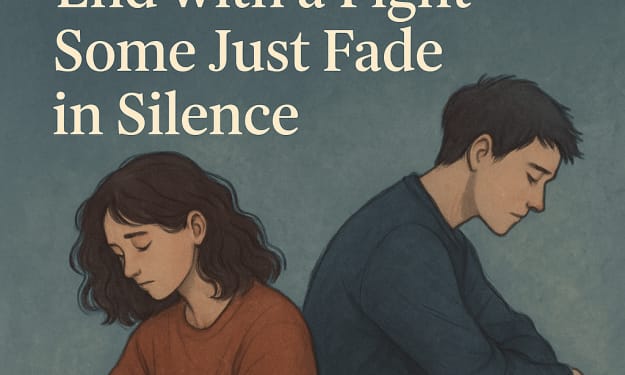
The Day I Stopped Apologizing for Who I Am.
For as long as I can remember, I’ve been saying “sorry” for things that didn’t need apologies. I apologized for taking up space, for speaking my mind, for existing in ways that made others uncomfortable—even if only slightly. It became my default response, a reflex ingrained so deeply that I barely noticed it anymore.
By FAIZAN AFRIDIabout a year ago in Humans
The Most Dangerous Lie We’ve Been Told About Happiness.
The Most Dangerous Lie We’ve Been Told About Happiness Why chasing happiness might be the very thing keeping you from it From a young age, we are taught that happiness is the goal of life. We're told to pursue it, choose it, and prioritize it at all costs. Social media feeds are flooded with quotes like “Happiness is a choice” and “Do more of what makes you happy.” It sounds empowering, even inspiring. But buried within this message is one of the most dangerous lies society has ever told us:
By FAIZAN AFRIDIabout a year ago in Humans
The Importance of Community
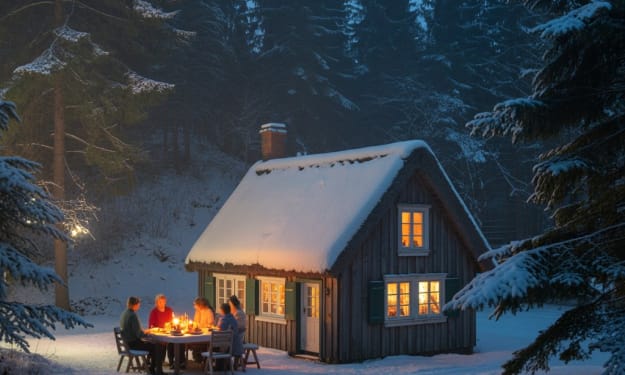
When Maya packed up her apartment in the city, she didn’t tell many people. There wasn’t much to say. Her husband, Daniel, had passed six months ago in a tragic accident. The grief had hollowed her out, leaving behind a shell of someone who once loved bookstores, jazz on Sundays, and impromptu road trips. Now, the world felt distant. So, she returned to the only place that had ever felt familiar before him—her childhood hometown of Brookside. Brookside hadn’t changed much. The same diner sat on the corner of Main Street. Mrs. Holloway still sold flowers outside her home, and the library still smelled like paper and dust. Maya rented a small cottage at the edge of town, surrounded by pines and silence. It was everything she thought she needed. But grief is tricky. It doesn’t go away just because you move. The loneliness settled in like fog—soft, but all-consuming. Then, one morning, a knock on the door broke the silence. It was her neighbor, Mr. Jenkins, a wiry man in his eighties with a crooked smile. “I hate to bother,” he said, “but I can’t seem to get my lawnmower started. Mind giving me a hand?” Maya almost said no. But something in his eyes—kindness, maybe hope—softened her. She nodded. They spent the next hour in his garage. She didn’t know much about engines, but after a few tries, they got it running. He clapped his hands, delighted. “You’ve saved me! I’ll have to make you my famous apple pie.” Maya smiled for the first time in weeks. Over the next few days, people seemed to find their way to her. A former classmate, now a schoolteacher, asked if she’d help organize a charity book drive. Mrs. Holloway dropped off a bouquet of sunflowers with a note: You’re not alone. A teenager named Lucy knocked on her door asking if she could pet Maya’s dog—only to end up staying for tea and pouring out her worries about college. It wasn’t one moment that changed Maya. It was all of them. The simple acts of connection, the unspoken understanding, the quiet reminders that life goes on—and that people need people. She began spending more time in town. Volunteering. Attending Sunday markets. Joining a small grief support circle at the library. At first, she sat in silence, listening to others speak. Then, one day, she found herself talking. Her voice trembled, but the nods around her steadied it. They understood. They had lost too. And somehow, sharing that space made the burden lighter. Community, Maya realized, wasn’t about grand gestures. It was about presence. About being seen and seeing others. About remembering that healing doesn’t always happen in solitude—it often happens in the spaces between people. By winter, her cottage looked different. There were handmade ornaments from Lucy hanging in the windows. A pie dish from Mr. Jenkins rested on her counter. A stack of books from the support group sat beside her favorite chair. The home was still quiet, but no longer empty. One snowy evening, she hosted her first dinner. Just a few neighbors—some she barely knew before, others who had become friends. They laughed over simple food, shared stories, and filled the rooms with warmth. As Maya stood at the sink later, washing dishes, she looked out at the snow-covered pines and thought of Daniel. He would’ve liked Brookside. He would’ve loved the people. And maybe, just maybe, he had brought her here for a reason. Grief hadn’t vanished. It never would. But it no longer ruled her. What had once felt like an ending had become a beginning—a quiet rediscovery of joy, connection, and meaning. In the embrace of her community, Maya found not just healing, but hope. Author’s Note: In a world that often feels fast and disconnected, this story is a reminder that community matters. Whether we’re grieving, celebrating, or simply surviving, human connection is essential to our well-being. It’s in the kindness of neighbors, the shared moments, the simple acts of presence. Together, we thrive.
By Kaleem Ullahabout a year ago in Humans
The Healer with Hidden Wounds
Quiet Hands By the time Dr. Aryan Verma reached his office, his shirt was already damp. The cool, sterilized air of his clinic barely made a difference. It clung to him—the worry, the tension, like an invisible coat he never removed. He took a long, silent breath. Then another. His hands, steady with patients, trembled alone in silence.
By Manatwal Khanabout a year ago in Humans
She Who Spoke to Shadows
She Who Spoke to Shadows In the forgotten village of Darnel Hollow, where fog clung to the trees like old secrets and the sun seldom broke through the heavy canopy, there lived a girl named Kaelen. Her name was whispered more than spoken aloud, not because she was feared but because she was not fully understood. From the moment she could speak, Kaelen conversed with shadows.
By Author kelechiabout a year ago in Humans
10. Abraham and Isaac on Mount Moriah: A Bible Story of Faith and Sacrifice. AI-Generated.
In the rugged land of Canaan, around 1900 BC, Abraham, a man of deep faith, lived with his beloved son Isaac, the child of God’s promise. The story of Abraham and Isaac on Mount Moriah, found in the Book of Genesis (22:1-19), is a profound account of obedience, trust, and God’s provision. It’s a moment in biblical history that tests the limits of human faith, revealing the depth of Abraham’s devotion and God’s ultimate mercy, a story that continues to challenge and inspire us with its powerful lessons.
By David Andrewsabout a year ago in Humans
9. Sodom and Gomorrah: A Bible Story of Depravity, Divine Judgment, and Mercy's Limits. AI-Generated.
In the ancient Near East, nestled in the fertile plain of the Jordan, lay two cities whose names would forever be synonymous with profound wickedness and divine retribution: Sodom and Gomorrah. These cities, along with Admah, Zeboiim, and Bela (which was later called Zoar), formed a pentapolis, a cluster of settlements that thrived in a region described as being "like the garden of the Lord, like the land of Egypt," well-watered and prosperous. It was to this seemingly idyllic region that Lot, the nephew of Abraham, had chosen to settle after he and Abraham separated due to their growing possessions and the quarrels between their herdsmen. Lot, surveying the land, had seen the lush plains and the apparent prosperity of these cities and had pitched his tents near Sodom. Little did he know the depth of the depravity that festered within their walls.
By David Andrewsabout a year ago in Humans