fact or fiction
Is it a fact or is it merely fiction? Fact or Fiction explores relationship myths and truths to get your head out of the clouds and back into romantic reality.
Rafael Devers
Rafael Devers is one of the brightest stars in Major League Baseball (MLB) today. He plays for the Boston Red Sox, one of the most famous baseball teams in the world. Known for his powerful bat and exciting style of play, Devers has become a fan favorite in Boston and across the country.
By Farhan Sayedabout a year ago in Humans
Why We Fall for the Wrong People: The Hidden Psychology of Attraction
Why Do We Keep Falling for the Wrong People? Ever feel like your heart has a broken GPS—always exploring toward enthusiastic dead ends and anguished interstates? You're not alone. It’s a disappointing circle: you meet somebody modern, get that moment start, think, “Maybe this time it’s different,” as it were, and end up with the same poisonous design rehashing like an awful playlist on shuffle.
By Milan Milicabout a year ago in Humans
Are Shannon and Earl Together After Bravo’s Love Hotel? Why It’s ‘Hard’ for Her to Watch Now
When Bravo brought together four iconic Real Housewives alumnae—Shannon Beador, Luann de Lesseps, Gizelle Bryant, and Ashley Darby—for its brand-new dating experiment Love Hotel, it felt like a match made in reality-TV heaven. Filmed last spring at a luxury retreat in Cabo, the series debuted April 27, 2025, and unfolded over seven episodes full of heartfelt connections, dramatic face‑offs, and unfiltered confessions . Among the romances, none captured viewers’ attention more than that of Shannon Beador—famously from The Real Housewives of Orange County—and bachelor Earl “the Pearl” Thompson. But now that the finale has aired and the honeymoon buzz has faded, fans are asking: are Shannon and Earl still a couple, and why is Love Hotel hard for Shannon to rewatch? --- 1. The Final Decision—with Mixed Results In the emotional conclusion on June 15, 2025, Love Hotel led Shannon and Earl through a boisterous dinner table confrontation about Earl’s admitted veggie aversion, where he clipped back and referred to Shannon’s communication style as triggering . Their mutual defensiveness made it clear this relationship wouldn’t be as simple as Cabo sunsets—and indeed, it came to a head again during a tense dinner when Shannon went out with her fellow Housewives instead of checking on Earl, who was stressed about his property during approaching Hurricane Helene . Yet the pair powered through, deciding to stay together and pursue a relationship when they “checked out” of the Love Hotel . Shannon admitted she believed Earl was her “person,” and Eloquently said, “I don’t know where you and I go from here, but … somehow, some way, you and I are going to be in each other’s lives.” But post‑Cabo bliss didn’t last. Fans learned Shannon and Earl “visited one another in their hometowns” after the show—but after “a couple of months,” Shannon ended things . Those visits appear to have been earnest attempts at long‑distance romance, but ultimately the distance, conflicting lifestyles, and emotional triggers were too much to bear. --- 2. Why It’s ‘Hard’ for Shannon to Watch Now Several factors make Love Hotel emotionally difficult for Shannon to revisit: a) Raw emotional triggers From the tear‑jerking veggie argument—where words like “F‑‑‑‑‑‑‑ prick” slipped out —to the emotionally charged dinner where Earl reproached her during a hurricane scare, the series dredged up deep relationship wounds, especially around Shannon’s past partners. One emotionally grounded scene had her walking out in tears after feeling misunderstood . b) Public airing of vulnerabilities As Shannon confessed to PEOPLE and Bravo Insider, she entered the show post‑DUI, determined to show her true self . Yet she also feared being judged—calling out Earl for not eating vegetables or “always looking like she wanted to slap him” inevitably exposed her healing process, vulnerabilities, and emotional defenses in front of a national audience. c) Unfinished romantic arc Despite heart‑warming dates, including a horseback ride on the beach and romantic suite dinners , their relationship didn’t reach closure on‑camera. They broke up months later without cameras catching the breakup—leaving Shannon revisiting a story that amplifies unresolved feelings. During the finale, she spoke of being his person—but didn’t get the fairy‑tale conclusion. d) Fresh off a transformative year Shannon had taken a full year off dating after a difficult DUI incident in September 2023 . Love Hotel represented a make‑or‑break moment of self‑rediscovery intended to be fun. But as host Joel Kim Booster explained, Love Hotel was structured to let emotion—not storyline—play out . For Shannon, revisiting it means confronting just how far she’s come—and how far she still has to go personally. --- 3. Shannon’s Perspective Post-Show Since the finale aired: Source Insight **People, Ay Por Favor podcast (June 6, 2025)** Shannon hinted that one of the four women is still with her Love Hotel partner—but clarified it wasn’t her . Bravo Insider, June 9 She reflected on Earl’s “kind eyes,” how his vulnerability moved her, and how good things felt during moments of connection . Virtual Reali‑Tea podcast On this show, she admitted feeling “flustered and excited” about Earl early in the series, confirming chemistry sparked quickly . People (May 12 scene) After the “F‑‑‑‑‑‑‑ prick” dinner moment, Shannon emphasized that communication issues from past relationships were surfacing . 5185-0She acknowledged mutual land‑mines. Her reflections signal honesty and growth. The series was never about forcing “happily ever after,” but rather about authenticity, self‑acceptance, and vulnerability. She said she values finding a partner who treasures “independence, kindness, intelligence, humor, and family values”—with no pressure to perform for cameras . --- 4. What About the Other Couples? Shannon teased during the June 5 Ay Por Favor podcast that one of the four women remained coupled after the show—and it wasn’t her . That turned out to be Luann de Lesseps, who left with James Quine. They’re “very much in love” and navigating a long‑distance relationship with effort . The other pairings—Gizelle & Theo and Ashley & Ralph—ended quietly, although Gizelle and Phil still remain friendly contacts . --- 5. What’s Next for Shannon? Post‑show, Shannon’s energy is decidedly hopeful and forward‑focused: She’s on a personal journey: reflecting on self‑worth, emotional triggers, and communication patterns she wants to change . Lowering the volume on dating is her new strategy. She told Bravo Insider she intends to “keep the relationship part of my life a little bit to myself” going forward . She knows what she wants in a partner—and isn’t settling . At the same time, she’s grateful: “It’s insane, the friendships I’ve maintained,” she told People, referencing her bond with fellow castmates and respectful pass with Earl . --- 6. Why the Journey Still Matters Despite the breakup, Love Hotel provided Shannon—and viewers—with an emotional mirror. Here’s why the experience continues to resonate: Authentic emotional arcs in reality TV are rare. Shannon wasn’t composed or polished; she messed up, cried, walked away, apologized, and tried again. That rawness is compelling—and relatable. The series showcases real-time learning. Shannon navigates triggers from past relationships, communication barriers with Earl, and the challenge of blending independent identities in pursuit of romance. A journey that wasn’t about headline drama—but about genuine personal growth. Shannon’s post-show comments show she got more from Love Hotel than a date—she got self-clarity. In a Bravo landscape filled with manufactured drama and stylized conflict, Shannon’s arc is refreshingly human. --- Final Take: No, They’re Not Together—but It Wasn’t a Failure To answer the headline question: No, Shannon and Earl are no longer together; their long‑distance experiment ended after a few months . Yes, despite the breakup, Shannon generously views the experience as a social experiment that worked in unexpected ways: she reconnected with herself, got vulnerable on national TV, and forged new friendships . It is hard for her to watch because Love Hotel peels back the layers of her emotional past—revealing rawness, pain, self‑discovery, and setbacks. In Shannon’s own words, the show was “a fresh start” after a “really difficult year” . She embraced the challenge—and while the romance didn’t survive beyond Cabo, Shannon is emerging stronger, wiser, and more self‑aware. --- Key Moments from Love Hotel The “veg‑gate” dinner: Shannon and Earl clashed over his refusal to eat vegetables—and he snapped, “Why do you always look surprised like you want to slap me?” . Emotional walkout: She stormed off mid‑conversation, muttering an expletive, when the emotional weight of past relationship triggers overwhelmed her . Cabo finale clarity: They enjoyed a horse‑and‑beach date, suite dinner, and genuine tears. Shannon told him: “You’re my person.” Post‑production honesty: People and Bravo outlets quote her reflections on healing, vulnerabilities, and her post-show guidance for future castmates . --- Why Fans Should Care Because Shannon’s journey—on and off screen—inspires. She’s candid about missteps, she’s vulnerable about emotional baggage, and she shows personal reinvention is never neat. Love Hotel became less a dating show and more a mirror into how we all carry scars into relationships—but can still show up authentically. --- Looking Ahead: Season 2 & Beyond While Love Hotel hasn't yet been officially renewed, buzz is building. People and entertainment outlets hint at new cast possibilities . And Shannon herself has suggested new Housewives like Paige DeSorbo and Lala Kent for potential casts . But no matter what happens next, this past season of Love Hotel will stand out—not for its couples, but for Shannon’s unfiltered journey into the heart of vulnerability, love, and self‑rediscovery. --- In Summary: Shannon and Earl are no longer together, parting just months after the show ended . It’s hard for Shannon to rewatch, because Love Hotel dug into her emotional baggage, triggers, and personal healing journey with raw, unscripted clarity. She’s walking away wiser, stronger, and with a renewed belief in authentic connection over perfect romance, regardless of what Bravo or future seasons hold. Bravo audiences—and anyone who’s ever tried to balance self-love with romantic hope—will likely recognize parts of themselves in Shannon’s journey. Love Hotel may not have ended with a happily ever after, but for Shannon, it marked the start of a very different kind of love story—the one she’s building with herself.
By Dipayan Biswasabout a year ago in Humans
The Boy Who Refused to Blink
I. The Child: Born Guilty The boy was born on a Tuesday—a day his village called Damnation’s Dawn. His mother bled silence, and the doctor wore no gloves. The hospital bed was cold; the window open in winter. They say he didn’t cry when he was born. They say he blinked once, then never again.
By Muhammad Abdullahabout a year ago in Humans
The Four Faces of Ishaaq
I. The Child: Born in a House of Silence Ishaaq was born on a Monday—a day neither holy nor cursed—into a house made of mud, secrets, and silence. His mother’s scream was the only sound in the room when he arrived. Not a wail from Ishaaq, not a word from his father. A midwife muttered “He looks like a thinking boy”, as if that were a curse in a town that worshipped ignorance.
By Muhammad Abdullahabout a year ago in Humans
"The Stranger Who Remembered Me Before I Was Born"
I was 27 the first time someone told me they remembered me before I existed. It happened on a late train — the kind that smells like metal and old gum, where time feels a little warped and nobody looks anyone in the eye.
By Hamad Haiderabout a year ago in Humans
Madison Zhao the founder and CEO of multiple companies
Madison Zhao has never believed in doing things halfway. Every company she founded was shaped by one guiding principle: if she’s going to do something, she’s going to do it better than anyone else. And if it doesn’t solve a real problem, it’s not worth building.
By Madison Zhao Fan Pageabout a year ago in Humans
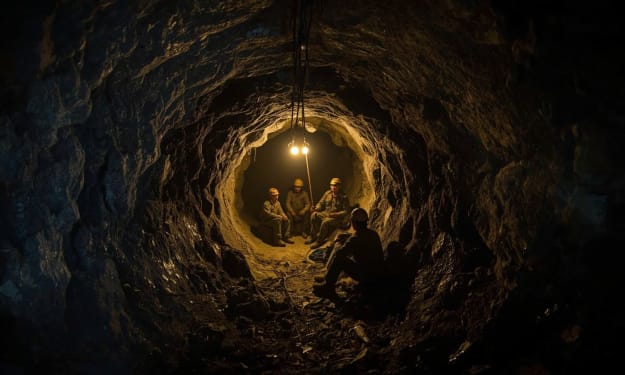
Trapped 2,300 Feet Underground for 69 Days 😨
On August 5, 2010, a collapse in the San José copper-gold mine in northern Chile left 33 miners trapped nearly 2,300 feet underground. What began as an ordinary shift turned into a global drama, as families above and rescuers below raced against time. Against all expectations, every miner emerged alive after 69 days. Their story stands as a powerful example of human resilience and teamwork. The Collapse and First Hours Early that morning, a section of rock broke free above the work site, sending debris crashing down the shaft. The miners had just begun their day when the tunnel caved in, cutting off the main routes to the surface. In the darkness, 33 men scrambled to reach a refuge chamber stocked with basic supplies. Many were injured, frightened by tumbling rocks and the echo of shifting earth. When dust settled, they found themselves isolated in a narrow chamber, far from escape routes. Initial estimates feared no one had survived. Only after hours of drilling and probe communications did rescuers confirm that all 33 were alive. That first contact offered a glimmer of hope, but the situation remained dire: limited food, uncertain water supplies, no quick way out, and the psychological weight of being buried deep beneath solid rock. Rationing Supplies and Maintaining Morale Inside the refuge, miners shared small rations of biscuits and water. With each passing day, they faced hunger, dehydration risk, and cramped conditions. Yet they understood that survival depended on calm planning. A clear plan emerged: Strict food rationing: Initial supplies would need to last far longer than anyone first expected. Each person accepted tiny portions, knowing waste could mean death. Daily routines: To preserve mental health, the group set a schedule: time for exercise stretches in place, rotations for tasks like checking air quality, and moments to share news or personal stories. Leadership and roles: Senior miners and those with medical or technical knowledge guided decisions. Everyone had a role: monitoring oxygen levels, organizing mealtimes, or leading brief discussions on future plans. Spiritual and emotional support: Many miners drew strength from prayer meetings, singing, or simply talking through fears. They encouraged one another to stay hopeful, reminding each other of families waiting above. This discipline and unity kept panic at bay during the weeks that followed. Communication with the Surface After about 17 days, a small borehole reached the chamber. A capsule lowered through it carried food, water, and a note: “We will not abandon you.” That first supply drop changed everything. Though limited, fresh provisions arrived regularly through drilling channels. The miners wrote messages back, describing their status and asking for news of their families. Each exchange boosted morale, confirming that rescue efforts continued. Engineers on the surface worked tirelessly to widen these boreholes into escape shafts. Complex drilling in hard rock at depth posed enormous technical challenges. International experts advised on machinery and methods, while families and the nation watched anxiously. The miners knew rescuers were struggling but felt renewed resolve each time fresh supplies arrived. Ingenuity Below and Above Underground, creativity emerged even in darkness. Miners used salvaged materials to rig basic lighting, stretch their legs, and maintain hygiene as best they could. They organized shifts to clean shared space, keep debris clear, and collect condensation for water. Teamwork extended to emotional care: when someone felt despair, others shared memories or joked to lighten spirits. Above ground, engineers drilled three separate rescue shafts, each following different techniques to maximize chances. The final successful shaft used a custom-designed capsule, later nicknamed “Fénix” (Phoenix). The capsule’s dimensions had to fit narrow tunnels yet remain sturdy enough to transport a person safely up nearly half a mile of rock The Rescue and Aftermath On October 13, after 69 days underground, the first miner entered the capsule and began the ascent. World leaders watched live broadcasts. One by one, all 33 men emerged back into sunlight, weak but alive, greeted by tears and cheers. Their return inspired millions, showing that even the deepest darkness cannot overcome united hope and effort. Recovery was only the beginning. Many miners faced long-term physical and psychological challenges—muscle atrophy, emotional trauma, and the task of rebuilding lives. Yet most went on to share lessons learned: the value of solidarity under crisis, the power of disciplined planning, and the importance of maintaining hope when circumstances seem hopeless. Why This Story Resonates Teamwork under pressure: The miners’ coordinated daily routines and mutual encouragement prevented panic and gave structure to survival. Human ingenuity: Simple solutions—rigorous rationing, makeshift lighting, creative use of limited resources—proved vital underground. Above ground, global expertise converged to solve unprecedented drilling challenges. Emotional resilience: Maintaining hope for over two months in total darkness required deep mental strength, bolstered by shared faith, humor, and daily reminders of families above. Universal inspiration: This event united people worldwide in empathy and admiration. It remains a reminder that in crisis, cooperation and caring can overcome seemingly insurmountable odds. Reflection: Being buried deep underground for weeks tests every limit of body and mind. Yet the Chilean miners’ experience shows how solidarity, discipline, and hope turn dire situations into stories of triumph. When faced with personal challenges or broader crises, their example encourages finding strength in community and trusting collective effort. > What lessons can be drawn when ordinary people unite under extraordinary pressure? How might that spirit of cooperation apply in daily life? Author’s Note: > This article is based on verified reports, interviews with survivors, and reputable sources. It has been revised and polished by the author for clarity and authenticity.
By Echoes by Imadabout a year ago in Humans
Why We Chase the Unavailable in Dating: The Thrill of Wanting What We Can’t Have
We’ve all been there. You meet someone who barely gives you the time of day, and suddenly, they’re all you can think about. They’re distant, hot and cold, maybe even a little emotionally unavailable… and yet, you're hooked like a fish on a line. You’re calling, texting, making excuses to see them — all the while, they're barely lifting a finger.
By Milan Milicabout a year ago in Humans
Man trapped under 500 kg rock for 5 days. (ALONE)
In April 2003, a 27-year-old man named Aron Ralston went hiking alone in Bluejohn Canyon, a remote and narrow canyon located in the deserts of Utah, USA. Aron loved the outdoors. He had gone on many adventures before and was confident in his skills. But on this trip, something went horribly wrong. As he moved through the tight spaces between the canyon walls, a massive boulder suddenly shifted. In a split second, it fell and trapped his right arm against the canyon wall. The rock weighed over 800 pounds—far too heavy to move. He was stuck. There was no one else around, and no phone signal to call for help. Aron had told no one where he was going, so no one would come looking for him. The sun was setting, and the canyon quickly turned cold. :Five Days Without Hope: Aron had only a little water, two burritos, and a small knife in his backpack. He tried everything he could to break or move the boulder, but nothing worked. As the hours turned into days, his body grew weaker. He began to feel dizzy, tired, and extremely thirsty. He rationed his water and food, trying to stay alive as long as possible. He used a small camera to record goodbye messages to his family, in case he didn’t make it. He also carved his name, birthday, and the date into the canyon wall—what he thought would be the date he died. Each night, temperatures dropped below freezing. Each day, the heat burned down. Aron was stuck in the same painful position for nearly five full days, with no sign of rescue and no way to escape. :The Decision That Saved His Life: On the fifth day, something inside him changed. He realized that if he didn’t act soon, he would die. So, he made a terrifying decision. He would cut off his own arm to survive. First, he used the rock to snap the bones in his forearm by twisting and bending it until it brokee. Then, with his dull pocketknife, he began to slowly cut through his skin, muscles, and nerves. It was incredibly painful, but he pushed through. He knew this was the only way out. After several long and agonizing minutes, Aron was finally free. :The Long Walk to Safety: But the nightmare wasn’t over yet. Aron still had to get out of the canyon. With only one arm, bleeding heavily, and barely able to walk, he climbed down a 65-foot cliff and hiked over 6 miles through the rocky desert. Eventually, he caame across a family who was hiking in the area. They gave him water and called for help. A rescue helicopter soon arrived and flew him to the hospital. Doctors said he had lost nearly half the blood in his body and was just hours away from death. But beccause of his strength and courage, he survived.
By Echoes by Imadabout a year ago in Humans