diy
Do it Yourself; Tips and ideas for DIY projects to give a gift that your significant other won't return.
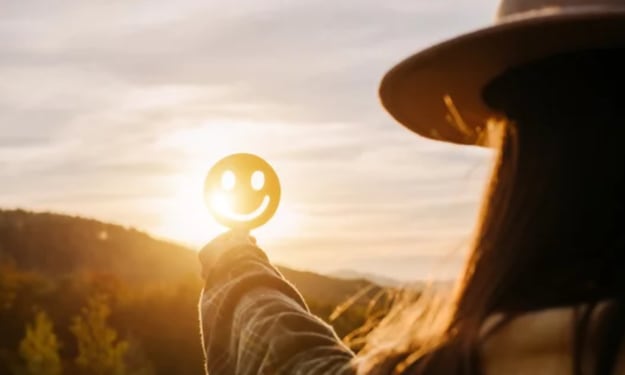
5 Simple Ways to Improve Your Mental Health Today (Without Turning Into a Wellness Guru)
Let's be honest with ourselves, mental health advice these days can feel about as useful as a screen door on a submarine. Between the pressure to meditate like a monk, journal like Shakespeare, and drink kale smoothies without gagging, it’s enough to make anyone want to crawl back under the covers and call it a decade.
By Just One of Those Thingsabout a year ago in Humans
"From surviving to thriving: My journey"
For years, I didn’t realize I was just surviving. I thought what I was doing—waking up exhausted, pushing through the day on autopilot, smiling when expected—was normal. I believed that everyone felt like this: numb, disconnected, and quietly overwhelmed. I didn’t know there was another way to live, because surviving was all I had ever known. I wasn’t falling apart in an obvious way. I went to work, kept up appearances, replied to messages with the usual “I’m good, just busy,” and kept moving. But beneath the surface, I was drowning. Every day felt like I was carrying an invisible weight that no one could see. I was functioning, but I wasn’t living. I wasn’t present in my own life. The turning point wasn’t dramatic. There was no single event that forced me to change. It was actually a quiet moment—one I’ll never forget. I was sitting in my car after work, staring at the steering wheel, and I realized I had no memory of the day. Not one conversation, not one laugh, not one meaningful moment. It scared me. I was watching life pass me by, and I wasn’t even in the passenger seat—I was somewhere in the trunk, shut away and silent. That moment broke something open in me. I realized that I had been moving through life in survival mode, and survival mode had stolen years of my joy, energy, and identity. It wasn’t that I was weak or ungrateful—I was simply burned out, emotionally drained, and carrying years of unspoken pain. I knew I couldn’t continue like this. I wanted more. I needed more. So I started small. I reached out to a therapist. That one step was terrifying, but it was also the beginning of everything. I walked into that first session with my guard up and my voice shaky. I didn’t know how to explain how I felt. But I didn’t need to have the perfect words—just showing up was enough. Therapy wasn’t a quick fix, and healing didn’t come all at once. There were setbacks and painful realizations. There were weeks when I felt like giving up. But slowly, piece by piece, I started reclaiming parts of myself I had lost. I allowed myself to feel—really feel—without judgment. I cried, got angry, forgave myself, and started to unlearn all the lies I’d believed about who I had to be. I also learned that surviving had once been necessary. It was my mind and body doing their best to protect me in a world that didn’t always feel safe. But surviving wasn’t meant to be permanent. It was supposed to be a bridge—not a destination. One of the most important lessons I learned was about self-worth. I had spent years tying my value to productivity, to making other people comfortable, to shrinking myself so others didn’t feel threatened. But in therapy, I started to see that I was worthy of rest. Worthy of peace. Worthy of joy—not because I earned it, but because I existed. As I healed, my life began to change in ways I never expected. I found joy in small things again—watching the sunrise, listening to music, writing without an audience. I started saying “no” without guilt. I began surrounding myself with people who made me feel safe, seen, and supported. I let go of toxic expectations and started setting boundaries that honored my growth. The road from darkness to light wasn’t straight. There were days I stumbled, days I questioned everything. But I never gave up. Each step forward was a quiet rebellion against the life I had accepted for far too long. And eventually, I looked around and realized I was no longer just surviving—I was thriving. Thriving doesn’t mean I’m always happy. It doesn’t mean my life is perfect. It means I’m present. It means I choose myself, over and over, with intention and love. It means I have the tools to handle hard days without losing myself. If you’re in the dark right now, please hear this: you are not alone. You don’t have to stay where you are. Healing is possible—even if it feels out of reach. And you don’t have to do it perfectly. You just have to start. One step. One breath. One moment of believing that your story can change. I’m living proof that it can. From surviving to thriving—it’s not a straight path, but it’s a journey worth taking. And every step toward the light is a victory.
By Kaleem Ullahabout a year ago in Humans
One Pile of Eternal Life
In a world where everything withers, fades, or dies, the idea of eternal life has captivated humanity for millennia. From the pharaohs of Egypt building pyramids to the digital footprints we leave on the internet, people have always yearned to escape the finality of death. But perhaps eternal life is not found in magic fountains or hidden galaxies. Perhaps it lies in something far more accessible — in a single, silent, symbolic pile we build throughout our lives: a pile of legacy, impact, and memory.
By Keramatullah Wardakabout a year ago in Humans
DIY Escape Room: Crafting an Adventurous Date Night at Home
In the age of creativity and at-home experiences, a DIY escape room date night has become the ultimate way to blend romance, excitement, and challenge all within the comfort of your own space. Whether you're celebrating an anniversary, looking to spice up your Friday night, or just want to create a memorable experience with your partner, a homemade escape room offers a perfect balance of fun and intimacy.
By Richard Baileyabout a year ago in Humans
Breaking Free from Perfectionism: Embracing the Imperfections of Being Human
Breaking Free from Perfectionism: Embracing the Imperfections of Being Human Introduction From the earliest days of childhood, many of us are taught to strive for perfection. We get high marks, awards, and praise for our flawless appearance. In a world that celebrates idealism and perfection, anything less can feel like failure. But this pursuit of flawlessness often comes at a cost: anxiety, self-doubt, exhaustion, and a disconnect from our authentic selves.
By Afia Sikderabout a year ago in Humans
What Happens After Death? A Look at Beliefs Across Religions
Death is one of the greatest mysteries of human life. Every culture and religion has tried to understand what happens after we die. While no one knows for sure, different faiths offer comforting, hopeful, or even warning-filled answers to this eternal question. Here's a brief look at what various religions say about life after death.
By Dr Sazidul about a year ago in Humans
The Subtle Art of White Lies: When Truth Takes a Gentle Pause
In the intricate tapestry of human interactions, honesty is often hailed as the best policy. Yet, nestled within our daily conversations are the subtle threads of white lies—those seemingly innocuous falsehoods told to spare feelings, avoid conflict, or maintain social harmony. While they may appear harmless, white lies occupy a complex space in our moral and ethical landscape, prompting us to question their true impact on our relationships and society at large.
By Ahmed Rayhanabout a year ago in Humans
The Haircut, the Heart, and Holding On
I never thought a haircut would make me cry. Not in the dramatic, just-got-dumped kind of way. Not even because it was botched. But because of who it was for, and what it meant. My brother, Sami, was sitting in the faded leather chair at the back of Malik’s Barbershop. It was a small place—wood-paneled walls, a dusty fan circling overhead, and a scent that was part shaving cream, part nostalgia. The kind of place where boys became men, and men came to find a sliver of peace. Sami had always been particular about his hair. He liked a low fade with a clean part, the kind that made him look sharp, like the hero of some old Bollywood movie. But today, he didn’t care. Because today, he didn’t recognize his reflection. It’s been nearly six months since our lives changed. One misdiagnosis. One delayed scan. One rare autoimmune disorder that began robbing Sami of his speech, coordination, and slowly, the light in his eyes. I’ve become his caregiver. It’s a word people don’t say enough. They say “blessing,” “burden,” “duty,” “love”—but not caregiver. As if acknowledging the labor of it somehow diminishes the love. But let me tell you the truth: Love is heavy. It’s carrying a grown man to the bathroom at 2 a.m. because he can’t walk on his own. It’s spoon-feeding oatmeal while pretending it's the same old breakfast he used to rush through before school. It’s crying in the laundry room because you miss being a sister instead of a nurse. And yet—it’s everything I’d ever do again, without a second thought. I remember our childhood vividly. Sami was always the brave one. He used to jump off rooftops into muddy puddles, convinced he was invincible. I was the careful one, always patching him up afterward. Maybe this was always going to be our fate—me putting him back together, piece by piece. Back at the barbershop, Malik clippers buzzed softly. Sami tilted his head slightly, eyes closed. A tiny twitch of discomfort crossed his face, and I instinctively stepped forward. Old habits. Malik looked at me and smiled softly. “I’ve got him,” he whispered. I nodded and stepped back. Watching the tufts of hair fall was like watching pieces of him scatter. I felt my chest tighten. This was the first time in weeks he agreed to leave the house. The first time he let a stranger touch him without flinching. Maybe this was healing. Or maybe it was surrender. I didn’t know. Outside, the sun was beginning to set—casting golden light through the windows, turning the dust in the air into tiny, dancing stars. And as if drawn by fate, a line from an old poem came to mind: > She is a sun, glowing through the grit, A keeper of warmth in a world unlit. Except this time, it wasn’t she. It was he. It was my brother, glowing quietly in the ruins of what had been. A different kind of strength. One that didn’t roar but whispered. One that held on. After the haircut, I helped him into his coat. His hand trembled as he tried to button it. I reached out, and he looked at me with those storm-colored eyes—full of gratitude, full of loss. We didn’t say much. Words had never been necessary between us. On the way home, he fell asleep in the passenger seat. I took the long route through town, letting the radio play old songs we used to sing loudly to, just to fill the silence. As I drove, I thought about all the ways people misunderstand caregiving. They think it’s about being strong. Being patient. Being angelic. But caregiving isn’t sainthood. It’s sacrifice. It’s giving up your plans, your weekends, your sleep, your career, sometimes even your sense of identity. It’s mourning someone while they’re still alive, and still showing up every day to hold their hand. And yet—it’s holy work. In the quiet moments, in the stolen smiles, in the eye contact that says “I’m still here”—you find pieces of yourself you never knew existed. Compassion that surprises you. Rage that humbles you. And love that doesn’t need conditions. Back home, I tucked Sami into bed. He looked peaceful. Before I left the room, he squeezed my hand. It was weak, but it was his way of saying thank you. Or maybe, just I love you. I sat outside on the porch afterward, staring at the moon. My thoughts spiraled. I thought about burnout. About how I once yelled at a nurse on the phone out of sheer exhaustion. About how I miss just being his sister. About how lonely it is to watch the world move on while you’re stuck in a loop of routines, medications, and memory loss. And yet, I also thought about that haircut. That small act of reclaiming normal. That quiet resistance. Sami isn’t who he used to be. And maybe neither am I. But maybe we are both still becoming. In the distance, I heard laughter from a neighbor’s yard. Life, buzzing as always. Untouched. Unaware. But here, in our small world, a battle is being fought—not with swords, but with spoons, clippers, and bedtime stories. And every little victory matters. Tomorrow, I’ll wake up and do it all again. And maybe, just maybe, one day Sami will smile and say, “It was a good haircut.” --- Author’s Note: To all caregivers out there—you are seen. You are heard. You are not alone.
By Ikram Ullahabout a year ago in Humans