celebrities
It can be hard to keep up with celebrity relationship low-down, but we certainly try.
Inside the Mind of Tom Segura: ‘Bad Thoughts’ and the Art of Unfiltered Comedy
There's a particular thrill in watching a comedian tightrope-walk between humor and horror—and Tom Segura has built a career on doing just that. With his newest Netflix special, Bad Thoughts, Segura opens his brain to us, and what we find there is both brutally funny and deeply revelatory.
By MD NAZIM UDDIN about a year ago in Humans
The Haircut, the Heart, and Holding On
I never thought a haircut would make me cry. Not in the dramatic, just-got-dumped kind of way. Not even because it was botched. But because of who it was for, and what it meant. My brother, Sami, was sitting in the faded leather chair at the back of Malik’s Barbershop. It was a small place—wood-paneled walls, a dusty fan circling overhead, and a scent that was part shaving cream, part nostalgia. The kind of place where boys became men, and men came to find a sliver of peace. Sami had always been particular about his hair. He liked a low fade with a clean part, the kind that made him look sharp, like the hero of some old Bollywood movie. But today, he didn’t care. Because today, he didn’t recognize his reflection. It’s been nearly six months since our lives changed. One misdiagnosis. One delayed scan. One rare autoimmune disorder that began robbing Sami of his speech, coordination, and slowly, the light in his eyes. I’ve become his caregiver. It’s a word people don’t say enough. They say “blessing,” “burden,” “duty,” “love”—but not caregiver. As if acknowledging the labor of it somehow diminishes the love. But let me tell you the truth: Love is heavy. It’s carrying a grown man to the bathroom at 2 a.m. because he can’t walk on his own. It’s spoon-feeding oatmeal while pretending it's the same old breakfast he used to rush through before school. It’s crying in the laundry room because you miss being a sister instead of a nurse. And yet—it’s everything I’d ever do again, without a second thought. I remember our childhood vividly. Sami was always the brave one. He used to jump off rooftops into muddy puddles, convinced he was invincible. I was the careful one, always patching him up afterward. Maybe this was always going to be our fate—me putting him back together, piece by piece. Back at the barbershop, Malik clippers buzzed softly. Sami tilted his head slightly, eyes closed. A tiny twitch of discomfort crossed his face, and I instinctively stepped forward. Old habits. Malik looked at me and smiled softly. “I’ve got him,” he whispered. I nodded and stepped back. Watching the tufts of hair fall was like watching pieces of him scatter. I felt my chest tighten. This was the first time in weeks he agreed to leave the house. The first time he let a stranger touch him without flinching. Maybe this was healing. Or maybe it was surrender. I didn’t know. Outside, the sun was beginning to set—casting golden light through the windows, turning the dust in the air into tiny, dancing stars. And as if drawn by fate, a line from an old poem came to mind: > She is a sun, glowing through the grit, A keeper of warmth in a world unlit. Except this time, it wasn’t she. It was he. It was my brother, glowing quietly in the ruins of what had been. A different kind of strength. One that didn’t roar but whispered. One that held on. After the haircut, I helped him into his coat. His hand trembled as he tried to button it. I reached out, and he looked at me with those storm-colored eyes—full of gratitude, full of loss. We didn’t say much. Words had never been necessary between us. On the way home, he fell asleep in the passenger seat. I took the long route through town, letting the radio play old songs we used to sing loudly to, just to fill the silence. As I drove, I thought about all the ways people misunderstand caregiving. They think it’s about being strong. Being patient. Being angelic. But caregiving isn’t sainthood. It’s sacrifice. It’s giving up your plans, your weekends, your sleep, your career, sometimes even your sense of identity. It’s mourning someone while they’re still alive, and still showing up every day to hold their hand. And yet—it’s holy work. In the quiet moments, in the stolen smiles, in the eye contact that says “I’m still here”—you find pieces of yourself you never knew existed. Compassion that surprises you. Rage that humbles you. And love that doesn’t need conditions. Back home, I tucked Sami into bed. He looked peaceful. Before I left the room, he squeezed my hand. It was weak, but it was his way of saying thank you. Or maybe, just I love you. I sat outside on the porch afterward, staring at the moon. My thoughts spiraled. I thought about burnout. About how I once yelled at a nurse on the phone out of sheer exhaustion. About how I miss just being his sister. About how lonely it is to watch the world move on while you’re stuck in a loop of routines, medications, and memory loss. And yet, I also thought about that haircut. That small act of reclaiming normal. That quiet resistance. Sami isn’t who he used to be. And maybe neither am I. But maybe we are both still becoming. In the distance, I heard laughter from a neighbor’s yard. Life, buzzing as always. Untouched. Unaware. But here, in our small world, a battle is being fought—not with swords, but with spoons, clippers, and bedtime stories. And every little victory matters. Tomorrow, I’ll wake up and do it all again. And maybe, just maybe, one day Sami will smile and say, “It was a good haircut.” --- Author’s Note: To all caregivers out there—you are seen. You are heard. You are not alone.
By Ikram Ullahabout a year ago in Humans
Wema Sepetu: Age, Movies, Husband, Net Worth, Biography & More
If you know Tanzanian pop culture, then you’ve definitely heard of Wema Sepetu. She’s the former Miss Tanzania who turned the pageant spotlight into a full-blown film career — and along the way, became one of the most talked-about celebrities in East Africa. Whether she’s starring in a Swahili blockbuster, launching a beauty brand, or making headlines with her love life, Wema knows how to keep the public hooked.
By Marveline Merababout a year ago in Humans
Nikita Kering: Age, Relationship, Net Worth, Tribe, Biography & More
At just 23 years old, Nikita Kering has already carved out a name for herself as one of Kenya’s most powerful and soulful voices. With a voice that can silence a crowd and lyrics that hit right at the heart, Nikita isn’t just making music — she’s making history.
By Marveline Merababout a year ago in Humans
She Just Wanted to Be Remembered
It was a cold winter morning when I entered the emergency room, not expecting anything out of the ordinary. The air smelled of disinfectant, machines beeped rhythmically, and the usual silence was broken only by hurried footsteps and soft whispers of nurses exchanging reports. As a doctor, you learn to carry your emotions in your pocket — only pulling them out when absolutely necessary. That day, I didn’t know I’d be forced to empty my entire heart. She was brought in on a stretcher — frail, trembling, barely conscious. Her name was Samra. Twenty-six years old. An elementary school teacher. Diagnosed months ago with a tumor pressing dangerously against her spine. Her file had gone through multiple hands. She had no family left, no husband, no parents — only a neighbor who had found her fainted on the floor of her one-room apartment and called an ambulance. I reviewed her case quietly, but something made me linger a little longer than usual. Maybe it was the photograph tucked inside her file — a picture of her standing with a group of children, all of them smiling widely. Or maybe it was her eyes — hollow, yet strangely full of something unspoken. Pain, maybe. Or hope. She had already gone through two surgeries, both unsuccessful. The tumor had grown aggressive, wrapping itself around the nerves. Her lower body was now paralyzed. She hadn’t walked in over three months. The medical board had labeled her case as palliative. That meant: no more interventions, just comfort until the inevitable happened. But I couldn’t walk away. When I spoke to her for the first time, she didn’t ask about procedures or medicines. She asked me something I wasn’t ready for. “Do you think I was a good teacher?” I paused. I had no way of knowing. “Why do you ask?” She smiled weakly. “I just don’t want to be forgotten.” Those words stayed with me. Over the next few days, I visited her more often than necessary. She didn’t have many visitors. A couple of her old students came by once, bringing flowers and little hand-written notes. I saw her cry quietly after they left, hiding her face in her pillow. Her health began to decline, but her spirit didn’t. She asked me about my journey. She asked how I deal with failure, with fear. I told her the truth — that we doctors aren’t superheroes. We hurt. We break. We carry the weight of lives we couldn’t save. One evening, while checking her charts, I mentioned a clinical trial happening abroad — a new experimental procedure using targeted electrical impulses to stimulate nerve regeneration. It was still in its early stages. She laughed softly and said, “Sounds like science fiction.” But I could see the flicker in her eyes. She wanted to try. Even if the odds were thin. I made some calls. Wrote letters. Sent medical histories. I didn’t tell her everything — not until we got the approval. She was eligible. The cost was overwhelming, but I couldn’t give up. I contacted old colleagues, organizations, anyone who owed me a favor. And then, a miracle happened. An anonymous donor agreed to cover the costs. I still don’t know who it was. Sometimes, the universe answers prayers we haven’t even said out loud. https://ideogram.ai/g/q4233uT6TYOt7RAlbCMxQA/3 The hospital arranged her transport, and I went with her. Not as a doctor. As a human being who had silently begun to care far more than I should have. The procedure was long. Complicated. Painful. There were moments when her body rejected the treatment, when the fever rose, when her lungs struggled. But she kept looking at me with the same question in her eyes — “Will I walk again?” Weeks passed.
By Doctor marwan Dorani about a year ago in Humans
The Prince Who Would Be King: Power, Oil, and the Art of Control
Oil, Power, and a $450 Million Picture: The Story of Saudi Crown Prince 'MBS' from Obscurity to Ascendancy In January 2015, Saudi Arabia's 90-year-old King Abdullah was nearing death in a hospital, and his half-brother Salman was poised to become king. At the same time, his favorite son, Mohammed bin Salman, was preparing for a power grab. Saudi Prince Mohammed bin Salman, also known as 'MBS,' at just 29 years old, had plans for some of the grandest projects in Saudi Arabia's history. But he feared that conspirators within the Saudi royal family might act against him. So, one night that month, he summoned a senior security officer to his palace to secure his loyalty. The security officer, Saad al-Jabri, was told to leave his mobile phone on a table outside, and MBS did the same. Now, they were alone. The prince was so fearful of palace spies that even the sole landline telephone was disconnected. According to al-Jabri, during their conversation, MBS described how he would awaken his kingdom from its deep slumber and give it its rightful place on the global stage. By selling shares in Aramco, the world's most profitable company, he would begin to wean the economy off its dependence on oil. He would invest billions of dollars in Silicon Valley tech startups, including the taxi company Uber. Then, he would create 6 million new jobs by freeing Saudi women to join the workforce. A surprised al-Jabri asked MBS about the scope of his ambitions, to which he replied, "Have you heard of Alexander the Great?" MBS then ended the conversation. The meeting, which was supposed to last half an hour, began at midnight but stretched to nearly three hours. When al-Jabri left the room, he found multiple missed calls on his mobile phone from other government colleagues, who were worried about his prolonged absence. Our documentary team, which has been working for the past year, has spoken to Saudi friends and opponents of MBS, as well as senior Western spies and diplomats. The Saudi government was offered the opportunity to respond to the claims made in the BBC film and this article. However, they did not respond. Saad al-Jabri was a high-ranking official in the Saudi security apparatus, with friendships extending to the heads of the CIA and MI6. The Saudi government has labeled Jabri a disgraced former official, but he is also one of the most informed Saudi dissidents who has dared to speak about how Crown Prince Mohammed bin Salman rules Saudi Arabia. His interviews provide us with some startling details. By gaining access to many who know the prince personally, we have shed light on the events that led to MBS's rise and influence, including the 2018 murder of Saudi journalist Jamal Khashoggi and the start of the devastating war in Yemen. Due to his father's frailty, the 38-year-old Prince Mohammed bin Salman is the de facto ruler of the land where Islam originated and is now the world's largest oil exporter. He has begun implementing many of the key projects he outlined to Saad al-Jabri. He has also been accused of human rights abuses, including suppressing freedom of expression, widespread use of the death penalty, and imprisoning women's rights activists. A Rocky Start The first king of Saudi Arabia fathered at least 42 sons, including MBS's father, Salman. The crown has traditionally passed among these sons. In 2011 and 2012, when two of them suddenly died, Salman was promoted in the line of succession, bringing him closer to power. Western intelligence agencies keep a close eye on the Saudi royal family to determine who will be the next king. At the time, MBS was so young and unknown that he was not even on their radar. Sir John Sawers, who headed MI6 until 2014, says, "He grew up in relative obscurity. He was not being groomed for high office." The crown prince's upbringing in a palace with few consequences for bad behavior explains his tendency to act without considering the repercussions of his decisions. MBS first gained notoriety in Riyadh in his late teens, earning the nickname 'Abu Rasasa' or 'Father of the Bullet.' He reportedly sent a bullet in the mail to a judge who ruled against him in a property dispute. Sir John Sawers says, "There's a certain ruthlessness to him. He doesn't like being crossed. But he's been able to bring about changes that no other Saudi leader could." The former MI6 chief says one of the most welcome changes is the cutting of Saudi funding for foreign mosques and religious schools that became breeding grounds for Islamic jihad. MBS's mother, Fahda, is a Bedouin tribal woman and is considered his father's favorite among his four wives. Western diplomats believe the king has suffered from vascular dementia for many years, and MBS was the son he turned to for help. Several diplomats recall their meetings with MBS and his father, noting that the prince would write notes on an iPad and then send them to his father's iPad for him to read out as answers. Lord Kim Darroch, national security advisor to British Prime Minister David Cameron, recalls, "I wonder if MBS was writing the sentences for his father." The prince was apparently so eager for his father to become king that in 2014, he reportedly suggested assassinating the then-king Abdullah with a poisoned ring obtained from Russia. Jabri says, "I can't say for sure if he was serious, but we took it seriously." The former senior security official says he has seen a secretly recorded video in which MBS discusses this. "For a long time, he was banned from court and from shaking hands with the king." Some time later, the king died of natural causes, allowing his brother Salman to ascend the throne in 2015. MBS was appointed defense minister and wasted no time in starting a war. The War in Yemen Two months later, the prince led the Gulf coalition's assault against the Houthi movement, which had seized much of western Yemen and which he saw as a proxy for Saudi Arabia's regional rival, Iran. The war triggered a humanitarian catastrophe, pushing millions to the brink of famine. Sir John Jenkins, the British ambassador before the war began, says, "It was not a sensible decision. A senior US military commander told me they were given 12 hours' notice of the campaign, which is unheard of." The military campaign helped transform a little-known prince into a Saudi national hero. However, even his friends believe it was the first of many major mistakes. A pattern emerges in his behavior, such as MBS's tendency to dismantle the traditionally slow Saudi decision-making system, preferring to act unpredictably or emotionally, and refusing to bow to the US or be treated as the leader of a backwater state. Jabri accuses MBS of issuing forged royal decrees in his father's name. Jabri says he discussed the Yemen war at the White House before it began, and President Obama's national security advisor, Susan Rice, warned him that the US would only support an air campaign. However, Jabri claims that MBS was so determined to push forward in Yemen that he ignored the Americans. Jabri says, "We were surprised that a royal decree was issued allowing ground intervention. He forged his father's signature on that decree. The king's mental capacity was deteriorating." Jabri says his source for this allegation was "reliable and trustworthy" and came from the Interior Ministry, where he was chief of staff. Jabri recalls the CIA station chief in Riyadh at the time being so angry that MBS had ignored the Americans. He added that the attack on Yemen should never have happened. Former MI6 chief Sir John Sawers says that while he doesn't know if MBS forged documents, "it's clear that the decision to militarily intervene in Yemen was MBS's, not his father's, though he may have been brought along." We have learned that MBS never saw himself as part of the system. He believed he was a young man who wanted to do a lot and that he didn't follow anyone else's rules. Kristen Fontenrose, who served on US President Donald Trump's National Security Council, says that when she read the CIA's psychological profile of the prince, she felt something was missing. She says, "He had unlimited resources. He was never told 'no.' He's the first young leader to reflect a generation that, frankly, most of us in government didn't understand." He Made His Own Rules In 2017, MBS purchased a famous painting that reveals how he thinks. He is willing to take any risk in a religiously conservative society. Above all, he wants to outdo the West in a show of power. In 2017, a Saudi prince reportedly working for MBS spent $450 million on the painting 'Salvator Mundi,' the most expensive artwork ever sold. The painting, by Leonardo da Vinci, depicts Jesus as the ruler of heaven and earth and the savior of the world. It has been completely missing for nearly seven years since the auction. Bernard Haykel, a friend of the crown prince and a professor of Near Eastern Studies at Princeton University, says that despite rumors that the painting hangs on the prince's yacht or in his palace, it is actually stored in Geneva, and MBS intends to hang it in a museum in the Saudi capital that has yet to be built. Haykel said that MBS had said, "I want to build a very big museum in Riyadh, and I want an anchor object that will attract people like the Mona Lisa." Similarly, his sports plans reflect someone determined and fearless to disrupt the environment. Saudi Arabia won the uncontested bid to host the 2034 FIFA World Cup. They have invested hundreds of millions of dollars in hosting tennis and golf tournaments, a practice known as 'sports washing.' But he is a leader who doesn't care what the West thinks of him; he does the opposite. He will do anything to make himself and Saudi Arabia great. Former MI6 chief Sir John Sawers says, "MBS is interested in building his own power as a leader. And the only way to do that is to increase the power of his country. That's what drives his actions." Jabri's 40-year career as a Saudi official could not withstand MBS's rise to power. As chief of staff to former Crown Prince Mohammed bin Nayef, he fled the kingdom when foreign intelligence services told him he was "in danger" after MBS took office. But Jabri says MBS unexpectedly messaged him, offering him his old job back. Jabri says, "It was a trap, and I didn't fall for it." He believes that if he had returned, he would have been tortured, imprisoned, or killed. As were his teenage children, Omar and Sarah. They were detained and later jailed on charges of money laundering and attempting to flee. They deny the allegations. Jabri says, "They planned to kill me. They won't rest until they see me dead. I have no doubt about that." Saudi authorities have issued Interpol notices for Jabri's extradition from Canada, but they have been unsuccessful. They claim he is wanted for embezzling billions of dollars during his time at the Interior Ministry. However, he was awarded the rank of major general, and the CIA and MI6 credited him with helping to prevent al-Qaeda terrorist attacks. Khashoggi's Murder It is very difficult to prove MBS's innocence in the 2018 murder of journalist Jamal Khashoggi at the Saudi consulate in Istanbul. The 15-member hit squad traveled on diplomatic passports and included several of MBS's own bodyguards. Khashoggi's body was never found, and it is believed that his bones were dismembered. Shortly after the murder, Professor Haykel exchanged WhatsApp messages with MBS. Recalling their conversation, Professor Haykel says, "I was asking, how could this happen?" "I think he was deeply shocked. He didn't expect such a reaction to Jamal Khashoggi's murder." Some time later, Dennis Ross met with MBS. Ross says MBS told him he didn't order the murder and "it was a huge mistake. I wanted to believe him because I couldn't believe he could issue such orders." MBS has always denied having prior knowledge of the plot. Although in 2019, he said he took "responsibility" for the murder because it happened under his watch. A declassified US report released in February 2021 insisted that MBS was personally involved in Khashoggi's murder. I asked those who knew MBS closely if he had learned from his mistakes or if his resolve had only increased after the Khashoggi killing. In response, Professor Haykel said, "He learned his lesson the hard way." He said MBS is deeply upset about how Khashoggi's murder has been used against him and his country. However, he is doing everything he can to ensure that an incident like Khashoggi's murder never happens again. Sir John Sawers agreed with Professor Haykel, saying that Khashoggi's murder was a turning point in MBS's life, after which he "certainly learned some lessons. However, his personality remains the same." MBS's father is 88 years old. When he dies, it is possible that MBS will rule Saudi Arabia for the next 50 years. However, he has recently expressed fears of being assassinated, possibly due to his efforts to normalize relations between Saudi Arabia and Israel. Professor Haykel says, "I think there are many people who would want to assassinate him, and he knows that." However, the constant surveillance around MBS keeps him safe. This was something Saad al-Jabri noticed when MBS was about to come to power and pulled the telephone wires out of the wall before speaking to him. However, MBS is still on a mission to modernize his country in a way that his ancestors could not. But he is not the first dictator whose inner circle lacks the courage to stop him from making more mistakes. Perhaps this is what makes him even more ruthless.
By Ikram Ullahabout a year ago in Humans
Hamisa Mobetto: Husband, Age, Wedding, Net Worth, Biography & More
Hamisa Mobetto has become a household name in Tanzania and beyond, admired for her stunning beauty, business acumen, and magnetic presence in the media spotlight. From gracing fashion runways to making headlines with her music and love life, she has mastered the art of reinvention. Whether you know her from her modeling days, her chart-topping songs, or her high-profile romances, there's much more to Hamisa than meets the eye. In this article, we delve into her age, husband, wedding, net worth, and the inspiring story behind her rise to fame.
By Marveline Merababout a year ago in Humans
Tanasha Donna: Age, Relationships, Tribe, Net Worth, Biography & More
Tanasha Donna has become one of East Africa’s most talked-about celebrities — a multi-talented singer, model, radio presenter, and entrepreneur whose name often trends for both her career moves and personal life. Known for her beauty, boldness, and brief romance with Tanzanian superstar Diamond Platnumz, Tanasha has built a brand that goes beyond the headlines. But who is Tanasha Donna really? In this article, we dive deep into her age, relationships, tribe, net worth, and biography to uncover the story behind the star.
By Marveline Merababout a year ago in Humans
Zari Hassan: Age, Husband, Net Worth, Biography & More
Zari Hassan, famously known as “The Boss Lady,” is a Ugandan-born socialite, entrepreneur, and reality TV star who has captured the spotlight across Africa and beyond. With her lavish lifestyle, high-profile relationships, and strong business acumen, Zari remains one of the most talked-about personalities on the continent.
By Marveline Merababout a year ago in Humans
Renowned Comedy Khiladigalu Star Rakesh Poojary Passes Away Following Heart Attack
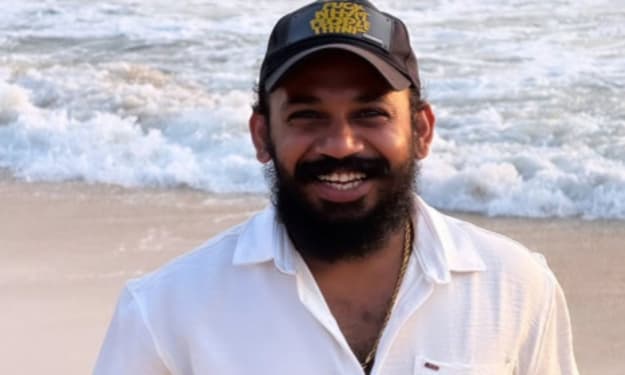
In a tragic turn of events, Rakesh Poojary, arguably one of the most renowned comedians and a fan favorite from the Kannada reality show, ‘Comedy Khiladigalu’ has passed away. Rakesh, who was an incredible artist, suffered a heart attack, which dealt a huge blow to his fans and fellow artists alike. Rakesh Poojary’s life in the film industry will always be cherished and in this article, we will discuss his contributions to the country’s entertainment sector.
By SAYAN GURIAabout a year ago in Humans