book reviews
Reviews of books by relationship gurus, dating experts, and cautionary tale-tellers.
"Rich Dad Poor Dad"
government school teacher, embodied this philosophy. His life was a testament to frugality & academic achievement, yet despite his sacrifices, financial freedom remained elusive. We lived paycheck to paycheck, & the anxiety of unexpected expenses was a constant shadow. It wasn’t until I stumbled upon Robert Kiyosaki’s Rich Dad Poor Dad during a low point in my late 20s that my worldview shattered—& rebuilt itself. The Wake-Up Call I discovered the book in a cluttered bookstore, its title nudging me like a forgotten promise. At the time, I was drowning. Freshly laid off from a corporate job I’d hated but clung to for "stability," I’d maxed out credit cards to maintain a facade of success—a sleek car, dinners at expensive restaurants, gadgets I didn’t need. I was the epitome of Kiyosaki’s "Poor Dad" mindset: equating income with wealth, confusing liabilities for assets. The first chapter felt like a mirror, reflecting my recklessness. Kiyosaki’s contrasting fathers—his educated but struggling "Poor Dad" & the street-smart "Rich Dad"—resonated deeply. My own father had warned me against debt, yet here I was, enslaved by it. But Rich Dad’s lesson, "The poor & middle class work for money. The rich have money work for them," ignited a spark. For the first time, I questioned: What if everything I knew about money was wrong? Assets vs. Liabilities: The Car That Broke Me The book’s central theme—"Know the difference between an asset & a liability"—hit home. I’d financed a car loan, believing it was an "investment." But Kiyosaki’s blunt truth—"A car is a liability the moment you drive it off the lot"—forced me to confront my ignorance. That depreciating metal hulk wasn’t wealth; it was a chain. Emotionally, this realization was brutal. I felt shame, regret, & anger—at myself, at the system that glorified consumerism. But Kiyosaki’s words also offered hope: "Every dollar in your asset column is like an employee, working 24/7 for generations." I sold the car, paid off the loan, & redirected funds into my first true asset: a rental property. It wasn’t glamorous, but watching tenants’ rent checks chip away at the mortgage gave me a thrill no luxury car ever could. Financial Education: From Fear to Fluency My "Poor Dad" upbringing had equated financial literacy with greed. Rich Dad’s mantra—"Mind your own business"—taught me otherwise. I devoured books on investing, attended workshops, & soaked up podcasts. The more I learned, the more I realized how schools had failed us. Algebra was mandatory, but budgeting? Compound interest? Silence. One memory stands out: sitting at my kitchen table, trembling as I invested ₹10,000 in mutual funds—a pittance to many, but a leap of faith for someone raised to hoard cash. When the portfolio grew 15% in a year, I felt a mix of pride & resentment. Why hadn’t anyone taught me this sooner? Entrepreneurship: Trading Security for Freedom The book’s most jarring advice was "Don’t work for money; make it work for you." For someone conditioned to equate job titles with self-worth, this was terrifying. Yet, Kiyosaki’s stories of building businesses—not buying them—inspired me. I launched a freelance content agency, initially juggling clients between midnight & dawn. The first year was chaos: missed deadlines, client disputes, moments of paralyzing doubt. But gradually, it stabilized. Quitting my 9-to-5 to focus on the agency was a visceral mix of terror & exhilaration. My father warned, "What if you fail?" Rich Dad’s voice countered: "Winners are not afraid of losing. Losers are." Today, the agency thrives, & the freedom to control my time—a luxury my salaried self never had—is priceless. The Bumps Along the Road Kiyosaki’s critics argue his advice oversimplifies complex systems. I agree—blindly following his steps without adapting them to India’s unique economy would’ve been disastrous. My first stock pick (a hyped tech startup) crashed, wiping out months of savings. Another lesson learned: education never stops. Moreover, the book’s emphasis on real estate feels outdated in today’s digital age. Instead, I diversified—rental income, stocks, a blog monetized through affiliate marketing. Flexibility, I realized, is key. A Legacy Rewritten Today, I’m debt-free, with multiple income streams. But the true victory is emotional: the erosion of scarcity mindset, replaced by abundance. My father, initially skeptical, now asks for investing tips. My children won’t inherit fear; they’ll learn to make money their ally. Rich Dad Poor Dad isn’t a flawless blueprint. It’s a mindset shift—a call to question, learn, & act. For me, it was the catalyst that turned despair into agency. As Kiyosaki writes, "The size of your success is measured by the strength of your desire." My desire? To never feel trapped again. If you’re ready to unlearn, to embrace discomfort for lasting freedom, this book is your first step. Just remember: the real work begins when you close the last page. — Mohit
By Harshitnath Thakur2 years ago in Humans
Life Struggle: A Battle on the Path to Dreams
The journey of life is fraught with difficulties and difficulties. Every person, regardless of their background, encounters difficulties in some way. Some struggle with financial difficulties, while others battle emotional turmoil, societal pressures, or personal insecurities. One thing remains constant in spite of these difficulties: the desire to achieve greater things, to overcome obstacles, and to realize dreams. The road to achieving one's goals is never easy; it is a battlefield in which perseverance, resilience, and determination are the weapons of success. The Nature of Conflict The struggle that comes with life is inevitable. We strengthen ourselves, evolve, and grow through struggle. Before taking their first confident steps, a child learning to walk falls countless times. This straightforward illustration captures the essence of life: failure and setbacks are necessary for growth. There would be no advancement if there were no struggles. Life’s challenges test our patience, strength, and willpower, pushing us to either give up or fight harder.
By Niranjon Chandra Roy2 years ago in Humans
The Rhythm of Renewal: Navigating the Dance of Change
Imagine stepping into a world of transformation—a secret adventure that starts around the age of 9 to 13 when a girl experiences her very first period. This moment marks the beginning of an extraordinary journey where hormones take center stage, orchestrating changes in the body, brain, and behavior. Welcome to the mesmerizing, ever-changing rhythm of the menstrual cycle.
By Eyo Otoabasi2 years ago in Humans
Unleash Your Potential: Embrace the Growth Mindset Revolution
Imagine life as a grand adventure where every challenge is a hidden opportunity waiting to be uncovered. Our mindset acts as the compass on this journey, directing us either toward the thrill of discovery or the safety of avoiding risks. There are two distinct ways of thinking: one that treats obstacles as chances to learn and grow, and one that shies away from difficulties, paralyzed by the fear of failure.
By Eyo Otoabasi2 years ago in Humans
Rhythm of Life: Unleashing Your Inner Clock
Ever notice how our bodies seem to follow a natural rhythm that dictates when we’re energized and when we feel like hitting snooze? It turns out that about one third of our lives is spent asleep, thanks to an internal clock known as the circadian rhythm. This fascinating biological cycle syncs our wakefulness with the rising and setting of the sun, guiding our sleep patterns and keeping us in tune with nature’s schedule.
By Eyo Otoabasi2 years ago in Humans
The Harsh Legacy Besides the Metal Mask
Metal Mask A Tool for Oppressing African Culture and Mastering Slaves How a slave master dehumanized his/her slaves was paramount to the system that held together the barbaric institution during slavery. Physical restraints, punishment and psychological tactics were similarly employed as slave masters sought to suppress labour and maintain their power, domination and control.
By Rohitha Lanka2 years ago in Humans
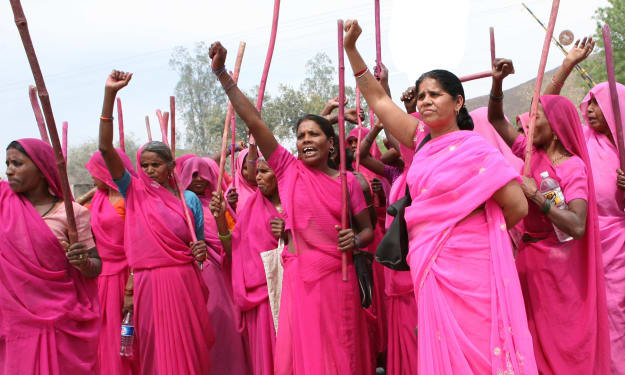
Feminist Vigilantism in Action: The Inspiring Story of Gulabi Gang. Content Warning.
The pink-colored house is in the secluded town of Attara. In a humble look, there are hundreds of women visiting the house every year due to all sorts of reasons, e.g., dowry demands, domestic violence, illegal harassment of family members, etc. All the common people do not know about it. One of the largest, most powerful, and most influential feminist vigilante organizations in the world has its base here. The Gulabi Gang.
By Hridya Sharma2 years ago in Humans
The Power of Friendship
Friendship: The Secret Superpower That Changes Everything Imagine scaling a mountain only to discover that with a good friend by your side, the climb feels a little less steep. A 2008 study found that people with a trusted companion saw a hill as less daunting than those who were alone. This simple experiment reveals a profound truth: friendship can transform how we perceive the world. When we share our journey with others, even the toughest paths become more manageable.
By Eyo Otoabasi2 years ago in Humans
Talk Yourself Through Life
When your alarm jolts you awake at an ungodly hour, you grumble, “Why did I set this thing so early?” In the mirror, while scrubbing away sleep, you ponder, “Maybe I need a haircut… or maybe not?” Then, in the mad dash out the door, you fumble for your keys only to realize they’re missing, and you can’t help but cry, “I just can’t do anything right!” All of this while your neighbor peeks out, witnessing your one-person show. It might feel a bit awkward to be caught chatting with yourself, and some might even label it as a sign of instability. But decades of psychological research tells us that talking to yourself isn’t just normal—it’s a natural part of being human.
By Eyo Otoabasi2 years ago in Humans
RIP Hank Chinaski
I know it’s a timeless debate: do people change? Some people say, absolutely. Others would argue that no, you don’t, you are who you are. I probably land somewhere in the middle, but veering towards yes, of course we change. But I think it’s also complex. Does maturing equal change? Does becoming firmer in our beliefs equal change? Or is that something that would qualify as something else? What actually constitutes the change we are talking about when we ask, “can a person change?” I sure as shit don’t know, but I do know this: if you want to see how much you have evolved as a person (or not,) revisit a favorite book from your twenties.
By Morgan Longford2 years ago in Humans