book reviews
Reviews of books by relationship gurus, dating experts, and cautionary tale-tellers.
The Secret Keeper’s Diary. AI-Generated.
When the parcel arrived, Emily almost didn’t recognize her mother’s handwriting. The return address was familiar, yet chillingly final: her mother, gone for two years, had somehow left her something more than memories. Inside, carefully wrapped in yellowed tissue paper, was an old leather-bound diary, its cover worn and cracked with age.
By Hasnainkhalid12 months ago in Humans
The Polished Mask of Social Media
The Digital Mirror Open any social media feed today, and you’ll see a flood of polished lives: professionals who look endlessly respectful, activists who share every noble cause, and friends who post touching videos of rescuing animals or feeding the poor. At first glance, it looks like the world has never been kinder.
By Life Hopesabout a year ago in Humans
"Mental Math Mastery"
Mathematics is often seen as a subject of rules, formulas, and memorization. But behind the numbers lies a powerful tool that can sharpen the mind, boost confidence, and even improve daily life: mental math. Mastering mental math is not about showing off fancy tricks—it’s about training the brain to think faster, work smarter, and stay sharp in every situation.
By aadam khanabout a year ago in Humans
The Endless Journey of Hopes: Learning to Live in the Present
Hope is the light that keeps us walking through the darkest nights. It is the quiet promise that tomorrow can be brighter, the whisper that tells us to keep moving, even when the road is long. Without hope, life would feel empty, stripped of purpose. And yet, I discovered that hope can also become a chain — beautiful, but heavy — keeping us always chasing, never resting.
By Life Hopesabout a year ago in Humans
The Beautiful Contradiction
M Mehran Humans are strange creatures. We build cities that scrape the sky and yet often forget the value of a single tree. We create art that transcends time and yet argue over trivialities that vanish by tomorrow. We are capable of immense love and, at times, staggering cruelty. And yet, somehow, we endure—messy, fragile, remarkable. --- The Faces Around Us Walking down a crowded street, I see humans everywhere. The man with worn-out shoes rushing to work. The teenager laughing too loudly on the corner. The elderly woman feeding pigeons in the park, her hands trembling but her smile unwavering. Each face tells a story. Each carries hope, sorrow, ambition, or regret. Humans are, in a way, walking novels—complex, layered, unpredictable. Yet we often overlook them, lost in our own routines, our own screens. --- The Capacity for Kindness A few months ago, I witnessed a small miracle. A young boy, maybe eight years old, helped a homeless man gather his scattered belongings in the rain. When he handed over the last item, he smiled, oblivious to the fact that passersby barely noticed. That moment captured what humans are capable of. Beneath the layers of anger, fear, or indifference, there is kindness waiting to be revealed. Humans are capable of acts so simple, yet so profound, that they ripple far beyond what we can see. --- The Struggle Within Yet, humans are also their own enemies. I think of the arguments I’ve had, the mistakes I’ve made, the bridges I’ve burned. I think of greed that leads to suffering, hatred that destroys relationships, apathy that leaves the vulnerable unprotected. We are contradictions, aren’t we? Each person carries a universe within them: light and darkness, courage and cowardice, love and indifference. And understanding that about ourselves is the first step toward understanding the world. --- Stories That Bind Humans connect through stories. Stories of triumph, of heartbreak, of survival, of love. I met Leila, a war refugee, who told me how she walked for days with her little brother, carrying nothing but hope. Her hands shook as she recounted nights of hunger, but her eyes were steady. She survived not because she was the strongest, but because she refused to give up—and in sharing her story, she reminded me of the resilience humans carry. Stories like hers are everywhere. They are ordinary, extraordinary, heartbreaking, and beautiful. Humans may stumble, but we also rise, again and again. --- The Pursuit of Meaning Humans are obsessed with meaning. We seek purpose in work, love, creativity, spirituality, even chaos. Some find it in religion, some in art, some in helping others. I once spoke to a man who built clocks for a living. He said, “Every clock I make is imperfect, but it still measures time. And in that, I see life.” Humans find significance not in perfection, but in effort, in trying to make sense of the incomprehensible, in connecting dots that might never align. --- The Power of Connection Humans are also defined by connection. We form bonds that shape us, challenge us, and sustain us. Family, friends, lovers, strangers—all leave traces on our souls. I think of my grandmother holding my hand as a child, of a friend driving three hours just to bring me soup during a fever, of a stranger who smiled at me on a bad day. Humans need each other, perhaps more than we admit. Even our solitude is often a search for connection in disguise. --- The Beauty in Flaws Humans are imperfect. Our mistakes, our flaws, our contradictions are not weaknesses—they are part of what makes us human. We forgive and we hurt, we dream and we falter, we create and we destroy. And yet, in these cycles, we grow. Humans are learning beings, constantly evolving through failure and triumph. It is in imperfection that we find depth, empathy, and understanding. --- A Moment of Reflection One evening, I sat by a river, watching people pass—laughing children, exhausted workers, lovers holding hands. A mother taught her toddler to skip stones; a man played guitar, letting music fill the empty spaces. In that simple moment, I understood: humans are miraculous not because we are flawless, but because we keep trying. We love when it hurts, create when it’s hard, hope when it’s easier to give up. Humans are fragile and resilient. Small and vast. Ordinary and extraordinary. Contradictory yet united by our desire to live, to connect, to leave marks on the world. --- Final Thought To study humans is to study the paradox of life itself. We are capable of despair, yet we dream. We fail, yet we rise. We hurt, yet we heal. Every human carries a story, a purpose, a spark. And perhaps the greatest thing about humans is that, despite all our flaws, despite our contradictions, we continue—struggling, loving, wandering, learning. Because in the end, being human is not about perfection. It’s about persistence, compassion, and the courage to keep moving forward. Humans are complicated. Messy. Beautiful. And that is enough.
By Muhammad Mehranabout a year ago in Humans
The Beautiful Imperfection of Being Human
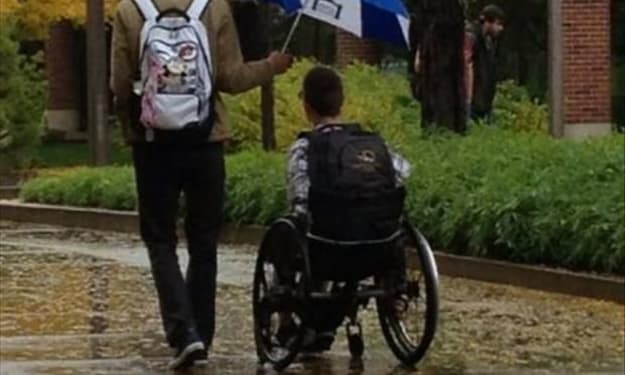
M Mehran If you strip away the noise of modern life—the glowing screens, the endless deadlines, the rush of traffic—you’re left with something raw and unpolished: us. Humans. Imperfect, unpredictable, vulnerable, and yet extraordinary. I didn’t always see it that way. For years, I thought being human meant constantly chasing perfection, hiding flaws, and living like life was some test I had to ace. But a series of moments—small, ordinary moments—taught me that being human is less about achieving and more about experiencing. The Stranger on the Train It started on a crowded train ride home. I was exhausted, scrolling through my phone, when I noticed an older man across from me. His coat was frayed at the edges, his hands trembling slightly as he held a paperback book. Every few pages, he would glance up, make eye contact with strangers, and smile. Not the forced, polite kind of smile, but one filled with warmth. People around him responded almost instinctively: a tired mother softened, a businessman lowered his phone, a teenager stopped frowning at the world. In that cramped metal box, surrounded by strangers, I realized something simple but powerful: humans crave connection. Even in silence, even in exhaustion, we reach for one another. The Beauty of Flaws Later that year, a close friend confessed something that changed the way I thought about humanity. She said, “I spent so much of my life pretending to be okay, until I realized that pretending was lonelier than the pain itself.” That struck me. How often do we, as humans, put on masks to look strong? We iron out our voices, tidy up our emotions, polish our stories. But the truth is, our flaws are the bridges that connect us. When someone admits fear, we say, me too. When someone shares grief, we hold their hand. When someone shows us their scars, we recognize our own. Being human isn’t about hiding the cracks. It’s about showing them and discovering we’re not broken—we’re just real. The Kindness of Strangers One rainy afternoon, my car broke down on a quiet street. Frustrated and cold, I stood there trying to flag down help. Cars passed by until finally, a woman in a small blue hatchback pulled over. She didn’t ask for anything, didn’t hesitate. She simply grabbed an umbrella from her backseat and stood with me until help arrived. She never even told me her name. That moment reminded me that being human isn’t always about grand gestures. It’s often about small acts of kindness that ripple far beyond what we can see. A smile, a held door, an umbrella shared on a rainy day—these are the threads that quietly weave humanity together. The Storm and the Sunrise But of course, being human also means facing storms. I remember the night my grandfather passed away. Grief came like a tidal wave, pulling me under. For days, everything felt gray and meaningless. And yet, slowly, life whispered back. A friend dropped off food without asking. My dog rested her head on my lap. The sun rose, stubbornly, each morning. That’s when I realized: humans are resilient not because we avoid pain, but because we learn to carry it. We break, but we also mend. And sometimes, we emerge softer, kinder, and more aware of how precious every sunrise is. Our Search for Meaning There’s another thread that defines us: our endless search for meaning. Humans build cities, paint murals, write poems, and explore galaxies not just to survive, but to understand. We want to know why we’re here, what love means, whether our stories matter. Maybe that’s why we tell each other stories at all. Every book, every song, every whispered confession is an attempt to say, I was here. I felt this. Do you feel it too? And when someone nods, when someone says yes, suddenly the vast mystery of life feels a little less lonely. Imperfect, Yet Enough One evening, sitting by the window with a cup of tea, I thought about all these moments—the man on the train, my friend’s confession, the stranger with the umbrella, the ache of loss, the joy of stories. I realized that humanity is not a polished sculpture. It’s more like a quilt: messy, stitched together from scraps of laughter, pain, mistakes, and kindness. And that’s the beauty of it. We are not perfect beings. We are enough, simply by existing, by loving, by trying. Why Humans Matter In a world that often values speed, efficiency, and flawlessness, it’s easy to forget the essence of being human. It’s not about how much we earn, how flawless we look, or how many goals we check off a list. It’s about how deeply we love, how bravely we endure, and how openly we share this journey with one another. So when I think about what it means to be human, I think of this: We smile at strangers. We cry when we lose someone. We laugh until our stomachs hurt. We stumble, fail, and then get up again. We carry memories, regrets, and dreams in equal measure. And through it all, we keep reaching out for connection. That’s the story of humanity: flawed, fragile, and yet endlessly full of hope. A Final Thought Someday, when I’m old and gray, I don’t think I’ll remember the deadlines or the polished masks. I’ll remember the people. The train rides, the confessions, the kindness, the grief, the laughter. Because being human isn’t about living perfectly. It’s about living fully. And that, I think, is the most extraordinary thing about us.
By Muhammad Mehranabout a year ago in Humans
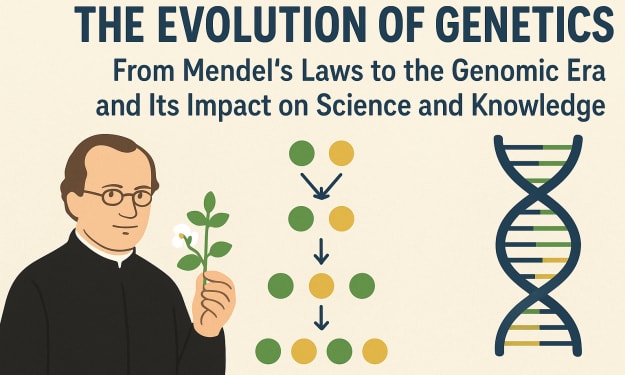
The Evolution of Genetics: From Mendel’s Laws to the Genomic Era and Its Impact on Science and Knowledge
The Development of Genetics and Its Impact on the Future Genetics is one of the most prominent sciences that has witnessed astonishing developments over the past two centuries, contributing to changing our understanding of life and opening new horizons in the fields of medicine, agriculture, and the environment. This science is concerned with the study of genes, the basic units that carry genetic information in living organisms, how they are transmitted across generations, and their role in determining biological traits. From the discovery of the laws of heredity by the Austrian monk Gregor Mendel in the nineteenth century to the sequencing of the human genome in the early twenty-first century, this field has come a long way, making it one of the most important pillars of modern science.
By PositivePulseabout a year ago in Humans
No Sex, We’re Still Evolving
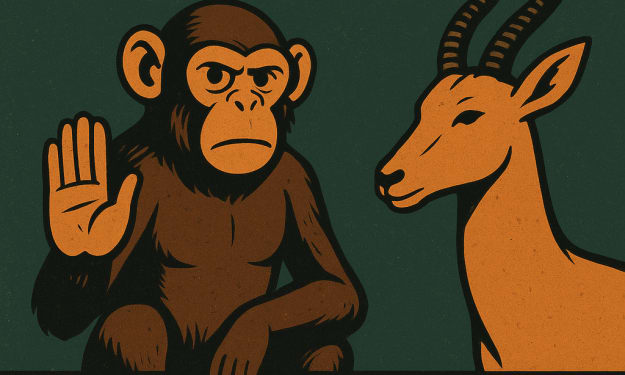
In the wild, every movement is a strategy for survival. For most species, reproduction is not a choice but an instinct, a genetic command Coded over millions of years. Yet here we are, humans, standing somewhere between animal instinct and conscious decision-making, trying to make sense of it all. The title “No Sex Please, We Are Animals!” sounds like a contradiction because animals are often associated with raw, natural desire. But what if this phrase is not about rejecting reproduction, but about questioning how, when, and why we engage in it?
By Farid Aslamabout a year ago in Humans