art
The best relationship art depicts the highs and lows of the authentic couple.
7 Transformative Benefits of Meditation for a Calmer, Healthier Life
In a world that often feels like it's moving too fast, meditation offers a quiet space to pause, reflect, and reset. What was once seen as a practice reserved for monks or spiritual seekers is now embraced by CEOs, athletes, students, and busy parents alike. But why has meditation become so popular? Because it works—genuinely and consistently.
By Alimuzzaman zamaddar2 years ago in Humans
If you want better focus, memory, and mood, build these habits into your mornings
Mornings are more powerful than most people realize. The way you start your day sets the tone for how your brain functions—impacting your focus, memory retention, and emotional balance. In an era of constant distraction and mental fatigue, building mindful, science-backed habits into your morning routine can act as a daily reset, optimizing your cognitive performance and emotional resilience. Here are key morning habits that can transform your brainpower and mood—no caffeine overload required. --- 1. Hydrate First Thing After 6–8 hours of sleep, your body and brain are dehydrated. Even mild dehydration has been shown to impair attention, working memory, and mood. A glass or two of water immediately upon waking rehydrates brain tissue, boosts alertness, and kickstarts metabolism. Add a pinch of sea salt or a squeeze of lemon for added electrolytes and digestive benefits. Tip: Keep a water bottle by your bed as a visual reminder. --- 2. Get Natural Sunlight Within 30 Minutes Your brain’s internal clock (circadian rhythm) regulates energy, alertness, and hormone production. Early exposure to natural light—especially within 30 minutes of waking—helps synchronize this rhythm. This leads to better sleep at night, sharper focus during the day, and a more balanced mood. A 10–15 minute walk outside or even sitting by a sunlit window can do the trick. Bonus: exposure to natural light increases serotonin, a neurotransmitter associated with mood stability. --- 3. Move Your Body Morning movement doesn’t have to mean an intense workout. Stretching, yoga, or even a brisk walk stimulates blood flow to the brain, encouraging the release of brain-derived neurotrophic factor (BDNF). BDNF supports the growth of new neurons and strengthens existing ones, playing a vital role in learning and memory. Studies show that moderate aerobic exercise in the morning enhances focus, reaction time, and memory throughout the day. Tip: A 10-minute bodyweight circuit or yoga session can be enough to activate your brain and body. --- 4. Practice Mindful Stillness Before diving into your to-do list or checking your phone, take a few moments for mindfulness. Meditation, deep breathing, or journaling has been shown to reduce cortisol levels (the stress hormone), enhance emotional regulation, and boost concentration. Even just five minutes of deep breathing or guided meditation can reduce mental chatter and help you approach the day with clarity. Tip: Try the 4-7-8 breathing technique: inhale for 4 seconds, hold for 7, and exhale for 8. --- 5. Fuel Your Brain with Nutrient-Dense Foods Breakfast should be more than just a grab-and-go fix. A balanced meal with protein, healthy fats, and complex carbohydrates fuels sustained mental energy. Avoid sugary cereals or refined carbs, which cause blood sugar spikes and crashes, leading to brain fog and irritability. Ideal options include eggs with avocado toast, oatmeal with nuts and berries, or a smoothie with spinach, Greek yogurt, and flaxseeds. Omega-3 fatty acids (found in chia seeds, walnuts, and salmon) are particularly important for cognitive function. --- 6. Cold Exposure (Optional but Powerful) While not for everyone, brief exposure to cold—such as a cool shower or splash of cold water—can trigger a release of norepinephrine, a neurotransmitter that increases alertness and improves mood. Cold therapy has also been linked to reduced inflammation, better stress management, and heightened mental clarity. Tip: Start with 30 seconds at the end of your shower and gradually build up over time. --- 7. Set Intentions for the Day Mental focus isn’t just about biology—it’s also about mindset. Taking a moment to mentally outline your goals or intentions for the day can sharpen your focus and give you a sense of purpose. This can be as simple as writing down three priorities, a mantra, or one positive action you want to take. This kind of mental priming helps direct your attention and energy where it matters most, instead of scattering it across distractions. --- 8. Avoid Digital Overload Checking emails, news alerts, or social media immediately upon waking floods your brain with information and dopamine—disrupting your mental clarity and setting you up for reactivity rather than proactivity. Give your mind space in the morning to wake up organically. Tip: Set a “digital delay” rule—no screen time for the first 30–60 minutes of your day. --- Building a Brain-Boosting Morning Routine You don’t need to overhaul your entire morning at once. Pick two or three of these habits to start, and build from there. The key is consistency. Small changes, when repeated daily, have a compounding effect on your brain health and overall well-being. By optimizing your mornings, you’re not just preparing for a more productive day—you’re laying the foundation for long-term mental resilience, emotional balance, and cognitive sharpness. --- Final Thought: Great mornings don't happen by accident. They’re designed, practiced, and protected. If you want better focus, memory, and mood, don’t wait for motivation—build the habits that make these states your new normal. Would you like a printable version or checklist to use for your morning routine?
By SophiaSoso2 years ago in Humans
Europe’s Massive Blackout: 7 Shocking Reasons Behind Spain and Portugal’s Power Crisis
On April 28, 2025, millions across Spain and Portugal woke up to an unsettling reality: no lights, no internet, no transportation. The two neighboring countries were thrown into darkness in one of the largest blackouts modern Europe has ever witnessed. Hospitals switched to emergency generators, airports faced major delays, and daily life ground to a halt in just a few minutes. But how could something like this happen in two of the most developed countries in Europe?
By sondos azhari2 years ago in Humans
Things We Never Got Over
Things We Never Got Over by Lucy Score is an emotionally charged, heartwarming romantic novel that will keep you hooked from the very first page. A perfect blend of humor, deep emotions, and romance, this book will take you on a journey of love, healing, and personal growth. With a storyline that’s both captivating and thought provoking, Lucy Score has created a rich narrative filled with compelling characters and heartfelt moments.
By Muhammad Hayat2 years ago in Humans
Silence of the Minds
In the year 2147, humanity achieved the zenith of technological progress, a period characterized by the seamless integration of Artificial Intelligence and robotics into all aspects of daily life. This transformation unfolded gradually, commencing several decades prior with the introduction of basic smartphones and culminating in sophisticated AI systems that oversaw everything from individual affairs to global governance. The advent of the Neurolink, a groundbreaking innovation facilitating direct communication between humans and machines, represented a pivotal moment. With merely a thought, individuals could retrieve information, transmit messages, and manipulate their surroundings. As the Neurolink gained widespread acceptance, it emerged as a beacon of advancement, celebrated as the quintessential instrument for human connectivity. Paradoxically, it would also herald the onset of decline.
By Imon Mridha2 years ago in Humans
Take Charge of Your Health
In today’s busy, constantly moving world, it’s easy to put our health on the back burner. We juggle work, family, responsibilities, and social obligations — often at the cost of our well-being. But here’s a simple truth: nothing is more valuable than your health. Without it, everything else becomes harder to manage.
By Naveed khan2 years ago in Humans
Healing by Hand: How a Philly Artist Is Using Card-Making to Empower Communities
By Kendra Hall PHILADELPHIA, PA — After more than 30 years of working in social services, Nancy Vickers thought her days of direct impact were behind her. But a quiet creative spark — and an undeniable calling — led her to start something new. Not in an office. Not with case files. But with cardstock, glue, and intention.
By Kendra Hall2 years ago in Humans
Why Hua Hin is the Perfect Getaway for Creative Travellers
Hua Hin in Thailand happens to be renowned for its vibrant cultural heritage and history. Over time, it has become a flourishing hub for Thai artists and even those from beyond its borders. The art scene here may be described as a combination of the traditional artistry of Thailand as well as more modern expressions; accordingly, it will draw the interest of creative travellers and art lovers. Some of the reasons why Hua Hin is an artistic focal point are described below.
By emma Callum2 years ago in Humans
Whiskey Kisses and Wildflower Promises
Dust on the Wind The sun had begun its slow descent, painting the Texas sky in hues of gold and rose. The wind danced over the parched earth, stirring tumbleweeds across the main street of Dustcreek—a town as rugged and worn as the boots that walked it. Saloons echoed with laughter and piano notes, and horses snorted in their stalls. Among it all, Delilah Morgan stood on the edge of town, her ivory dress dusty, her boots muddy, and her heart racing with a freedom she'd never known.
By Shah Jehan2 years ago in Humans
“The Hollow Hunger”. Content Warning.
Jason sat at the edge of the bed, the silence of the early morning pressing against his ears. The city hadn’t yet woken up. A woman lay behind him, breathing softly, a name he couldn’t remember even if he tried. He stared at the floor, shirtless, with fingers nervously pulling at the hem of the sheets.
By Sabiha Sums2 years ago in Humans
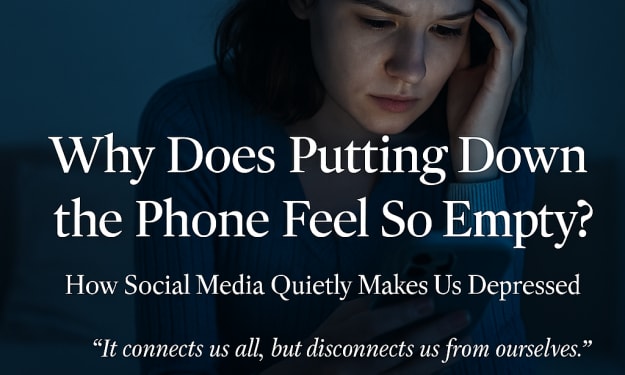
Why does the phone feel so empty?-How Social Media Makes Us Quietly Depressed:
There was a time when the mornings began with sunlight from the sounds of birds passing through the curtains and outside the window. Next, we start with the cold glow of the screen. Open Instagram. A friend goes on a holiday in Santorini. The other guy is just engaged.
By Rasid khan2 years ago in Humans