art
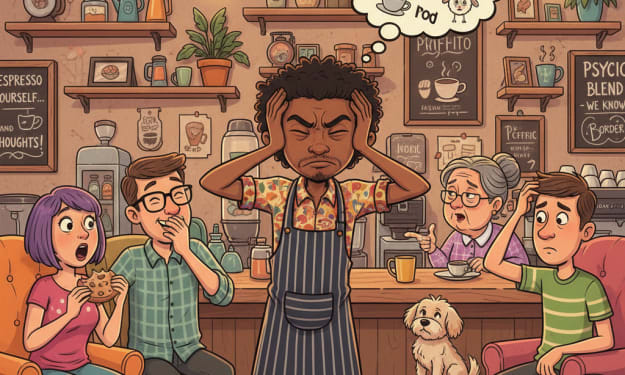
The best relationship art depicts the highs and lows of the authentic couple.
Realy Mens Brown Leather Jacket is Wardrobe Essential ?
The Mens Brown Leather Jackets Classic Idea A excellent piece of clothing the mens brown leather jacket radiates style toughness, and adaptability adventurers rebels and style icons have all worn this famous piece of outerwear which has a long history spanning numerous countries and subcultures the brown leather jacket has undergone many changes from its modest origins as protective clothing to its current reputation as a symbol of cool these days it is a classic and necessary piece of clothing for any man skillfully fusing practicality and fashion.
By The Genuine leather12 months ago in Humans
Rebuilding Reciprocity
Truth alone can heal what pride has broken. The war between men and women is not natural. It is manufactured by a culture that rewards resentment and mocks responsibility. Men are not the enemy of women, and women are not the enemy of men. The true enemy is the spirit of division that turned cooperation into competition. To rebuild what was lost, both must return to the principle that made civilization possible: reciprocity.
By Peter Thwing - Host of the FST Podcast12 months ago in Humans
The Decline of the Marriage Covenant
Marriage was once the sacred foundation of civilization. It was the covenant upon which families, communities, and moral order were built. It bound man and woman together in purpose, duty, and devotion under the authority of God. Today, that covenant has been reduced to a fragile contract of convenience. What was once holy has become negotiable. What was once permanent has become temporary. The decline of the marriage covenant is not only a personal tragedy. It is a national one.
By Peter Thwing - Host of the FST Podcast12 months ago in Humans
The Moral Economics of Love
Every human system, whether spiritual, political, or relational, is governed by incentives. People repeat what is rewarded and avoid what is punished. Love is no exception. It may sound sacred and emotional, but it still follows the law of cause and effect. When love is rewarded with gratitude, it grows. When it is met with entitlement, it dies. Modern society has rewritten the incentives of love, turning what was once an act of sacrifice into a transaction of convenience. The result is a generation that no longer knows how to give without gain.
By Peter Thwing - Host of the FST Podcast12 months ago in Humans
DistroKid Review: A Cautionary Tale for Independent Musicians.
DistroKid has long marketed itself as the go-to digital distribution platform for independent musicians, offering unlimited uploads for a low annual fee and promising fast, seamless access to major streaming services like Spotify, Apple Music, and Amazon. For many, it delivers on that promise—until it doesn’t. This review is not for the lucky majority who’ve had smooth experiences. It’s for the growing number of artists who’ve found themselves locked out, silenced, and financially exploited by a company that seems to prioritize automation over accountability.
By Julie O'Hara - Author, Poet and Spiritual Warrior12 months ago in Humans
“The Light We Carry Within: Stories That Make Us Human”
In a world where technology moves faster than thoughts and expectations rise higher with every passing day, it’s easy to forget the quiet truth that binds us all: being human is not about perfection—it is about connection. This truth became clearer to Rayan the day a small moment changed the direction of his thinking forever. Rayan was an ordinary man with ordinary routines. He walked the same path to work each morning, listening to the same music and noticing the same city sounds. Life was predictable, and predictability often made him feel invisible. Like many people, he wondered if his actions mattered in a world full of noise, pressure, and endless stories of achievement. But one morning, as he walked past a local park, he noticed an elderly man struggling to lift a box from a bench. Rayan hesitated. He had a meeting. He was already running late. Yet something inside him whispered that stopping—just for a moment—could mean more than arriving on time. He approached the man gently. “Hello, may I help you with this?” Rayan asked with a calm smile. The old man nodded gratefully. Together, they placed the box on a small trolley. It took less than a minute, but the man held Rayan’s hand afterward and said, “Thank you, my son. People forget that kindness doesn’t need to be big to be beautiful.” That sentence stayed with Rayan long after he left the park. All day, it repeated in his mind like a soft echo. Kindness doesn’t need to be big to be beautiful. Maybe humanity isn’t measured by extraordinary achievements but by simple choices made in ordinary moments. As days passed, Rayan started noticing things he had never paid attention to: a bus driver who waited an extra second for a rushing passenger, a child sharing her snack with a friend, a shopkeeper placing a free bottle of water beside a homeless man’s bag. None of these moments were loud, dramatic, or heroic. Yet each one added a small drop of goodness into the world. He realized something profound—being human means being aware. Aware of the feelings around us. Aware of the burdens others carry silently. Aware of how a single smile can lighten someone’s day. Inspired, Rayan began small changes in his own routine. He made eye contact with the security guard at work and greeted him warmly. He wrote anonymous encouragement notes and left them near bus stops. He spent extra minutes talking to his younger brother about school, actually listening instead of replying quickly. These were not grand gestures, but they created ripples. Over time, the ripples grew. The security guard said those greetings made him feel respected. The bus stop notes became something people looked forward to. His brother felt more confident, more supported. Rayan didn’t fix the world—but he changed feelings, and feelings change lives. One evening, as he walked home, a young boy recognized him and said, “You’re the person who leaves the notes, right? I found one on a day when I felt very bad. It helped me.” Rayan felt warmth spread through him. He didn’t know that a small piece of paper could hold so much power. But it did. And at that moment, he understood the heart of humanity: every person carries a light, and when we share it, the world becomes brighter—not instantly, but steadily. Humans are not remembered for the perfection of their lives but for the moments in which they offered kindness, understanding, support, and hope. Our true stories are written not by what we achieve, but by who we touch along the way. And sometimes, all it takes is one minute, one word, one gentle act. Because in the end, it is the light we carry within—and how we share it—that makes us human.
By Muhammad Saad 12 months ago in Humans
“When Hearts Remember: The Quiet Power of Everyday Humanity”
Some stories don’t begin with heroes, dramatic events, or unforgettable victories. Some begin with the quiet hum of ordinary life—where humanity reveals itself in the smallest, most unexpected ways. That is exactly where Adeel’s story begins. Adeel lived in a busy neighborhood where everyone rushed through their routines as if life itself was racing them. People moved fast, spoke fast, and rarely paused long enough to notice each other. Adeel was much the same. With work, errands, and responsibilities filling every hour, he rarely gave a second thought to the people around him. One evening, after a long day, Adeel stopped at a small roadside shop to buy tea. As he waited, he noticed a young delivery boy struggling with a heavy crate of water bottles. The boy’s hands trembled from the weight, and his face showed exhaustion. He looked no older than sixteen. Adeel saw him. Really saw him. Before he could think too much, Adeel stepped forward. “Here, I’ll help you,” he said. The boy’s surprise turned into quiet relief. Together, they carried the crate inside the shop. It took less than a minute, but when they finished, the boy’s eyes shone with gratitude. “Thank you, bhai,” he whispered. “People see me, but they don’t actually look at me.” Adeel froze. Those words struck him deeply. People see me, but they don’t look at me. How many people around us feel invisible behind their work, struggles, or responsibilities? That night, Adeel lay awake thinking about it. Humanity wasn’t fading; it was simply waiting for people to notice one another again. The next day, he made a small decision. Wherever he went, he would try to genuinely see people. Not just look at them, but notice them—acknowledge them. That decision changed everything. He started greeting the old bookstore owner, who always sat quietly behind the counter. He offered his seat to a tired father on the bus. He stopped to ask the gardener in his building how he was doing and listened—really listened—to his answer. These weren’t big acts. They didn’t require money or strength. They required something far more meaningful: presence. Surprisingly, Adeel began noticing changes in those around him. The bookstore owner began smiling more, even sharing stories from his youth. The gardener told him about his dream of educating his daughter. The father on the bus nodded with such gratitude that Adeel remembered it all day. It was as if humanity had never left—it just needed space to breathe. One afternoon, a stranger approached Adeel near the marketplace. “You probably don’t remember me,” the man said. “But last week you helped my son pick up his school books that fell on the road. He came home smiling. Thank you.” Adeel didn’t even remember the moment. But the boy did. And that was what mattered. He realized then that humans create impact even without realizing it. Every action—small or large—adds to someone’s memory. Sometimes to someone’s hope. Weeks passed, and Adeel’s small acts grew naturally—not forced, not planned, just part of who he was becoming. People in his neighborhood started showing more kindness too. Someone left water out for stray animals. Someone else helped an elderly woman cross the street. A shopkeeper began handing out free fruit to children from poor families. It was contagious—humanity spreading quietly, beautifully. One evening, Adeel met the same delivery boy again. This time, the boy stood taller, smiling confidently. “You helped me once,” he said. “So I helped someone today too. I think that’s how the world becomes better, bit by bit.” Adeel felt a warmth in his heart that words couldn’t describe. He realized that humanity doesn’t need grand gestures or loud announcements. It grows in silence, in sincerity, in the gentle choices we make without expecting anything in return. We all have the power to create change—one small moment at a time. Because in the end, what makes us human is not just how we live, but how we help others live a little better.
By Muhammad Saad 12 months ago in Humans
“Threads of Humanity: The Power That Connects Us All”
In a world that moves faster every year, it’s easy to feel like we’re drifting apart. Screens replace conversations, deadlines push us past each other, and the quiet moments of connection seem fewer than they once were. Yet, beneath the noise and rush of daily life, one truth remains unchanged: we are all connected by the simple, powerful thread of being human. This story begins on an ordinary Tuesday — the kind most people forget — but for one neighborhood, it became the day that reminded everyone what humanity truly means. Mr. Hale, a retired teacher, lived alone at the end of the street. His days followed a familiar routine: morning tea, a short walk, and an afternoon spent reading. Most people waved politely as they passed, but few stopped to talk. Life was busy, and everyone assumed he was doing fine. But on this particular Tuesday, as clouds gathered and the wind picked up, something shifted. Mr. Hale slipped on the damp ground near his front gate and sprained his ankle. His groceries scattered across the pavement, and for a moment, he sat helpless and embarrassed, unsure what to do. Then came young Aiden, a 12-year-old boy who usually sped through the neighborhood on his bicycle. Today, though, he noticed the fallen groceries and stopped. Without hesitation, he rushed over. “Are you okay, sir?” he asked gently. Mr. Hale tried to brush it off, insisting he was fine, but Aiden stayed. He picked up the bags, helped the older man to his feet, and guided him inside. News travels quickly in small communities, and soon Aiden’s mother, and then a few neighbors, came by to check on him. Someone brought warm food. Another offered to run errands. A nurse who lived two houses down stopped in after her shift to make sure the injury wasn’t serious. Within hours, the once-quiet home was filled with conversations, laughter, and warmth. What started as a small act of kindness rippled through the entire street. The next day, volunteers formed a rotating schedule to help Mr. Hale until he recovered. Some read with him in the afternoons. Others simply came to talk. And for the first time in a long while, he felt seen — not as a man living alone, but as a human being who mattered. But something else happened too: the neighbors began connecting with each other. People who had lived side-by-side for years without speaking beyond greetings now shared tea on porches, swapped stories, and helped one another with daily tasks. Children played together in the street again. A community that had been fading into quiet isolation slowly brightened with new life. A week later, Mr. Hale insisted on thanking everyone. Though still limping slightly, he stood in his front yard and smiled at the crowd gathered around. “I used to think the world had changed too much,” he said. “That kindness was disappearing. But you all proved me wrong. Humanity isn’t gone — it’s right here. It just takes one person to begin the chain.” His words touched everyone. People realized that being human isn’t about grand gestures or perfect lives. It’s found in simple acts: noticing, helping, caring, listening. It’s the ability to see someone else’s pain and decide, even for a moment, that their world matters to you. In the weeks that followed, the neighborhood kept the spirit alive. They organized a small community garden, where families planted herbs and flowers together. They started a monthly gathering where anyone could share a story or a meal. And whenever someone new moved in, it wasn’t long before they were welcomed with open arms. The world beyond the neighborhood remained busy, noisy, and unpredictable. But inside this little corner, people learned that humanity grows wherever kindness is planted — and that no thread is too small to connect one heart to another.
By Muhammad Saad 12 months ago in Humans
“The Toolkit Within: Finding Strength in the Resources You Already Have”
Most people believe that success depends on having more—more money, more tools, more opportunities, more connections. But sometimes, the greatest resource a person can ever use is already in their hands. This truth arrived in Ahsan’s life at a moment when he felt the exact opposite. Ahsan was a 22-year-old student with big dreams but very limited means. He wanted to improve his skills, start earning, and help his family, but everywhere he looked, it seemed like others had more advantages—better devices, better support, better access to good opportunities. He often compared himself to people who seemed miles ahead, and every comparison made him feel small. One afternoon, overwhelmed by frustration, Ahsan walked into the local library—a place he hadn’t visited in years. His plan was simple: sit there quietly until his mind settled. But life had a different plan. As he entered, he noticed something unexpected. The room was filled with people of all ages—some reading, some working, some learning new skills. Nobody there seemed to have everything. But everyone was using what they did have. Ahsan found a seat near a window and sighed deeply. That’s when an elderly librarian approached him with a warm smile. “You look like you’re searching for something,” she said. He hesitated but nodded. “Yes. I’m trying to figure out what I need to get better in life. Feels like I’m missing too many things.” The librarian chuckled softly and placed an old book in front of him. Its title read: “Start With What You Have.” Ahsan raised an eyebrow. “Is this… a self-help book?” “Not exactly,” she replied. “It’s a reminder. Sometimes the best resources are not outside us—but within us. Read a little. You might find what you’re looking for.” Curious, Ahsan opened the book. Inside were short stories of ordinary people who transformed their lives not by acquiring new resources but by using what was already available: time, curiosity, consistency, self-discipline, free tools, simple habits, and the courage to begin. The more he read, the clearer everything became. He realized that he had been waiting for perfect conditions to start. But perfect conditions never come. Ahsan closed the book halfway through and felt something shift inside him—a quiet but powerful realization. He listed all the resources he had been ignoring: A basic smartphone Internet at the library Free courses online A notebook at home A willingness to learn Discipline he hadn’t fully used Time he often wasted And most importantly—belief This wasn’t nothing. It was more than enough to begin. That evening, he created a simple plan: Step 1: Learn a skill using free resources. He chose graphic design and started watching tutorials on YouTube and free learning platforms. Step 2: Practice daily, even if only for 30 minutes. Step 3: Build a small portfolio using free online tools. Step 4: Offer services to local businesses for small fees to gain experience. Within weeks, Ahsan’s designs improved. Within months, he landed his first paid client—just enough to boost his confidence. From there, opportunities started to grow. His work spread through word of mouth, and soon he was earning more than he had ever imagined—using the very resources he once thought were “too little.” One afternoon, he returned to the library, carrying the same book the librarian had given him. He placed it gently on her desk. “You were right,” he said with a grateful smile. “I had more than I thought. I just wasn’t using it.” The librarian nodded warmly. “Remember this,” she said. “A person’s greatest resource is not what they have, but how they use what they have.” Ahsan walked out with a renewed sense of purpose. He no longer felt behind. He felt equipped. Empowered. Capable. Because the strongest resources—discipline, creativity, effort, consistency, patience—were within him all along. And once he started using them… everything changed.
By Muhammad Saad 12 months ago in Humans
I Built an Accountability Group for 30 Days — And It Skyrocketed My Habits
It started with a single tweet on a restless November night in 2025. The clock read 1:14 a.m., and I was staring at my laptop screen, surrounded by the ghosts of unfinished Vocal drafts and crumpled habit trackers. My 30-day experiments—quitting my phone, rising at 5 a.m., ditching sugar, devouring books—had sparked something inside me, sure. But alone in my apartment, the wins felt fragile, like sparks without tinder. I'd read the headlines buzzing everywhere: self-improvement in 2025 wasn't a solo sprint anymore; it was a relay, fueled by accountability pods and online tribes where people locked arms against their excuses. Communities weren't just trendy—they were lifelines, turning "I should" into "We will."
By Aman Saxena12 months ago in Humans