
Rest in Peace, Alan Osmond
1949-2026

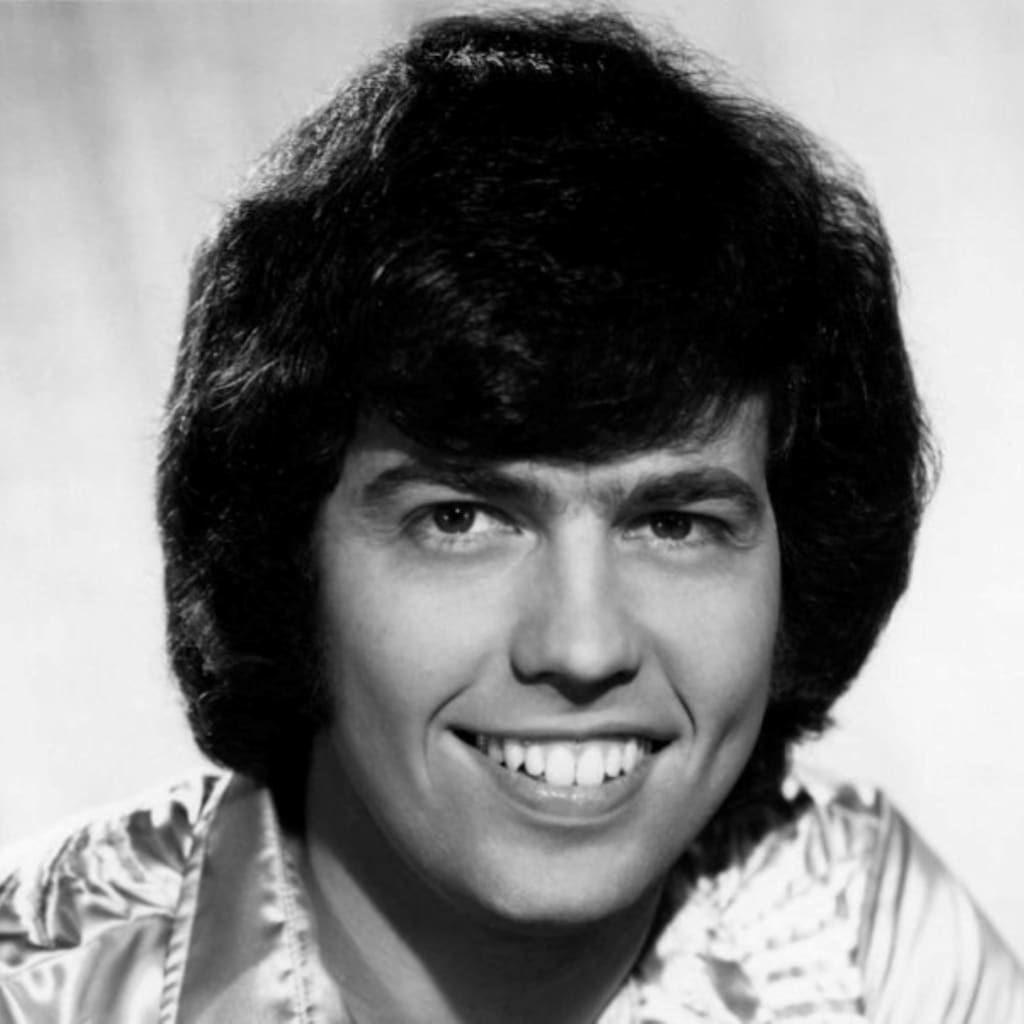
Alan Osmond’s story begins long before the bright lights of network television or the roar of international stadium crowds. It begins in Ogden, Utah, where he was born on 2 March 1949, the eldest of the original performing Osmond brothers and the child who would become the axis around which one of America’s most enduring musical families would turn. His early life was shaped by discipline, faith, and a sense of responsibility that would later define his leadership within the group. Long before the Osmonds became a global pop‑rock force, they were a barbershop quartet of remarkable precision, and it was Alan who held the center, guiding his younger brothers through the demanding routines that would eventually propel them to national attention. Even in childhood, he possessed a rare combination of musical instinct and organizational clarity, a pairing that would become the backbone of the Osmond enterprise.
As the family’s performing ambitions grew, Alan’s role expanded with them. He was not simply another voice in the harmony stack; he was the architect of the group’s sound, the choreographer of their movement, and the internal engine that kept the entire operation running. The Osmonds’ early success on The Andy Williams Show was built on their tight harmonies, clean presentation, and relentless professionalism—qualities that Alan cultivated with a seriousness unusual for someone so young. He understood instinctively that talent alone was not enough. Precision mattered. Repetition mattered. The ability to adapt mattered. Under his direction, the brothers rehearsed with a rigor that rivaled professional dance companies and vocal ensembles, and that discipline became the signature of their early career.
When the Osmonds transitioned from barbershop and variety‑show performances into the world of pop and rock, Alan again stood at the forefront. The shift was not accidental; it was strategic, and it was driven by his awareness that the musical landscape was changing. The late 1960s and early 1970s were defined by experimentation, electrification, and the rise of youth‑driven pop culture. Alan recognized that the family’s future depended on evolving with the times, and he pushed for a sound that blended their trademark harmonies with contemporary instrumentation and rhythms. This transition produced some of the group’s most iconic work, and Alan’s contributions as a songwriter, arranger, and producer were central to that evolution.
Among the songs that bear his creative imprint, One Bad Apple stands as a defining moment. Although written by George Jackson, the song’s arrangement, vocal distribution, and performance style were shaped heavily by Alan’s direction. It became a number‑one hit and established the Osmonds as a force in mainstream pop. But Alan’s deeper songwriting contributions emerged in the tracks he co‑wrote with his brothers, songs that revealed a more adventurous musical sensibility. Down by the Lazy River showcased a driving rhythm and energetic vocal interplay that reflected Alan’s instinct for blending pop accessibility with rock intensity. Crazy Horses, perhaps the group’s most critically acclaimed and musically daring track, demonstrated a willingness to push into harder, more experimental territory. Its distorted vocals, aggressive instrumentation, and environmental message were far removed from the clean‑cut image the public associated with the family, and Alan’s role in shaping its structure and performance helped redefine what a family pop group could be.
Other songs such as Goin’ Home, Hold Her Tight, My Drum, Traffic in My Mind, and Life Is Just What You Make It further illustrate his range. These tracks reveal a songwriter unafraid of complexity, someone who understood how to weave introspection, social commentary, and musical innovation into the framework of accessible pop. Alan’s writing often carried a sense of forward motion, a belief in agency, and a grounding in personal responsibility—values that mirrored his own life. His lyrics tended to avoid abstraction in favor of clarity, and his melodies favored strong, memorable hooks supported by intricate harmonic layering. Even when the songs were upbeat, there was a structural intelligence beneath them, a sense that every part had been considered and refined.
Alan’s influence extended beyond the studio. As the group’s choreographer, he developed a performance style that balanced precision with charisma. The Osmonds were known for their synchronized movement, quick transitions, and ability to shift between genres seamlessly during live shows. This approach prefigured the performance style later adopted by boy bands in the 1980s, 1990s, and early 2000s. Groups such as New Kids on the Block, Backstreet Boys, and *NSYNC built their stagecraft on a foundation that Alan helped establish: tight harmonies, coordinated choreography, and a blend of pop sentiment with high‑energy presentation. While those groups emerged in a different cultural moment, the lineage is unmistakable. Alan’s work helped normalize the idea that male vocal groups could be both musically serious and visually dynamic, a combination that would become central to modern pop performance.
His leadership also shaped the Osmonds’ transition into television. When the Donny & Marie variety show launched, Alan played a key role behind the scenes, contributing to staging, musical direction, and the overall creative vision. The show’s fast‑paced medleys, genre‑blending performances, and polished production values reflected his influence. Variety television in the 1970s was a competitive landscape, and the Osmonds’ ability to deliver consistent, high‑quality musical segments was due in large part to Alan’s meticulous planning. He understood the demands of live television and the importance of maintaining a balance between spontaneity and structure. His work helped set a standard for musical variety programming, influencing later shows that sought to combine comedy, music, and dance in a cohesive format.
Throughout the height of the Osmonds’ fame, Alan remained grounded in his faith and personal values. His disciplined work ethic was not merely a professional trait; it was an expression of his worldview. He believed in preparation, in service, and in the idea that artistic excellence was a form of gratitude. This perspective shaped the group’s internal culture and contributed to their reputation as one of the most hardworking families in entertainment. Even as the pressures of fame intensified, Alan maintained a steady presence, guiding his brothers through the complexities of touring, recording, and public life.
In 1987, Alan received a diagnosis that would alter the course of his life: Multiple Sclerosis. The news arrived at a time when he was still deeply involved in the family’s creative endeavors, and the diagnosis presented both physical and emotional challenges. Yet Alan approached the condition with the same resilience that had defined his career. His public statement—“I may have MS, but MS doesn’t have me”—became a mantra not only for himself but for others facing chronic illness. He founded the “One Family” initiative to support individuals and families affected by MS, using his platform to raise awareness and encourage solidarity. His openness about his condition helped destigmatize chronic illness in the entertainment industry, where vulnerability was often hidden.
As his symptoms progressed, Alan gradually stepped back from performing, officially retiring in the mid‑2000s to focus on his health and his family. Retirement did not diminish his influence. Instead, it allowed space for reflection on the legacy he had built. The Osmonds’ impact on American music culture is often discussed in terms of their chart success, their television presence, and their global fanbase, but Alan’s contributions run deeper. He helped shape the evolution of family‑based musical groups, demonstrating that such ensembles could achieve both commercial success and artistic credibility. He helped pioneer the integration of choreography into pop‑rock performance, a practice now standard in the industry. He contributed to a body of work that blended harmony‑driven pop with rock experimentation, influencing artists who sought to bridge similar genres.
Alan Osmond’s final years were marked by the same steadiness that had defined his life. As his health declined and the effects of Multiple Sclerosis became more pronounced, he continued to advocate for families facing chronic illness and remained a quiet source of strength within his own. When he died, he left behind not only a vast musical legacy but a record of personal resilience that shaped how fans, scholars, and fellow musicians understood him. His passing marked the end of an era for the Osmond family and for a generation of viewers who had grown up watching the family’s evolution from barbershop prodigies to global entertainers.
In death, Alan’s influence became even clearer. The reassessments of the Osmonds’ catalog, the renewed interest in their more experimental work, and the recognition of their impact on modern pop performance all underscored the foundational role he played. The choreography‑driven boy‑band model, the expectation that vocal groups deliver both musical precision and visual spectacle, and the blending of genres within a single act all trace back to the structures he built. His work behind the scenes—arranging harmonies, shaping stagecraft, refining television pacing—became part of the invisible architecture of contemporary pop culture.
Alan Osmond no longer stands as a living figure in American music history; instead, he endures as a historical one. His legacy is fixed, not in the sense of being static, but in the sense of being complete. The arc of his life can now be seen in full: the disciplined child who became the group’s leader, the songwriter who pushed the family into new sonic territory, the choreographer who helped define a performance style that would echo for decades, the producer who shaped the look and feel of televised musical entertainment, and the man who faced illness with clarity and courage. His contributions continue to resonate in the artists who follow the path he helped carve, in the songs that remain embedded in the cultural memory of the 1970s, and in the understanding that innovation often comes from those willing to work quietly, consistently, and with unwavering purpose.
Alan Osmond’s life is now part of the historical record, but his influence remains active. It lives in the harmonies that shaped a generation, in the performance styles that dominate modern stages, and in the recognition that leadership in the arts often happens behind the curtain, in the hours of rehearsal, in the choices that shape a group’s identity, and in the vision that guides a family from local stages to global acclaim. His death closed the chapter of his personal story, but the cultural story he helped write continues to unfold.
About the Creator
Julie O'Hara - Author, Poet and Spiritual Warrior
Thank you for reading my work. Feel free to contact me with your thoughts or if you want to chat. [email protected]
Enjoyed the story? Support the Creator.
Subscribe for free to receive all their stories in your feed.
Comments
There are no comments for this story
Be the first to respond and start the conversation.