
New Stability Record for Italy’s Meloni May Prove Fleeting
Giorgia Meloni is about to make Italian political history by leading the country’s longest-lasting post-war government, but growing competition on the right and the 2027 election could put her remarkable stability to the test.
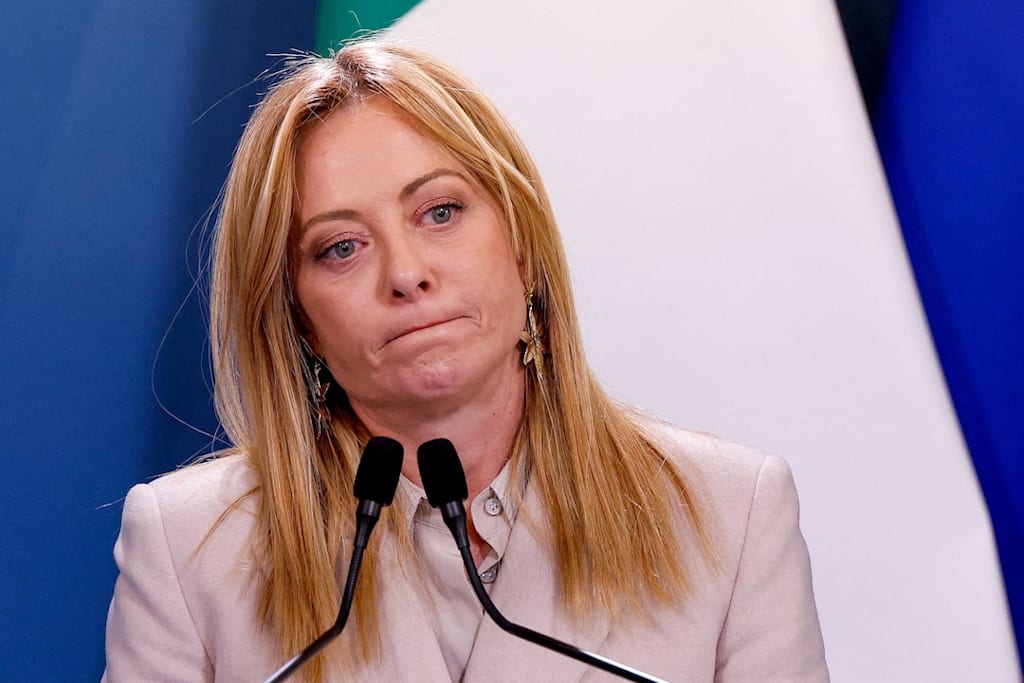
Coalition politics, Italy’s parliamentary structure and disagreements between governing parties have traditionally made it difficult for administrations to remain in power for extended periods. Against that background, Meloni’s ability to maintain her coalition for almost four years represents a major political achievement.
Her government has generally followed a pragmatic approach on economic policy, while maintaining a firm stance on immigration and security.
The administration has also benefited from relatively strong employment figures and efforts to maintain fiscal discipline. Supporters argue that Meloni has demonstrated that a government led by the right can remain stable while working within European fiscal constraints.
Economic Stability Helps Meloni
One of the strongest elements of Meloni’s political position has been economic performance.
Italy has recorded improvements in employment, while the government has sought to reduce public deficits and maintain credibility with financial markets. Reuters reported that employment and unemployment figures represent some of the clearest positive indicators for Meloni’s administration.
The government has introduced moderate tax reductions and replaced Italy’s previous Citizens’ Income welfare programme with more targeted assistance and stricter eligibility requirements.
Meloni has therefore attempted to combine conservative economic policies with measures designed to appeal to working families and lower-income voters.
However, Italy continues to face major structural challenges, including high public debt, weak productivity and an ageing population. These problems could become increasingly important as the country approaches the next general election.
Big Reforms Have Struggled
While Meloni has succeeded in maintaining political stability, her record on major structural reforms has been considerably more mixed.
One of her government's most ambitious projects involved reforming the judiciary. The proposal ultimately suffered a major setback after voters rejected the constitutional reform in a referendum earlier this year.
Another important proposal aimed to strengthen the position of the prime minister through direct election. That reform has not advanced as far as the government initially hoped.
The League party has also promoted greater regional autonomy through the Differentiated Autonomy project. Parts of the legislation were challenged and struck down by Italy’s Constitutional Court, leaving the initiative unresolved.
These setbacks demonstrate that political longevity does not automatically guarantee legislative success.
Security and Immigration Remain Priorities
Where Meloni’s government has been more successful is in security and immigration policy.
Her administration has introduced tougher measures targeting illegal immigration, people-smuggling networks and public disorder. The government has also pursued agreements with North African countries as part of its strategy to reduce irregular migration.
The controversial plan involving migrant detention facilities in Albania has faced legal and practical obstacles, resulting in delays and changes to the original concept.
At home, the government has also passed a series of security measures creating new offences and tougher penalties for certain forms of public disorder and illegal activity.
This emphasis on law and order remains an important part of Meloni’s political identity.
The 2027 Election Is the Big Test
Despite her current position, Meloni faces a much more complicated political environment ahead of Italy’s 2027 parliamentary election.
The Brothers of Italy remains the country’s leading political party, but its support has shown signs of pressure. More importantly, a new far-right movement led by former army general Roberto Vannacci is attracting voters who might otherwise support Meloni or her coalition partners.
Vannacci’s Futuro Nazionale reached 7.6% in a YouTrend poll reported in July, making it Italy’s fifth most popular party and bringing it close to coalition partner Forza Italia.
The rise of a new party on the right could complicate Meloni’s efforts to maintain a unified conservative coalition.
Instead of facing a powerful opposition alone, she may have to manage competition from politicians who share some of her electorate.
Electoral Reform Could Change the Game
Meloni’s government is also seeking changes to Italy’s electoral system.
The proposed reforms are intended to make it easier for winning coalitions to obtain a stable parliamentary majority and reduce the fragmentation that has historically contributed to government instability.
Parliament’s lower house backed the contested electoral reform in July, but the proposal remains politically controversial.
Meloni argues that greater electoral stability would help governments implement their programmes without being constantly threatened by coalition disputes.
Opponents, however, fear that changes to the electoral rules could give excessive power to the largest political bloc.
Coalition Unity Could Become More Difficult
Meloni’s government has benefited from relatively strong coalition discipline, but maintaining that unity until 2027 will be crucial.
Her coalition includes Brothers of Italy, Matteo Salvini’s League and Antonio Tajani’s Forza Italia. Each party has its own priorities, voters and political ambitions.
The growing presence of Vannacci’s party could increase pressure on the League in particular. If the new movement continues gaining support, coalition partners may become more focused on protecting their own electoral bases.
That could make internal disagreements more visible as the election approaches.
Italy’s Demographic Challenge
Beyond party politics, Meloni faces a major long-term challenge that could affect Italy regardless of which government wins the next election: population decline.
Italy’s national statistics office has projected that the population could fall from 58.9 million in 2025 to about 55 million by 2050 and 45.8 million by 2080. At the same time, the proportion of people aged 65 and over is expected to rise substantially.
The decline in births presents serious economic and social challenges because fewer working-age people will have to support an increasingly elderly population.
Meloni has repeatedly emphasized the importance of increasing Italy’s birth rate, but births have continued to decline despite government initiatives.
A Historic Record With an Uncertain Future
Giorgia Meloni’s political longevity is unquestionably significant. Becoming Italy’s longest-serving post-war prime ministerial administration demonstrates an unusual degree of coalition stability in a political system historically known for frequent government changes.
But the record also creates a new question: can Meloni turn stability into lasting political dominance?
The answer may depend on the economy, coalition unity, electoral reform and the strength of emerging political movements before the 2027 election.
For now, Meloni has achieved something few Italian prime ministers have managed. Her government has survived long enough to rewrite the country’s post-war record for political longevity.
Yet the next chapter could be considerably harder.
If opposition parties consolidate their support and the new far-right challenge continues growing, Meloni could discover that maintaining power after making history is much harder than making history itself.
Her stability record may therefore be both a remarkable achievement and a warning: in Italian politics, even the strongest government can face rapid change when voters return to the polls.
About the Creator
Enjoyed the story? Support the Creator.
Subscribe for free to receive all their stories in your feed.
Comments
There are no comments for this story
Be the first to respond and start the conversation.