
"Michael": A Greatest Hits Reel Pretending to Be a Movie
A Rigid Timeline, A Flattened Life

The instant that flashy Optimum Productions logo appears in the opening credits — Michael Jackson's own production company — the illusion shatters. Antoine Fuqua may have technically pointed cameras at actors and captured sound, but let's be honest about what this is: a family-sanctioned tribute reel dressed up as cinema. "Michael" isn't really a film. It's a curated playlist desperately searching for a plot to hang itself on.
This is billed as part one of the singer's life story, and the producer credits tell you everything: Jackie, Jermaine, Marlon, La Toya, and the late Michael himself, all listed as executive producers. Their influence is stamped on every saccharine frame. People have already noticed the glaring omissions — Janet Jackson doesn't exist anywhere in this narrative, and the singer's legal controversies are nowhere to be found (a cowardly choice on Fuqua's part, both morally and narratively). But honestly, those absences aren't even the film's biggest sin. The real failure is that the movie shows zero genuine curiosity about who Michael actually was as a person.
A Rigid Timeline, A Flattened Life
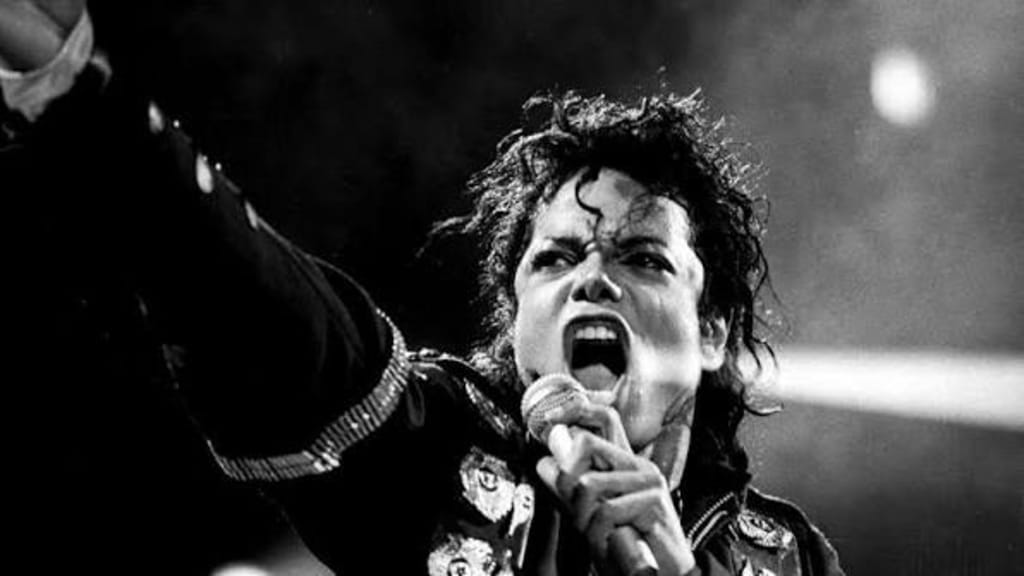
Covering the years 1966 through 1988 in strict chronological order, the film's structure practically guarantees clunky, rushed recreations of pivotal moments. Its one saving grace is the music itself — and Fuqua wastes no time leaning on it. We barely settle into the opening shot of Michael in his iconic black outfit, waiting before a roaring crowd, before we're yanked back to his childhood in Gary, Indiana.
Young Michael (played with real charm by Juliano Krue Valdi) rehearses harmonies with his older brothers in the family living room, under the strict supervision of their father, Joe (Colman Domingo). Despite Joe's insistence that Michael look him in the eye, the boy is too timid to do so. Their mother, Katherine (Nia Long), is portrayed as gentle but passive — she witnesses her husband's harsh treatment of their youngest son without ever intervening. According to John Logan's screenplay, this strained family dynamic becomes the central obstacle Michael must overcome on his path to becoming a real artist.
Skimming the Surface of Trauma
The film seems reluctant to actually sit with Michael's pain, fear, or inner conflict. Its characters remain frustratingly one-dimensional, which keeps the story from ever really examining Michael as either an artist or a human being. Scene after scene rushes by without giving the audience room to process anything, as the movie races through an already well-worn version of his rise to fame — all within a brisk 127-minute runtime.
Quality control doesn't seem to be a priority for Fuqua here. In the first twenty minutes alone, the story leaps from the Jacksons starting their touring career in 1966, to their Motown discovery at Chicago's Regal Theater in 1968, then straight into their early recording sessions in 1969. There's no pause to sit with the unsettling reality of Joe sending his underage sons to perform in adult venues, or the discomfort of a young Michael singing lyrics about romance and sexuality far beyond his years.
This rushed pacing hints at a more thoughtful film that may have existed before the editing room got involved. There's a sense that Fuqua originally wanted to explore the connection between Michael's frozen sense of childhood and the adult world he was thrust into too soon — but that ambition seems to have been trimmed away in favor of more musical numbers.
Everyone Else Is Just Set Dressing
True to its singular focus, the film barely bothers fleshing out anyone besides Michael. His brothers function as little more than background props. We never learn who he was closest to, who he butted heads with, or who made him laugh hardest. Sure, you could argue this is meant to be Michael's story alone — but isn't a person's relationship with their siblings part of who they are? The film isn't interested in exploring that kind of nuance, and it doesn't offer any fresh insight into Michael or those around him that you couldn't find in countless other sources.
Because of this thin writing, Colman Domingo delivers what might be the weakest performance of his career — not because he lacks talent, but because the script reduces Joe Jackson to a cartoonish villain rather than a real, complicated person. This shallow characterization robs the film of the emotional weight it should carry around Michael's arrested development. His menagerie of exotic pets, his collection of children's toys, his chimpanzee companion Bubbles (arguably the most well-realized character in the whole film) — these aren't quirky signs of eccentric genius. They're signs of someone in real distress. Yet Fuqua frequently frames these moments for comic effect, inviting us to laugh at Michael's oddities instead of recognizing the loneliness behind them.
A Few Flickers of Humanity
Jaafar Jackson — Jermaine's real-life son — occasionally breaks through the film's superficial treatment to offer genuine glimpses of his uncle's inner world. His portrayal lands especially well in a scene about Michael's decision to alter his nose to resemble Peter Pan, his childhood hero; the moment carries real emotional heft thanks to Jackson's surprisingly tender performance. His grounded work also elevates scenes with Motown executive Berry Gordy (Larenz Tate) and bodyguard Bill Bray (KeiLyn Durrel Jones), subtly revealing how Michael repeatedly sought father figures elsewhere. But even strong acting can't do much with material this worshipful — material that mostly just reminds us, again and again, how generous and kind Michael was toward children. (Whether a planned sequel might add depth to these moments remains to be seen.)
A Victim, Nothing More
The film frames Michael purely as someone things happened to. That's not to dismiss the real trauma he experienced — his father's abuse, the on-set Pepsi commercial accident that's depicted here — but the script never grants him any real flaws, opinions, or distinct personality traits. He exists solely as a vessel for overcoming his father's cruelty.
Hollow, Even Where It Should Shine
Even the musical sequences — the film's supposed strong suit — fall flat, largely due to baffling camera choices. There are moments where Fuqua finds genuinely compelling shots, like a close focus on Michael's footwork during the "Billie Jean" performance at Motown 25, or his choreography rehearsal for "Beat It." But these are repeatedly undercut by disorienting crowd pans that drain all the energy from the performance — committing the exact mistake that Michael himself calls out in one scene, when he tells a cameraman not to lose the energy of the dance.
The strength of Michael Jackson's catalog will likely smooth over a lot of these shortcomings for casual viewers. But great music can't disguise the fact that this film, unlike its subject, isn't inventive, isn't thrilling, and isn't willing to take any real risks. It's safe to the point of being forgettable. You'd be better off watching the existing Jacksons miniseries — or better yet, just queuing up Michael's music videos — than sitting through these lackluster recreations of his greatest moments.
About the Creator
write with shan
🌍 Discovering the world through words.
👻 Horror & Mystery Stories
🔬 Science & History Articles
📈 Trading Knowledge
🎬 Movie Reviews & Analysis
New content every week.
Enjoyed the story? Support the Creator.
Subscribe for free to receive all their stories in your feed.
Comments
There are no comments for this story
Be the first to respond and start the conversation.