
Karambit Knife: The Curve That Changes How You Think About Blades
Karambit Knife
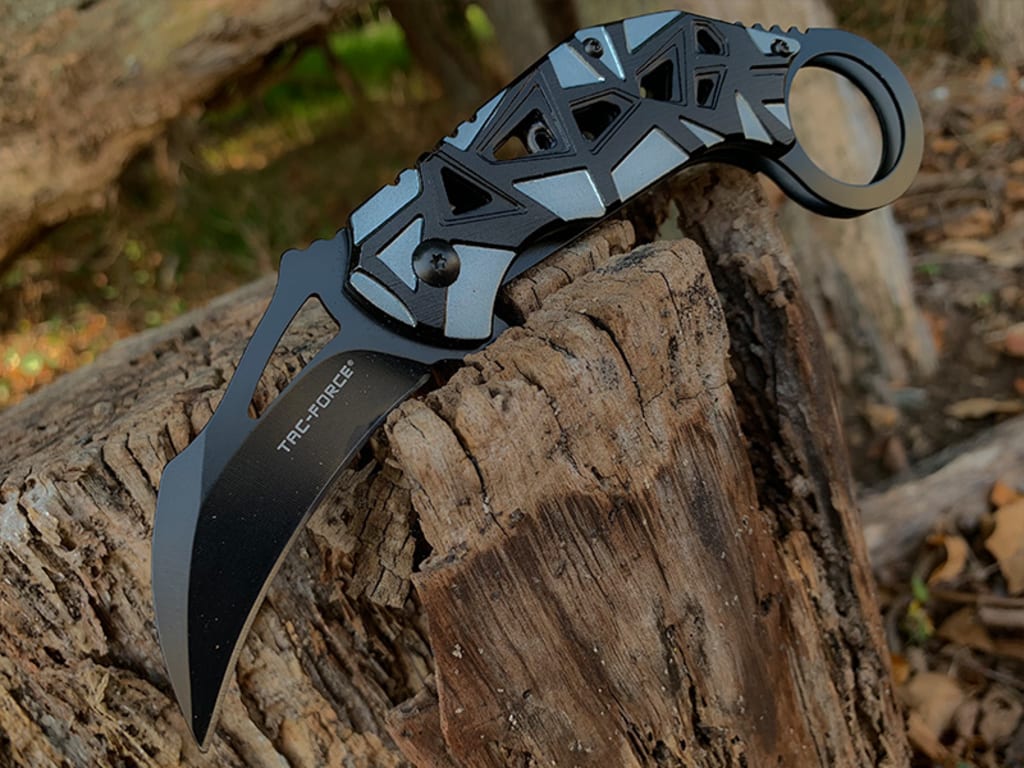
The first thing people notice about a karambit knife is the curve. It doesn’t behave like a traditional straight blade, and it doesn’t try to. Instead, it follows a hooked arc that immediately feels unfamiliar in the hand until you understand its logic. That curve isn’t decoration—it is the entire philosophy of the tool made visible.
This design traces its roots back to Southeast Asia, particularly regions like Indonesia, where curved blades were used in agricultural work long before they became associated with combat systems. The shape made sense in fields and forests: it could cut through fibrous plants cleanly while reducing wasted motion. That practical origin still defines how the karambit knife is understood today.
From Tool to Technique
What makes the Karambit knife interesting is not just its shape, but how that shape influences movement. Traditional straight blades encourage linear motion—forward, backward, direct. A curved blade changes that language entirely. It encourages circular motion, fluid transitions, and continuous flow.
In martial arts such as Silat, this weapon became more than a tool—it became part of a system of movement. The hand doesn’t just strike; it rotates, guides, and redirects. The finger ring at the end of many karambit designs adds another layer of control, anchoring the grip so the blade can move without slipping away from the user’s hand.
That small ring changes everything about how the tool is handled.
Engineering Hidden in Simplicity
At a glance, the karambit knife looks simple. A curved blade, a handle, and a ring. But simplicity here is deceptive. Every element exists for a reason.
The curve concentrates cutting force along a shorter path, allowing controlled slicing with minimal effort. The inward arc naturally draws the blade through material rather than pushing it away. The grip orientation—often reverse or “claw-like”—shifts leverage in ways that feel unusual at first but become intuitive with practice.
This design is not about force. It is about direction.
Control Over Aggression
Unlike larger or straighter blades that emphasize reach or impact, the karambit knife is built around control. Its effectiveness comes from proximity and precision rather than extension.
That difference changes how it is perceived. It is less about overpowering and more about managing space. In many traditional interpretations, it reflects a mindset of efficiency rather than dominance.
Even modern tactical interpretations tend to focus on the same principle: close-range control, retention, and fluid movement rather than brute force.
The Psychology of the Curve
There is something psychologically distinct about curved blades. A straight edge feels familiar because it mirrors everyday cutting tools. A curved blade feels instinctive in a different way—it suggests motion even when it is still.
Holding a karambit knife often changes how a person thinks about direction and movement. It is less about linear intention and more about arcs, rotations, and flow. That shift is subtle, but noticeable in how users describe their experience with it.
It feels less like pointing and more like guiding.
Materials and Modern Craft
Modern versions of the karambit knife vary widely in material and design. Some are built for practical utility, others for training, and many for collection or display. Stainless steels, coated finishes, and reinforced polymers are common depending on purpose.
Despite these variations, the defining characteristics remain unchanged: the curve, the grip structure, and the emphasis on control. Even when aesthetics shift toward aggressive or tactical styling, the underlying geometry stays consistent.
Craftsmanship plays a key role in how balanced the tool feels. A poorly weighted karambit can feel awkward, while a well-made one feels almost seamless in motion. Balance is more important here than size or decoration.
Misconceptions and Media Influence
Popular media has significantly shaped how the karambit knife is perceived. Video games and action films often exaggerate its speed, lethality, or theatrical use. While visually striking, these portrayals rarely reflect the actual principles behind the design.
In reality, its effectiveness depends on understanding mechanics, not spectacle. The blade is not inherently “faster” or “deadlier”—it simply behaves differently due to its geometry.
That distinction is often lost in entertainment portrayals, but it matters for understanding what the tool actually is. Because of its unique design, the karambit knife is not intuitive for beginners. It requires familiarity with grip transitions, motion control, and spatial awareness. Without understanding those fundamentals, the tool can feel unpredictable.
Training emphasizes repetition and control rather than speed. The goal is not to force movement but to understand how the blade naturally wants to travel. That difference defines whether it feels awkward or fluid. Responsibility is also part of that learning curve. Like any edged tool, it demands respect for safety, environment, and context.
A Tool That Redefines Motion
What separates the karambit knife from more conventional blades is how it reshapes the idea of cutting itself. Instead of pushing through resistance in a straight line, it works with arcs and angles. Instead of forceful extension, it emphasizes guided motion.
That shift is subtle but fundamental. It turns a simple tool into something that changes how movement is conceptualized. Today, the karambit knife exists in many spaces: practical use, martial arts training, collecting, and design appreciation. Its popularity is not just about aesthetics, but about the uniqueness of its form and function. It stands out because it refuses to conform to the straight-line logic of most blades. Instead, it follows a different path, one shaped by curve, control, and continuity.
About the Creator
Enjoyed the story? Support the Creator.
Subscribe for free to receive all their stories in your feed.
Comments
There are no comments for this story
Be the first to respond and start the conversation.