
Ivan Valek on Family, Faith, Communism, Architecture, and Croatia’s Moral Future
How did Ivan Valek’s life under communism, Mormon conversion, family commitments, and architectural career shape his philosophy of truth and moral responsibility?

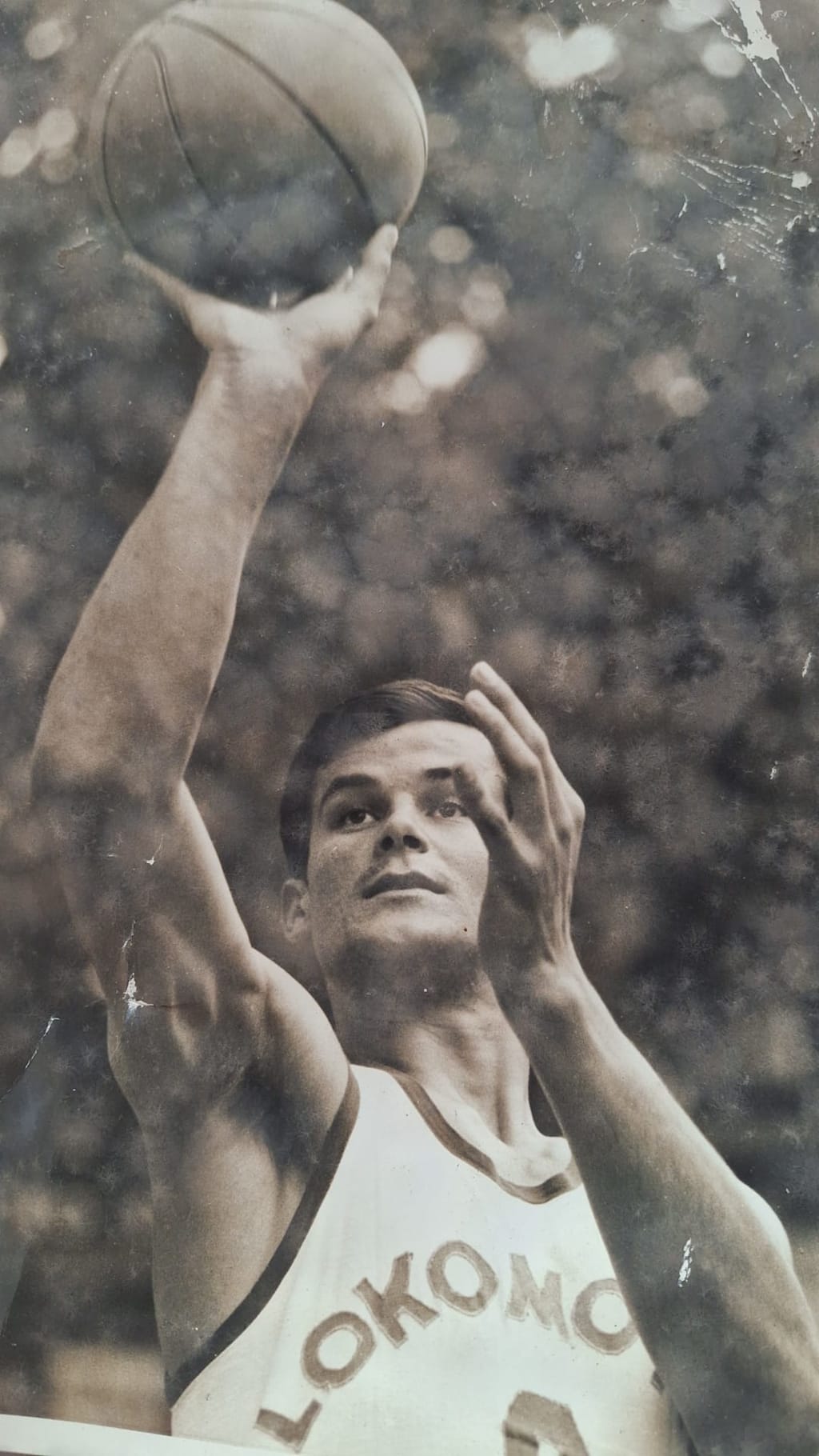
Ivan Valek is a Croatian architect, entrepreneur, former athlete, and religious thinker whose life spans Yugoslav communism, Croatian independence, international business, family migration, and spiritual searching. A former youth-level basketball player, he later worked in architecture, anti-nuclear shelter design, fountains, swimming pools, and humanitarian initiatives. Born Roman Catholic, later involved with Mormonism, Valek emphasizes family, truth-seeking, moral responsibility, and the struggle to do good while resisting evil through an intensely autobiographical lens of public faith.
In this interview, Scott Douglas Jacobsen speaks with Ivan Valek about family, education, sport, architecture, religion, and life under communism. Valek reflects on his American wife, children, Roman Catholic upbringing, Mormon period, theological studies, and conviction that truth must guide spiritual life. He connects personal history to Croatia’s political struggles, moral decline, entrepreneurship, anti-nuclear shelter design, and a belief that doing good requires actively confronting evil within family, society, church, and wider modern civilization itself.
Scott Douglas Jacobsen: I was really curious because you have had a very interesting life story. So, maybe we can open with this. Can you describe your diverse educational and family background? That is one. Two, you have an interesting background in that you became Mormon and then left for a denominational form of Christianity, I think. I also think that whole conversion narrative is very interesting. Could you talk about that a little bit?
Ivan Valek: Family is the most important thing to me. My wife was an American citizen. She was a Mormon missionary in Yugoslavia. After returning to the United States, another missionary started writing letters, and then she left.
During the war situation, we were married in 1999. The war in Croatia began in 1991. She agreed to live with us, and she was very happy.
I worked with children, very special children. I was very blessed. Our first child was born in 1990 and now lives in the United States. That generation was still shaped by the old communist system and by the people who remained in power after communism. The situation was not good economically or politically.

I can tell you that Croatia is a beautiful land with good people. I think Croatia has one of the greatest potentials. It has more than 1,200 islands, islets, cliffs, and reefs, along with hills and mountains. This was part of the story for the countries of the former Yugoslavia. Many of those countries went through difficult situations after the breakup of Yugoslavia, though Slovenia was generally in a stronger position.
During communist times, everything was very organized. There was even economic progress under communism. We can only measure it against this democracy. I have insights from all the countries. Many countries remained in a difficult position. Why? Because countries spent more money than they earned.
When they came to power in 1990, the debt was much lower. Today, Croatia's public debt is far higher than it was in the 1990s. We saw all the difficulties. We saw the hotels, the land, the fields, and the people living in the towns. Now we are seeing more and more of it, and I think we must change the system and the politicians if we are going to get out of this.
Yes, I can hear you. There are huge possibilities. In America, we wanted English schooling, university education, and a better life for the children.
I went to school in Odessa, and one child went to school in America, but they all finished university in the United States of America. This was the reason for Eisen David. He was very young. He was an ice hockey player. He entered a sports kindergarten when he was four years old. He was very talented in ice hockey. He spent years in Slovakia and two years in the Czech Republic.
He played for the United States under-18 team. He won a championship award in North Dakota. He did not want to be an angel, though he had offers; he wanted to be a gladiator. They told him that with help, a name, and engagement, you never know. I offered him...
He finished that degree and worked in court in Utah. My sister is from Manchester, and I saw her play soccer at Boston University on scholarship. She has a master's degree. All my children are moral, well educated, and polite. My wife and my children, for us, are everything.
In communist times, I did not know. My father was not a communist. He lived through the Second World War. He had his shop. He was not in the war, but he was Croatian. He was a Roman Catholic. You had to fight very hard. Normally, I do not think they would have pushed me. I was very talented in basketball. I played for Yugoslavia at the youth level. I was 18 and 20. I was the best.
I played at the upper level for the national team. You had to have political support from the club, but I did not have it. Then I had my first contract with the Boston Celtics for the NBA. I do not know; that was maybe many years ago. So we are a sports-oriented family. Normally, we have three homes in the United States. We built one in Belgium.
They were involved in the U.S. hockey program, and we had a house there. This was my salvation: the swimming pool, the farm, and the money. Also, we had connections with an international company. In Africa, I had some connections, and there were many possibilities, such as concessions involving wood, oil, and forest resources.

But the war started in Yugoslavia. So, as you know me, I am a normal family man. I gave everything to my children and now to my grandchildren. If you want something about my spiritual life, I was born Roman Catholic under communist Yugoslavia. I went to church and served at Mass, because that was one point of identity. We were old Roman Catholics, and what happened to us could happen.
When I was about 20 years old, I did not make it to the United States from Yugoslavia because of my business life, company, girls, and all of this.
At 20, I decided to try to find the best philosophy of life. I did not think only in terms of religion, but philosophy, because I felt that some principle exists in the universe. If you are good and doing good, then why do you do good? What is the best philosophy? I studied the problem of the will. I thought that sometimes I had more will and sometimes less will.
I thought that this depended on my way of believing. So, I can say that in this moment, I found my soul. When you find your soul, then you can watch over your soul and feel it. This was one of the questions: How do I feel inside? So, I am working outside. If you would do it, you are also doing it outside. But the most important thing is different.
We are outside every second. We are waiting to fix the principle that we have known for many days. That is what I mean. And this principle is certainly right.
I studied theology and philosophy. I studied at three universities: Roman Catholic theology in Zagreb, Protestant theology in Zagreb, and a third institution, possibly in Switzerland. I also invested in the church and studied at Brigham Young University. But I studied in the first way. A good professor said that when you are a student, then you can speak Greek.
He was the best professor. My professor of the history of Roman Catholic theology was Tomislav Janko Šagi-Bunić, who was a Croatian Catholic theologian associated with the Second Vatican Council. Cardinal Ratzinger was responsible for the doctrine of the faith in the Roman Catholic Church. I can say, from my 60 years, that when God was waking me up, I understood my stand and the world around me.
I do not believe nobody; I just justify that God exists. I believe that Jesus Christ is our Saviour because his teaching was right. What is Christian is not only the life of Jesus, but what has existed from the beginning.
I think that the whole life here on the planet has a deep meaning. It is important. Now, speaking about theological philosophy, let us first know who we are.
The most important question is why we are here. If we know why we are here, then we must fulfil why we are here now. What must we do? I can tell you what I found. I found that we must make a lot of difference because there is good and evil, and we must decide to do good. One part that many people do not do, and that is very important, is that it is not enough only to do good. We must fight against evil. This is the war against evil.

On this planet, we must fight for the Earth. We must have wisdom. We must have knowledge. We must fight for the Earth. This creates harmony between our souls and our material bodies. Then I believe, and this is why I was a member of the Church of Jesus Christ of Latter-day Saints, that family can be eternal, and that you can marry your wife for eternity.
Knowledge, and all the dimensions that exist, modify my family and my spiritual experience. What I am sure of is that I love the truth. If I am wrong, I like to be asked, and I will listen. If you have an argument and can tell me that something is wrong, I only want the truth. I am not ready at the moment to belong to churches or church dealings. It is just me and my family.
This award I have in front of me is very precious. I can make my experience from my autobiography, Ocean of Sin, not because I am important to people, but for my grandchildren. They can learn from our mistakes. They can learn from our path. Family is the most important thing in this life. This is very important to me and my children.
My children were in the good hands of their parents, Bonnie and me. One year ago, my wife had stomach cancer. We invested in our children, and I think, at this age, you see when you are young that this is the age of life. You are lucky in the garden, and you take the fruit of life if you work in the garden.
In life, living under communism was something you cannot imagine. People died. The communists killed many Croatian people.
They killed people on the road like dogs, simply because they thought those people might do something against communism. It was very hard. I think my parents were not politicians. I went to school. My father said to work and study.
School was good in the former Yugoslavia. If you were not political, you could get a higher education from your family without paying anything. You also had medical care without paying anything. You had a job, and you could work. It was good if you were not political. Then, as I told you, I studied and played basketball. It was quite a strength.
I was a world champion. I was the best scorer on the team. I was officially connected with basketball. I went to play last year in Miami, which gave me jobs. I came to one company with 15,000 workers.
My position as an architect was that I also worked on anti-nuclear bunkers. We produced them, and I became one of the first people in Yugoslavia involved in these underground shelters. I represented Yugoslavian architects in Finland at an architects' congress.

Then I went into private business. My private business was fountains and swimming pools. Even now, I would like to establish family nuclear shelters in a different way. They should last over time. They should not be like our swimming pools.
You can change the concept from the old way of thinking about catastrophes in the world and catastrophes in confined spaces. What is most important? It should not cost more than one common building. I want to come into contact with Elon Musk about these buildings.
For my idea, the sheltering would involve wood. The bunker would go underground, and the top would also have grass. It could be good for catastrophes, chemical incidents, or something else that may come. But I am looking for connections with Musk. I do not know if he would be a partner, because I have this material and I was filling up my works.
The people hated me and all. They told me I could play basketball, but I was one of the first professionals, because I became a professional player.
I have been this way all my life. I work, I edit, and it is what I love to do. I do not know if this is a short time, but I am a fan of your reactions and what you know. My family, my business, my spiritual situation, and this world are making me think more. The soul can be self-made or secret. The soul can have more knowledge, more wisdom, and more experience.
For about 25 years, we have had this association, Christians of Asia. It is not a church organization. Good people work together for the good of others, without the churches.
Take one of our programs, for example: homeless people. In Yugoslavia, there were 1,700 years since Nicaea. This is historical. After Rome and Nicaea, the church changed its character and everything. Now I am writing about government and rule.
I love history. In my book, I am writing the history of this part of Southeastern Europe. It is a great history. You remember what I said in Belgrade: in every civilization, there was community, but now there is only egoism. That is egoism. People have lost the feeling for one another. This is the worst sickness on this planet Earth.
Now you see me for the first time. What is the principle? What can we do? We are dealing with a virus, not only COVID. The planet and the universe, if they ever did not exist, would be destroyed. But we still have this chance, because every matter can change. The soul can be healed.
What is heavenly? The heavenly system has the goal of health. Every healthy soul is his soul. That is the principle. If you are doing good, you cannot feel bad. If you are doing bad, you cannot, in the end, feel good. Life is much simpler than people believe. You know what I mean? It is so simple. If you find the right wife, you know how your life will be. The most important thing is to find the right person, marry, and become one. That was first, because family is like the atom in the physical world. The woman, the mother, and the father are in the centre.
The children are around them. This is the basic union, in time and in eternity. I feel good. You would believe that I feel 25. I would like to speak with Elon Musk about this. The bunker would go underground and also serve as shelter in a social section.
Jacobsen: Thank you very much for the opportunity and your time, Ivan.
Valek: I always have my mobile, and I will be happy to speak with you.
Scott Douglas Jacobsen is a blogger on Vocal with more than 200 publications on the platform. He is the Founder and Publisher of In-Sight Publishing (ISBN: 978–1–0692343; 978–1–0673505) and Editor-in-Chief of In-Sight: Interviews (ISSN: 2369–6885). He writes for International Policy Digest (ISSN: 2332–9416), The Humanist (Print: ISSN, 0018–7399; Online: ISSN, 2163–3576), Basic Income Earth Network (UK Registered Charity 1177066), Humanist Perspectives (ISSN: 1719–6337), A Further Inquiry (SubStack), Vocal, Medium, The Good Men Project, The New Enlightenment Project, The Washington Outsider, rabble.ca, and other media. His bibliography index can be found via the Jacobsen Bank at In-Sight Publishing, comprising more than 10,000 articles, interviews, and republications across more than 200 outlets. He has served in national and international leadership roles within humanist and media organizations, held several academic fellowships, and currently serves on several boards. He is a member in good standing in numerous media organizations, including the Canadian Association of Journalists, PEN Canada (CRA: 88916 2541 RR0001), Reporters Without Borders (SIREN: 343 684 221/SIRET: 343 684 221 00041/EIN: 20–0708028), and others.
Image Credit: Ivan Valek.
About the Creator
Scott Douglas Jacobsen
Scott Douglas Jacobsen is the publisher of In-Sight Publishing (ISBN: 978-1-0692343) and Editor-in-Chief of In-Sight: Interviews (ISSN: 2369-6885). He is a member in good standing of numerous media organizations.
Enjoyed the story? Support the Creator.
Subscribe for free to receive all their stories in your feed.
Comments
There are no comments for this story
Be the first to respond and start the conversation.