
How AI and Tech Are Shaping Toy Product Development Companies
Empower Your Business Growth with BrandNewMD: Your Premier Partner in Product Sourcing And Development

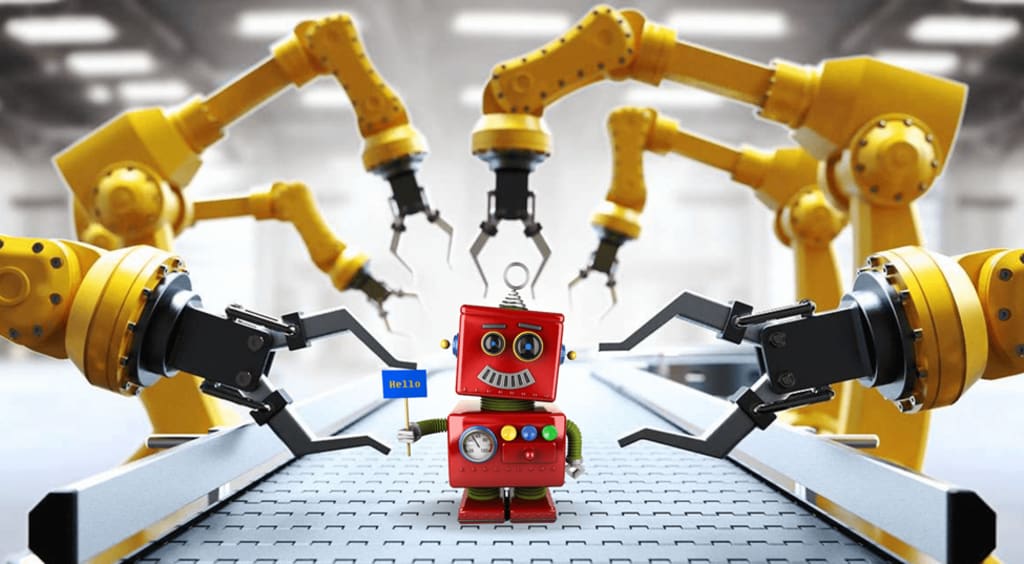
The Future of Play: How AI and Tech Are Shaping Toy Product Development Companies
This restructuring is happening to the toy industry—an industry that has historically been Wikimedia-related to imagination and creativity. Technology has really blended well with play, and there is a new way of approaching toys. The focal point of change lies in the field of toy product development, where advanced intelligence such as AI, AR, and 3D printing will define the future of play.
In this blog, we'll explore how these technologies are revolutionizing the toy industry, creating innovative play experiences, and setting the stage for the next generation of toys.
1. The Relationship between Technology and Toy Production
In its broadest sense, technology has grown to influence the design, production, and use of toys. It should be mentioned that today's toys are not only inert objects but also instruments of interactive learning and playing.
Despite its humble beginnings, toy product development companies take center stage in this revolution by applying technological advances to redefine play. From robots to books with augmented reality, those firms do everything to make toys adapt to contemporary children.
For example:
Products like Cozmo are varieties of Interactive Robots that engage users in coding activities in a fun way. They merge actual reality with a virtual one so children can play live with characters they see on the screen. Smart Toys use Artificial Intelligence to enable it to learn from children and create play sessions according to children's likes.
Importance of AI in Toy Product Development
AI-Powered Design Tools
AI has made prototype design and setup easier in many ways. The software makes designs complex, and several mechanisms are created, hence minimizing cycle generation. Businesses can quickly see if their ideas accurately capture the target market and adjust toy design accordingly.
Personalized Play Experiences
AI's performance can be highly effective in one of its most interesting areas, specifically in creating toys that interact with children and modify their behaviors. Since these toys can understand interactions, play becomes fun and not a repetitive, tedious task. For example, Moxie is an AI robot used as a learning companion for teaching children social and emotional learning.
AI in Market Research
AI enables toy companies to analyze consumer trends, predict demands, and identify gaps in the market. By leveraging AI-powered predictive analytics, companies can create toys that align with emerging preferences and global trends, staying ahead of the competition.
Advanced Technologies Reshaping Toy Development
Augmented Reality (AR) and Virtual Reality (VR)
AR and VR are revolutionizing play by creating immersive experiences. AR-powered storybooks allow children to bring characters to life, while VR games transport them into virtual worlds where they can explore, create, and learn. These technologies are also gaining traction in educational toys, enhancing STEM learning.
3D Printing in Prototyping
3D printing has revolutionized toy prototyping, enabling rapid concept validation and iteration. Companies can create physical models of toys in hours, significantly reducing development timelines. For instance, before mass production, toy product development companies use 3D printing to test durability and functionality.
The Internet of Toys (IoT)
The IoT has introduced smart toys connected to apps and the cloud. These toys offer real-time interactivity, allowing children to play with others worldwide. App-controlled cars and multiplayer interactive games are prime examples of IoT-driven innovation.
The Benefits of Technology for Toy Product Development Companies
Technology brings several advantages to the toy development process:
Faster Time-to-Market: AI tools and 3D printing have also increased the design and testing rate and thus saved time for the market.
Enhanced Safety Standards: The use of simulation technologies aids in fulfilling safety standards, which are important aspects of manufacturing toys.
Global Collaboration: Thanks to conventions such as cloud computing, it is easy to share files across different countries for production, buying new material, or even designing with a team of people from other countries.
Issues Arising from the Implementation of AI and Technology in Toy design
Privacy Concerns
Since many smart toys are designed to interact with children, the toys in question may collect data to create a more engaging experience for the child, which raises questions about the child's privacy. COPPA, among other child privacy laws, must be followed to avoid cases of unethical practices.
Cost of Implementation
Generally, it is elementary to encourage the usage of lieu technologies because applying advanced technologies might be costly, especially for small firms. However, partnerships, grants, and scalable technology solutions on the ground could correct this challenge.
Technological Overload
Of course, technical toys are cool, but technology can sometimes deceive and cause children to get tired of sitting in front of a screen. Toy manufacturers cannot afford to fully shift towards virtual play because toys need to have significant and age-appropriate value.
Success Stories: High-Tech Toys and Companies
AI-Powered Companion Toys
An example is Cozmo, an AI robot that transforms simple storytelling into an interactive one. By adding advanced AI features, the toy product development company behind Cozmo designed a toy that readily connects with both children and their parents.
AR Toys Revolutionizing Play
The Merge Cube is an AR toy that integrates reality and physically manipulates elements to create a learning tool kids can use through their smartphones. This creates a clear example of how augmented reality can revolutionize educational play.
Sustainability through 3D Printing
Other industries, like the toy industry, especially LEGO, have started embracing 3D printing to minimize waste in the models' development. In one way, these companies are a good example of creating quality products while meeting the global objectives of using minimal materials and resources.
The Future of Play: Emerging Trends
The toy industry is set to embrace several exciting trends:
AI-Powered Creativity Tools: Toys like AI-driven art kits inspire children to design and create.
Eco-Friendly Tech Toys: Combining sustainability with technology, these toys cater to environmentally conscious parents.
Educational Tech Toys: STEM-focused toys are gaining popularity, preparing children for the digital future.
Inclusive Toys: Developers are increasingly creating toys that celebrate diversity and cater to children with different abilities.
Conclusion
In light of modern technological advancements, the children's toy industry is experiencing new frontiers in innovation, entertainment, and education. Toy product development companies are perhaps at the vanguard of this revolution, using Artificial Intelligence, Augmented Reality, and other related technologies to reimagine play.
Looking forward, it can be said that the use of high technologies will continue to boost the toy industry, and toys will remain a valuable addition to children's playing and learning activities. For companies, adapting to these developments is not a choice; rather, it is about survival in the new breed of market.
Are you ready to learn how to enhance Toy Products through Technology? Partner with a toy product development company today and be an instrument in designing the toys of tomorrow.
About the Creator
Brand NewMD
BrandNewMD: Your one-stop solution for product sourcing, development, and consulting needs. Unlock growth opportunities with expert analysis and strategic insights tailored to your business goals.
Enjoyed the story? Support the Creator.
Subscribe for free to receive all their stories in your feed.
Comments
There are no comments for this story
Be the first to respond and start the conversation.