
George Harrison in Blackpool
A Quiet Pilgrimage Through the Northern Entertainment World

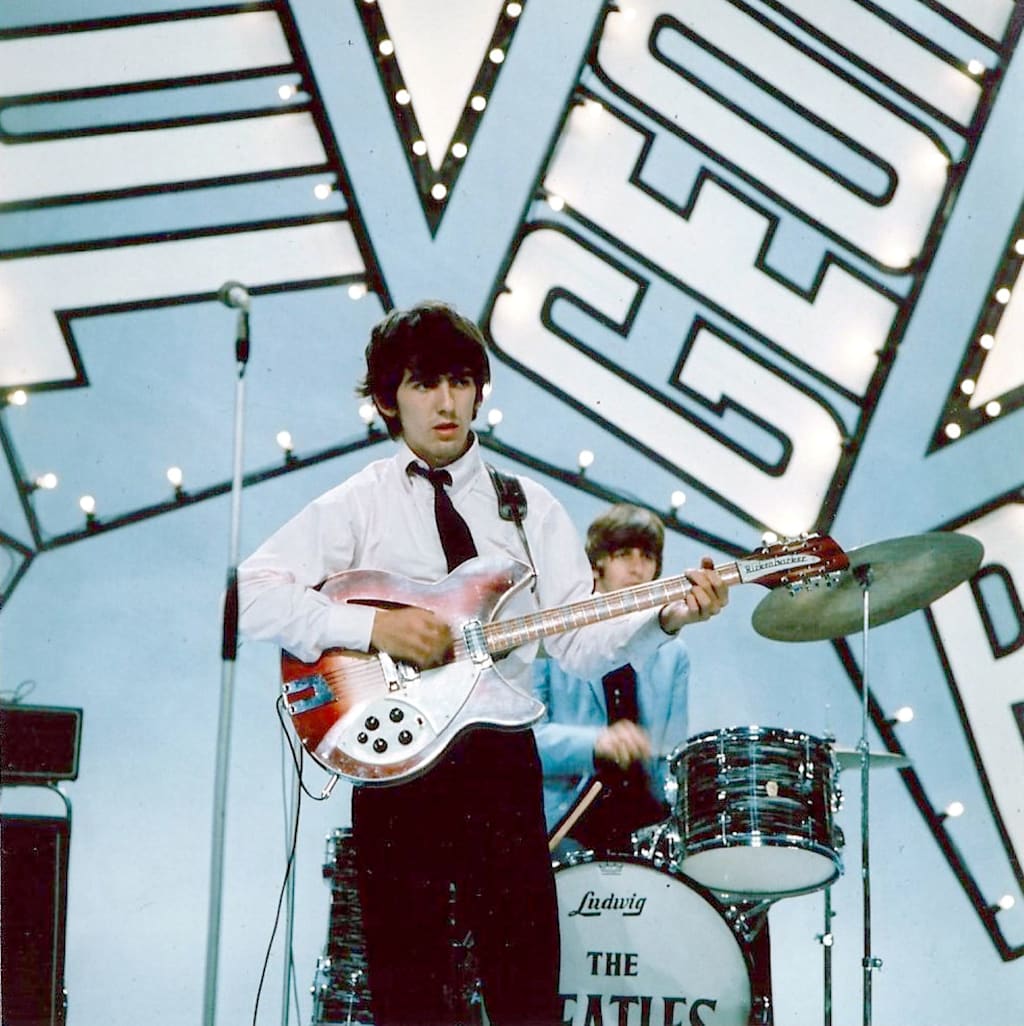
George Harrison’s relationship with performance was always more complicated than the public imagined. Fame had arrived early, arrived fast, and arrived with a force that reshaped his life before he had the chance to understand what he wanted from music. Yet throughout his career, he remained drawn to the places where performance was treated not as spectacle but as craft. Blackpool, with its long lineage of stages and working entertainers, was one of those places.
Blackpool had been a centre of British entertainment for generations. Long before rock ’n’ roll, long before the Beatles, the town had built its reputation on variety shows, dance halls, orchestras, and seasonal revues. The Winter Gardens, the Tower Ballroom, the Grand Theatre, and the piers formed a network of venues that shaped the careers of countless performers. It was a town where audiences expected professionalism, where performers learned resilience, and where entertainment was woven into the rhythm of everyday life.
For someone like Harrison — a musician who valued authenticity and who often felt constrained by the machinery of fame — Blackpool offered something rare: a place where he could observe performance without being consumed by it.
He visited the town over the years, sometimes quietly, sometimes with friends, sometimes under the name George O’Hara‑Smith, one of the pseudonyms he used when he wanted to move through public spaces without attracting attention. The alias had appeared in studio credits during the All Things Must Pass era, part of his habit of adopting alternate identities that allowed him to step sideways from the expectations placed on him. It was a name that gave him room to breathe.
Blackpool’s festivals, concerts, and seasonal shows provided the kind of environment where such an alias could function. The town drew large crowds, but they were focused on the stage, not on scanning the audience for celebrities. Harrison could attend performances, listen to musicians, and watch entertainers refine their craft without the constant interruption that followed him elsewhere. He could be present without being observed.
His interest in attending performances was not casual. Throughout his life, Harrison made a point of supporting the artists he admired. He attended concerts by Indian classical musicians, comedy shows, small club gigs, and charity events. He valued the experience of being part of an audience, of watching performers who were committed to their work regardless of the size of the venue or the fame attached to their names. Blackpool’s entertainment culture aligned naturally with that sensibility.
The town’s stages had shaped the development of British popular culture. Before television became dominant, Blackpool was one of the most important testing grounds for new acts. Comedians refined their timing there. Singers learned how to hold a room. Dancers built stamina through long summer seasons. The Beatles themselves had played in similar circuits during their early years, absorbing the lessons of Northern audiences who were direct, demanding, and unafraid to show their preferences.
Harrison understood the value of those environments. He understood the discipline required to perform night after night, the pressure of holding the attention of a crowd, and the satisfaction of delivering a strong performance. Blackpool represented a continuity with the world that had shaped him — a world where music was a working craft rather than a global commodity.
His most documented appearance in Blackpool came in 1991, when he performed at the Winter Gardens with Dhani Harrison and Jimmy Nail. It was an informal moment, not a major public event, and it reflected the way Harrison preferred to engage with music in his later years: quietly, without fanfare, and in the company of people he trusted. He played ukulele, an instrument he loved for its simplicity and its ability to bring people together. The performance was brief, but it carried the ease and sincerity that defined his relationship with music after the intensity of the Beatles era.
That appearance was not an isolated gesture. It was part of a broader pattern in his life — a pattern of seeking out spaces where music could exist without the weight of expectation. Blackpool, with its long history of performers who worked for the love of the craft, offered exactly that kind of space.
The town’s entertainment culture had always been built on accessibility. Performers were close to their audiences. Shows were frequent, varied, and shaped by the demands of the season. The environment encouraged experimentation and resilience. Harrison appreciated those qualities. He had lived through the extremes of global fame, but he had also experienced the quieter, more grounded aspects of performance during the Beatles’ early years in Liverpool and Hamburg. Blackpool reminded him of the value of those roots.
His use of the name George O’Hara‑Smith during some of his visits reflected his desire to engage with performance on those terms. The alias allowed him to attend festivals and shows without being pulled into the orbit of celebrity. It allowed him to listen, to observe, and to reconnect with the aspects of music that had drawn him to it in the first place. It was not an attempt to deceive but an attempt to participate — to be part of the audience rather than the centre of attention.
Blackpool’s history made it an ideal setting for that kind of participation. The town had always been a crossroads for performers from across the country. It had hosted orchestras, dance bands, music‑hall acts, rock groups, and touring productions. Its stages had witnessed the evolution of British entertainment from the Victorian era to the present. Harrison’s presence there, whether as himself or under an alias, placed him within that lineage.
The relationship between Harrison and Blackpool was not defined by spectacle. It was defined by continuity. He was a musician who valued the craft of performance, and Blackpool was a town built on that craft. He was a man who sought spaces where music could be experienced without distraction, and Blackpool offered those spaces. He was an artist who understood the importance of tradition, and Blackpool embodied a tradition that had shaped generations of performers.
In the end, his visits to the town — documented or quiet, public or private — reflected the core of who he was. Harrison was not driven by the need for attention. He was driven by the need for authenticity. Blackpool, with its long history of honest performance and its deep connection to the Northern entertainment world, gave him a place where that authenticity could thrive.
His time there, whether under his own name or as George O’Hara‑Smith, was part of a larger story: the story of a musician who never stopped seeking the heart of the craft, even after the world had turned him into an icon. Blackpool was one of the places where he found it.
References
Baker, K. (2011). George Harrison: Behind the Locked Door. Faber & Faber.
Clayson, A. (2003). George Harrison. Sanctuary Publishing.
Discogs. (n.d.). George O’Hara‑Smith Singers – Artist Profile.
Lewisohn, M. (2013). Tune In: The Beatles – All These Years, Volume 1. Crown Archetype.
Liverpool Echo. (1991). George Harrison’s Surprise Appearance at the Winter Gardens.
Roberts, D. (2006). British Hit Singles & Albums. Guinness World Records.
Sandbrook, D. (2010). State of Emergency: The Way We Were: Britain, 1970–1974. Allen Lane.
VisitBlackpool. (n.d.). History of Blackpool’s Entertainment Venues.
Winter Gardens Blackpool Archives. (1991). Event Records and Performance Notes.
About the Creator
Julie O'Hara - Author, Poet and Spiritual Warrior
Thank you for reading my work. Feel free to contact me with your thoughts or if you want to chat. [email protected]
Enjoyed the story? Support the Creator.
Subscribe for free to receive all their stories in your feed.
Comments
There are no comments for this story
Be the first to respond and start the conversation.