
Fertility Awareness: Monitor Your Menstrual Cycle
For natural family planning, fertility awareness is monitoring the menstrual cycle phases (follicular, ovulation, luteal, and menstrual) in order to determine when an individual is fertile and infertile. It gives women information and choices about reproductive health.
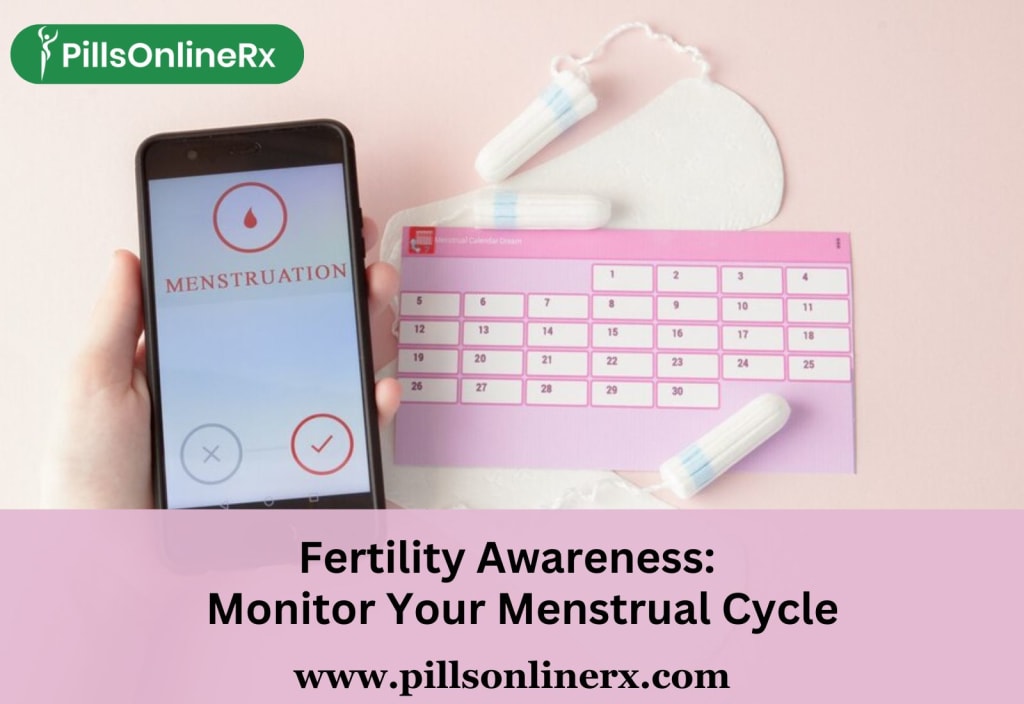
The menstrual cycle is a part of women’s lives and occurs every month for 3–7 days until menopause. Fertility changes with age, and so does the body. To create a fertility awareness plan at the right age for conception or to prevent pregnancy, you must understand your menstrual cycle.
It is not easy to learn everything in one go; you should first know what fertility awareness is and how it depends on monitoring your menstrual cycle to get pregnant or to avoid it.
What is Fertility Awareness?
Fertility awareness helps you determine when you are most fertile and when you are not. This involves some practices that can help you with fertility awareness planning. These methods help you track and monitor your menstrual cycle, especially when you want to conceive or avoid getting pregnant.
Before we get the method, let’s learn about the menstrual cycle phases first for a better understanding.
Menstrual Cycle Phases:
Menstrual phase: It begins on the first day of your period and lasts for 3–7 days. This is the period where natural vaginal bleeding occurs.
Follicular phase: This marks the end of your period and lasts till ovulation. Your ovaries witness the growth of the follicle and a rise in estrogen that creates a thick lining to the uterus to prepare for a potential pregnancy.
Ovulation: Ovulation occurs on the 14th-16th day of your cycle. This is when you are most fertile. A mature egg is released from the ovaries for fertilization. It’s important to track ovulation for fertility awareness.
Luteal phase: this occurs after ovulation and lasts for typically 14 days. To preserve the uterine lining, the corpus luteum produces progesterone after the rupture of a follicle. If conception doesn’t take place, there’s a decrease in progesterone, and hence follows menstruation.
Fertility Awareness Methods to Track Your Menstrual Cycle
Fertility Awareness Methods (FAM) are ways of natural family planning. They help you identify the fertile and infertile phases of the menstrual cycle for pregnancy or to avoid it. These methods can also be used to monitor your reproductive health.
Calendar: This is your regular method; all women do this. You can use the method to chart your period for several months to identify the patterns and track ovulation.
Basal body temperature (BBT): Body basal temperature is when your body is completely at rest. There’s a slight increase in women’s body temperature during ovulation. These days are the most fertile days to conceive or avoid pregnancy. You can use a basal thermometer to check the temperature.
Cervical Mucus: Here you have to monitor the mucus (discharge) produced by your cervix, which keeps changing throughout the menstrual cycle. Before ovulation, the mucus increases (thin and slippery) and after ovulation, the mucus reduces, becoming thicker and easier to miss. Avoid intercourse if you do not want to get pregnant, and if you want to conceive, intercourse between these 2-3 can be beneficial.
Symptothermal Method: It combines the BBT, cervical mucus, and calendar method for fertility awareness. This can be a hectic process to track with everything but this is an effective method.
Standard days method: It’s a variant of the calendar method. Track how long is your menstrual cycle. According to the Standard Days method, the most fertile days are days 8–19 if your cycle lasts between 26 and 32 days.
Is fertility awareness effective in preventing pregnancy?
If women are using fertility awareness to prevent pregnancy, one or five out of 100 may get pregnant. You should be consistent in using the method properly to achieve the desired result. If you do not know the right way of doing it, you can just ask a medical professional instead of using the incorrect method.
What are the benefits of fertility awareness?
Natural Conception: When used properly, fertility awareness can be an effective way to avoid pregnancy without relying on hormonal or barrier contraception.
Easy to conceive: Couples trying to conceive can use fertility awareness to track the most fertile days of the menstrual cycle, increasing the chances of conception.
Understanding your body: Tracking menstrual cycles, basal body temperature, and cervical mucus changes might help people develop a better understanding of their own bodies and reproductive processes.
Cost-effective: It comes free of charge or low cost, making it an affordable option for family planning.
Empowerment: It lets women take control of their reproductive health, making them feel more empowered.
How does fertility change for women?
Fertility changes as we age for both men and women. Let’s take a look at it:
Prime fertility: Women have the highest fertility between the ages of 20 and 30. Every month they have the best chances of pregnancy.
Decline: Fertility starts declining after 30 and after 35, the decline accelerates.
Quality of eggs: As a woman matures, the quality of her eggs declines, increasing the chance of genetic disorders and miscarriages.
Menopause: It indicates the end of women’s menstrual cycle, marking the end of reproductive years. This usually happens between the ages of 45 and 55.
About the Creator
Enjoyed the story? Support the Creator.
Subscribe for free to receive all their stories in your feed.
Comments
There are no comments for this story
Be the first to respond and start the conversation.