
Dimitri Vasylev on Ukraine’s War, Democratic Resilience, Political Unity, and National Security
How does Dimitri Vasylev assess Ukraine’s wartime volunteering, democratic challenges, political tensions, and need for national unity?

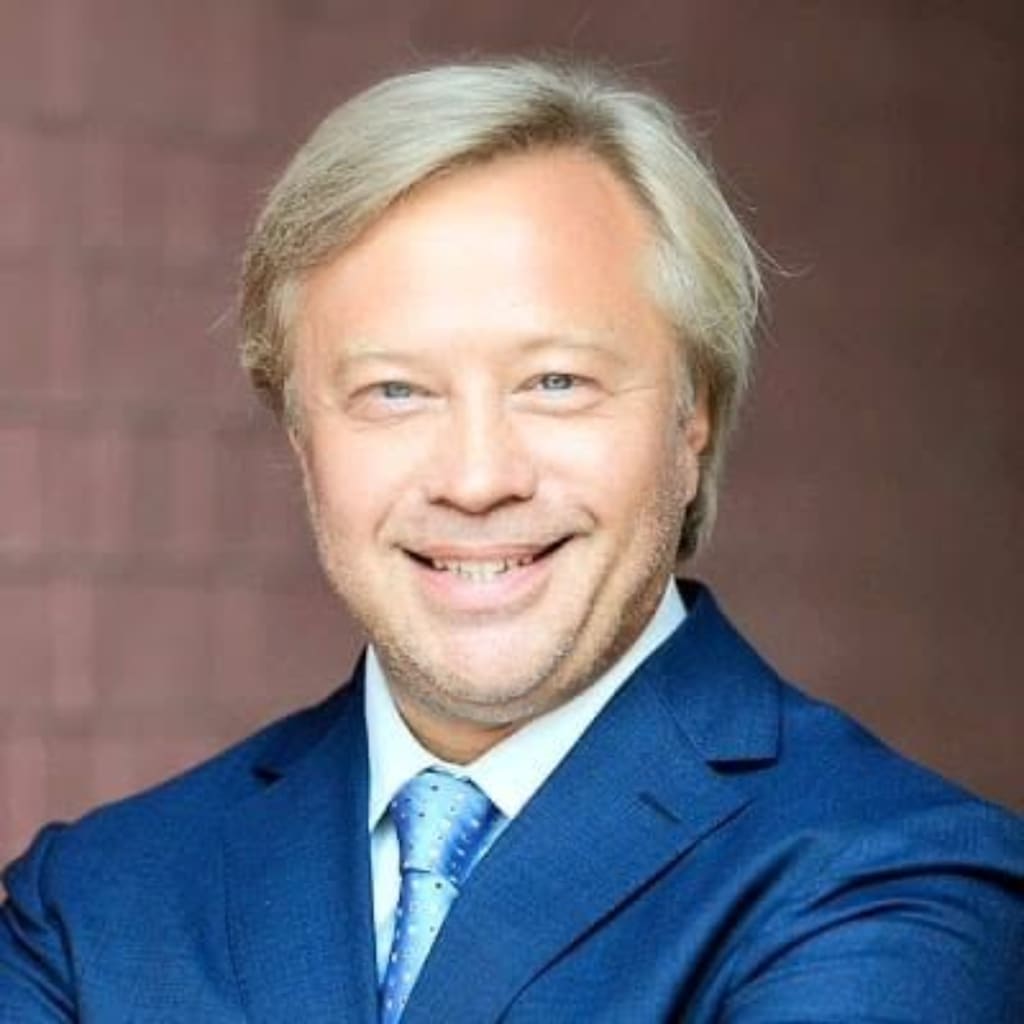
Dimitri Vasylev is a Ukrainian political consultant, analyst, public communications specialist, and musician. He leads the Research Agency for Development and Analysis (RADA), working across political analysis, governance, development, and public communication. Born in Kyiv during the Soviet period, Vasylev served in the Soviet Army before developing a stronger Ukrainian identity. Since Russia’s full-scale invasion, he has combined volunteer activity with music, producing three albums intended to strengthen Ukrainian culture, resilience, and national identity.
In this interview, Scott Douglas Jacobsen and Dimitri Vasylev discuss wartime volunteering, casualty-notification protocols, military-family support, strategic communications, and Ukraine’s democratic resilience. Vasylev argues that Russia’s invasion challenges the wider democratic order and that European states must recover the capacity to defend freedom militarily. He also assesses Ukraine’s internal political tensions, criticizing excessive presidential power, opposing wartime elections, supporting a unity government, and identifying national cohesion as the country’s most urgent sociocultural priority during war.
Scott Douglas Jacobsen: What did your volunteer experience during the war teach you?
Dimitri Vasylev: At the beginning of the full-scale war, I was volunteering for a territorial community and a military group. Then I helped my friend at one of the military commissariats in Kyiv develop a casualty-notification protocol with former Deputy Minister of Defence Hanna Maliar. At the time, she was already working with the General Staff and was able to explain to the Commander-in-Chief the importance of such a protocol.
The protocol did not exist there in that form at the time. So the Commander-in-Chief tasked us with developing the protocol, and we worked closely with people from the Ministry of Defence and the General Staff. I had good friends in the community of American veterans who continued to live in Kyiv. One of them was a former U.S. military attaché to Ukraine, and he helped a lot by providing the American equivalent of the protocol.
In the end, Commander-in-Chief Oleksandr Syrskyi developed and signed the protocol in December 2024. As soon as it was signed, we needed to implement it. So we worked hard to develop a perspective on how to implement it in the best way.
We spoke with the Ministry of Defence, the Ministry of Foreign Affairs, several international organizations, and key diplomatic missions about how we could develop a perspective for implementing the protocol. A lot of work was done.
In parallel, I also helped provide civilian support for many of the social needs of the Ukrainian Navy's River Flotilla. That's a great job we've done together with them, with their civil-military cooperation unit and their commander. We've done a lot to make sure it works and that many soldiers from the River Flotilla receive good social support, including support for their families.
So that's something I've done and continue to do.
On the information front, I worked with a group that supported our military, the Ministry of Defence, and especially the General Staff in communicating the most important messages to the public through the media. That was also part of my volunteer work with the General Staff.
Jacobsen: What would you consider, for those who are international, East or West, and who are non-Ukrainian, some misconceptions about the political context of Ukraine during the war? What truths dispel the myths they may have about that context?
Vasylev: When we're talking about a democratic society, it's most important to think about the democratic part of this planet, the countries and unions like the European Union or the Euro-Atlantic alliance, NATO.
Those governments and nations forgot they had experience fighting for their freedom. For about 80 years, they learned that diplomatic means, tools, and instruments worked much better than military tools. So they learned how to communicate, negotiate, and de-escalate through diplomacy and dialogue.
Of course, they tried hard to use those instruments for de-escalation. And that's the moment when everybody understood that sometimes you have to be ready to understand that your opponents are not ready to talk.
They want to fight. If you're not ready to fight, you can lose all those achievements of your previous generations based on which you have this freedom, democracy, and economic development. So you have to be ready to fight for this. That's first.
I think now, little by little, some nations and some governments understand it. Donald Trump, who is not my hero, actually helped many Ukrainians and many European governments and leaders understand much more quickly that you had better be ready to fight.
And most of them didn't realize that Ukraine was fighting not only for itself, but that Russia began the war not only against Ukraine, but against the democratic idea more broadly.
If you remember December 17, 2021, before the full-scale invasion, Russian Deputy Foreign Minister Sergei Ryabkov said something many people didn't fully appreciate at the time. He said NATO should remove its military infrastructure and return to its 1997 positions.
From my perspective, it was a declaration of confrontation with European countries, based on the idea that NATO's military posture should be rolled back to the situation that existed in 1997.
Then, about two months later, the full-scale invasion began. Russia had a clear idea that first they wanted to occupy Ukraine and then go further.
Now, a lot of military intelligence services and governments in Europe understand that Russia will not necessarily stop if it occupies Ukraine. It could go further. But at that time, they didn't understand it.
Everybody has to be crystal clear: Ukraine fights not only for Ukraine. Ukraine fights for democracy and the democratic world. The democratic world has to be united if it wants to win and fight for a better future because the autocratic world has much greater potential right now to fight with no rules, cynically, without worrying about killing people.
The democratic world has to understand that it must be strict, strong, and ready to fight hard.
Jacobsen: What are your political expectations for Ukraine toward the end of Q3 and into Q4?
Vasylev: I think the Ukrainian president will try to preserve the system as it is. But the controversies surrounding anti-corruption institutions and corruption scandals may lead him to consider what he can do as the nation's leader during the war to keep the country united and avoid losing the war because we are divided.
I hope it brings him to the clear idea that he has to give up some of his power because, in my view, the concentration of power he has is autocratic rather than democratic.
We don't need to go to elections now. I don't think it's a good idea. I don't see a feasible way to conduct elections with legitimate results and ensure everyone can vote during the war.
At the first stage, we can form a new coalition in parliament, which could form a new government of Ukrainian unity. The president has his job on the military and foreign-policy fronts, so let him do it. But let him give up some of his power over those things that he is not able to manage successfully now, because, in my view, he has not been successful enough in domestic and social policy.
Jacobsen: So this is actually leaning into my next question, which has to do with Mr. Fedorov's recent statements.
Vasylev: I'm not sure Mr. Fedorov is the best solution for us. He's still too young, and he's making a lot of mistakes.
Jacobsen: How would you describe the internal temperature, so to speak, or atmosphere more descriptively?
Vasylev: We can go on with the temperature metaphor. It's a temperature that could lead to serious illness and perhaps to the need for a quick, unplanned operation. It's okay now, but we're on the edge.
Jacobsen: What do Ukrainians see as their most substantial sociocultural concern right now?
Vasylev: Just to be united. That's the main thing.
Jacobsen: Thank you very much for the opportunity and your time, Dimitri.
Scott Douglas Jacobsen is a blogger on Vocal with more than 200 publications on the platform. He is the Founder and Publisher of In-Sight Publishing (ISBN: 978–1–0692343; 978–1–0673505) and Editor-in-Chief of In-Sight: Interviews (ISSN: 2369–6885). He writes for International Policy Digest (ISSN: 2332–9416), The Humanist (Print: ISSN, 0018–7399; Online: ISSN, 2163–3576), Basic Income Earth Network (UK Registered Charity 1177066), Humanist Perspectives (ISSN: 1719–6337), A Further Inquiry (SubStack), Vocal, Medium, The Good Men Project, The New Enlightenment Project, The Washington Outsider, rabble.ca, and other media. His bibliography index can be found via the Jacobsen Bank at In-Sight Publishing, comprising more than 10,000 articles, interviews, and republications across more than 200 outlets. He has served in national and international leadership roles within humanist and media organizations, held several academic fellowships, and currently serves on several boards. He is a member in good standing in numerous media organizations, including the Canadian Association of Journalists, PEN Canada (CRA: 88916 2541 RR0001), Reporters Without Borders (SIREN: 343 684 221/SIRET: 343 684 221 00041/EIN: 20–0708028), and others.
Image Credit: Dimitri Vasylev.
About the Creator
Scott Douglas Jacobsen
Scott Douglas Jacobsen is the publisher of In-Sight Publishing (ISBN: 978-1-0692343) and Editor-in-Chief of In-Sight: Interviews (ISSN: 2369-6885). He is a member in good standing of numerous media organizations.
Enjoyed the story? Support the Creator.
Subscribe for free to receive all their stories in your feed.
Comments
There are no comments for this story
Be the first to respond and start the conversation.