
AI and the Future of Human Connection
Will Artificial Intelligence Bring Us Closer Together or Drive Us Further Apart?


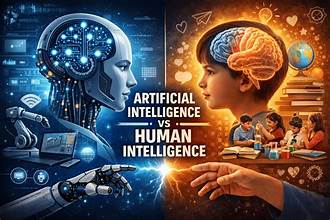
Artificial Intelligence has rapidly evolved from a futuristic concept into a powerful force shaping our daily lives. From virtual assistants and recommendation algorithms to advanced conversational systems and autonomous technologies, AI now influences how we work, communicate, learn, and build relationships. As these technologies continue to advance, one critical question emerges: What does the future of human connection look like in an AI-driven world?
Human connection has always been the foundation of civilization. Our relationships, communities, families, and social networks are built on communication, empathy, trust, and shared experiences. Yet as AI becomes increasingly integrated into society, many people wonder whether technology will strengthen these bonds or gradually replace them.
The answer is not as simple as choosing between optimism and pessimism. AI presents both extraordinary opportunities and significant challenges for the future of human relationships. Understanding these possibilities is essential if we want technology to serve humanity rather than diminish what makes us human.
## The Evolution of Communication
Throughout history, technological innovation has transformed the way people connect. The invention of the telephone allowed conversations across vast distances. Email accelerated communication globally. Social media connected billions of people regardless of geography.
AI represents the next major evolution in this progression.
Modern AI systems can translate languages in real time, assist with communication barriers, summarize conversations, and facilitate interactions that were previously impossible. A person in London can instantly communicate with someone in Tokyo without speaking the same language. Businesses can collaborate globally with unprecedented efficiency. Families separated by continents can maintain stronger relationships through intelligent communication tools.
In many ways, AI is reducing friction in human interaction. It removes obstacles that once prevented meaningful connections from forming and flourishing.
However, easier communication does not automatically create deeper relationships. Quantity does not guarantee quality. While AI can increase the number of interactions we have, it raises important questions about the authenticity and emotional depth of those connections.
## AI as a Relationship Facilitator
One of AI's most promising roles is serving as a facilitator rather than a replacement for human relationships.
Consider healthcare. AI systems can monitor patient wellbeing, identify signs of depression, and alert healthcare professionals when intervention may be needed. This enables doctors and caregivers to provide more timely and personalized support.
In education, AI tutors can adapt to individual learning styles, helping students overcome challenges while allowing teachers to focus on mentorship, motivation, and emotional development. Rather than replacing educators, AI can enhance the human elements of teaching.
Businesses are also using AI to improve customer relationships. Intelligent systems analyze customer preferences, enabling organizations to provide more personalized experiences. When used responsibly, these technologies can create stronger and more meaningful interactions between companies and consumers.
The key distinction is whether AI serves as a bridge connecting people or as a barrier separating them.
When designed thoughtfully, AI can amplify human potential and strengthen relationships. When designed poorly, it can encourage isolation and dependency.
## The Rise of Digital Companionship
Perhaps one of the most controversial developments in AI is the emergence of AI companions.
Advanced conversational systems can now engage in lengthy discussions, remember preferences, provide emotional support, and simulate aspects of friendship. Millions of people worldwide are already interacting with AI companions for entertainment, advice, and emotional comfort.
For individuals experiencing loneliness, social anxiety, or isolation, these technologies can provide valuable support. Elderly individuals living alone may benefit from AI systems that offer companionship and monitor wellbeing. People struggling with mental health challenges may find comfort in accessible, non-judgmental conversations.
Yet this trend also raises profound ethical and societal questions.
Can a relationship with an AI ever truly replicate human connection? Should emotional attachment to machines be encouraged? What happens when people begin preferring predictable AI interactions over the complexities of real human relationships?
Human relationships are often messy, unpredictable, and demanding. They require compromise, vulnerability, patience, and emotional growth. AI companions, by contrast, can be designed to be endlessly agreeable and tailored to individual preferences.
While this may seem attractive, it risks creating environments where people become less willing to engage with the challenges that make human relationships meaningful and transformative.
## Empathy in the Age of Machines
Empathy lies at the heart of human connection. It enables us to understand the emotions, perspectives, and experiences of others.
AI can simulate empathy by recognizing emotional patterns and generating supportive responses. Through natural language processing and emotional analysis, AI systems can identify sadness, frustration, excitement, or anxiety and respond accordingly.
However, simulated empathy differs fundamentally from genuine human empathy.
A machine does not feel compassion. It does not experience joy, grief, love, or loss. It analyzes patterns and generates responses based on data.
This distinction is crucial.
While AI can assist in emotional support roles, genuine human connection remains rooted in shared experiences and authentic emotional understanding. The comfort of speaking with someone who has faced similar struggles cannot be fully replicated by algorithms, regardless of how sophisticated they become.
The future may involve AI augmenting empathy rather than replacing it. By helping people recognize emotional cues, improve communication, and provide support resources, AI can strengthen human-to-human understanding.
## Social Media, AI, and the Attention Economy
The relationship between AI and human connection is already visible on social media platforms.
Recommendation algorithms determine much of the content people see online. These systems are designed to maximize engagement, often by prioritizing emotionally charged or highly stimulating content.
While these algorithms connect users with relevant information and communities, they can also contribute to polarization, misinformation, and social division.
The challenge lies in aligning AI systems with human wellbeing rather than purely commercial objectives.
Future AI technologies could potentially promote healthier digital environments by encouraging constructive dialogue, reducing toxic behavior, and facilitating meaningful interactions. Instead of optimizing for clicks and screen time, AI could optimize for relationship quality and community wellbeing.
Achieving this outcome will require deliberate choices by technology companies, policymakers, and society as a whole.
## AI and Workplace Relationships
The workplace is another area where AI is transforming human interaction.
Automation is changing job roles across industries, reducing repetitive tasks and increasing efficiency. This shift creates opportunities for employees to focus on creativity, collaboration, and relationship-building.
As routine work becomes automated, uniquely human skills become increasingly valuable. Emotional intelligence, leadership, negotiation, mentorship, and teamwork are qualities that remain difficult for AI to replicate.
Organizations that embrace AI while investing in human development may discover that technology enhances workplace relationships rather than undermines them.
However, there is also a risk that excessive automation could reduce opportunities for social interaction. Remote work, digital collaboration tools, and AI-driven processes may inadvertently weaken the informal connections that contribute to organizational culture and employee wellbeing.
Balancing efficiency with human connection will be one of the defining challenges of the future workplace.
## The Loneliness Paradox
Despite unprecedented connectivity, loneliness has become a growing global concern.
Millions of people interact with others online every day, yet many report feeling increasingly isolated. This phenomenon highlights an important truth: connection and communication are not the same thing.
AI has the potential to either worsen or alleviate this problem.
If technology encourages superficial interactions and substitutes genuine relationships with artificial alternatives, loneliness may intensify. Conversely, if AI helps individuals find supportive communities, maintain relationships, and access emotional support, it could become part of the solution.
The outcome depends largely on how society chooses to design, regulate, and use these technologies.
Technology itself is neither inherently beneficial nor harmful. Its impact is determined by the values embedded within it and the intentions of those who deploy it.
## Ethical Considerations for the Future
As AI becomes more deeply integrated into human relationships, ethical considerations become increasingly important.
Privacy is one major concern. AI systems often require access to personal data to provide personalized experiences. Safeguarding this information is essential to maintaining trust.
Transparency is equally important. Users should understand when they are interacting with AI rather than a human. Deception erodes trust and can create emotional and psychological risks.
Bias presents another challenge. AI systems trained on imperfect data may perpetuate social inequalities and reinforce harmful stereotypes. Ensuring fairness and inclusivity must remain a priority.
Finally, society must carefully consider the boundaries of AI involvement in emotional and interpersonal domains. Some aspects of human connection may be too valuable to delegate to machines.
## A Future Defined by Human Choices
The future of human connection will not be determined by AI alone.
Technology does not dictate destiny. Human choices do.
We are entering an era where AI can assist with communication, facilitate relationships, provide companionship, and enhance collaboration. These capabilities offer tremendous potential for improving lives and strengthening communities.
At the same time, there is a danger of becoming overly dependent on technology for needs that have traditionally been fulfilled through human relationships.
The challenge is not preventing AI from advancing. Progress is inevitable. The challenge is ensuring that technological advancement remains aligned with human values.
If we prioritize empathy, authenticity, trust, and wellbeing, AI can become a powerful tool for strengthening human connection. If we prioritize convenience above all else, we risk creating a world where relationships become increasingly transactional and artificial.

## Conclusion
Artificial Intelligence is reshaping the way humans connect with one another. It offers extraordinary opportunities to overcome barriers, reduce isolation, and enhance communication on a global scale. Yet it also presents challenges that force us to reconsider the meaning of relationships, empathy, and community.
The future will likely involve a blend of human and artificial intelligence working together. Machines will handle many tasks that require speed, scale, and data processing. Humans will continue to provide the emotional depth, creativity, compassion, and understanding that define meaningful relationships.
Ultimately, the future of human connection depends not on what AI can do, but on what we choose to do with it.
The most successful societies of the future will not be those that replace human relationships with artificial ones. They will be the societies that use AI to strengthen the bonds between people, enabling deeper understanding, greater collaboration, and more meaningful connections than ever before.
As we move into this new era, one truth remains unchanged: technology may evolve, but the human need for connection will always endure.
About the Creator
Sam Siamak Callimi
Writer focused on AI, online income, digital tools, and real-world solutions. Publishing helpful, practical content weekly.
Enjoyed the story? Support the Creator.
Subscribe for free to receive all their stories in your feed.
Comments
There are no comments for this story
Be the first to respond and start the conversation.