movie review
Movie reviews for horror fans; from gruesome bone-chillers to dark horror thrillers, a showcase for frightful films that seek to entertain and to terrify.
The House of Unspoken Whispers Where Time Paused, and Shadows Learned to Speak
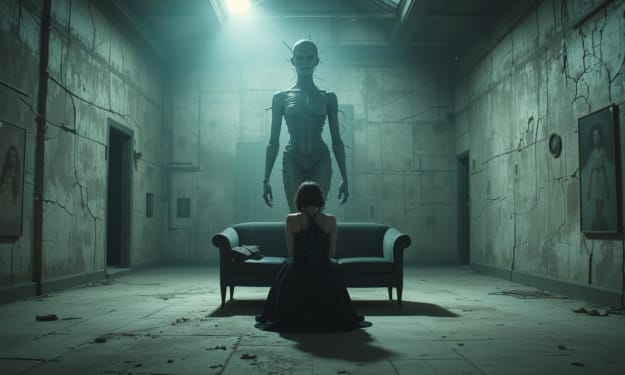
The House of Unspoken Whispers A Tale of Time, Echoes, and the Silence That Watches The village of Oakhaven clung to the cliffside like an old secret, veiled forever in a mist that smelled of salt and sorrow. Here, whispers outran the wind, and no whisper was older—or more feared—than the one about Blackwood Manor. The mansion stood solemnly on a jagged precipice, overlooking a violent sea. Fifty years ago, the entire Blackwood family had vanished without a trace. No bodies. No answers. Just silence. The house remained abandoned, untouched, and avoided—like a grave no one dared mourn aloud. But where others saw fear, Dr. Elias Thorne, a skeptical historian with a thirst for truth, saw opportunity. To him, the manor was a relic, an untouched archive of forgotten stories. So, against the urgent warnings of Oakhaven’s weathered locals, Elias bought the manor. His first nights were uneventful: drafty halls, groaning floorboards, and the eerie loneliness only an old house could offer. No ghosts. No shrieks. Just the mundane sounds of a building remembering itself. Elias, ever the rationalist, carried on with his cataloging and research. Then the quiet changed. It wasn’t just silence—it was absence. Sound vanished as though swallowed by something unnatural. And in those uncanny voids, Elias began to see colors. Not lights or shapes—colors, vibrant and misplaced. A shimmer of emerald here. A flicker of gold there. And most hauntingly, a glint of azure blue. At first, he doubted himself. He blamed fatigue. Misplaced objects, books left open to the wrong page—it could all be explained. But when he installed motion cameras and they captured stretches of pitch blackness—blinks, where time itself seemed erased—he began to question. One frigid evening, the silence returned like a breath held too long. From the corner of his eye, he saw a flare of azure. As he reached for it, a cold force pushed against his hand. Then, inexplicably, the manor’s broken grandfather clock released a single, thunderous chime. Compelled, Elias searched the fireplace and discovered a hidden compartment. Inside, wrapped in an azure ribbon, was a crumbling leather-bound diary—the journal of Eleanor Blackwood, the youngest daughter who had vanished with her family. Eleanor’s words were graceful, haunted, and increasingly urgent. She wrote of a “darkness” that seeped into the family—a sorrow that grew until time itself felt warped. Her father, a clockmaker, had built a mysterious mechanism in secret—meant not to measure time, but to capture it. He wanted to preserve a moment of happiness. Instead, he created a trap. The machine froze the Blackwoods in their final, fearful instant—preserved like a photograph, repeating endlessly in a broken loop. The colors Elias had been seeing were fragments of their existence—echoes of Eleanor’s green dress, her father’s golden watch, her brother’s azure scarf. But the diary warned of something else—a Watcher. Eleanor’s last words chilled Elias to the bone: > “We are here. We see. We feel. But we cannot leave. Only Mother tries to reach through… through the blue. She warns me. Father made a mistake. We are not alone. There is a Watcher.” In that moment, Elias realized: the Watcher was real. Not just a metaphor, but a being—one that had been feeding on the family’s trapped echoes. Not a ghost, but a parasitic entity, drawn to the fractured time within the house. Driven by horror and urgency, Elias searched beneath the clock and found the hidden core of the mechanism—a lattice of ancient gears and glowing runes. As he worked, the Watcher revealed itself. A towering, angular shape of pure shadow, standing in the corner, faceless, watching him… hungering. He couldn’t save the Blackwoods. Not yet. But he could seal the loop. Following Eleanor’s final entries, Elias activated a counter-sequence—a desperate gamble. The house trembled. The echoes screamed. And then—light. The Watcher was pulled back. The silence returned—not the cold void from before, but a peaceful one. The colors faded. The diary closed itself. Elias left and never returned. He told no one what he’d seen. Now, Blackwood Manor stands in perfect stillness, whisper-less, yet heavy with the memory of time gone wrong. It’s not haunted by spirits—but by a family’s desperate wish to preserve joy. Instead, they became prisoners of a moment, captives in a clockwork tragedy. And somewhere, deep within the stone, the mechanism still ticks—quietly. --- Author’s Note: Not all ghosts are spirits. Some are echoes. Some are colors. Some are mistakes made in the name of love. And some, like the Watcher, are the things that come when time itself breaks—and starts to feed.
By Noman Afridiabout a year ago in Horror
The Ghost in the Old Digital Camera
📸 The Ghost in the Old Digital Camera A digital whisper from the past… that should have stayed silent. --- The scent of dust and forgotten dreams hung heavy in Curio’s Attic, a junk shop Liam frequented more out of habit than hope. He was a struggling freelance photographer, obsessed with capturing the unseen—the fleeting moments that whispered of deeper stories. His phone, his sleek digital camera—they all felt too sterile. He longed for something with character, something that held a past. Deep within a dusty box of discarded electronics, he found it: a Kodak Easyshare CX7300, a clunky, silver relic from the early 2000s. Its plastic body was scuffed, its screen cracked, and the battery compartment corroded. It looked utterly dead. Yet something about its forgotten simplicity called to him. He bought it for a few dollars—a whimsical purchase. Back in his studio, fueled by cheap coffee, Liam tinkered. He cleaned the corrosion, replaced the batteries, and to his astonishment, the tiny LCD screen flickered to life, displaying a low battery icon. He charged it, skeptical. This old dinosaur surely wouldn't capture anything usable. The next morning, armed with his working modern camera, he decided to take the old Kodak on a casual stroll through the deserted morning streets, just for kicks. He pointed it at a picturesque, empty alleyway bathed in soft light and pressed the shutter. The mechanical whir of the lens, so alien to his modern gear, brought a nostalgic smile to his face. He downloaded the new batch of photos, scrolling through the crisp, vibrant shots from his main camera. Then he opened the file from the old Kodak. The first few images were grainy, pixelated blurs, as expected. But on the fifth image—the one of the empty alleyway—something was wrong. Standing faintly in the middle of the alley, almost translucent, was the figure of a young woman. Her posture was hunched, her head bowed, as if in despair or deep thought. Her clothes looked dated, from another era. Liam zoomed in, his breath catching. It wasn't a trick of the light. It wasn't a smudge on the lens. It was a clear, albeit ghostly, apparition. The alley had been completely empty when he took the shot. Fear warred with an overwhelming sense of fascination. He took another picture, this time of his own empty living room. Again, the image, once developed, showed the same faint figure—sitting on his couch, her head in her hands. She was always there, a spectral visitor in his photos, her presence subtle but undeniable. Driven by a surge of unnerving curiosity, Liam started a frantic online search. He scoured forums for paranormal photography, vintage camera malfunctions—anything that could explain this phenomenon. He found nothing. Then, on a whim, he uploaded one of the photos to a niche online community dedicated to unsolved disappearances, asking if anyone recognized the woman. Within hours, his post exploded. The woman was identified as Sarah Wells, a local university student who had vanished without a trace exactly 15 years ago to the day, just a few blocks from where he’d bought the camera. Her disappearance had baffled the police—no body, no leads, just a chilling void. Liam was thrust into the center of a burgeoning online mystery. His photos, with their undeniable, ghostly addition, went viral. People were captivated, terrified, and intrigued. Was it a hoax? A digital manipulation? But Liam’s reputation as a meticulous photographer and the undeniable analog nature of the old Kodak's raw files lent credibility to his claims. He returned to the empty alleyway, the old Kodak clutched in his trembling hand. He snapped photos, hundreds of them, from every angle. Sarah's ghostly image appeared in each one, her posture slowly shifting, her head lifting incrementally with each shot—as if struggling to look up. It was like watching a flipbook of a forgotten memory, a digital echo awakening. He started noticing patterns. The light in the photos, the shadows—they weren't always consistent with the real-time conditions. It was as if the camera was capturing the light and shadows from Sarah's last moments, replaying them, bleeding them into the present. The camera wasn’t just taking pictures; it was projecting visual memories from a past that had never truly died. Through painstaking cross-referencing of Sarah's known last movements, old missing person reports, and the subtle clues in the evolving photographic echoes, Liam pieced together a horrifying narrative. Sarah wasn’t just walking away when she disappeared. She was photographing something. Her last known location was a hidden art gallery, famed for its experimental, dark art—now long closed and forgotten. The images from the Kodak hinted at a flash of blinding light, a sense of immense pressure, and a distorted face in the background of one of her final, ghostly shots. Then, a new element began to appear in the images—not just Sarah, but a subtle, almost invisible distortion in the background of her photos: a shimmering ripple, like heat haze, around a specific, dark sculpture that used to be in that gallery. It was a piece known as “The Observer,” a terrifying, abstract metal sculpture that reportedly had an unsettling effect on viewers. --- The Climax Liam, guided by the camera’s increasingly vivid echoes, entered the derelict, forgotten art gallery. The air was cold, stagnant. He raised the old Kodak, pointing it into the darkness. On the cracked screen, a terrifying image formed: Sarah, clearly visible, her eyes wide with terror, staring directly into the lens. Behind her stood the "Observer" sculpture—its metallic form twisting, no longer abstract, but revealing something chillingly organic, a monstrous, shadowed face emerging from its cold metal. Suddenly, the screen of the Kodak flashed violently—a searing white light that momentarily blinded Liam. When his vision cleared, the camera was dead. Its screen: black. Its battery: instantly drained. But the final image, transferred to his laptop moments before, was burned into his mind. It showed Sarah, her face contorted in a final, silent scream, as a dark, grasping tendril, seemingly made of shadow and twisted metal, reached out from the sculpture, consuming her. The image was raw, terrifying—a direct window into her last, horrifying moments. --- The Truth The camera hadn’t just been capturing echoes—it had been replaying a murder. A sentient piece of art that had come to life and consumed its victims, leaving no physical trace. Sarah hadn’t vanished. She had been absorbed. Liam understood then. The camera had been Sarah’s, its digital memory imprinted with her final, desperate visual cries. It was trying to warn him, trying to show the world what truly happened. And the creature—The Observer—was still there. Dormant in the darkness. Waiting for another unsuspecting soul to wander into its web. --- Epilogue Liam never showed that final image to anyone. Who would believe that a metal sculpture could consume a human? That a digital camera could act as a spectral witness? The story of the "Ghost Camera" continued to circulate online, generating millions of views and endless theories—a modern-day paranormal legend. But Liam, now wiser and infinitely more cautious, understood the truth. He locked the old Kodak away, a chilling memento of a digital haunting. He knew that some horrors don’t leave a physical trace… But linger in the echoes of data, Waiting for the right frequency, The right medium, To reveal their deadly secrets. --- Sometimes, the most terrifying truths aren’t captured by the newest technology… But by the forgotten relics of a digital past.
By Noman Afridiabout a year ago in Horror
Spring-heeled Jack: The Mysterious Phantom of Victorian England (1837-1904)
Introduction Spring-heeled Jack is one of the most bizarre and enduring mysteries of Victorian England. This enigmatic figure terrorized London and the surrounding areas for decades. He was described as a terrifying supernatural being with glowing eyes, clawed hands, and the ability to leap incredible heights. Spring-heeled Jack's place in folklore has been established by eyewitness accounts, newspaper reports, and urban legends, blurring the lines between myth, widespread panic, and possible reality. This article explores the origins, reported sightings, theories, and cultural impact of Spring-heeled Jack, delving into why this strange figure continues to captivate the public imagination over a century after his last alleged appearance.
By Silas Blackwoodabout a year ago in Horror
Frankenstein by Mary Shelley (1818): A Gothic Masterpiece of Science, Morality, and Humanity
Introduction One of the most influential pieces of Gothic literature and science fiction is Frankenstein: Or, The Modern Prometheus (1818), written by Mary Shelley. Written when Shelley was just 18 years old, the novel explores profound themes such as the dangers of unchecked scientific ambition, the nature of humanity, and the consequences of isolation. Through the tragic story of Victor Frankenstein and his monstrous creation, Shelley raises enduring ethical questions about creation, responsibility, and societal rejection. This article delves into the novel’s plot, themes, characters, historical context, and its lasting legacy in literature and popular culture. Summary of the plot
By Silas Blackwoodabout a year ago in Horror
The Amityville Horror Franchise: Ranking from the best to the worst movie . AI-Generated.
The original Amityville Horror film, released in 1979, is primarily inspired by the tragic real-life events surrounding the DeFeo family murders that occurred on November 13, 1974. Here’s a detailed overview of the events that led to the film's creation:
By Ninfa Galeanoabout a year ago in Horror
Bird Box by Josh Malerman: A Terrifying Exploration of Fear, Survival, and the Unknown
The Book That Changed the Face of Apocalyptic Horror Bird Box, Josh Malerman's debut novel, captivated horror readers in 2014 with its chilling depiction of a world where seeing is fatal. The book’s premise—an unseen force drives people to violent madness upon sight—captivated readers and later inspired the hit Netflix film starring Sandra Bullock. However, Bird Box is not simply a viral sensation. It’s a masterclass in psychological horror, blending relentless tension, deep character study, and existential dread. It is still one of the most influential horror novels of the 21st century, nearly ten years after it was published. In this deep dive, we’ll explore: The terrifying premise of Bird Box How Malerman crafts fear without showing the monster The novel’s themes of motherhood, trust, and survival Why Bird Box still haunts readers today The Hypothesis: In a world where looking is fatal, Malorie, a woman who lives in a post-apocalyptic world where anyone who sees an unknown entity is driven to homicidal rage, is the protagonist of the book. Survivors must blindfold themselves to stay alive, turning every outdoor journey into a nerve-wracking game of sound and memory. Malorie, along with two young children she calls only "Boy" and "Girl," embarks on a perilous river journey to a rumored safe haven. The problem? They must do it blindfolded. Why This Concept Works So Well The monster is never seen – By never describing the entity, Malerman forces readers to imagine something far worse than any visual could provide. Survival depends on vulnerability – Characters must willingly blind themselves, heightening tension in every scene. The fear is universal – Unlike zombies or plagues, this horror exploits a fundamental human instinct: the need to see. How Malerman Creates Fear: The Horror of the Unseen Bird Box's moderation is one of its greatest assets. Unlike many horror stories that rely on gore or jump scares, Malerman’s terror is psychological, built through: 1. Lack of Perception With characters blindfolded, every sound, touch, or whisper becomes a potential threat. Readers experience the world as Malorie does—uncertain, disoriented, and hyper-alert. 2. The Madness of Others Flashbacks reveal how society collapsed, with infected individuals describing beautiful visions before turning violent. The unseen force is made even more disconcerting by the contrast between wonder and horror. 3. The Paranoia of Trust In a world where opening your eyes could mean death, who can you rely on? The novel explores how fear erodes human connection, leading to betrayal and isolation. Themes: More Than Just a Monster Story While Bird Box is undeniably terrifying, its deeper themes elevate it beyond standard horror fare. 1. Motherhood and Survival Instinct Malorie’s journey is as much about protecting her children as it is about survival. Her decision to train Boy and Girl in extreme discipline—forcing them to rely on hearing alone—raises ethical questions about love and necessity in a broken world. 2. The Fragility of Sanity The infected don’t just die—they lose themselves in ecstatic visions before turning violent. This suggests that the entity doesn’t just kill; it reveals something horrifying about human nature. 3. The Fear of the Unknown By never explaining the creatures, Malerman taps into Lovecraftian horror—the idea that some truths are too terrible to comprehend. The novel’s power lies in what it doesn’t show. Comparing the Book to the Movie on Netflix The 2018 Netflix film brought Bird Box to a wider audience, but there are key differences: Aspect Novel Film Malorie’s Character More introspective, haunted More action-driven The entity was never described and was only briefly depicted (controversial). Ending Ambiguous, open to interpretation More concrete, hopeful While the film is effective, the book’s unseen horror and deeper psychological exploration make it a richer experience. Why Bird Box Still Haunts Readers Today 1. It appears strangely plausible. In a post-pandemic world, the idea of an invisible, unstoppable threat resonates more than ever. The themes of survival, isolation, and false information come across as unsettlingly familiar. 2. The Horror Lingers Because the monster is never seen, readers keep imagining it long after finishing the book. This lingering dread is a hallmark of great horror. 3. It Reinvents Apocalyptic Fiction Unlike zombie or virus stories, Bird Box presents a threat that can’t be fought, only avoided. This makes survival feel even more desperate. Final Verdict: A Modern Horror Classic Bird Box isn’t just a scary story—it’s a brilliant exploration of fear itself. By forcing characters (and readers) to confront the unknown, Malerman crafts a horror novel that’s as thought-provoking as it is terrifying. Have you read Bird Box? Could you survive blindfolded?
By Silas Blackwoodabout a year ago in Horror
The Terrifying Pandemic Horror Twist in Your Shadow Half Remains
How Sunny Moraine’s Novel Reinvents Apocalyptic Fear In an era still reeling from real-world pandemics, horror fiction has evolved to reflect our deepest anxieties—not just about disease, but about the collapse of human connection. Sunny Moraine’s Your Shadow Half Remains (February 2024) takes pandemic horror to a chilling new level with a simple, devastating premise: what if eye contact made people violently insane? This is not another Bird Box imitation. Moraine’s novel strips survival horror down to its most primal fear—the inability to trust anyone, even yourself—and crafts a claustrophobic, psychological nightmare that lingers long after the last page. In this deep dive, we’ll explore: The terrifying premise of Your Shadow Half Remains How it differs from other horror stories about pandemics The real-world fears it exploits Why this could be 2024’s most unsettling horror novel
By Silas Blackwoodabout a year ago in Horror
Even More Facts That Will Melt Your Brain (Part 2)
10 More MIND-BLOWING Facts You Weren’t Taught in School (Part 2)If Part 1 left you scratching your head in amazement, get ready to take that brain-scratching to a whole new level. Our world—and the universe it floats in—is packed with bizarre truths, hidden gems of knowledge, and scientific oddities so strange they feel like fiction. Yet they’re all real. Let’s dive into another set of weird and wonderful facts they definitely didn’t cover in class.
By Haroon Bahramzaiabout a year ago in Horror
The Sacred Trial: One Woman’s Journey Through Fire, Flesh, and Fear
I didn’t expect to wake up in a pit. The sand beneath me was warm, almost soft, though the jagged edges of dried coral bit into my back like the memory of something ancient. Crabs—silent, alien sentinels—moved in circles around me, their eyes like beads of obsidian, unblinking. Above them stood figures in long, earthen robes. Silent. Still. Watching.
By Mr Haris Khanabout a year ago in Horror
Elias Witherow's The Black Farm, 2025 Expanded Edition
Introduction Since its initial release, The Black Farm by Elias Witherow has been a cult favorite among horror fans because of its grotesque imagery, psychological torture, and unrelenting brutality. With the 2025 Expanded Edition, Witherow has reworked his ghastly creation once more, adding new terror layers, more lore, and even more visceral storytelling. The expanded edition of The Black Farm is the subject of this article, which examines its themes, new content, and the reasons why it continues to be one of the most terrifying horror novels ever written. How does The Black Farm work? For those who aren't familiar, Nick and Jess is a horror novel about a couple who kills themselves together and wake up in the dreadful afterlife known as the Black Farm. The Pig God, a monstrous deity who thrives on suffering, is in charge of this realm. The Farm is a place where the damned suffer incessantly as they are mutilated, harvested, and subjected to unimaginable horrors. Nick embarks on a terrifying journey through the Farm in an effort to flee, encountering other lost souls, ethereal monsters, and the constant threat of the Pig God's wrath. The original novel was praised for its unflinching depiction of despair, emotional depth, and relentless brutality. What's New in the 2025 Expanded Edition? Not only is the 2025 Expanded Edition a reprint, but it also significantly expands on the original story. Witherow has completed:
By Silas Blackwoodabout a year ago in Horror