movie review
Movie reviews for horror fans; from gruesome bone-chillers to dark horror thrillers, a showcase for frightful films that seek to entertain and to terrify.
The female horror film audience : viewing pleasures and fan practices. Part: 01
29 March, 1999 Abstract The Female Horror Film Audience: Viewing Pleasures and Fan Practices What is at stake for female fans and followers of horror cinema? This study explores the pleasures in horror film viewing for female members of the audience. The findings presented here confirm that female viewers of horror do not refuse to look but actively enjoy horror films and read such films in feminine ways. Part 1 of this thesis suggests that questions about the female viewer and her consumption of the horror film cannot be answered solely by a consideration of the text-reader relationship or by theoretical models of spectatorship and identification. A profile of female horror film fans and followers can therefore be developed only through an audience study. Part 2 presents a profile of female horror fans and followers. The participants in the study were largely drawn from the memberships of horror fan groups and from the readerships of a cross-section of professional and fan horror magazines. Qualitative data were collected through focus groups, interviews, open-ended questions included in the questionnaire and through the ommunication of opinions and experiences in letters and other written material. Part 3 sheds light on the modes of interpretation and attempts to position the female viewers as active consumers of horror films. This study concludes with a model of the female horror film viewer which points towards areas of female horror film spectatorship which require further analysis. The value of investigating the invisible experiences of women with popular culture is demonstrated by the very large proportion of respondents who expressed their delight and thanks in having an opportunity to speak about their experiences. This study of female horror film viewers allows the voice of an otherwise marginalised and invisible audience to be heard, their experiences recorded, the possibilities for resistance explored, and the
By Silas Blackwoodabout a year ago in Horror
The Best Horror Books of All Time – Esquire
Horror literature has the unique power to unsettle, terrify, and linger in the mind long after the final page is turned. From Gothic classics to modern psychological thrillers, the genre has produced some of the most chilling and thought-provoking works in fiction. Whether you're a seasoned horror fan or a newcomer looking for a good scare, this list of the best horror books of all time—curated in the spirit of Esquire—will guide you through the most haunting tales ever written.
By Silas Blackwoodabout a year ago in Horror
The Djinn’s Wife in the Mountains: A Forbidden Encounter Beyond the Veil of Reality
It was during a period of deep emotional turmoil that I decided to escape into the mountains. Life in the city had become a blur — noise, pressure, expectations. I felt suffocated. I needed silence. I needed nature. And maybe, without realizing it then, I needed answers from a world far older than mine. There were rumors about an ancient valley hidden deep in the hills, unreachable by any vehicle and avoided even by the locals. They said strange lights flickered there at night. Some called it cursed, others whispered about spirits. That only made me more curious. I packed a small bag, told no one, and set out at dawn. The path grew steeper and the trees darker with each passing mile. I could feel the atmosphere changing. It wasn’t just the altitude — it was something else, something deeper. The birds became silent. The wind carried a chill, even though it was summer. And then I found it. A narrow, winding trail veiled with creeping vines and pale-blue flowers led to a cave hidden behind a curtain of hanging moss. It was like walking through time. The entrance of the cave was marked with symbols — old, unfamiliar, and powerful. Still, I entered. Inside, it wasn’t cold as I expected. It was warm, dimly lit by oil lanterns hanging from jagged rocks. The air was heavy with the scent of burning herbs. As I stepped further in, I realized this place wasn’t abandoned. It was inhabited — not by man, but by presence. And then I saw her. She sat in front of a fire that burned without wood. Her long, jet-black hair flowed like liquid ink, reaching the ground. Her robe was white but shimmered with silvery tones as if stitched with moonlight. Most unsettling of all — I could not see her face. A veil of mist, or shadow, concealed it entirely. And yet... I could feel her eyes on me. She did not move. She simply said, “You have come.” My throat tightened. “I didn’t know where I was going.” “You never do. But your soul does.” I was frozen in place, not from fear, but from awe. The firelight danced, reflecting symbols on the cave walls. I dared to sit. “I am the wife of the Djinn who guards these hills,” she said calmly, her voice echoing as if from the mouth of the earth itself. My heart thudded. I had heard legends about djinns — creatures of smokeless fire, living in hidden realms, both feared and revered. But this... this was no legend. She was real. “Why me?” I asked. “You’re breaking,” she replied. “And we do not let broken souls wander. Sometimes we heal them. Sometimes... we keep them.” Her words were neither threat nor comfort. Just truth. “I didn’t mean to trespass,” I whispered. “But you were called,” she said. “Not all who wander are lost. Some are led.” Then, from a pouch beside her, she pulled out a black stone, smooth and warm. “Keep this. It will protect you from what follows. For now... leave.” Before I could ask more, the fire roared upward. The lanterns flickered violently. I blinked — and she was gone. The warmth vanished. The cave grew cold and still. I stumbled out, stone clenched in my hand, and found the path back. But nothing looked the same. The valley seemed older now. More watchful. Since that day, I’ve never been the same. I see shadows where none should be. I hear whispers in languages I don’t understand. And the stone she gave me? It still burns faintly at night. Sometimes I dream of her — the faceless woman in white. And sometimes... I hear her voice just before sleep. “Broken things still belong somewhere...”
By Noman Afridiabout a year ago in Horror
The Exorcist (1973): A Cinematic Masterpiece of Horror
Introduction Few films have left as indelible a mark on the horror genre as The Exorcist (1973). Directed by William Friedkin and based on William Peter Blatty’s 1971 novel of the same name, The Exorcist is widely regarded as one of the greatest and most terrifying horror films ever made. Its shocking imagery, intense performances, and profound exploration of faith and evil have cemented its place in cinematic history. Upon its release, The Exorcist became a cultural phenomenon, sparking controversy, inspiring countless imitations, and leaving audiences traumatized. Even decades later, its power to unsettle remains undiminished. This article delves into the film’s production, themes, impact, and legacy, examining why it continues to haunt viewers to this day. The Origins of The Exorcist William Peter Blatty’s Inspiration The story of The Exorcist was inspired by a real-life 1949 exorcism case involving a young boy (referred to as "Roland Doe" in records). William Peter Blatty, a novelist and screenwriter, came across the story while studying at Georgetown University and was fascinated by the themes of demonic possession and the battle between good and evil. His novel The Exorcist became a bestseller, blending horror with deep philosophical and theological questions. From Page to Screen Blatty adapted his own novel into a screenplay, and Warner Bros. enlisted William Friedkin, fresh off the success of The French Connection (1971), to direct. Friedkin approached the film with a documentary-like realism, insisting on authenticity in performances and special effects. This commitment to realism would contribute to the film’s visceral impact. Production: A Grueling and Controversial Process Casting and Performances Ellen Burstyn as Chris MacNeil – The actress brought emotional depth to the role of a desperate mother. Linda Blair as Regan MacNeil – Only 12 years old during filming, Blair delivered a performance that was both innocent and horrifying. Her physical and psychological transformation remains one of cinema’s most disturbing portrayals. Jason Miller as Father Damien Karras – A struggling priest grappling with faith, Miller’s performance added profound emotional weight. Max von Sydow as Father Lankester Merrin – Though only 44 at the time, von Sydow was aged with makeup to play the veteran exorcist. His presence brought gravitas to the film. Mercedes McCambridge as the Demon’s Voice – Her guttural, otherworldly vocal performance heightened the terror. Challenges on Set The production was plagued by rumors of a "curse," including injuries, fires, and even deaths among crew members. Whether coincidence or superstition, these incidents added to the film’s mystique. Friedkin pushed his actors to extremes: Burstyn suffered a permanent back injury during a violent scene. Blair endured grueling makeup sessions and psychological strain. The infamous "spider-walk" scene (cut from the original release but restored in later versions) required a stunt double to crawl backward down stairs. Groundbreaking Special Effects Special effects artist Dick Smith created some of the most iconic horror imagery: Regan’s spinning head, levitation, and vomit scenes. The grotesque makeup for her possessed state. Practical effects like freezing breath and furniture moving on its own. These effects were revolutionary for their time and remain disturbing even by modern standards. Themes: More Than Just a Horror Film Faith and Doubt At its core, The Exorcist is a story about faith. Father Karras, a psychiatrist and priest, struggles with his belief in God after his mother’s death. His crisis mirrors the film’s central question: How can evil exist in a world governed by a benevolent God? The exorcism becomes not just a battle for Regan’s soul but a test of Karras’s own faith. Science vs. Religion The film contrasts medical and supernatural explanations for Regan’s condition. Doctors initially diagnose her with neurological disorders, but as her condition worsens, science fails to provide answers. The exorcism ritual, though archaic, becomes the only solution—suggesting that some evils lie beyond human comprehension. Innocence Corrupted Regan’s possession represents the ultimate violation of innocence. Her transformation from a sweet child into a profane, violent entity is deeply unsettling, tapping into primal fears about the corruption of youth. Release and Cultural Impact Initial Reception Upon its release on December 26, 1973, The Exorcist became a box office sensation, earning over $441 million worldwide (adjusted for inflation). It was nominated for 10 Academy Awards, including Best Picture—a rarity for a horror film. Audiences reacted viscerally: Reports of fainting, vomiting, and panic attacks in theaters. Religious groups protested, accusing the film of being blasphemous or Satanic. Some theaters provided "barf bags" for viewers. Legacy and Influence The Exorcist reshaped horror cinema: Demonic possession films became a subgenre (The Omen, The Conjuring universe). Foundational for psychological horror—its slow buildup and realism influenced later films like Hereditary and The Babadook. Enduring popularity—multiple re-releases, director’s cuts, and a franchise (sequels, prequels, TV series). Why The Exorcist Still Terrifies Psychological Horror Unlike modern jump-scare-heavy horror, The Exorcist relies on dread and psychological torment. The idea of an unseen, malevolent force violating a child taps into deep-seated fears. Religious Terror For believers (and even non-believers), the film’s depiction of demonic forces challenges the safety of the spiritual world. The exorcism scenes feel like a genuine confrontation with evil. Uncanny Realism Friedkin’s documentary-style direction makes the supernatural events feel plausible. The lack of overt CGI (compared to modern films) enhances the horror. Conclusion More than 50 years after its release, The Exorcist remains the gold standard of horror cinema. Its masterful blend of psychological terror, groundbreaking effects, and profound themes ensures its place in film history. Whether viewed as a terrifying supernatural tale or a deep meditation on faith, The Exorcist continues to shock, disturb, and captivate audiences—proving that true horror never dies. Final Thought The Exorcist isn’t just a movie; it’s an experience. And like all great horror, its true power lies in what it makes us believe—even after the credits roll.
By Silas Blackwoodabout a year ago in Horror
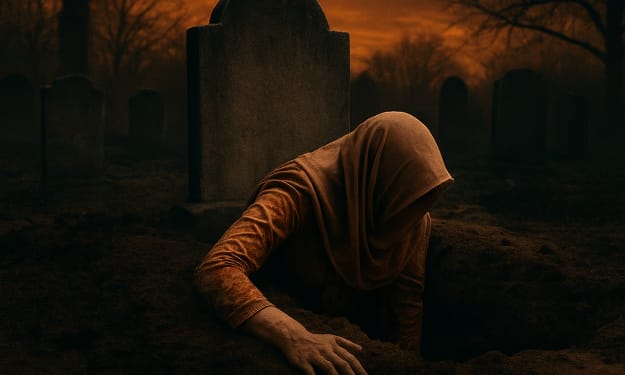
Buried Alive: The Echoes Beneath
The sun had just slipped behind the horizon, draping the village in shades of rust and violet. A cold wind brushed past me, whispering secrets through the dry leaves, as I walked briskly along a seldom-used path. My shortcut home passed dangerously close to the graveyard — a place even the bravest avoided once the sky darkened. Tonight, however, I had no choice. As I neared the low stone boundary, something unusual caught my attention. It wasn’t the rustling of trees or the call of an owl. It was a sound I couldn’t name — a faint moan, soaked in agony, carried on the wind. I froze. Every instinct screamed at me to run. But something deeper — perhaps fate — held me in place. Then, another sound: a dull, rhythmic thud. It echoed like a heartbeat under the earth. Driven by an indescribable force, I climbed over the wall. The graveyard was older than the village itself, its stones worn and weeping with moss. As I ventured deeper, the sounds became clearer — moans, gasps, desperate thuds. They came from a freshly dug grave. I knelt beside it. A simple wooden plaque bore a name I recognized: Zainab. A young girl, no older than twenty, recently declared dead after being struck by lightning. The village had mourned her sudden loss — I remembered the somber procession. But now, her grave was alive with movement. I whispered, “Hello?” My voice cracked in the silence. The earth shifted. From behind a twisted tree, a hunched figure emerged — Old Man Qasim, the graveyard keeper. His eyes met mine, tired and hollow. “You heard it too?” he rasped. “It’s Zainab. She won’t stay quiet.” My breath caught. “What do you mean?” “They say her spirit’s trapped. Been like this since we buried her.” Just then, the soil shifted again — violently. A small fissure formed in the mound. I reached forward, brushing away the loose earth with trembling hands. And then I heard it — a gasp. Wet. Real. Alive. Qasim and I dug with frantic urgency. The earth flew from our hands. And then — we saw it. A hand. Pale. Clawing upward. With all our strength, we pulled open the cheap wooden coffin. And there she was. Zainab. Her wide, terror-filled eyes met mine. She gasped, choking on the stale air. She was weak, shaking, filthy — but alive. We lifted her out, her fragile body barely responding. She was rushed to the doctor — a young woman from the city. Shocked, the doctor examined her and unraveled the truth. Zainab had never died. The lightning strike had induced a coma so deep her breathing and heartbeat had slowed beyond detection. The villagers, terrified by her sudden collapse, mistook her state for death. Bound by custom and fear, they buried her within hours. But Zainab’s body had fought. Deep beneath the soil, she regained consciousness. Trapped. Alone. Suffocating. Her sounds — the thuds, the moans — were cries for help. The village reeled with guilt. The miracle of her survival was shadowed by the horror of what could have been. Zainab’s story became legend — not just of fear, but of awakening, of listening closely to the things we dismiss. As for me, I never took that shortcut again. But I still hear it, sometimes — the echo of her whispers beneath the ground. A reminder that sometimes, the dead are not dead at all.
By Noman Afridiabout a year ago in Horror
When I Died in My Dream
The story begins on a cold, gloomy night when I felt my chest tighten and my breath grow shallow. I was alone in my apartment, silence screaming around me. I tried to call for help, but my voice cracked into whispers. Darkness started to blur the edges of my vision until everything went black. I died. Or so I thought. When I opened my eyes, I was lying in the middle of an unfamiliar forest. The sky above me was a sickly shade of green, and the air was heavy with an unbearable silence. The trees had no leaves, only crooked, bony branches that reached out like claws. I stood up, confused and terrified, and started walking. I didn’t know where I was, but something deep inside told me that I shouldn’t stay still. As I walked, I noticed strange shadows moving behind the trees, too quick to fully see, but always there. I could hear whispers—soft, unintelligible words that made my skin crawl. I wasn’t alone. I was being watched. Soon, I reached a crooked bridge hanging over a river of black water. On the other side, a figure waited for me. A tall, pale man in a torn cloak with hollow eyes. He raised his arm and pointed behind me. I turned. Behind me stood a massive creature—half shadow, half flame. Its voice entered my mind, not through my ears, but like a memory being inserted without permission. “You have crossed the realm of the forgotten.” I ran. I didn’t know where I was going, but I ran until my legs gave out and I fell. The ground opened beneath me, and I fell through darkness, through centuries of whispers, through layers of screams and laughter and silence, until I hit the cold, hard ground. I woke up in a narrow hallway. The walls pulsed like veins, and the floor was soft like flesh. Lights flickered above me. I stumbled forward, gagging from the rotten stench in the air. At the end of the hallway was a door, and behind it... my apartment. I walked through. Everything looked exactly as it had before I “died.” But I wasn’t alone. In the reflection of my TV screen, I saw them—figures standing silently behind me, staring, waiting. I turned quickly. Nothing. Then the TV flickered on by itself. A news reporter’s voice said, “The young man who died last night was buried today—neighbors report strange sightings in the area since his passing.” My photo was on the screen. Panic filled me. I touched my face. I was cold. My breath didn’t fog the window. I screamed. Then I woke up. In my bed. Safe. Warm. Breathing. Just a dream. I laughed, shaking. Just a horrible nightmare. But when I looked at my window, I saw fingerprints from the outside. My door was slightly open, though I remembered locking it. And in the corner of the room... A shadow moved. Not everything you dream is a dream. Some dreams follow you back. I tried to convince myself it was sleep paralysis, a leftover echo of the nightmare. But every time I blinked, the shadow seemed closer. I called a friend over, needing someone to confirm reality. He laughed when I told him the story, but when he looked into the dark corner... His smile vanished. "Who lives with you now?" he asked, backing toward the door. "Tell me you didn’t actually die." He left in a rush, refusing to explain what he saw. That night, I didn’t sleep. The shadow crept along the walls like ink spilled in water. My lights wouldn’t turn on. My phone stopped working. Every time I looked at the TV, it played my funeral. I was sitting there, watching mourners walk past my coffin. I screamed again. But no one heard me. And then... I woke up. Again. Now I wasn’t in my room, but on a train. Everyone around me was silent, motionless, staring ahead. I asked where we were going. No one responded. I looked out the window and saw the same forest, the same bridge. We were going back. I began to understand. Every time I woke up, I was still dreaming. Each layer brought me closer to something real—or perhaps further away from it. The final time I woke up, I was in the coffin. The lid creaked open slowly, and I saw my apartment ceiling. I gasped, sat up, drenched in sweat. This time... I knew. I had never really woken up. I was still dreaming. Or worse... Still dead.
By Noman Afridiabout a year ago in Horror
The House That Wasn't Meant for Humans
I was never the superstitious type. Tales of jinns, haunted houses, and cursed places? Just myths people used to scare children—or so I believed. That changed the night I took a wrong turn during a hiking trip in northern Pakistan. It was just supposed to be a two-day retreat with friends. But on the second day, I wandered off the trail alone to get better photos of an old stone structure hidden deep in the forest. When I reached it, the sun was already setting, and my phone battery was at 3%. The building looked ancient, yet oddly untouched. No moss. No cracks. Just clean, grey stones stacked perfectly, forming an archway leading into darkness. A carved stone slab above the door read something in Arabic: "La yadkhulu illa maznun." I didn't understand it fully then. Later, I learned it meant: "Only the possessed may enter." I should have left. But I was tired, my phone died, and the wind was chilling. I thought, “It’s just a ruin. I’ll rest inside for a bit.” So, I stepped in. That’s when the silence hit me. Not the kind you get in nature—but an oppressive, unnatural stillness. No birds. No wind. Even my own footsteps seemed muted. Inside, the place looked… wrong. The walls were too smooth. No dust. No spiders. No signs of age. There were three doors. Each identical. Wooden. Closed. Carved with symbols I couldn’t read. I chose the middle. --- The moment I opened it, cold air rushed past me, and a low whisper filled my ears—like a hundred voices speaking at once, just beneath the threshold of hearing. My limbs went cold. My breath caught. Inside was a room. Lit with a dim blue glow. In the center: a round table with a mirror on it. Above the mirror: nothing. Yet, it reflected something—something moving, circling, watching. Then the whispers grew louder. "He is not one of us." "He does not belong." "He must pay." My body refused to move. I watched, helpless, as the shadows in the room twisted. They formed a figure—tall, thin, face shrouded in darkness. It stepped toward me, and though it made no sound, I could feel the floor tremble. Then a second figure emerged—a woman, draped in black, eyes like burning white fire. She raised a hand, and the first shadow recoiled, hissing. “You’re not meant to be here,” she said. “Leave. Before they seal your soul.” “I… I didn’t know,” I stammered. “They don’t care. This is their sanctuary. A house of gathering. For jinn. Every hundred years, they meet here. Tonight… is that night.” My heart dropped. She touched my forehead. “You have seconds. Once the third door opens, you’re theirs.” I turned to run, but the hallway was no longer there. Instead, I stood at the center of a massive, circular chamber. Dozens—no, hundreds—of jinns stood around me. Each different. Some fire, some smoke, some winged, others serpentine. All watching. I tried to speak, but my mouth made no sound. Then, one of them stepped forward. Massive, crowned, made of red flame. His voice shook my bones. “You’ve broken the seal of the Middle Gate. That door belongs to the ‘Mirror Keeper.’ You have seen what no man must see.” I collapsed. Then the woman appeared again. She stood between me and the flame-being. “He didn’t know. Let him go.” “He must give something,” the being said. “Nothing leaves untouched.” The woman turned to me. “Give a memory. One that matters.” I didn't understand. Then pain shot through my head—a memory surged: my mother’s face, laughing, brushing my hair when I was a child. “No!” I shouted. But the being reached forward and touched my temple. The memory vanished. Just… gone. I couldn’t recall her face anymore. “That is the price,” the jinn said. “Now go. And speak of this… and we will return.” --- I woke up just outside the archway. Morning birds chirped. My phone was dead. The stone structure now looked broken, aged, lifeless. As if it had been abandoned for centuries. When I returned to my friends, they said I’d been missing for two days. I didn’t tell them what happened. Who would believe me? But every now and then, in dreams, I see a round mirror. And in it—a shadow, circling. Watching. And the memory of my mother’s smile? It never came back.
By Noman Afridiabout a year ago in Horror
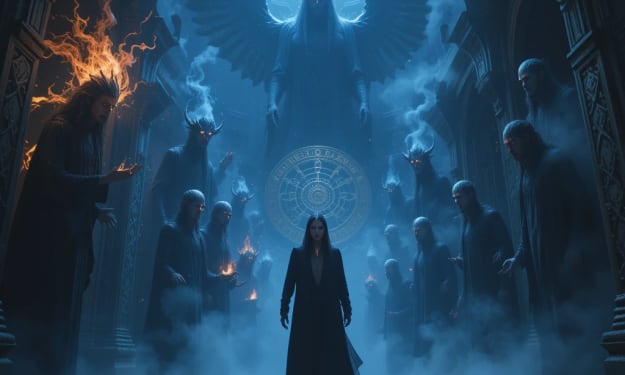
The Whispering Shadows: Jinn in the Attic
The first thing Rehan noticed about his grandfather’s house was how it breathed. Not literally, of course—but every wooden creak, every subtle groan of the walls, sounded like the house exhaling. After the passing of his grandfather, Rehan inherited the old colonial structure at the edge of a long-forgotten village. A perfect retreat for writing, he had thought. Quiet. Isolated. A place where stories could come alive. But he didn’t know that one already had. The attic had been sealed. Not locked—sealed. Ropes of black cloth tied into complex knots, symbols drawn in what looked like dry blood on the wood, and a chilling scent of burnt something. He laughed nervously the first time he saw it. "Grandpa was into weird stuff." The villagers had been cryptic. An old woman had grabbed his wrist at the corner store. “Don’t go to the top. He trapped something. He died before sealing it forever.” Rehan smiled politely and walked away. Superstition, he thought. But on the third night, he heard it. A whisper. Faint. From the attic. At first, it was a name. “Rehan...” He jolted awake. It came again the next night. Clearer. Closer. “Rehan... I remember you.” Each whisper scraped his mind like fingernails on a chalkboard. He searched for logical explanations—wind, rodents, pipes. But none made sense. Finally, on the seventh night, he snapped. Armed with a crowbar and flashlight, he tore down the ropes and symbols and yanked the attic door open. What he saw was... nothing. Just dust, broken furniture, old books—and something that resembled a cage. Small. Made of iron and bone. Burn marks in a circle. As he stepped inside, the door behind him slammed shut. And the whisper turned into breathing. “Welcome back... child of betrayal.” He turned—and there it was. A jinn. Not fully formed. Its body shimmered like mist, but its eyes glowed—two pits of red flame. It hovered above the ground, face shifting between human and something far older, far darker. Rehan fell backward. “What are you?” “You know me. Your grandfather made me... his servant. But he betrayed the oath. And so did you.” “I didn’t do anything!” “You broke the seal,” it growled, “That was enough.” The room went cold. His flashlight died. Darkness swallowed everything but those burning eyes. Rehan crawled back, chanting anything he could remember from his childhood. Verses his grandmother used to whisper. But the jinn only smiled. “That won’t help you. Your blood is bound.” Then it vanished. The next day, Rehan tried to leave. His car wouldn't start. His phone showed no signal. Even the roads seemed to curve back to the house. He was trapped. And the attic whispered louder now. Sometimes laughter. Sometimes screams. In desperation, he began reading his grandfather’s old books—grimy, handwritten journals filled with rituals, signs, and warnings. He learned the truth. His grandfather had captured the jinn in a rage of revenge. The creature had once haunted the village, stealing children. Rehan’s uncle had been one of them. In grief, his grandfather summoned it—not to banish it, but to bind it. But binding a jinn requires blood. His own blood. And when he failed to sacrifice completely, the jinn was only partially sealed. Its revenge was merely... delayed. Until Rehan came. The journal offered one solution: finish the binding. Complete the sacrifice. Rehan couldn’t understand what it meant—until he saw the final page. “Only the willing blood of a bloodline can end the pact.” He stood before a mirror. The jinn appeared behind him. “You see now,” it whispered, “You must finish what he started.” “I won’t kill myself for you.” “You won’t have to. The house will.” And it did. That night, the walls moved. The floorboards snapped. Furniture flew. The very structure came alive. The jinn didn't need to attack—the house itself was its vessel. Rehan ran to the attic, clutching the last page of the journal. There, he redrew the symbols, poured his blood onto the bones, and began chanting. The house screamed. Windows shattered. The jinn appeared—writhing in pain, trying to stop him. “You cannot bind what is already free!” But Rehan did not stop. As the final verse left his lips, the jinn was pulled into the circle. It screeched—louder than thunder—before vanishing in a burst of light and ash. Silence. And then... the house breathed no more. In the morning, Rehan walked out. The car started. The phone buzzed. The roads led away. He left the house behind. But in the rearview mirror, just as he turned the last corner, the attic window stood open. And someone was whispering his name again.
By Noman Afridiabout a year ago in Horror
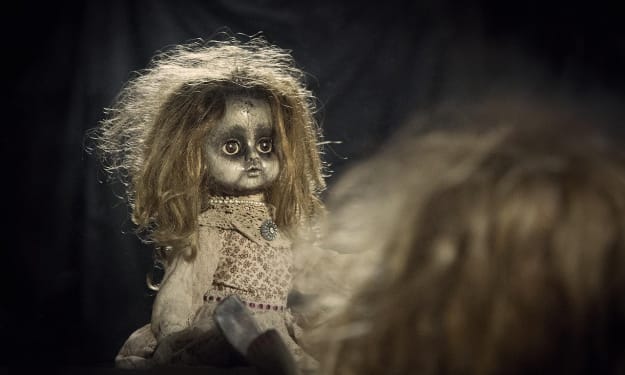
The Cursed Doll. Content Warning. AI-Generated.
In the dim corner of an abandoned Victorian house lies a doll with hollow eyes, a cracked porcelain face, and a faded dress that whispers of forgotten times. To most, it’s just a discarded toy. But to those who know the legend, this doll is a vessel of darkness, a cursed artifact that brings death and despair to whoever dares awaken it. This is the tale of the cursed doll — a story steeped in mystery, fear, and supernatural horror.
By RIDOY AHAMMEDabout a year ago in Horror
The Bloodstained Silk
Chapter 1: Festival and Blood In the heart of an ancient mountainous region, nestled in a valley wrapped in mist and shadow, stood the crumbling remains of a once-glorious palace. It had belonged to the Larma family, an old Chakma lineage that once ruled these parts with grace and pride. But now, the estate stood abandoned—haunted by whispers of betrayal, bloodshed, and a silk handkerchief soaked in death.
By Kevin Hudsonabout a year ago in Horror