fiction
Horror fiction that delivers on its promise to scare, startle, frighten and unsettle. These stories are fake, but the shivers down your spine won't be.
Wrath's Inferno. Top Story - June 2026. Content Warning.
I rub the tiredness from my eyes and crane my neck to listen in the dead of night. I swear I heard a door open. I wave off the thought. It’s probably just my imagination from all of my late nights at work; the doors were locked before I came up. A creaking floorboard stops my heart in my chest, sending a maddening pulse into my ears. Someone is here. Ice slides through my veins with every footstep ascending the staircase and drawing closer. Forcing my stunned limbs into action, I creep along the floor to my window and hide behind my bed like a child. Every too noisy breath dares to give away my position.
By Bea Weaver5 months ago in Horror
The Stairway Down. Content Warning.
It was a familiar, unfamiliar place. It was a hazy twilight; a realm of transcendence he felt he had been to, perhaps once in a dream or before he had been born. Yet, he was a total stranger here. There wasn’t much memory left of anything… not where he came from, or where he was going. He didn’t know where his body ended and where his external world began, or if they had all melted into one. He couldn’t tell what was sound or light, or feel the temperature of his skin. He didn’t even remember his name.
By Mama Magdalene5 months ago in Horror
There Are No Dogs. Honorable Mention in Out of the Dream Challenge. Content Warning.
“THERE ARE NO DOGS” was spelled out in magic marker on a sheet of paper Jack had taped above the terminal as a reminder. Two years earlier, he had awakened in this place with no memory of his previous life. According to the contract he’d found on the desk in the living quarters, he had volunteered for this assignment in return for a reduction of his sentence, though the thick sheaf of papers made no mention of any crime. The many clauses indemnifying “The Agency” from any deleterious effects, physical or mental, suffered by volunteers included, but were not limited to: anguish, anorexia, arthritis, apnea, bursitis, cirrhosis, dementia, fugue states, gastrointestinal issues, hemorrhoids, insanity, jaundice, lesions, memory issues, Nielsen Syndrome, obesity, reality fracture, and a host of other conditions that were suggested could be expected.
By J. Otis Haas5 months ago in Horror
Murderkill River
To lay her head down on the pillow again felt like a sin. As an atheist, she didn’t literally feel like it was some crime against the unknown and unknowable, but it was close. Vivid, the dream dropped gems in her skull like so many pieces of artifacts. She could still hear the screams. She smelled the blood in the air. It hung like a metallic mist drifting on the wind. Though the pieces didn’t fit together into a cohesive whole, they came in fragments. Each of them reminded her of the battle that had been waged. Her alarm clock sounded on her phone at three am. She picked herself up from her bed, the nightmare still scaling the walls of her consciousness.
By Skyler Saunders5 months ago in Horror
The Woman in Room 17
The first thing Eleanor noticed was the smell. Not because it was strong. Because it was wrong. Hospitals smelled like bleach. Schools smelled like dust. Churches smelled like old wood and quiet promises. This place smelled clean in a way that made her skin crawl. Like somebody had scrubbed every trace of a person out of it. She opened her eyes slowly. White ceiling. White walls. A narrow bed. A chair in the corner. No windows. At least none she could see from where she was lying. The panic arrived before the memory. It always did. A cold hand around the throat. A pressure behind the ribs. A certainty. Someone had taken her. She sat upright. The room tilted. The blanket slid from her lap. There was a plastic bracelet around her wrist. A name printed on it. ELEANOR PRICE The sight of it sent anger shooting through her chest. That was how they did it. Kidnappers in movies used ropes. The real ones used paperwork. A lock clicked somewhere beyond the door. Eleanor froze. Footsteps. Steady. Unhurried. The footsteps of someone who wasn't afraid. The door opened. One of them stepped inside carrying a paper cup. Late forties. Blue uniform. Gentle smile. The kind of smile people practiced in mirrors. "Good morning, Eleanor." Eleanor stared. The woman set the cup on the table. "You slept better last night." "Where am I?" The smile never moved. "You're safe." There it was. That answer. The answer people gave when they didn't want to tell the truth. Eleanor swung her legs over the side of the bed. "Call my daughter." "We can do that later." "Call her now." The woman's eyes softened. Not pity. Something worse. Recognition. Like she'd had this conversation before. Many times. "I'll be back in a little while." Then she left. The lock clicked again. Eleanor waited. Counted to sixty. Then stood. The room swayed. Her knees trembled. Drugged. Of course she was drugged. People didn't wake up in locked rooms because everything was fine. They woke up in locked rooms because somebody wanted them there. And Eleanor intended to find out why. By now she had a system. Every morning she counted. One. Two. Three. Four white walls. One locked door. One narrow bed. One chair bolted to the floor. No family. No answers. Day forty-seven. Or maybe forty-eight. They liked messing with time. That was how places like this worked. Keep people confused long enough and eventually they stopped fighting. Eleanor wasn't going to stop fighting. Not today. Not ever. The lock clicked again. The dark-haired one this time. Soft voice. Gentle hands. One of the good ones. The dangerous kind. "Morning, Eleanor." Eleanor ignored her. The woman placed a tray on the table. Eggs. Toast. Orange juice. Drug delivery system. Same as yesterday. Same as every day. "You need to eat." "I need a phone." The woman sighed. Not annoyed. Sad. Like she felt sorry for her. Eleanor hated that look. People only looked at you that way when they thought they knew something you didn't. "You spoke to your daughter yesterday." "No, I didn't." "You did." "No." The woman glanced at the clipboard. "There was a video call." "No." The word came harder this time. Sharper. Because it wasn't true. They showed her videos. Pictures. Actors. Whatever they thought would work. But she knew her daughter. She knew her own child. And the woman on the screen yesterday had been wrong. The smile was wrong. The voice was wrong. The age was wrong. Everything about her had been wrong. The handler stood. "I'll check on you later." Eleanor said nothing. The door closed. The lock clicked. Again. Always the lock. Always the click. As if they were afraid of something getting out. Or afraid of the truth getting in. Eleanor waited. Listened. Counted footsteps. One. Two. Three. Four. Five. Gone. Silence. Then she moved. The vent behind the bed. She had discovered it weeks ago. Maybe two. Maybe three. Time had become slippery here. Like trying to hold water in your hands. She pulled the vent cover loose. Reached inside. Retrieved the spoon. Her spoon. The one she'd stolen from lunch. The one she'd spent weeks grinding against concrete. Not a weapon. A tool. Tools opened doors. Tools got people home. Tonight. Tonight she was leaving. At midnight the hallway was silent. Or as silent as this place ever got. Eleanor knelt beside the door. The spoon trembled between her fingers. Not from fear. From age. At least that's what they wanted her to believe. Her hands had not always shaken. Her mind had not always wandered. She remembered that much. Didn't she? The metal slipped into the lock. Twist. Push. Wait. Nothing. She adjusted her grip. Tried again. Twist. Push. A click. Eleanor froze. The sound was so small she almost missed it. But it was there. Real. The lock had moved. For a second she couldn't breathe. Forty-seven days. Maybe forty-eight. Locked doors. Locked windows. Locked conversations. And now— A crack. A weakness. A mistake. The spoon turned once more. The latch released. The door drifted open. Eleanor stared. Nobody came. No alarms. No footsteps. Nothing. Just a dark hallway stretching away in both directions. Freedom. She stepped out. The air felt different immediately. Cooler. The carpet softened her footsteps. Doors lined both sides of the corridor. Most closed. A few cracked open. Enough to reveal pieces of lives. A lamp. A dresser. A photograph. A sleeping figure. Not cells. Rooms. The thought unsettled her. She pushed it away. Of course they were rooms. Kidnappers had budgets too. Halfway down the hall she heard whispering. A television flickered inside one of the open doors. An old man sat alone watching static. Not a movie. Not a show. Static. Gray snow dancing across the screen. He looked up as she passed. Their eyes met. The old man began crying immediately. No warning. No expression change. Just tears. Rolling silently down both cheeks. Eleanor stopped. "What is it?" The man stared. Then whispered: "You got out." A chill climbed her spine. "What do you mean?" His mouth trembled. "You got out." Like it was impossible. Like he'd watched a ghost step out of a grave. Eleanor took a cautious step backward. The old man suddenly grabbed the arms of his chair. "Run." The word came out broken. Barely audible. "Run before they find you." Eleanor didn't need to be told twice. She turned and hurried away. Heart hammering. The corridor seemed longer now. The shadows deeper. The doors watching. Every second felt borrowed. Then she heard it. Footsteps. Somewhere behind her. Slow. Measured. Not running. Never running. The people in charge never ran. Why would they? They already owned the building. Owned the locks. Owned the paperwork. Owned the story. The footsteps continued. Steady. Patient. Certain. Eleanor rounded a corner. Then another. Searching desperately for an exit. A sign appeared at the end of the hall. EXIT. The most beautiful word she'd ever seen. She almost laughed. Almost cried. Almost collapsed. Instead she walked faster. Then faster. Then faster. Until she was nearly running. The door burst open beneath her hands. Cold air slammed into her face. Real air. Night air. Free air. Eleanor stumbled into the darkness. The parking lot stretched before her. Silver beneath the moon. Cars. Trees. Sky. Actual sky. For a moment she simply stood there. Breathing. Nobody understands what freedom smells like until it's gone. Grass. Dirt. Rain somewhere far away. The world. The actual world. Not disinfectant. Not locked doors. Not handlers. The world. Tears filled her eyes. She started walking. Then running. Then running harder than she thought her body could still manage. As if every step might return a stolen piece of herself. As if somewhere ahead her daughter was waiting. As if home still existed exactly where she'd left it. As if time had been patient enough to wait for her. The road felt longer than she remembered. Not physically. Wrong. Like somebody had stretched it. Pulled it thin. Eleanor walked until her legs shook. Then kept walking. The moon followed. Silent. Patient. The way predators followed wounded things. By the time headlights appeared behind her, she was limping. The car slowed. A young woman leaned across the passenger seat. "Ma'am?" Eleanor stepped back immediately. The woman raised both hands. Not threatening. Not scared. Concerned. Which somehow felt worse. "You okay?" "No." The answer came instantly. Honest. Raw. The young woman studied her. The hospital bracelet. The bare feet. The trembling hands. The nightgown. Eleanor saw the realization happen. The assumptions. The judgment. The story being built behind those eyes. "They kidnapped me." The woman blinked. Then nodded slowly. "Okay." Eleanor frowned. Okay? Just okay? No questions? No disbelief? The woman reached over and opened the passenger door. "Get in." Eleanor hesitated. Every instinct screamed not to trust strangers. But every instinct had also screamed that she was trapped. And she had been right about that. Hadn't she? She climbed inside. The heater wrapped around her immediately. Warm. Safe. Almost enough to make her cry. The woman glanced at her. "Do you know where you live?" "Of course I do." The answer felt insulting. Eleanor recited the address. Without hesitation. Without doubt. The woman typed it into her phone. Then froze. Only for a second. But Eleanor saw it. A flicker. Something. "What?" "Nothing." "What?" The woman shook her head. "Nothing." Liar. People always said nothing when something was wrong. The rest of the drive passed in silence. Streetlights appeared. Then houses. Then neighborhoods. Then familiar roads. At least they should have been familiar. Something felt off. A grocery store where she didn't remember one. A church painted different colors. Trees missing. Buildings she didn't recognize. Everything looked close enough to be right. But not right enough. As if someone had rebuilt the world from memory. When they finally turned onto her street, Eleanor felt relief flood through her. Home. Finally. Home. Then she saw the mailbox. The paint had changed. The tree in the front yard was enormous. The porch looked smaller. Older. Weathered. Memory shouldn't age. The thought struck her so hard she almost laughed. The car stopped. The woman looked at her carefully. "Are you sure?" Eleanor was already opening the door. The porch steps groaned beneath her weight. She didn't remember them doing that. The light above the door flickered. She didn't remember that either. Nothing felt right. And yet everything felt familiar. Like hearing your mother's voice through a wall. Close. But distorted. She knocked. Once. Twice. Three times. Movement inside. Footsteps. The lock turned. The door opened. A woman stood there. Gray in her hair. Lines around her eyes. A face marked by years. For a moment neither of them spoke. The woman's hand flew to her mouth. The color drained from her face. "Oh my God." Eleanor stared. Something inside her shifted. Not recognition. Something older. Something buried. Something afraid. "Where's my daughter?" The woman's eyes immediately filled with tears. No. Not tears. Devastation. The kind that comes from finding something you already buried. "Eleanor—" "Where is she?" The woman made a sound. A small broken sound. Then one word escaped her lips. One impossible word. "Mom." Everything stopped. The night. The street. The wind. The blood inside Eleanor's veins. "No." The woman nodded. Tears falling freely now. "Mom." "No." Her voice cracked. "No." The woman stepped forward. Slowly. Like approaching a frightened animal. "It's me." "No." Because her daughter wasn't old. Because her daughter still needed help tying her shoes. Because her daughter still slept with the hallway light on. Because— Because— Because— The reasons kept coming. But suddenly they felt fragile. Thin. Like paper left in rain. The woman reached for her hand. And Eleanor noticed something. A scar. A tiny white scar beside her thumb. The memory hit like lightning. Eight years old. Bicycle. Driveway. Blood. Crying. Bandages. A little girl saying: "Don't tell Dad." The memory arrived whole. Perfect. Alive. And for one glorious second Eleanor knew exactly who she was looking at. Her daughter. Her little girl. Not little anymore. Not even close. The realization tore through her like broken glass. Because if her daughter had grown old— Then where had all those years gone? Where had she been? What had happened? What had been stolen? And why couldn't she remember any of it? The memory vanished. Just as quickly as it arrived. Gone. The scar remained. The face remained. The tears remained. But the certainty disappeared. Eleanor stared. Lost again. The woman squeezed her hand. Holding on. Refusing to let go. Like she'd done it before. Many times. And suddenly Eleanor understood something she couldn't explain. The woman wasn't crying because she'd found her. The woman was crying because she'd already lost her. Again. And again. And again. And every time she came back— She left all over again. The house was warm. Too warm. The kind of warmth that made old memories wake up. The woman led her inside. Slowly. Carefully. Like she was afraid Eleanor might disappear if she looked away for too long. Family photographs covered the walls. Hundreds of them. Thousands, maybe. Eleanor stopped in front of one. A little girl missing her front teeth. Holding a drawing. A horse. Not a dog. Not a house. A horse. The memory hit so hard it nearly buckled her knees. "Mom?" The woman moved beside her. Eleanor pointed at the picture. "I remember that." The words came out small. Fragile. Like they might break if spoken too loudly. The woman covered her mouth. Fresh tears immediately filling her eyes. "I remember that." A horse. Crayons. The kitchen table. Orange juice spilled across the paper. A little girl crying because she'd ruined it. A little girl she had scooped into her lap and told: "It's okay. We can draw another one." The memory stayed. Longer this time. Not seconds. Minutes. The woman was openly crying now. Not hiding it. Not apologizing for it. Just crying. And Eleanor suddenly hated herself. Because she didn't know why. Not completely. Not yet. But she knew enough. Enough to understand that every tear had a history she couldn't remember. Enough to understand she'd been leaving this woman for years without ever going anywhere. The realization hurt worse than the locked room. Worse than the bracelets. Worse than the fear. Because kidnappers could be fought. This couldn't. ─── Hours passed. Or maybe minutes. Time had become strange. They sat together on the couch. Photographs spread across the coffee table. Graduations. Birthdays. Christmas mornings. A wedding. Children. Grandchildren. An entire life. Eleanor touched each picture carefully. Like they were artifacts recovered from a shipwreck. Proof that something had existed. Proof that she had existed. The woman never stopped holding her hand. Not once. Eventually the house grew quiet. The clock continued ticking. The television stayed off. Neither of them wanted noise. Neither of them wanted interruption. The woman rested her head against Eleanor's shoulder. The same way she used to when she was little. And for one impossible moment— The years vanished. Not forgotten. Gone. As if they had never happened. As if the universe had briefly decided to be merciful. Eleanor closed her eyes. Holding her daughter close. Feeling her breathe. Feeling the weight of her head against her shoulder. Feeling love. Pure. Undeniable. Untouched by memory. Untouched by time. Untouched by whatever was happening inside her mind. Eventually she felt it. The slipping. The tide pulling away from shore. Slow at first. Then stronger. The photographs on the table began losing context. The stories attached to them unraveled. Names loosened. Dates vanished. Moments drifted away. One by one. Like leaves floating down a river she could no longer reach. Terror rose in her chest. Quiet. Private. She knew what was happening. She knew she was losing them again. She tightened her grip on her daughter's hand. As if love alone could anchor memory. As if wanting something badly enough could make it stay. It couldn't. It never could. The room softened around the edges. The certainty faded. The connections broke. One after another. Until only feelings remained. Love. Sadness. Longing. The shape of something important without the words for it. The woman sleeping beside her shifted slightly. A strand of gray-streaked hair fell across her cheek. Eleanor stared at her. Studied her face. Searching. Trying. Begging her own mind to hold on. She knew this woman. She knew she did. She just couldn't remember how. The loss hit her so suddenly she gasped. Because a terrible truth had finally become clear. Forgetting wasn't the worst part. The worst part was knowing. Knowing there was something precious on the other side of the fog. Knowing it mattered. Knowing you loved it. And still being unable to reach it. The woman smiled softly in her sleep. Eleanor reached over. Brushed the strand of hair from her face. The gesture felt familiar. Ancient. Automatic. Like a prayer learned so young you no longer remembered learning it. The woman smiled again. Still asleep. Eleanor felt tears gathering in her eyes. She didn't know why. Not exactly. Only that her heart was breaking for reasons her mind could no longer explain. She looked at the sleeping woman one last time. Then whispered: "I think you're my daughter." The words barely made a sound. The woman never woke. Eleanor smiled. A sad, trembling smile. And began to cry before she knew why.
By Tifani Power 5 months ago in Horror
The Ghost Who Saved My Life Wanted Something in Return...
The first time I died, nobody believed me. Doctors called it a miracle. My mother called it divine protection. But I knew the truth. Something had saved me. And it wasn’t human. It happened three years ago on a freezing November night when rain slammed against my windshield so hard I could barely see the road. I was driving home from a late shift, exhausted, angry, and distracted after another argument with my fiancé, Adam. We were supposed to get married in two months. Instead, we were falling apart. I remember gripping the steering wheel tightly, tears blurring my vision. My phone lit up with another message from him. “Maybe we need space.” I glanced down. Just for a second. That was enough. A truck came out of nowhere. Bright headlights. Screeching brakes. Metal twisting. Glass exploding. Then darkness. I should have died instantly. The police later said my car had flipped into the river below the bridge. No seatbelt. Broken window. Freezing water. No chance of survival. But when they found me at dawn, I was lying safely near the roadside, unconscious but alive. No one understood how I got there. Not even me. At first. Because I remembered something. A woman dressed completely in white. Standing beside me in the water. Her long black hair floated around her like seaweed. Her skin was pale—too pale. And her eyes… Her eyes looked painfully sad. “You’re not supposed to die yet,” she whispered. I couldn’t move. Couldn’t breathe. The river was swallowing me whole. Then she touched my forehead. Ice spread through my body. “I’ll save you,” she said softly. “But someday…” She smiled. “…you’ll return the favor.” I woke up screaming in the hospital. Nobody believed the story. Not Adam. Not my family. Not even I fully believed it after a while. Trauma can do strange things to the brain. That’s what my therapist said. So I buried the memory. Life moved on. Adam and I broke up. I changed cities. Started over. For the first time in years, things finally became normal. Until the knocking started. Every night at exactly 3:13 a.m. Three soft knocks on my apartment door. Knock. Knock. Knock. At first, I ignored it. Probably neighbors. Bad timing. But one night curiosity got the better of me. I opened the door. Nobody. Just a cold gust of air. And wet footprints. Bare footprints. Leading into my apartment. I froze. The footprints stopped right beside my bed. That night, I slept with every light on. The next morning, I convinced myself I imagined it. Stress. Lack of sleep. Too much coffee. Then things got worse. My mirrors started fogging up. Even when the room wasn’t hot. Words appeared. At first small ones. “Soon.” Then— “I SAVED YOU.” And finally— **“DON’T FORGET YOUR PROMISE.”** I nearly shattered the mirror trying to clean it. That was when I saw her again. Standing behind me. The woman in white. Silent. Dripping river water onto my floor. I spun around. Nothing. Gone. But her reflection stayed in the mirror. Smiling. “You remember me now,” she whispered. I moved out two days later. It didn’t matter. She followed. Hotel rooms. Friend’s apartments. Even work. I’d catch glimpses of her standing at the end of hallways. Watching. Waiting. Always wet. Always smiling. Then came the accident. I was crossing the street after work when a speeding motorcycle lost control. It should’ve hit me. But suddenly— Someone yanked me backward. Hard. I fell. The bike crashed inches from where I stood. A stranger helped me up. “You okay?” I looked around wildly. No one had touched me. Except— Across the street— The woman in white stood beneath a broken streetlamp. Smiling again. That night she finally spoke clearly. I woke to find her sitting in the chair beside my bed. “You owe me,” she said. My throat tightened. “What do you want?” Her expression darkened. “My son.” I stared at her. “What?” “He drowned,” she whispered. “Long ago.” Water pooled beneath her feet. “They took him from me.” Her voice cracked like broken glass. “I saved your life so you could help me find him.” Something deep inside me screamed to run. But guilt rooted me in place. She had saved me. Hadn’t she? “What if I say no?” I asked. Her head tilted unnaturally. The room temperature dropped instantly. “You already promised.” I didn’t remember agreeing. But maybe dying changes the rules. Over the next few weeks, she led me through abandoned places near the river where my crash happened. Old tunnels. Collapsed buildings. Forgotten ruins. Every night she appeared. Every night she whispered the same thing. “He’s close.” I started researching. Newspapers. Archives. Missing persons reports. That’s when I found her. Her name was **Eleanor Voss. A woman who drowned herself in 1978 after her six-year-old son disappeared near the river. People claimed they saw her ghost for years afterward. Always searching. Always crying. But there was one detail nobody talked about. The boy’s body had never been found. Until I discovered an old police report. Buried evidence. A hidden well beneath an abandoned church near the riverbank. My stomach dropped. I went there the next night. She followed silently. The church was crumbling. Rotting wood. Broken stained glass. The smell of mold and wet earth. Behind the altar, hidden under debris, I found the well. And inside— Tiny bones. A child. I nearly threw up. The police later confirmed it. Her son. Murdered. Hidden. Forgotten. But finally found. I expected relief. Peace. Closure. Instead— That night she returned. Standing beside my bed. Dry for the first time. Her sad eyes softer now. “It’s finished,” I whispered. She smiled. “Yes.” I exhaled shakily. “So… we’re done?” Silence. Then she stepped closer. Too close. “You misunderstand,” she said gently. “I wanted something in return.” Fear curled inside me. “What?” Her cold fingers touched my hand. “Loneliness.” The room darkened. “You were supposed to live the life I lost.” Her voice trembled. “A family. Happiness.” Tears filled her eyes. “But you threw it away.” Adam. The wedding. Everything. “I saved your life,” she whispered. “So now…” Her grip tightened. “…you must help save mine.” I woke up the next morning engaged to a man I didn’t remember meeting. A beautiful house. Wedding photos. Neighbors who knew my name. Everyone acted like this life had always been mine. But every mirror in the house showed something different. Her reflection. Standing behind me. Watching. Smiling. Waiting. And every night at exactly **3:13 a.m.** I wake to find her sitting beside my bed. Whispering the same terrifying sentence into my ear. “Live carefully.” “Because if you waste this life again…” “…I’ll take it back.”
By Diana Joseph 5 months ago in Horror
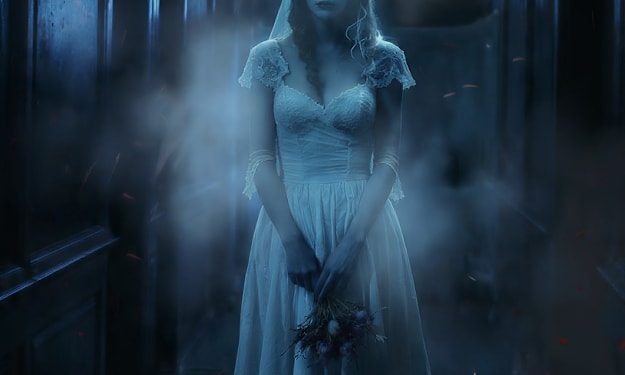
The Bride in White Only Appears Before Someone Dies
Nobody in Raven Hollow talked about the bride. Not openly. Not during daylight. And certainly not after sunset. The villagers had an unspoken rule—when darkness arrived, doors stayed locked, windows remained covered, and no one stepped outside after midnight. Especially when the church bell rang twelve times. Because that was when **she** appeared. The Bride in White. And whenever someone saw her… Someone died. Twenty-six-year-old Elena Hart never believed in ghost stories. She believed in facts. Logic. Reality. Which was exactly why returning to Raven Hollow after fifteen years felt unbearable. Her mother had passed away unexpectedly, leaving behind the family house she swore she would never return to. As Elena drove into the village, fog swallowed the road like a living thing. The place looked frozen in time. Old lanterns flickered weakly. The forest surrounding the village stood unnaturally still. And everyone she passed looked… afraid. At the local bakery, conversations stopped the second she entered. People stared. Whispered. Then looked away. “You’re Margaret Hart’s daughter,” the old baker finally said. Elena nodded. The man’s face turned pale. “You shouldn’t stay here,” he muttered. Before she could ask why, he quietly added— “Not after what happened to your family.” Her stomach tightened. “What happened?” The old man hesitated. Then leaned closer. “Your mother saw the bride.” A cold silence settled between them. “The bride?” Elena asked. He immediately stepped back. “No one says her name.” And just like that, the conversation ended. That night, Elena settled into her childhood bedroom. The house creaked constantly. Wind howled outside. At exactly 12:00 a.m., the old grandfather clock downstairs began chiming. One. Two. Three. Twelve. Then— Silence. A strange feeling crept over her skin. Like someone was watching. Elena walked to the window. Outside, thick fog covered the street. At first, she saw nothing. Then movement. A woman stood near the cemetery gates. Still. Unmoving. Wearing an old-fashioned white wedding gown stained with dirt. Her long veil covered her face completely. Elena frowned. Who stands outside at midnight dressed like that? Then slowly— The woman lifted one hand. And pointed. Directly toward a nearby house. The lights inside flickered. Then darkness. The bride turned— And vanished. Not walked away. Not faded. Gone. Elena barely slept. The next morning, church bells rang loudly. People gathered outside Mr. Holloway’s house. An ambulance stood nearby. “Elena,” someone whispered. “He died in his sleep.” Her chest tightened. The house. It was the same house the bride pointed at. No. Coincidence. Had to be. Still… Fear crawled quietly beneath her skin. Later that afternoon, Elena visited the village church hoping for answers. The priest, Father Thomas, seemed nervous when she mentioned the bride. “You saw her?” “Yes.” His face lost all color. “You must leave Raven Hollow.” “Oh come on,” Elena said impatiently. “You don’t seriously believe a ghost predicts deaths?” Father Thomas looked at her strangely. “She doesn’t predict them.” He lowered his voice. “She chooses them.” A chill spread through Elena’s body. He walked toward an old locked cabinet and pulled out a dusty journal. “This village has carried her curse for nearly a century.” He opened to a yellowed photograph. A young woman stood beside a church. Beautiful. Smiling. Wearing a white gown. “Her name was Isabelle Moreau,” Father Thomas said softly. “She was abandoned at the altar.” Elena frowned. “That happens to people. They don’t become murder ghosts.” “She didn’t become one immediately.” He swallowed hard. “Her fiancé disappeared before the wedding. Villagers accused her family of witchcraft. Humiliated, heartbroken… she hanged herself in her wedding dress near the cemetery.” Thunder rumbled outside. “The deaths started days later.” Elena crossed her arms. “So what? People made up stories.” Father Thomas stared at her. “The villagers didn’t make up thirty-seven deaths.” That shut her up. “She appears before someone dies,” he continued. “Always at midnight. Always in white.” “And nobody stopped her?” His expression darkened. “Anyone who tries…” He looked toward the cemetery. “Dies first.” That night, Elena locked every window. Fear made no sense. Yet sleep refused to come. At 12:00 a.m., the church bell rang again. Slowly. Twelve times. Then Tap. Tap. Tap. Something touched her bedroom window. Her breathing stopped. Outside— The bride stood impossibly close. Second floor. No ladder. No balcony. Just standing there. Watching. Her veil fluttered unnaturally despite the still air. Then slowly… She raised her hand. And pointed. Toward Elena’s house. No. No, no, no. Elena stumbled backward. “You’re not real,” she whispered shakily. The bride tilted her head. Then slowly lifted her veil. Elena screamed. The woman had no eyes. Only darkness. An empty smile stretched across stitched lips. Then she vanished. The next morning, Elena found Father Thomas dead inside the church. Heart attack, people said. But his terrified expression suggested otherwise. Panic spread across the village. Because everyone knew. The bride had pointed at Elena’s house. Which meant— Someone there would die next. Elena packed immediately. She wasn’t staying another night. But halfway out of town— Her car died. No signal. No help. No way out. Rain began pouring heavily. She returned home trembling. That evening, while searching for candles, she discovered something hidden beneath loose floorboards. A letter. Written by her mother. **Elena, if you’re reading this, she has probably found you.** Her hands shook. **The bride does not haunt strangers. She haunts bloodlines.** No. Impossible. **Your grandmother saw her. Then your grandfather died. I saw her. Then your father died.** Elena stopped breathing. **If she ever points at you, do not answer the door after midnight. No matter what voice you hear.** A loud knock echoed downstairs. Her heart nearly stopped. Knock. Knock. Knock. Midnight. Then a soft voice came through the darkness. “Elena…” Her blood froze. It sounded exactly like her mother. “Please open the door.” Tears filled her eyes. Impossible. Her mother was dead. Another knock. Softer this time. “You left me alone,” the voice whispered sadly. The handle slowly turned. Then another voice emerged. Cold. Broken. Not her mother. “Let me in…” Footsteps creaked upstairs. Slow. Dragging. Elena backed into her room. The air turned freezing. Then— The bedroom door opened by itself. The bride stood there. Closer than ever. Her veil slowly lifted. And underneath— Elena gasped. The face staring back at her looked exactly like her own. Same eyes. Same mouth. Same terrified expression. The bride smiled. “You were always meant to replace me.” Darkness swallowed the room. The next morning, villagers found Elena gone. No body. No footprints. Nothing. Only a white wedding veil left neatly folded on her bed. And ever since then… Travelers passing through Raven Hollow sometimes see two women standing near the cemetery at midnight. One old. One young. Both dressed in white. Waiting silently for the next person who doesn’t believe the story. Because in Raven Hollow— The Bride in White only appears before someone dies.
By Diana Joseph 5 months ago in Horror
Thalassophobia. Runner-Up in Out of the Dream Challenge. Content Warning.
THALASSOPHOBIA: The irrational fear of open water. * At the edge of Čertovo Jezero, in Western Czechia, the cautionary trees grow in a way that feeds… isolation. The forest of Šumava cocoons a deep bed of water stretching for two miles. Even in the peak of Summer, the lake’s inky surface maintains a glacial stillness.
By Edward Swafford5 months ago in Horror