
Xi's Silent Alliance: Beijing’s Stake in the Russia-Ukraine Battlefield
Behind the scenes of war, China’s alliance with Russia has flourished—but the shifting US policy could expose the cracks in this silent partnership
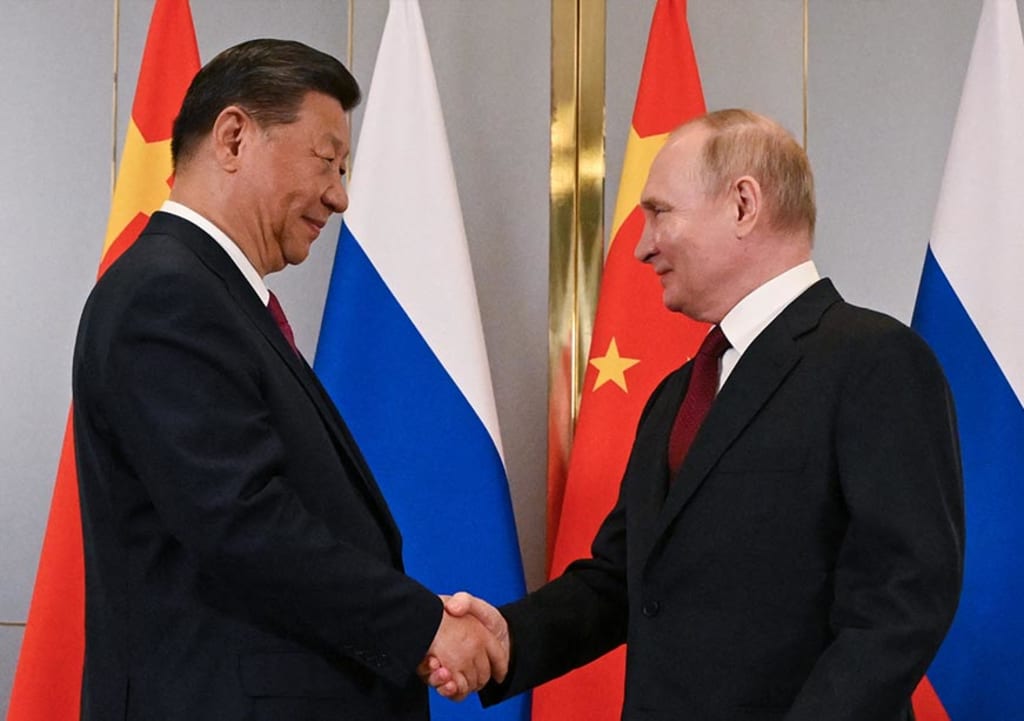
A few weeks before Russia’s full-scale invasion of Ukraine, Chinese President Xi Jinping stood beside the Russian President Vladimir Putin in Moscow and declared a ‘no limits’ partnership. However, after the tanks rolled in, the phrase quietly vanished from official rhetoric as its continued use could have signalled unambiguous Chinese backing of Russia’s war footing. However, the eventual breakup with the West only served to strengthen their ties. Isolated and increasingly aligned, Moscow and Beijing forged a silent alliance in which Xi, with quiet calculation, steadily gained the upper hand over Putin.
China is cautiously observing these developments unfold, as the reduced United States (US)-Russia contestation could potentially lead to the relative weakening of the Moscow-Beijing partnership.
However, the political turnover in Washington in 2025 was marked by a deliberate shift away from European entanglements, toward both a strategic reset with Moscow and intensified efforts to contain China in the Indo-Pacific. China-Russia relations may be about to undergo a paradigm-shifting reorientation as a result of this. China is cautiously observing these developments unfold, as the reduced United States (US)-Russia contestation could potentially lead to the relative weakening of the Moscow-Beijing partnership. As discourse around the war in Ukraine tilts toward the possibility of a ceasefire, a reassessment of how these shifting dynamics affect China’s strategic interests is both timely and necessary.
China-Russia Proximity during the Ukraine war
The Russia-Ukraine War considerably impacted Beijing’s interests, as China is a major trading partner for several countries in the region. The majority of Chinese inland trade to Europe went through Russia, but with sanctions imposed on Moscow, this trade route faced disruptions. To circumvent, China even attempted to position itself as an honest broker in bringing peace to the conflict by rolling out a twelve-point peace plan, but the efforts proved futile because the agreement did not stipulate the withdrawal of Russian forces from Ukrainian territory.
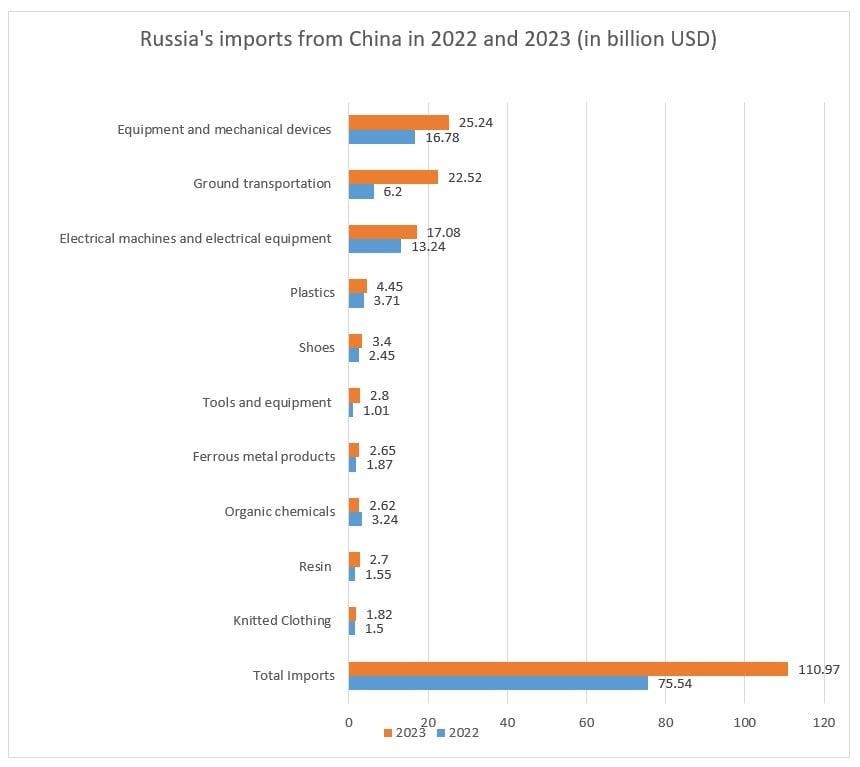
However, as the war progressed, the China-Russia partnership continued to improve since China stopped short of condemning Russia, instead urging respect for national sovereignty and ending hostilities. Furthermore, Beijing did not join the sanctions regime against Russia, leading to increased trade between the two nations. Bilateral trade grew from US$ 147 billion in 2021 to US$ 240 billion in 2023. In fact, the Russian economy underwent Yuan-ization from 2022 to early 2024, when it became increasingly dependent on the yuan to settle international payments. The majority of Chinese inland trade to Europe went through Russia, but with sanctions imposed on Moscow, this trade route faced disruptions.
Moreover, Russia’s energy and mineral exports meant for the European market were re-routed to China, and in exchange, Russia imported substantial amounts of high technology goods, manufactured products, and consumer items (see Fig. 1.1 and 1.2). Beijing not only became the biggest supplier of commercial goods to Moscow but also exported dual-use items, covered by Western export controls. These items included microelectronics, telecommunication equipment, radars, optical devices, machine tools, sensors, and other high-priority components used to manufacture tanks, drones, and missiles.
Figure 1.1: Russia’s exports to China in 2022 and 2023
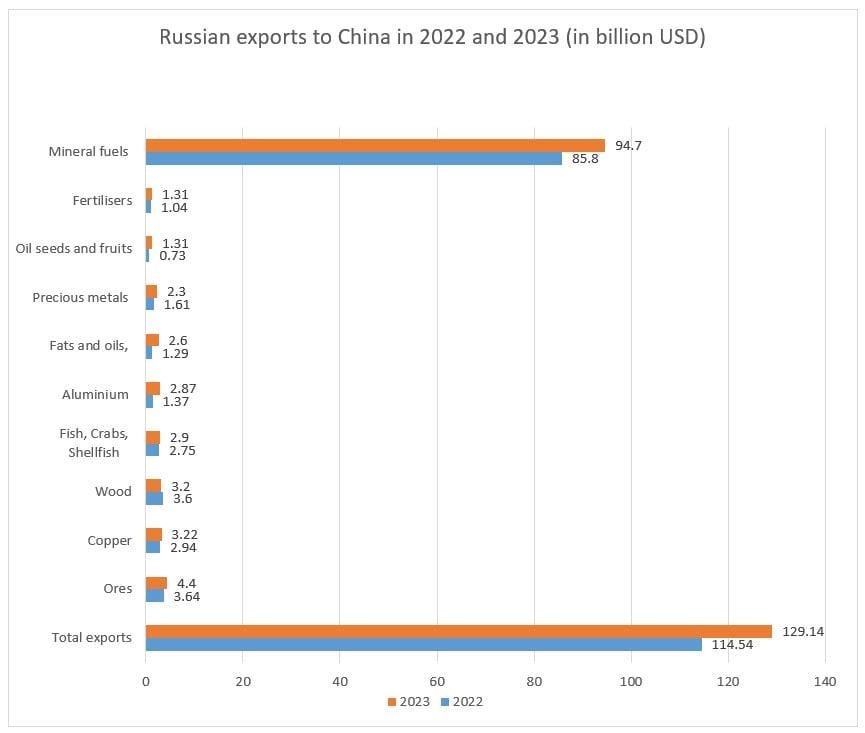
Figure 1.2: Chinese exports to Russia 2022 and 2023
Russian and Chinese political ties also improved during this time, as evidenced by frequent bilateral exchanges between their governments at all levels and their close collaboration in regional, multilateral, and plurilateral organizations like BRICS+ and the Shanghai Cooperation Organization (SCO). Further, both countries prioritised harmonising connectivity projects in Eurasia, reflected in the linkage of the Belt and Road Initiative (BRI) with the Eurasian Economic Union (EEU).
Moreover, the geoeconomic interlinkages have reflected in the geopolitical realms as well. China’s improved relations with Russia have helped it expand and solidify its footprint in the Arctic region. Beijing’s stake in the Northern Sea Route has increased, connecting the Russian ports in the west to China’s northeastern ports, reducing shipping time by a few weeks, compared to the route via the Suez Canal. To buttress, China has invested in port development projects in the Arctic, for example, China's state-owned Poly Group signed a Memorandum of Understanding (MoU) to develop the Arkhangelsk region to build a deep-water port. China is also developing a nuclear-powered icebreaker in cooperation with Russia’s Rosatom. Last year, the Russian and Chinese navy participated in a 35-day North Pacific Ocean patrol that visited the Chukchi Sea, Bering Sea, and Arctic Ocean. Their naval cooperation was evident.
About the Creator
Enjoyed the story? Support the Creator.
Subscribe for free to receive all their stories in your feed.
Comments
There are no comments for this story
Be the first to respond and start the conversation.