
Why Ararat Is in Turkey but Remains the Main Symbol of Armenia
Why a mountain beyond Armenia’s modern borders still remains one of the strongest symbols of Armenian history, faith, and loss.
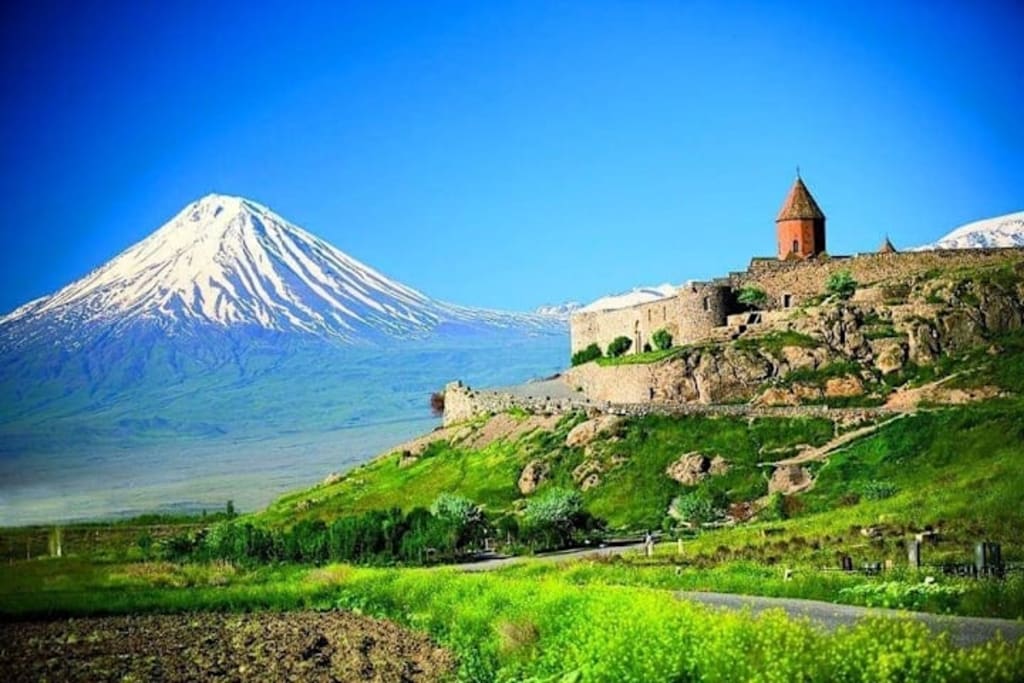
There are symbols that are stronger than borders. For Armenians, Mount Ararat became such a symbol. On the map, it is located in Turkey, but in Armenian consciousness Ararat remains a sacred mountain, an image of homeland, history, and national memory. More than that, it appears on the coat of arms of Armenia — a country to which the mountain does not officially belong today. At first glance, this seems like a paradox. But once you know the history, it becomes easier to understand.
Ararat was part of the Armenian world
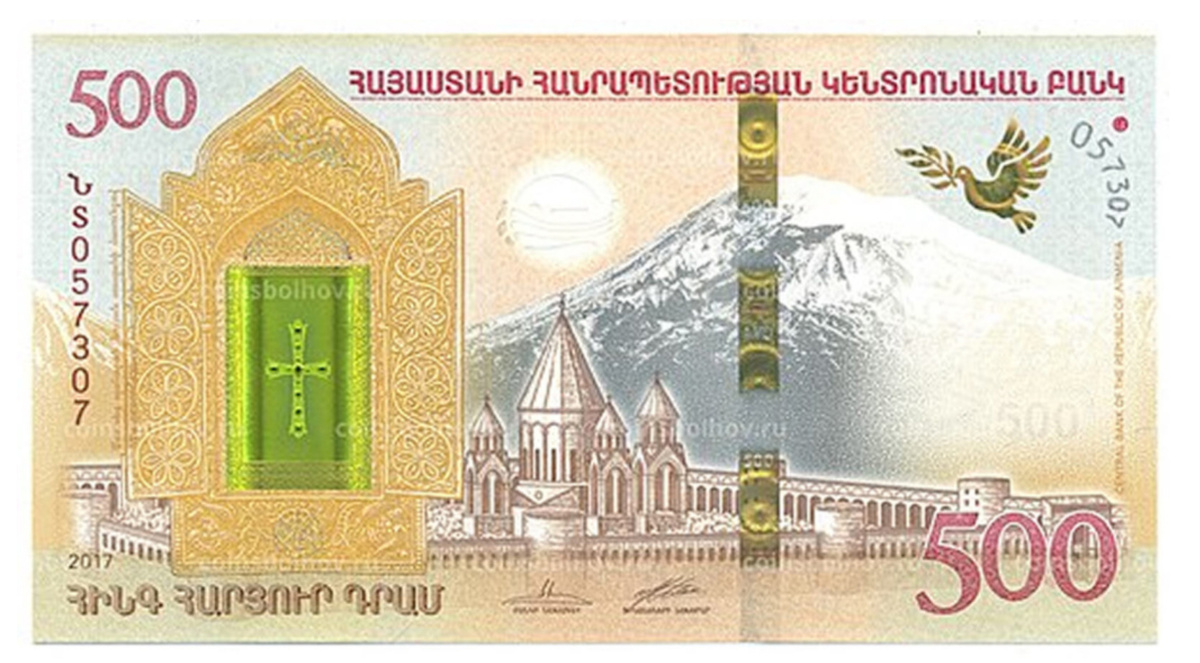
Modern Armenia is only a small part of historical Armenia. In different eras, Armenian lands were much broader and included territories that today lie in Turkey, Iran, Azerbaijan, and Georgia. Ararat was perceived by Armenians for centuries not as a “foreign mountain,” but as the center of their native landscape. It stood near Armenian settlements, monasteries, legends, and historical memory. That is why it became for Armenians not simply a beautiful peak, but part of their national image of the world. In Armenian tradition, Ararat is often linked to the ancient kingdom of Urartu, to the region of Ayrarat, and to the heart of historical Armenia. It was in these lands that early Armenian ideas of homeland were formed.
A sacred mountain and Noah

Ararat matters not only as a historical mountain, but also as a religious symbol. In the biblical tradition, it is the “mountains of Ararat” that are connected with the story of Noah’s Ark after the Flood. According to tradition, the Ark came to rest on Ararat, and from there a new life began after catastrophe. For Armenians, one of the oldest Christian peoples, this story became part of their own spiritual world. That is where the mountain’s special meaning comes from: Ararat is not just a summit. It is a symbol of salvation, a new beginning, and the bond between human beings and God.
The story of the Soviet coat of arms and Turkey
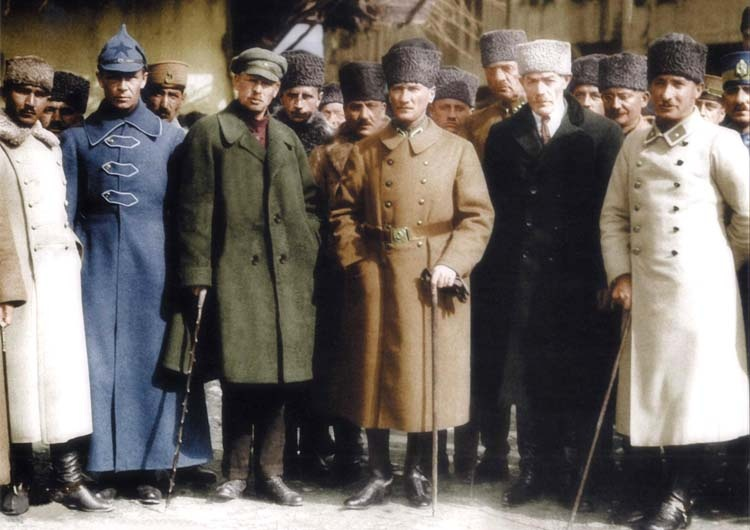
There is a well-known story connected with the image of Ararat on the coat of arms of Soviet Armenia. When Ararat appeared on the coat of arms of the Armenian SSR, Turkey supposedly objected: how could that be, if the mountain was on Turkish territory, yet it was shown on an Armenian emblem? According to the popular version, the Soviet side replied with something like this: the Turkish flag shows a crescent moon, but the Moon does not belong to Turkey either. The story is often retold like an anecdote, and it is not always easy to verify it documentally. But it conveys the essence of the dispute very precisely: a symbol does not have to lie within modern borders in order to remain part of national memory.
Why Ararat is on the Armenian coat of arms
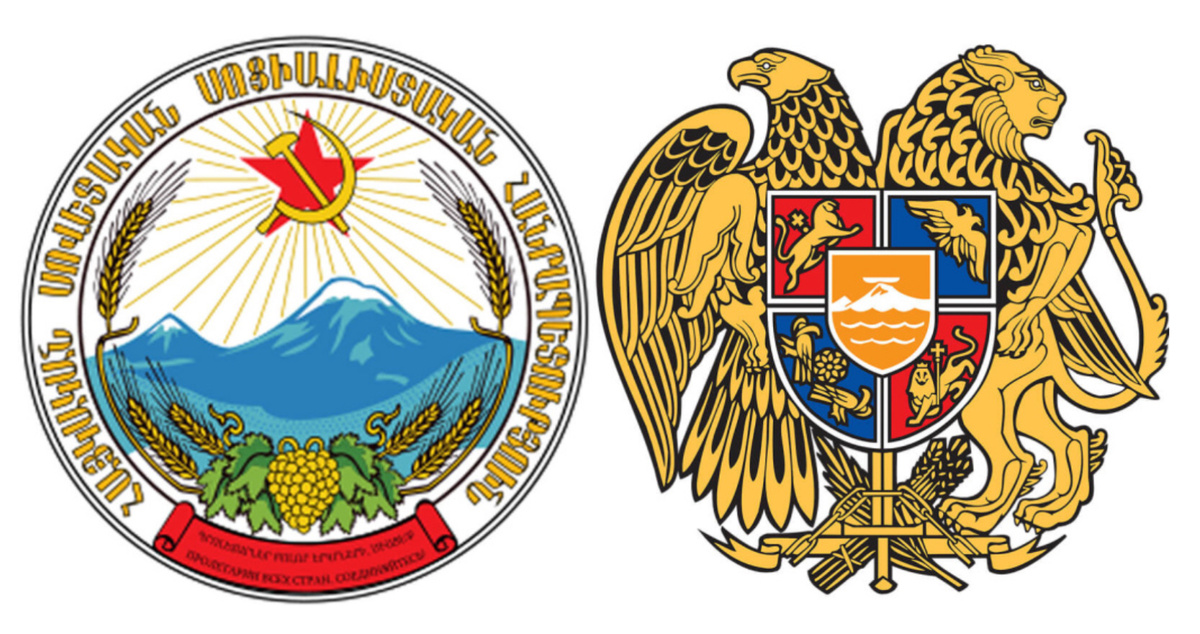
Ararat on the coat of arms of the Armenian SSR and on the coat of arms of modern Armenia
The Armenian coat of arms depicts Ararat with Noah’s Ark on its summit. This is not a random decorative detail. It is a direct statement: Armenian statehood is tied not only to present-day borders, but also to deep historical memory. A coat of arms shows more than a political map. It shows what a people considers part of its identity. For Armenians, Ararat is the memory of an ancient land, of Christian tradition, of loss, and of the continuity of the people. That is why its presence on the coat of arms is not just an image, but a concentrated expression of Armenian history.
The mountain visible from Yerevan
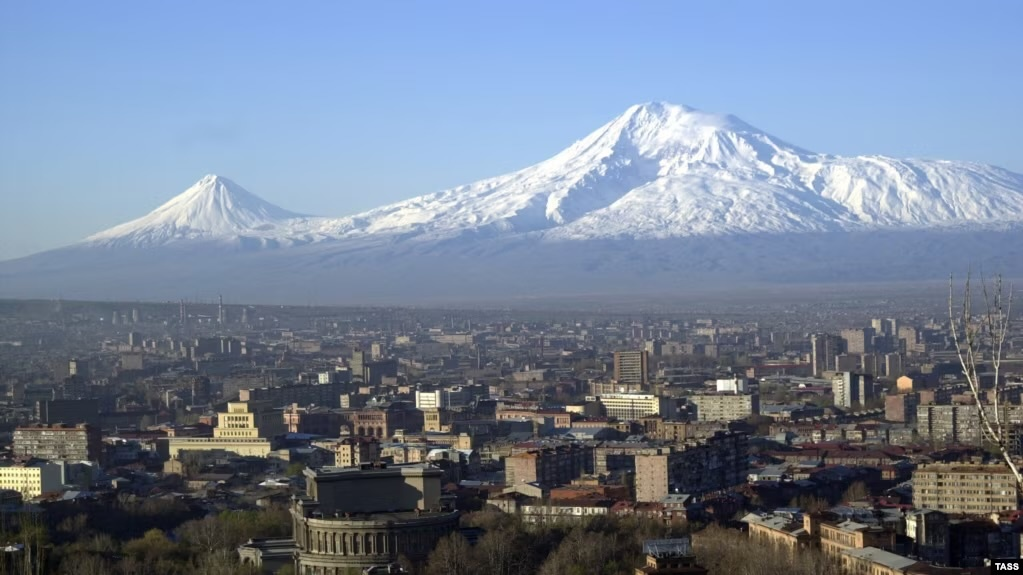
There is another reason the bond with Ararat is so strong. It can be seen from Yerevan. For the people of Armenia, it is not an abstract symbol from a textbook. It is a mountain that stands on the horizon. In clear weather, it can be seen from the capital, from villages, from roads, from balconies, and from viewing platforms. The result is an almost painful picture: the mountain is nearby, right before the eyes, and yet the border makes it inaccessible. That is why Ararat became not only a symbol of grandeur, but also a symbol of loss.
Ararat as the memory of what was lost
For Armenians, Ararat is also tied to the tragic history of the twentieth century. After the collapse of the Russian and Ottoman Empires, wars, and the redrawing of borders, many territories of historical Armenia ended up outside the Armenian state. That is why Ararat became a symbol not only of faith, but also of pain. It reminds people of a land that was part of Armenian history, but now lies on the other side of the border. Armenian painters, poets, and writers returned constantly to the image of Ararat. It was painted on canvases, praised in poetry, printed on postcards and in books. It became an almost obligatory background of Armenian culture — a sign of a homeland that cannot be forgotten.
Physically, the mountain is in Turkey. But a cultural symbol cannot simply be transferred by treaty or shut off with a border fence. For Turkey, Ararat is a geographic object on its territory. For Armenians, it is a national shrine and part of historical memory. These two realities exist at the same time. That is why the phrase “Ararat is in Turkey” changes nothing in Armenian perception. Yes, politically it is there. But culturally and emotionally, it remains an Armenian symbol.
About the Creator
Enjoyed the story? Support the Creator.
Subscribe for free to receive all their stories in your feed.
Comments
There are no comments for this story
Be the first to respond and start the conversation.