
Who Claqueurs Were and Whether Claque Still Exists Today
How paid applause, laughter, tears, and boos shaped nineteenth-century theater — and why the claque still survives in modern media and politics.
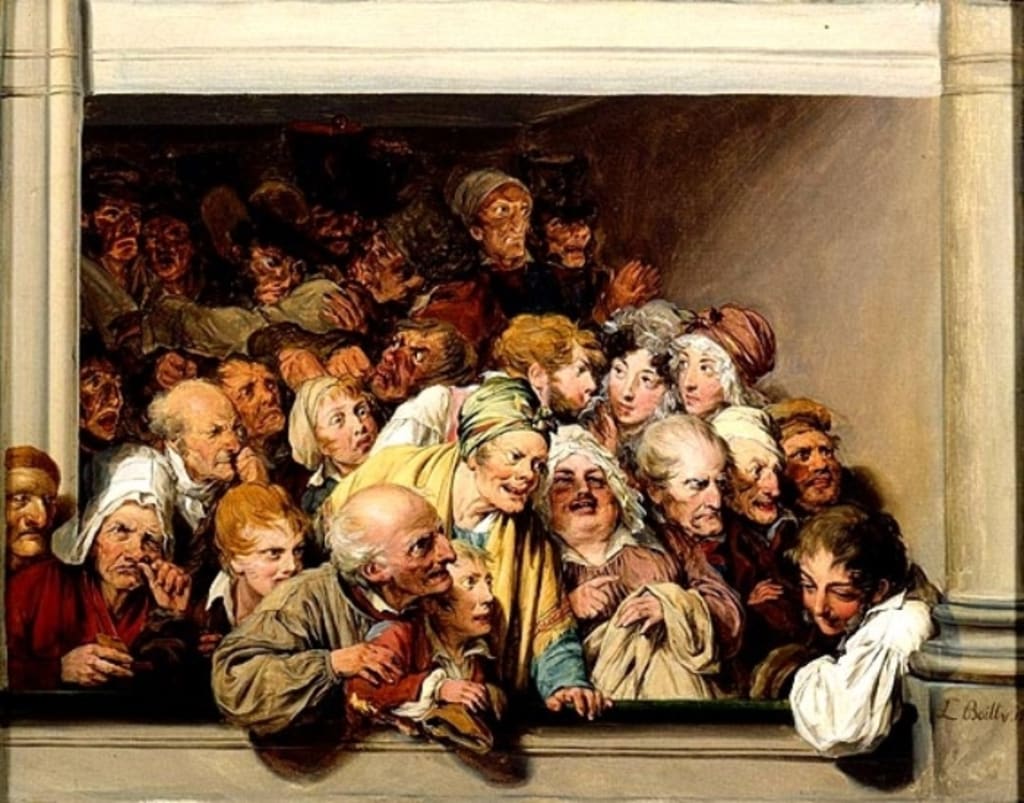
Imagine that you have written an opera, rehearsed it for half a year, and on opening night the audience contains people who were paid not for tickets, but to ruin your performance. They will cough, laugh at the wrong moments, and at the climax they will pointedly slam the door as they leave. This is not the plot of a thriller. It was an ordinary theater evening in nineteenth-century Paris. The system was called the claque — an organized group of spectators who, for money, created the reaction of the hall. Applause, cries of “bravo,” enthusiastic exclamations, or, on the contrary, hissing and boos — all of it could be bought.
What the claque was and how it appeared
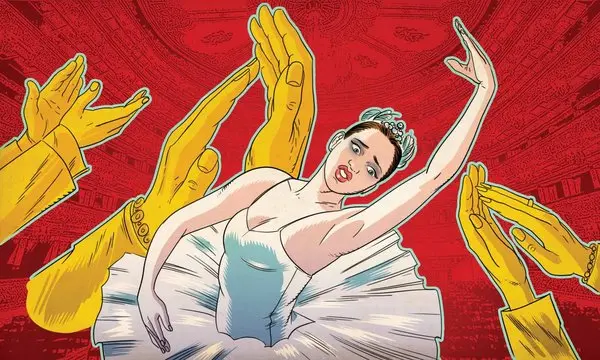
The claque (from the French claquer, “to clap”) was made up of professional hired spectators who, for payment, supported or sank performances, actors, and playwrights.
The first organized groups appeared in Paris in the 1820s. In that era, the theater was the city’s main entertainment, but competition between stages was ferocious. The success of a performance often depended not on the quality of the play, but on how the audience received it. And the audience could be bought.
The man usually credited with turning the claque into a system was François Sauson. In 1820, he opened a “Bureau of Success” — an agency that, for money, guaranteed a performance the desired audience reaction. Sauson recruited unemployed people, students, and anyone wanting to earn extra money, handed them tickets, and instructed them when and how to respond.
By the 1830s, the claque in Paris had become an industry. Major theaters kept permanent claqueurs on hand, and directors considered them as necessary as actors and scenery.
Who the claqueurs were and how much they earned
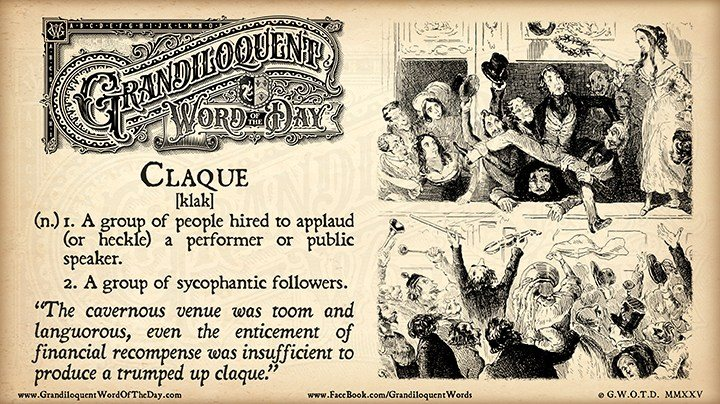
A claqueur was a profession. It had hierarchy, specialization, and clear rates.
Inside the group there were different roles:
Chef de claque — the head of the claque. He negotiated with the theater director or the playwright, received the money, and distributed people around the hall. He himself usually sat in the center, in one of the best seats, and gave signals with a cough, a wave of the hand, or a program.
Rieurs — professional laughers. They laughed at the right moments in order to “infect” the hall. A weak joke could suddenly seem funny if ten people in different corners of the theater burst into laughter at exactly that second.
Pleureuses — the women who cried. In dramatic scenes, they took out handkerchiefs and wiped away tears. Nothing convinces the public of a tragic moment like real tears in the front row.
Bisseurs — the people who shouted “Encore!” They demanded repetitions of particularly successful arias or scenes, creating the illusion of overwhelming enthusiasm.
Siffleurs — professional whistlers and booers. They were hired to destroy the show of a rival or punish an actor who had displeased the management.
How much were they paid? Exact figures do not survive for every theater, but there are records from the Paris Opera in 1835. An ordinary claqueur earned 3 to 5 francs per performance. The head of the claque could make 15 to 20 francs. For comparison, a skilled worker in Paris earned around 4 to 5 francs a day. A claqueur could earn in one evening what a worker made for a full day of hard labor — for applauding.
Who hired the claque and why
The range of clients was wide.
Theater directors hired the claque as insurance against failure. A premiere was always a risk. Even a good performance could be booed if enemies were sitting in the audience. Permanent claqueurs provided a safety cushion: at the very least, a few sincere cries of “bravo” at the end.
Playwrights and composers also paid for support themselves. There is a famous case involving Giuseppe Verdi. In 1847, when his opera Macbeth was staged in Paris, Verdi hired a claque, but miscalculated: the claqueurs applauded so wildly and at such inappropriate moments that it irritated the rest of the audience. The premiere went worse than it might have without any help at all.
Actors sometimes hired claqueurs for themselves personally, especially when they were in conflict with management or with other performers.
Opponents of a production could hire not a claque, but catarres — people who coughed, rustled programs, whispered loudly, and interfered with the performance. The owners of neighboring theaters did this regularly.
The most famous head of a claque: Auguste Levasseur
When people talk about the claque, they most often remember Auguste Levasseur. He led the claque at the Paris Opera from 1853 to 1870.
Levasseur perfected the system. He had a team of 70 to 80 people seated throughout the hall. Each person knew his or her role. At Levasseur’s signal, they would begin the applause, cries, laughter, or tears.
By various estimates, his annual budget was around 40,000 francs. The money came from the theater management, which included claque expenses in the operating budget. Levasseur was not merely a hired hand, but a full manager of theatrical success.
He retired in 1870 after the fall of the Second Empire. Under the new political climate, his methods became less effective — audiences were becoming more independent and more suspicious of organized ovations. But the claque did not disappear. It simply changed form.
Other cities and other eras
Although the claque is most closely associated with Paris, it existed anywhere there was a large theatrical market.
Vienna, 1830s–1840s. Court theaters used claqueurs to support Wagner’s operas, which often did not please the public.
Milan, La Scala. There the claque was especially powerful and aggressive. Rival groups of claqueurs supported different singers and fought each other. Sometimes there were even brawls in the hall.
London. British audiences resisted the system for a long time, considering it a piece of “French immorality.” But by the late nineteenth century, London had its own claqueurs too, though they were more discreet and more carefully disguised.
New York, early twentieth century. At the Metropolitan Opera, the claque also existed. Italian immigrants brought with them the habit of hiring support for their favorite singers.
Scandals and exposés
The claque was regularly involved in scandals. The loudest story broke in Paris in 1838. The newspaper Le Figaro published an investigation into the “Bureau of Success” and named actors and playwrights who used the services of claqueurs. A scandal erupted. Public opinion demanded that the claque be banned.
But the theaters could not do without it. The paradox was this: the audience despised the claque, but still responded to it. When twenty people stood up and shouted “bravo,” the rest began clapping too — not because they liked the performance, but because “everyone is applauding.”
Stendhal described this psychological mechanism long ago. He wrote that the claque worked not because of money alone, but because of herd instinct. A few people in key seats were enough, and the crowd would do the rest on its own.
Who fought against the claque and why they lost
The struggle against the claque began almost as soon as it appeared.
In 1835, the French Minister of the Interior issued a circular forbidding theaters from keeping permanent claqueurs on staff. The circular was ignored.
In the 1880s, Paris tried to create a “serious audience” — educated spectators who would evaluate performances impartially. The idea died because a serious audience had no reason to attend bad performances.
In the 1910s, some theaters declared themselves “free of the claque” and even printed this in their posters. But it was mostly a marketing move, nothing more.
The claque did not die because of bans. It died because culture changed. By the middle of the twentieth century, the theater was no longer the main spectacle. Cinema, radio, and television had appeared. Audiences had become more critically literate. Organized ovations no longer worked the way they had in the nineteenth century.
Does the claque still exist today?
Yes — but in different forms.
Television. Applause in talk shows is a classic claque. People are hired or invited for free, but they are given clear instructions: clap here, laugh there.
Political congresses and rallies. Professional applause groups exist for many parties. They sit in the hall, know the signals, and start the ovations at the right moment.
Corporate events. In large companies, there are people at meetings and presentations who create the “correct” reaction — clapping, asking the right questions, applauding the boss.
YouTube and social media. The real claque of the twenty-first century is bots and purchased likes. The principle is the same: an artificial reaction is created so that others will follow.
In traditional theater, the claque has survived in Italy and partly in France. At La Scala there are still groups of organized spectators who support favorite singers and boo those they dislike. But this is no longer a business in the old sense. It is more a tradition.
What it all comes down to
The claque was one of the earliest examples of organized management of public opinion. During the century of its heyday, it produced dozens of scandals, thousands of newspaper articles, and countless anecdotes. It was mourned as a destroyer of true art, yet almost everyone used it in silence.
It revealed a simple and uncomfortable truth: success is not always the same thing as quality. Sometimes it is simply well-organized applause.
Today the claque no longer exists in its classic form, but its mechanisms remain. If you have ever laughed at a joke on a talk show because everyone around you was laughing, then you too can be called part of a claque. You just were not paid for it.
About the Creator
Enjoyed the story? Support the Creator.
Subscribe for free to receive all their stories in your feed.
Comments
There are no comments for this story
Be the first to respond and start the conversation.