
Turning the Tide: How the United States Shaped World War II
An Overview of the American Role in World War II

The USA may have been isolationist for the first few years of the war, but when it joined, it gave a considerable boost to the Allies. In 1939, few could have foreseen the influential role the USA would have in the war. The Japanese bombing of Pearl Harbor may have sunk 4 US battleships and hundreds of US planes, but now that the United States had joined the war, it could provide its Allies with thousands of planes, tanks, and millions of soldiers for the war in Europe & beyond. At a time when both Britain and the USSR were pinned back on their primary fronts, this would be most welcome in late 1941.
Upon entering the war in 1941, the USA was first preoccupied with the Pacific War. The Pacific War was almost entirely an American front. This became all the more evident as Japanese troops defeated the European armies during their advances in 1942, culminating in the British surrender at the Battle of Singapore. Here, over a hundred thousand Commonwealth troops were captured, and Britain’s main military stronghold in the region had fallen. As such, with this, they could not provide huge military support to the United States in the Pacific.
The US Navy was therefore largely alone in its battles with the Imperial Japanese Navy. From the Battle of the Coral Sea, notable naval victories such as the Battle of Midway and the Battle of the Philippine Sea saw Japan lose many aircraft carriers and aircraft. These were key victories for the Allies in the Pacific War that halted the Japanese advances in the region.
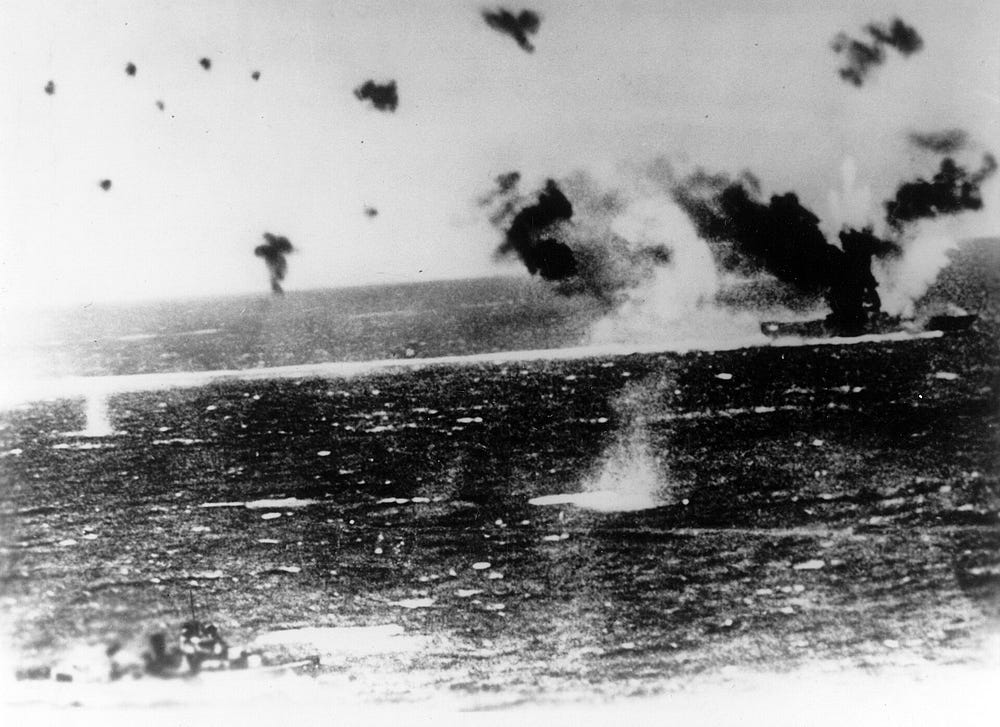
Overall, the US military planners outlined the Allies’ overall strategy in the Pacific War. Operation Cartwheel laid the foundations for numerous US advances in the Pacific. The Battle of Tarawa, Battle of Saipan, Battle of the Philippines, and then further battles such as the Battle of Iwo Jima wiped out Japanese armies stationed there and reduced much of the territory of the Japanese Empire.
On other fronts, the United States would begin to land its troops in North Africa in late 1942. This reinforced the British considerably after their victories at El Alamein. Hereafter, the United States and British armies pushed Rommel’s Afrika Corps back into Tunisia during 1943 and won the war in the desert, which paved the way for the Allied landings in Italy
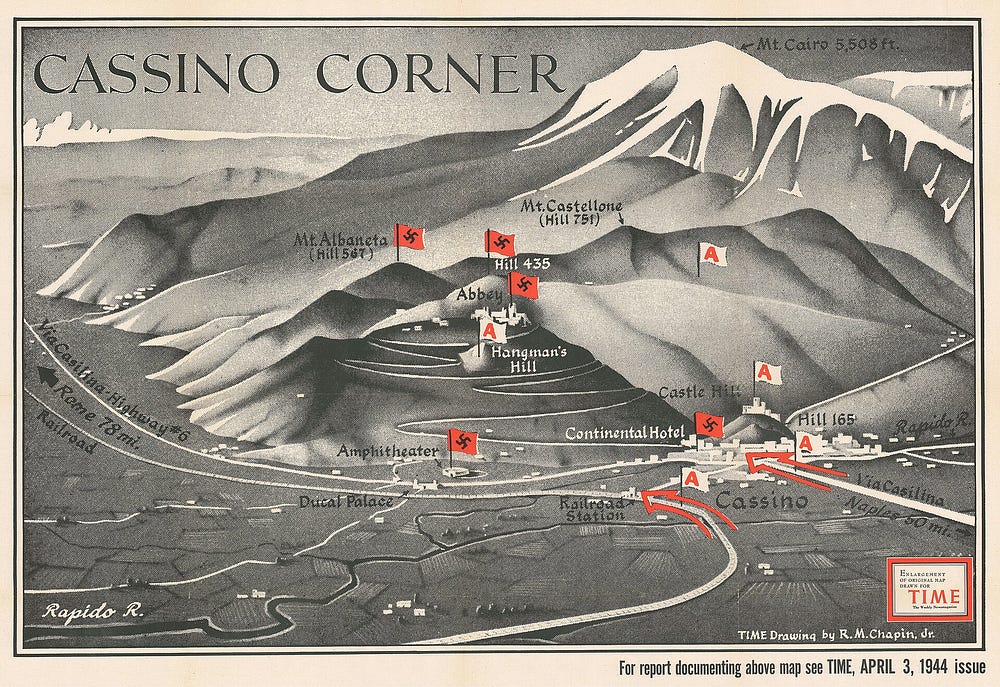
When the United States and British & Commonwealth troops landed in Italy, they had effectively opened up a second front in Europe. During the Italian campaign, the Italian troops were defeated relatively quickly, which ensured the demise of Mussolini’s regime as the Italian populace began to join the Allies. However, the supporting German armies in Italy were not so quickly defeated and set up strong positions in the foothills of Italy, and battles such as the Battle of Monte Cassino were not easily won, with over 100,000 Allied casualties. However, the United States & its Allies prevailed, and American troops occupied Rome.
However, the main second front would not be opened until 1944, and the USA provided many of the troops and much of the armaments and munitions for the D-Day landings in France. By the end of the operation, United States troops moved into Paris, as remaining German troops retreated quickly eastwards.
However, further battles were still to follow in Western Europe. In late 1944, a large German army emerged from the Ardennes forest and struck at weak points along the Allied lines. During this advance, the US armies were caught by surprise and retreated, which resulted in a bulge in their lines. Despite this, some of the best American troops held firm during the Siege of Bastogne against a numerically larger German army, which eventually retreated. Hereafter, the United States began its own advances after Patton’s re-enforcements reached Bastogne and pushed into Germany by 1945.
Aside from this, the US Air Force also provided notable support for Allied bombing raids of German industrial targets. US B-25 bombers bombed German industry in Europe, which went some way to limiting German industrial production. Admittedly, the bombing also devastated German cities such as Hamburg and Kassel.
It would also be left to the United States to end the war in 1945, as Japan would not surrender. Secretly, the United States had developed the A-bomb, which was now ready to be dropped on Japan. This effectively ended the war as Japan surrendered to the US and its Allies aboard the USS Missouri.
As such, the USA provided millions of soldiers to its Allies in the Pacific and European Theaters. This, in addition to the many thousands of tanks and aircraft, was to assist in defeating the Japanese, German, and Italian armies. Therefore, this proved to be vital in the Pacific War and also in Western Europe. The United States won most of its battles on all fronts, which ensured the unconditional surrender of the Axis.
This article of mine was originally submitted to Medium.com, where you can read it here.
About the Creator
Matthew A
Matthew is the author of Battles of the Pacific War 1941-1945. Battles of the Pacific War is available on Amazon and Lulu in e-book and paperback formats. Check out the book’s blog at battlesofthepacificwar.blogspot.co.uk.
Enjoyed the story? Support the Creator.
Subscribe for free to receive all their stories in your feed.
Comments
There are no comments for this story
Be the first to respond and start the conversation.