


Afrikaners are a Southern African ethnic group primarily descended from Dutch, German, and French settlers who arrived at the Cape of Good Hope starting in 1652. Known for their distinct culture and the Afrikaans language, their history is shaped by pioneer expansion, conflicts with British rule, and the establishment of the apartheid system.
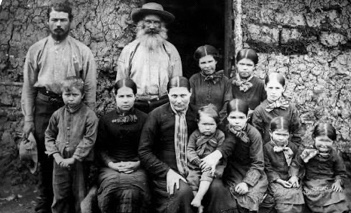
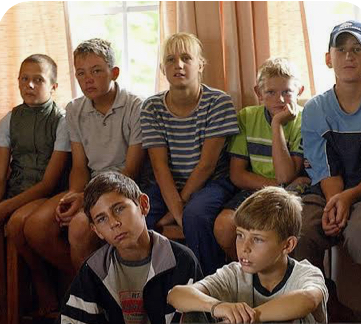
Origins and the Cape Colony (1652–1795)The Settlement: The Dutch East India Company (VOC) established a refreshment station at Cape Town in 1652 to resupply ships traveling between Europe and Asia.
Free Burghers: In 1657, company employees were released to become independent farmers. Over the decades, they were joined by German immigrants and French Huguenots fleeing religious persecution.
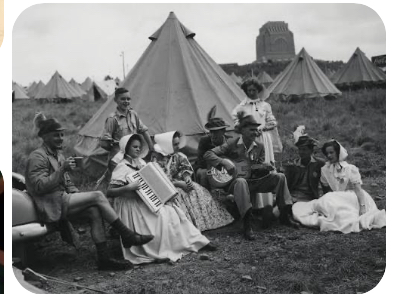
Emergence of Identity: These isolated European settlers began developing a unique identity, culture, and a new creolized language known as Afrikaans—which combined 17th-century Dutch with elements of local African, Malaysian, and Portuguese languages.
The Great Trek and the Boer Republics (1830s–1880s)British Control: Britain took control of the Cape Colony in the early 1800s, leading to cultural clashes, the banning of slavery, and the imposition of the English language.
The Great Trek: Seeking independence, thousands of Afrikaner farmers (known as Boers) packed their wagons and migrated inland between 1835 and 1846.
New Republics: During this expansion, they displaced indigenous African communities and founded their own independent republics, most notably the Zuid-Afrikaansche Republiek (Transvaal) and the Orange Free State. Natal was a Boer state before it was taken over by the British.Following the "Great Trek," a large group of predominantly Dutch-speaking farmers (Voortrekkers) established the independent Boer Republic of Natalia in 1839. Its capital was Pietermaritzburg, and it was created after the Boers defeated the Zulu Kingdom.The republic was short-lived, as the British Empire did not want an independent Boer state with access to the Indian Ocean. The British officially annexed the territory in 1843, turning it into the British Colony of Natal. Following the British takeover, many of the Boers left the area and migrated further inland to establish other Boer republics, such as the Orange Free State and the Transvaal.Colony
The Boer Wars and British Dominance (1880–1910)Discovery of Gold and Diamonds: The discovery of valuable minerals in Boer territories led to massive economic shifts and intense friction with the British Empire.First and Second Boer Wars: This tension culminated in the bloody South African War (1899–1902). The British defeated the Boers, utilizing scorched-earth tactics and concentration camps that devastated the Afrikaner population.
Union of South Africa: In 1910, the British colonies and the former Boer republics were merged to form the Union of South Africa, allowing Afrikaners to regain political influence.
Afrikaner Nationalism and Apartheid (1948–1994)Rise of the National Party: Driven by a revival of Afrikaner nationalism, the National Party gained power in 1948.Apartheid System: They instituted the policy of apartheid, a system of institutionalized racial segregation and white supremacy. This era was marked by the brutal oppression of the black majority, severe human rights violations, and increasing international isolation.Republic of South Africa: In 1961, Afrikaner leaders successfully severed ties with the British monarchy, declaring South Africa a republic.
Transition to Democracy (1990s–Present)Dismantling Apartheid: Internal resistance, international sanctions, and economic pressures led to negotiations in the early 1990s. The apartheid system was dismantled, and the country transitioned to a democratic society.Democratic South Africa: The historic 1994 multiracial elections marked the end of Afrikaner political dominance, with Nelson Mandela being elected the first black president of South Africa. F. W. de Klerk was the president of South Africa immediately before Nelson Mandela. He served as the final State President of the apartheid era from 1989 to 1994, during which time he ordered the release of Nelson Mandela and negotiated the end of white-minority rule. Frederik Willem de Klerk. (18 March 1936 – 11 November 2021) was a South African politician who served as the final state president of South Africa from 1989 to 1994 and as deputy president alongside Thabo Mbeki under President Nelson Mandela from 1994 to 1996.
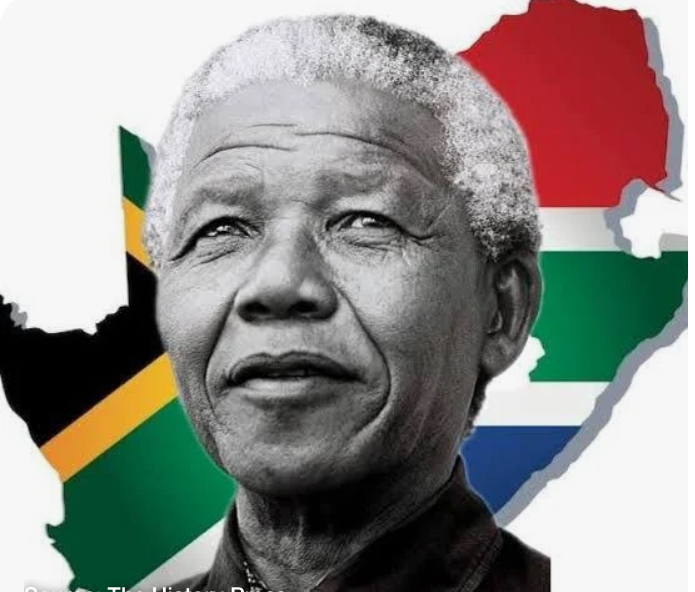
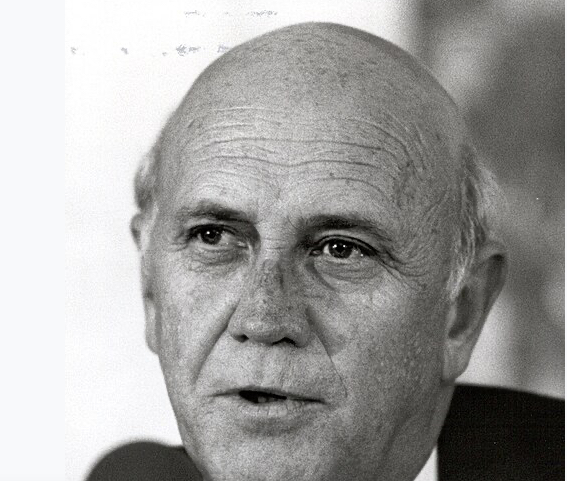
They both won the Nobel Peace Prize for their work in bringing democracy to South Africa and an end to Apartheid.
Modern Identity: Today, Afrikaners are a diverse community navigating their place in a modern, multicultural democracy. While many have adapted to the changes, others continue to grapple with shifting power dynamics, issues of cultural preservation, and land rights.
The Afrikaner is the only white African tribe, having no colonial European country to go back to. They are truly African.
So this is the history of South African Afrikaners. From the western mainstream historians. I lived in Durban, Natal province during the Apartheid era (1970s)and went to school. I was taught this history, but with an Afrikaner slant. They hated the British because how they were pursued relentlessly, then finally fought against them and lost. They were isolated from European contact while on their trek into the hinterland, and remained in their 17th century mentality and thoughts.
Bearing this in mind you can understand how apartheid became their governing policy. They were stuck in the 16th century.
It doesn’t make apartheid right, but understandable.
About the Creator
Guy lynn
I’m interested in history, space travel and the possibilities, Americana,( where I live now), Africa (Southern Africa, where I was born and raised), and I write about things that interest me ( bead history) and I hope will interest you.
Enjoyed the story? Support the Creator.
Subscribe for free to receive all their stories in your feed.
Comments
There are no comments for this story
Be the first to respond and start the conversation.