
The Story of Palestine and Israel
A Century of Conflict, Dispossession, and Struggle
Introduction
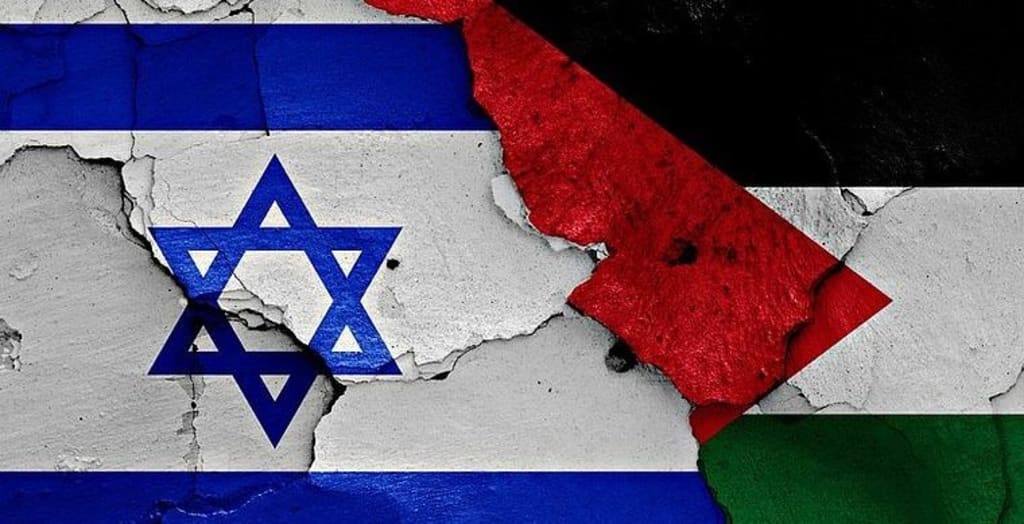
The conflict between Palestine and Israel is one of the most enduring and contentious struggles of the modern era. Rooted in competing nationalisms, colonial interventions, and deep historical trauma, it has shaped the lives of millions and remains unresolved after more than a century. This article traces the origins, key events, and current realities of the conflict, examining the perspectives of both sides while acknowledging the immense human cost.
Early Roots: Zionism and Palestinian Arab Resistance (Late 1800s – 1948) For centuries, the land known as Palestine was part of the Ottoman Empire, inhabited predominantly by Arab Muslims and Christians, with a small Jewish minority. In the late 19th century, European Jews fleeing anti-Semitism began migrating to Palestine, driven by the Zionist movement’s call for a Jewish homeland.
Balfour Declaration (1917) and British Man After World War I, Britain took control of Palestine under a League of Nations mandate. In 1917, the British government issued the Balfour Declaration, supporting "a national home for the Jewish people" in Palestine—without consulting its Arab majority. Over the next decades, Jewish immigration surged, leading to violent clashes between Zionist militias and Palestinian Arabs.
The 1947 UN Partitan plan and the 1948 War In 1947, the UN proposed partitioning Palestine into separate Jewish and Arab states. Jewish leaders accepted the plan; Palestinian leaders and Arab states rejected it, seeing it as a violation of their right to self-determination.
In 1948, Israel declared independence. Neighboring Arab states invaded, but Israel won, expanding its territory beyond the UN borders. Over 700,000 Palestinians were expelled or fled—an event known as the Nakba ("Catastrophe"). Israel was established; Palestine was erased from the map
Occupation and Wars (1967 – 1990s)
The 1967 Six-Day War In 1967, Israel launched a preemptive strike against Egypt, Syria, and Jordan, seizing the West Bank, Gaza Strip, East Jerusalem, and Golan Heights in six days. This marked the beginning of Israel’s military occupation of Palestinian territories, which continues today.
The Rise of the PLO and Palestinian Resistance The Palestine Liberation Organization (PLO), founded in 1964, became the main representative of Palestinian nationalism. Under Yasser Arafat, it led armed struggle and diplomatic efforts for statehood.
The First Intifada (1987-1993) A mass Palestinian uprising against occupation erupted in 1987, marked by protests, strikes, and stone-throwing youth facing Israeli soldiers. Over 1,300 Palestinians and 160 Israelis were killed. The Intifada
The Oslo Peace Process and Its Collapse (1990s – 2000s)
The Oslo Accords (1993-1995) A breakthrough seemed possible when Israel and the PLO signed the Oslo Accords, which promised Palestinian self-rule in parts of the West Bank and Gaza. The Palestinian Authority (PA) was created to govern these areas.
However, Oslo failed to address core issues: Israeli settlements kept expanding in the West Bank. Jerusalem’s status remained unresolved. No clear path to Palestinian statehood was established.
The Second Intifada (2000-2005) Frustration over Oslo’s failures led to the Second Intifada, a far bloodier uprising. Suicide bombings by Palestinian militants and harsh Israeli military crackdowns left over 3,000 Palestinians and 1,000 Israelis dead.
Gaza Under Hamas (2007-Present ) In 2006, Hamas won Palestinian elections, leading to a violent split with the PA. Israel imposed a blockade on Gaza, turning it into an open-air prison. Wars in 2008, 2012, 2014, 2021, and 2023-24 have devastated Gaza, killing thousands of civilians.
Current Realities: Apartheid, Settlements, and Resistance
Israel’s Settler-Colonial Project Today, over 700,000 Israeli settlers live illegally in the West Bank under international law. Palestinians face home demolitions, military raids, and restricted movement under a system many human rights groups (including Amnesty International and Human Rights Watch) call apart
Gaza: The World’s Largest Open-Air Prison Two million Palestinians in Gaza endure severe shortages of food, water, and medicine due to Israel’s blockade. The 2023-24 Israeli assault killed over 35,000 Palestinians, mostly civilians, drawing global condemnation.
The Fight for Justic Palestinians continue resisting through protests (Great March of Return), Boycott, Divestment, Sanctions (BDS), and UN diplomacy.
Israel justifies its actions as self-defense, backed by powerful allies like the U.S. Global solidarity is growing, with millions demanding an end to occupation and genocide.
Conclusion: Is Peace Possible? The Israel-Palestine conflict is not just about land—it’s about justice, survival, and recognition. While a two-state solution seems increasingly impossible due to settlements, a one-state solution with equal rights remains a distant dream under Israel’s current policies. rights remains a distant dream under Israel’s current policies.shifted global attention to the Palestinian cause.
About the Creator
Enjoyed the story? Support the Creator.
Subscribe for free to receive all their stories in your feed.
Comments
There are no comments for this story
Be the first to respond and start the conversation.