
The Rise of Fascism in Italy
Remembering the March on Rome in October 1922

The Italian nation had been a democracy before World War I. During the war, they were allied with Germany, but later joined the Entente (France, Britain, and Russia). In the post-war settlements that followed, Italy did not gain the promised amount of territory. Soon after the war, the Italian Fascist Party emerged.
In the post-war era, coalition governments came and went with some regularity. They were regarded as largely ineffective, particularly in bringing a post-war economic recovery. Liberal Italy was in decline during the post-war era.
Support for the left wing increased in the post-war era. The Socialist Party gained the most votes in the 1919 elections. In the early 1920s, the socialists organized labor strikes, with Soviets emerging in industrial towns. However, the socialists never effectively united and began to split.
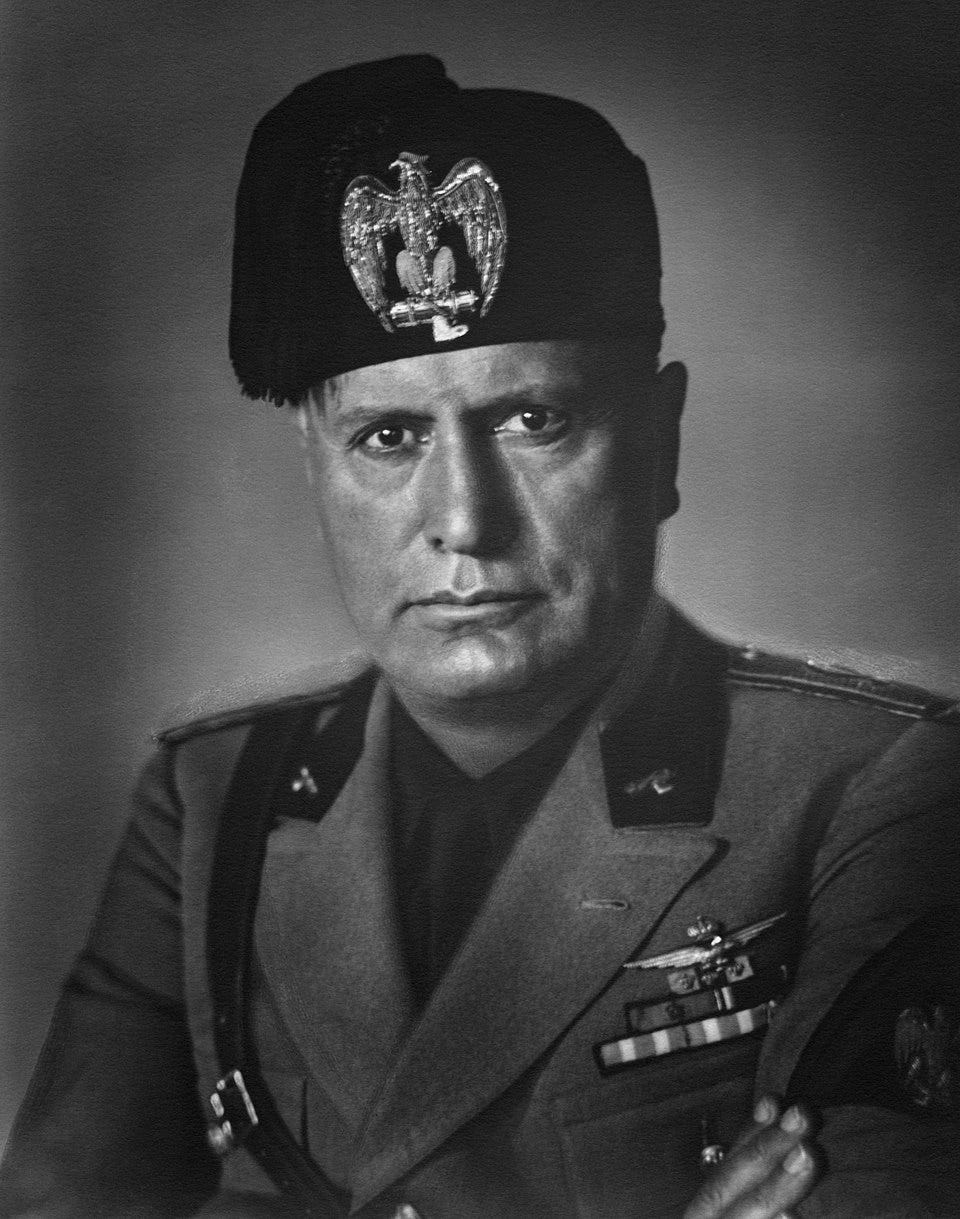
Mussolini founded the National Fascist Party. The National Fascist Party may have lacked a clear and consistent manifesto, but in 1921, it still fared well in elections, gaining 35 seats. Such success allowed for the potential to establish a coalition government with Mussolini's National Fascist Party.
After the election success of 1921, Mussolini began to abandon his previous socialist policies. Mussolini became an opponent of the communist and socialist groups in Italy, and indeed beyond. This won the support of army officers who began to equip the Fascist Blackshirts with military equipment during the early 1920s. The left-wing strike in 1922 also failed.
To ensure a place in the cabinet, Mussolini organized a March on Rome that took place on October 28, 1922. The Liberal Premier soon resigned. King Victor Emanuel became more sympathetic to the fascists, who promised a more stable government, possibly because it was a good alternative to the left-wing groups in Italy. In 1922, he invited Mussolini to form a new coalition government.
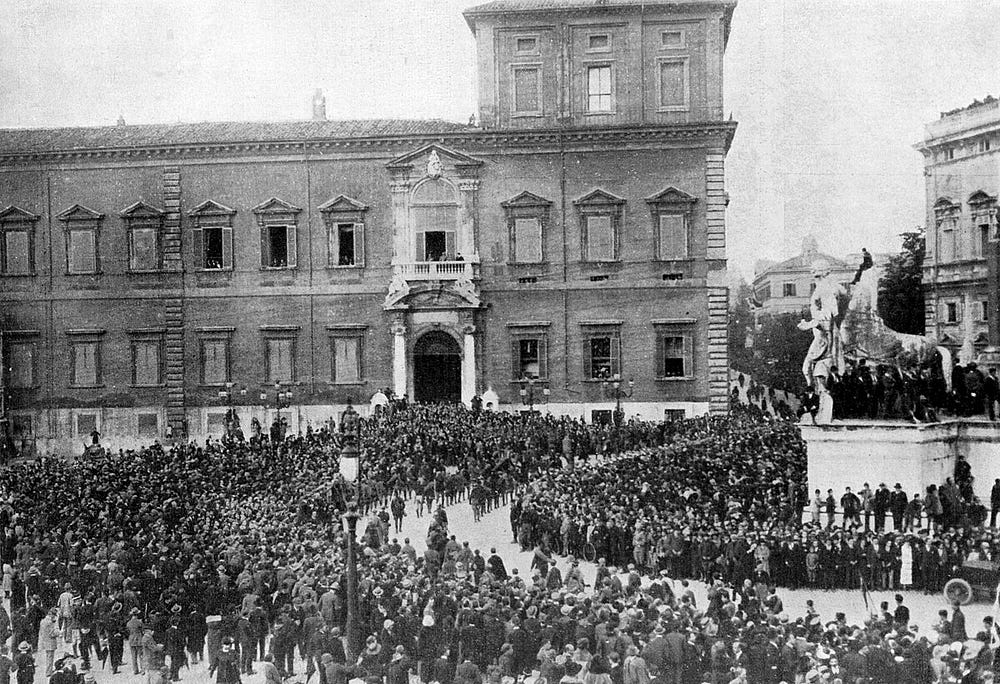
Mussolini pursued policies that ended democracy in Italy. By 1926, opposition groups were banned in Italy. Changes to election procedures that limited universal suffrage ensured the 1929 elections were in the fascists' favor, and Mussolini's dictatorship was firmly established.
A one-party state emerged in Italy. The National Fascist Party remained in Italy for the rest of the 1930s and pursued foreign policies that would see Italian involvement in the Spanish Civil War. They would also join the Axis alliance. As the Italians joined World War II, numerous military defeats would see Italy become an occupied country, and a civil war emerge with the fascists displaced.
Has Fascism Re-emerged in Italy?
In 2022, Italy remembered the March on Rome during its centennial anniversary. That anniversary sparked a large-scale black-clad fascist sympathizer march in Predappio, the hometown of Mussolini. It was a march to commemorate the March on Rome in 1922, and those who attended performed the fascist salute. That was a clear sign that fascist nostalgia remains in Italy.
The anniversary year coincided with the election of Giorgia Meloni, the first woman prime minister of Italy. Some have dubbed Meloni a fascist because her party, Brothers of Italy, was established by former fascists as a descendant of the Italian Social Movement. Giorgia Meloni has also made some positive statements about Mussolini and Italy's fascist past.
Yet, in truth, Giorgia Meloni is more of a center-right conservative from a post-fascist cultural background. Her fascist label might be more due to the confusion between conservatism and fascist ideologies, which are in some respects similar but also different. Conservative parties support parliaments, while most fascists don't. Meloni hasn't dismantled democracy in Italy like Mussolini did when he became prime minister.
Nevertheless, the March on Rome anniversary in 2022 certainly highlights that a certain amount of fascist nostalgia remains in Italy. When she was 19, Meloni said this: "I think Mussolini was a good politician. Everything he did, he did for Italy. And we haven't had any politicians like that in the past 50 years." Thus, Italian fascism remains divisive, with an unresolved historical legacy in Italy today.
I submitted this article of mine to Medium.com, where you can read it here.
About the Creator
Matthew A
Matthew is the author of Battles of the Pacific War 1941-1945. Battles of the Pacific War is available on Amazon and Lulu in e-book and paperback formats. Check out the book’s blog at battlesofthepacificwar.blogspot.co.uk.
Enjoyed the story? Support the Creator.
Subscribe for free to receive all their stories in your feed.
Comments
There are no comments for this story
Be the first to respond and start the conversation.