
The Most Isolated Country in Socialist Europe: Enver Hoxha’s Albania
How Enver Hoxha turned Albania into the most isolated state in twentieth-century Europe through fear, self-reliance, and total control.
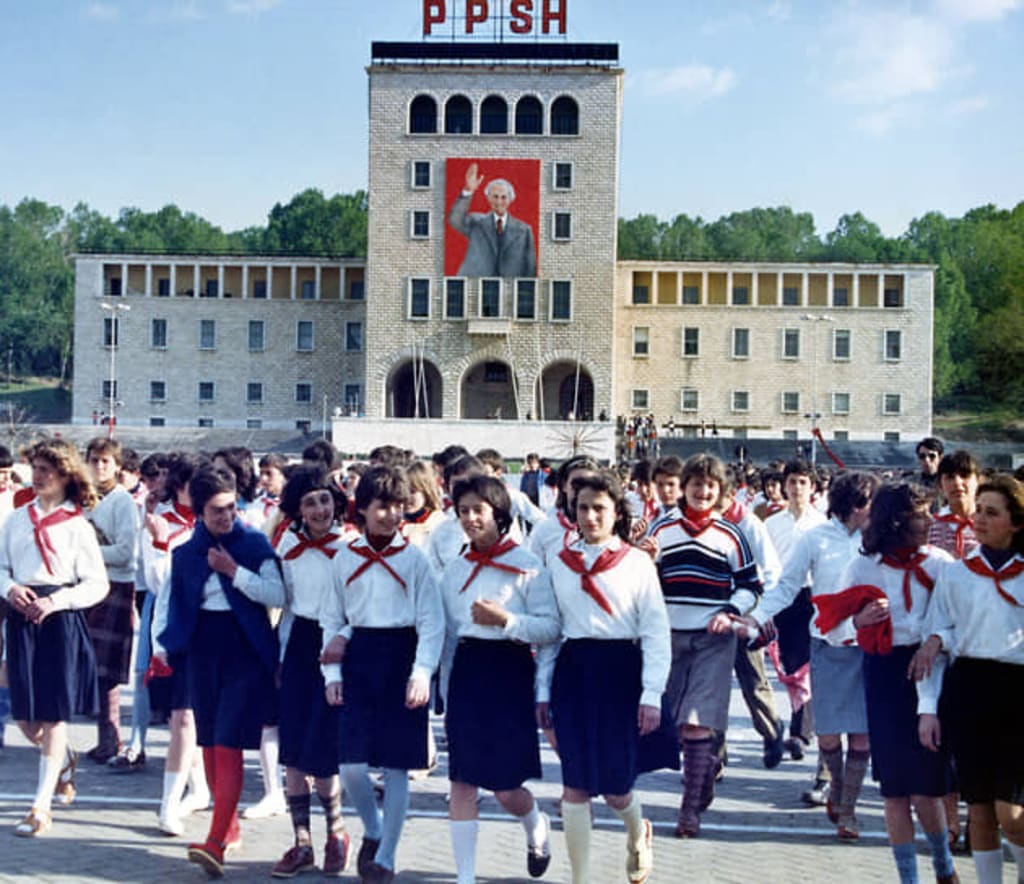
A country where private cars were virtually nonexistent, religion was banned by law, and bunkers were more common than trees.
When people talk about isolated countries, North Korea usually comes to mind. Yet in twentieth-century Europe there existed a regime comparable to Pyongyang in both its isolation and its totality of control—despite being only a few hours by sea from the coast of Italy. The People's Socialist Republic of Albania under Enver Hoxha was the most isolated country in European history. Not necessarily the most brutal—although it was certainly brutal. But unquestionably the most closed off from the outside world.
A small Balkan country became the site of one of the most extreme social experiments of the Cold War.
Who Was Enver Hoxha?
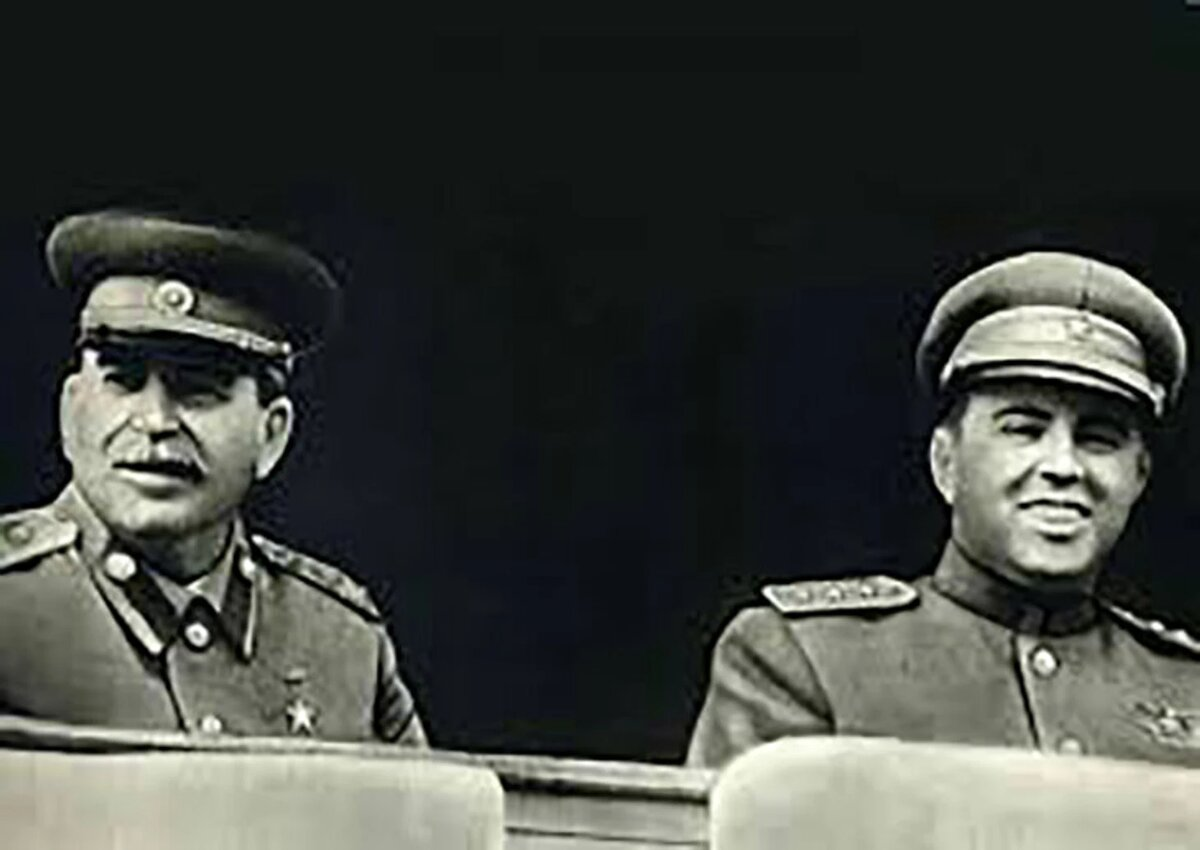
It is impossible to understand Albania without understanding Hoxha, because Albania under socialism was, in many ways, Hoxha himself. He ruled alone for forty-one years, from 1944 to 1985. Longer than Stalin ruled the Soviet Union. Longer than the Third Reich existed. Longer than many European monarchies of the twentieth century.
Hoxha was born in 1908 in Gjirokastër, in southern Albania, into the family of a merchant. He studied in France, in Montpellier and Paris, and returned home a committed communist. During the Second World War he led the partisan movement against Italian and German occupation forces. In November 1944, he entered Tirana on a white horse—literally.
He was an educated man. He read Marx, Lenin, and the French Enlightenment thinkers in their original languages. He wrote poetry. He loved painting. Yet he also created one of the most repressive regimes in modern history, doing so methodically, consistently, and with little visible remorse.
Fear was the driving force behind his rule. Not fear of enemies, but fear as a tool of governance. The system depended on universal fear, carefully cultivated and never allowed to fade.
Geography and Isolation
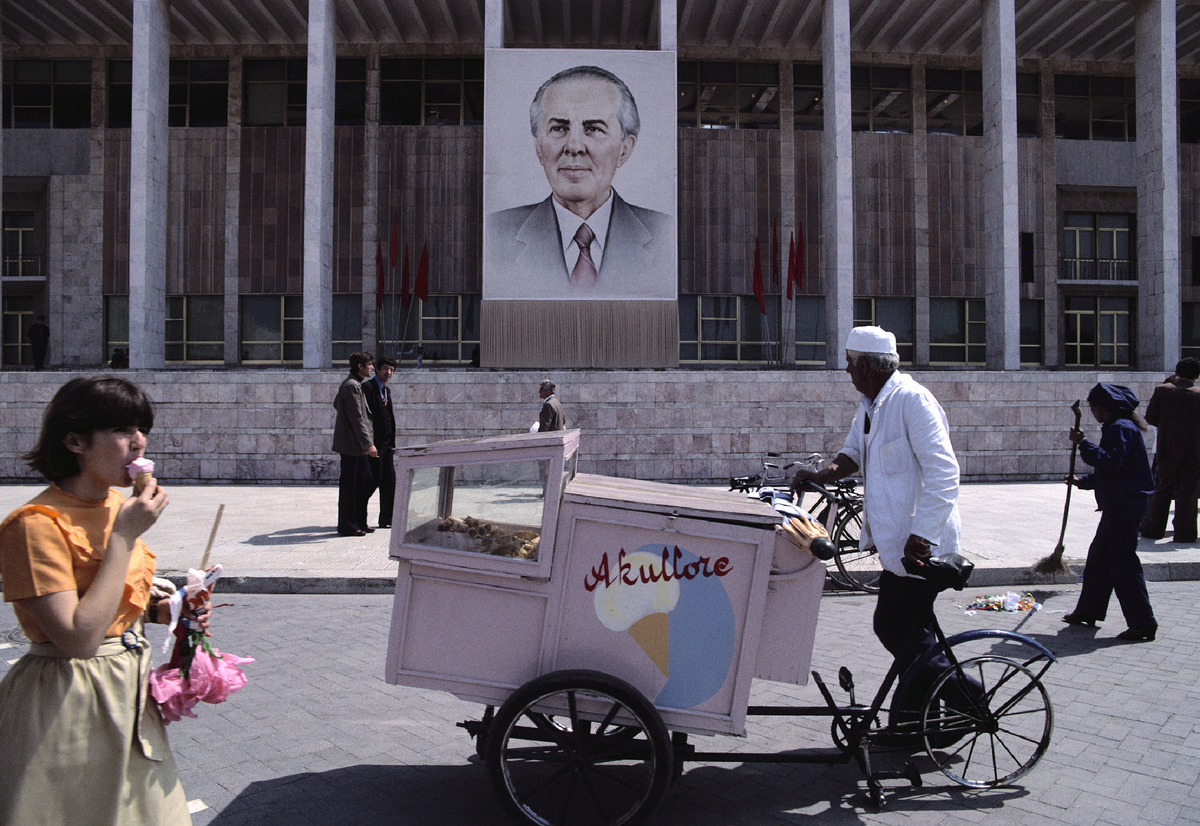
Albania is wedged between Yugoslavia to the north and east, Greece to the south, and the Adriatic Sea to the west. Its territory covers about 28,000 square kilometers, and at the height of Hoxha’s rule the population was roughly three million.
The country’s mountainous terrain had historically isolated it even before politics entered the equation. Much of the landscape consists of difficult mountain ranges. Roads were scarce. Railways were even scarcer.
Hoxha used geography as an ally. The mountains served as natural prison walls. The only major opening, the Adriatic coast, was tightly controlled by the navy and border forces.
But natural isolation was not enough. He built an artificial one as well, layer by layer.
The Ban on Religion: The World’s Only Atheist Constitution
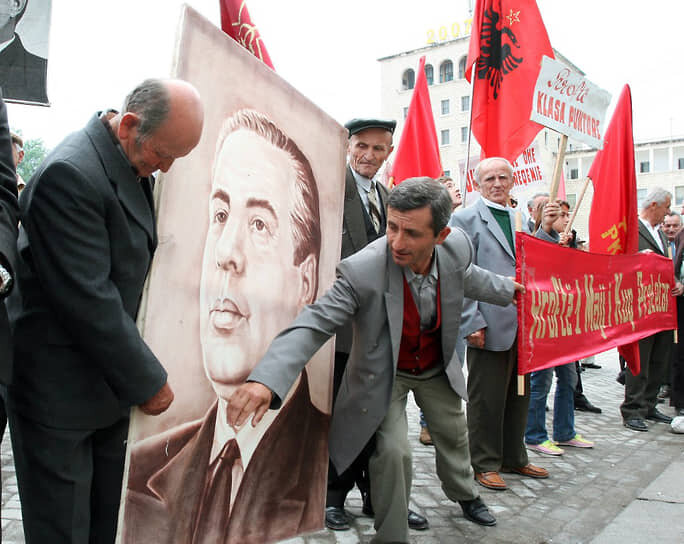
In 1967, Hoxha declared Albania the world’s first atheist state. This was not merely propaganda—it became law and was enforced through criminal prosecution.
All religious organizations were banned. Mosques, Orthodox churches, and Catholic cathedrals were closed. Some were converted into warehouses, cinemas, or sports halls. Others were demolished entirely.
Religious practice of any kind became a criminal offense. Possessing religious literature—whether a Bible, Quran, or prayer book—could lead to imprisonment. Baptisms, religious weddings, and religious funerals were prohibited.
Even personal names came under state control. Traditional Christian and Muslim names were discouraged or banned for newborns. Citizens were often pressured to adopt names considered ideologically acceptable. Special commissions compiled lists of approved names that were either neutral or nationalistic in character.
This policy was even more radical than the anti-religious campaigns of the Soviet Union. The USSR persecuted clergy and restricted religious activity, but it never completely outlawed religion. Hoxha went further.
Sigurimi: A State Within a State
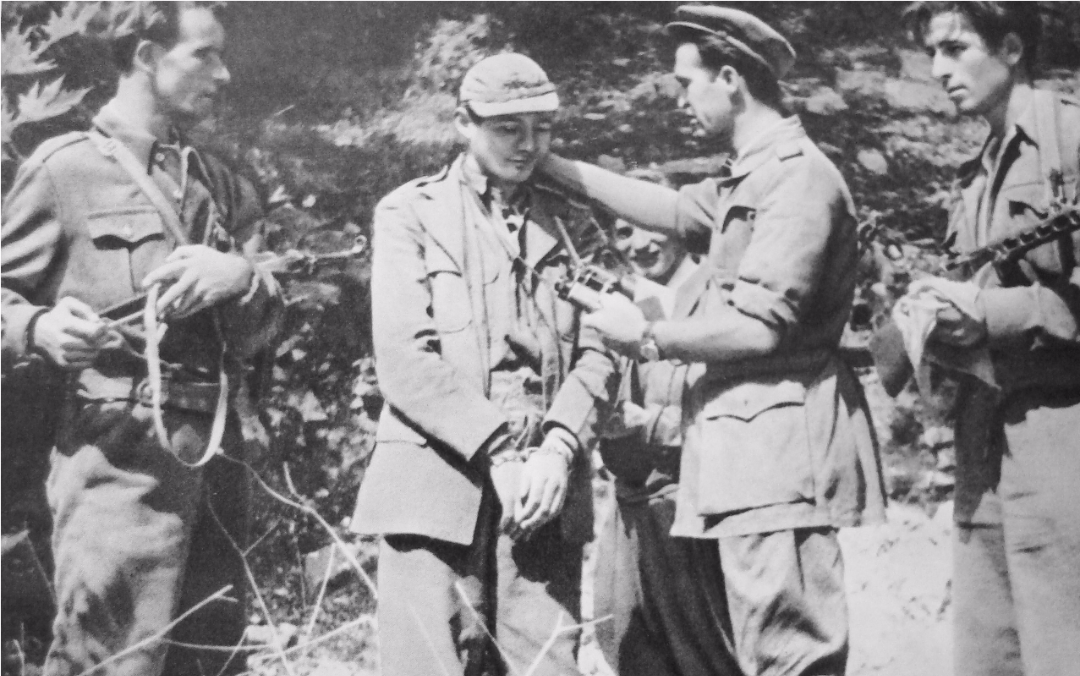
The secret police, known as Sigurimi—officially the Directorate of State Security—formed the backbone of the regime.
Its full-time staff is estimated at around 10,000 people. In a country of three million, that meant roughly one officer for every 300 citizens. The true reach was much broader because Sigurimi maintained an extensive network of informants. According to various estimates, one member of every fourth or fifth family cooperated with the secret police, voluntarily or under pressure.
The result was an atmosphere of total distrust. You could not speak openly with a neighbor. Perhaps he was an informant. The same applied to coworkers. Even relatives could not always be trusted.
Sigurimi relied heavily on collective responsibility. The arrest of one family member often brought consequences for everyone else: dismissal from work, expulsion from universities, or forced relocation to remote areas. This system discouraged opposition more effectively than direct threats.
When parts of the archives were opened after 1991, the scale of surveillance became clear. Detailed files existed on much of the adult population, including reports from informants, transcripts of conversations, and evaluations of personal behavior.
A Country You Could Not Leave
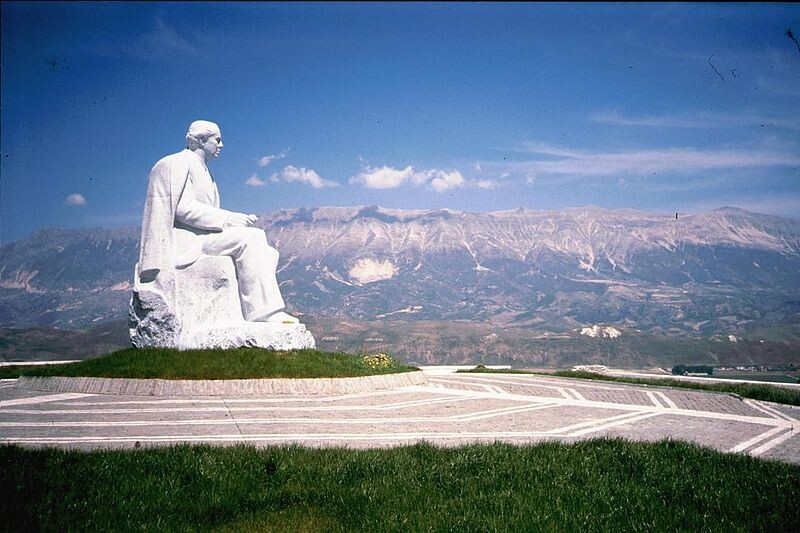
Attempting to leave Albania without permission could be punished by death. This was not a figure of speech—it was official policy.
The borders were protected by minefields and armed patrols authorized to shoot. The Adriatic coast was monitored by naval units, while mountain passes on the Yugoslav and Greek frontiers were regularly patrolled.
People still tried to escape. Every year, some died on mines or from border guards’ bullets. Others reached Greece or Yugoslavia and became exiles. Their families back home often faced predictable consequences: repression, imprisonment, or internal exile.
Even approved travel—for diplomats, trade representatives, or sports delegations—came with strict conditions. Travelers often left family members behind, effectively as hostages. Any contact with foreigners abroad had to be reported immediately.
Foreign visitors faced similar restrictions. Tourism was almost nonexistent until the final years of the regime. Journalists were rare and heavily supervised. Diplomats were confined to designated areas of Tirana. Even representatives of allied socialist countries eventually became unwelcome after Albania severed relations with both the Soviet Union and China.
Breaking With Everyone
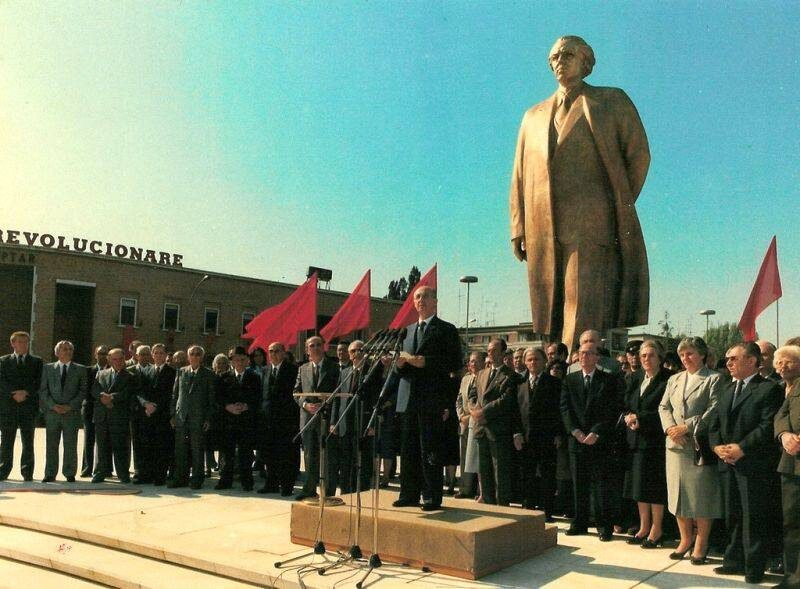
The diplomatic history of Hoxha’s Albania is essentially a story of breaking ties with every major ally.
In 1948, Albania broke with Yugoslavia. Tito had ambitions of bringing Albania under Belgrade’s influence, and Hoxha used the Soviet-Yugoslav split to escape Yugoslav dominance. Stalin became his new patron.
In 1961, Albania broke with the Soviet Union. After Stalin’s death and Khrushchev’s de-Stalinization campaign, relations deteriorated rapidly. Hoxha viewed criticism of Stalin as a threat to his own system. Soviet advisers were expelled, the Soviet naval presence was removed from Vlorë, and economic assistance ended. Albania formally left the Warsaw Pact in 1968.
In 1978, Albania broke with China. After Mao’s death and Deng Xiaoping’s reforms, Beijing moved toward economic modernization and improved relations with the United States. Hoxha regarded this as betrayal. Chinese aid stopped, and Chinese specialists were expelled.
After 1978, Albania had no allies at all. None. A nation of three million people, surrounded by unfriendly neighbors, cut off from foreign assistance, and armed with increasingly outdated equipment existed in almost complete diplomatic isolation.
Hoxha called this policy “self-reliance.” In theory it meant independence. In practice it became a recipe for economic stagnation.
The Economy of Isolation
The Albanian constitution of 1976 prohibited foreign loans and foreign investment. The ban was written directly into the constitution. External debt was declared incompatible with both socialism and national sovereignty.
This meant no Western technology, no significant foreign goods, and no integration into the global economy. Albania was expected to produce everything itself, from bread to tractors.
Reality was less impressive than the rhetoric. Albania produced enough food to avoid mass famine, unlike Maoist China during the Great Leap Forward. Yet variety was limited. Bread, olive oil, and occasional meat formed the diet of many citizens. Long queues for basic goods were common.
Industry relied on aging Soviet and Chinese machinery that became increasingly difficult to maintain after foreign advisers left. Productivity declined, and product quality remained poor.
One area where Albania achieved genuine success was electricity production. Mountain rivers enabled the construction of large hydroelectric projects that supplied relatively inexpensive power. Hoxha used this advantage effectively.
Elsewhere, the economy relied heavily on compulsory enthusiasm: mandatory labor campaigns, production quotas, and endless drives for higher output. Such measures produced short-term gains while creating long-term problems.
Bunkers: Paranoia in Concrete
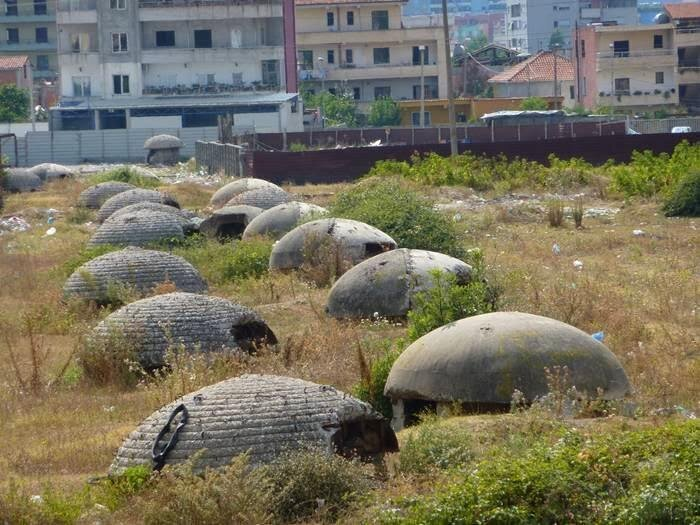
It is impossible to discuss Hoxha’s Albania without mentioning the bunkers. They became the most visible symbol of the system.
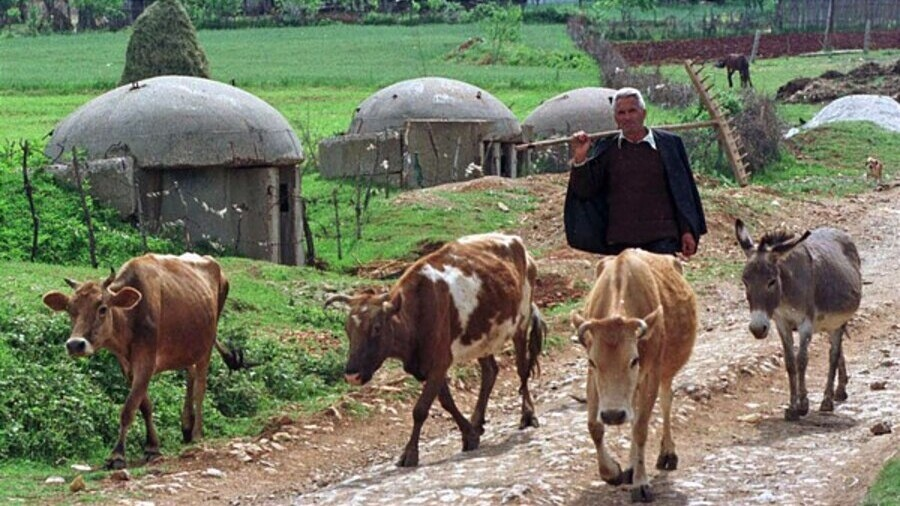
Approximately 173,000 bunkers were built—roughly one for every sixteen residents. Small concrete domes with firing ports appeared everywhere: in fields, on city streets, in mountain passes, on beaches, and even near homes.
Construction continued from 1967 to 1986. According to popular accounts, Hoxha personally inspected the first prototype and had a tank driven into it to test its strength. The bunker survived, and mass production followed.
The resources consumed were enormous. Some estimates suggest that enough concrete was used to build housing for much of the population. Steel, cement, and the labor of thousands were poured into these defensive structures.
Their military value was questionable. Scattered individual bunkers did not form a coherent defensive system. A modern army could bypass them with relative ease, while air power could neutralize them from above.
Their true purpose was psychological. Every citizen who saw a bunker outside the window was reminded of a constant message: the country was under threat, enemies were everywhere, and only the Party and Comrade Hoxha stood between Albania and disaster.
The Camp System and Collective Punishment
Albania’s prison camp system had a distinctive feature that set it apart even from the Soviet Gulag: collective punishment.
The arrest of one individual frequently led to repercussions for the entire family. Children of so-called enemies of the people were denied access to universities. Spouses lost jobs. Families were relocated from Tirana to remote mining settlements or rural communities.
It was an extraordinarily effective mechanism of control. Anyone considering opposition activity had to think not only about personal consequences but also about what might happen to their children. Most chose silence.
The most notorious camp complex was Spaç, located near copper mines in the mountains of central Albania. Prisoners worked under harsh conditions, mortality was high, and contact with the outside world was extremely limited.
The total number of victims remains disputed. Estimates range from several thousand executions to tens of thousands who died in prisons and camps. Exact figures may never be known because some archives were destroyed and others remain inaccessible.
Culture Under Surveillance
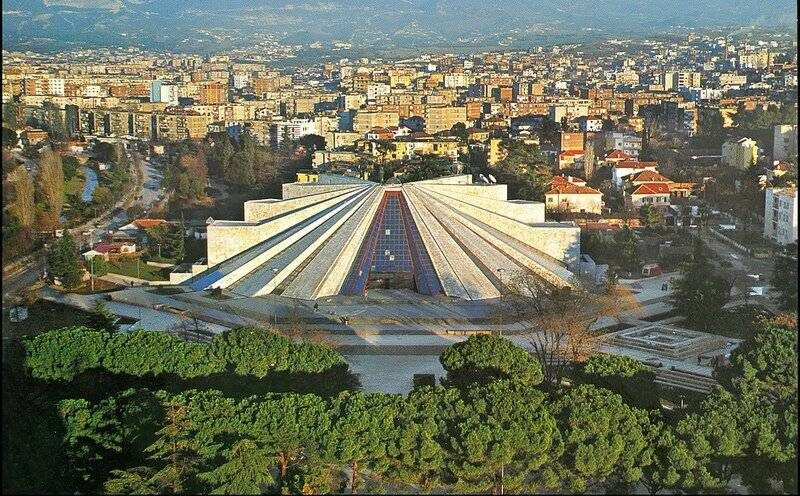
Culture existed in Hoxhaist Albania, but only within carefully defined limits.
Literature, cinema, theater, and visual arts were all controlled by the state. Creative unions determined what could be produced, while Party officials reviewed works before publication or performance.
Approved themes included partisan heroism, socialist construction, workers and peasants, and struggles against class enemies. Everything else existed in a gray zone or was prohibited outright.
Western culture was largely inaccessible. Foreign books could only be read in approved translations. Foreign music was viewed with suspicion. Jazz was condemned as bourgeois decadence. Rock music was portrayed as an instrument of imperialism.
Yet Hoxha made exceptions for classical music and opera, which were considered sufficiently elevated and culturally safe. The Tirana Opera remained active, and the state symphony orchestra continued to perform. The result was a strange contrast within an otherwise closed society.
Television as a Tool of Control
Albanian state television began broadcasting in 1960. By 1985, the country had around 200,000 television sets for a population of three million—limited, but enough to reach most urban residents.
Programming was overwhelmingly propagandistic. News focused on Hoxha’s speeches and the achievements of socialism. Cultural programming consisted of approved performances and concerts. Entertainment largely featured folk songs and traditional dances.
Yet television also created an unexpected opening. Along much of Albania’s coastline, Italian broadcasts could be received. Citizens with access to suitable antennas secretly watched Italian programs.
This became a small window into another world. Many Albanians who emigrated to Italy after 1991 later explained that they had learned much of the Italian language through these unauthorized broadcasts.
Hoxha Dies, the System Continues
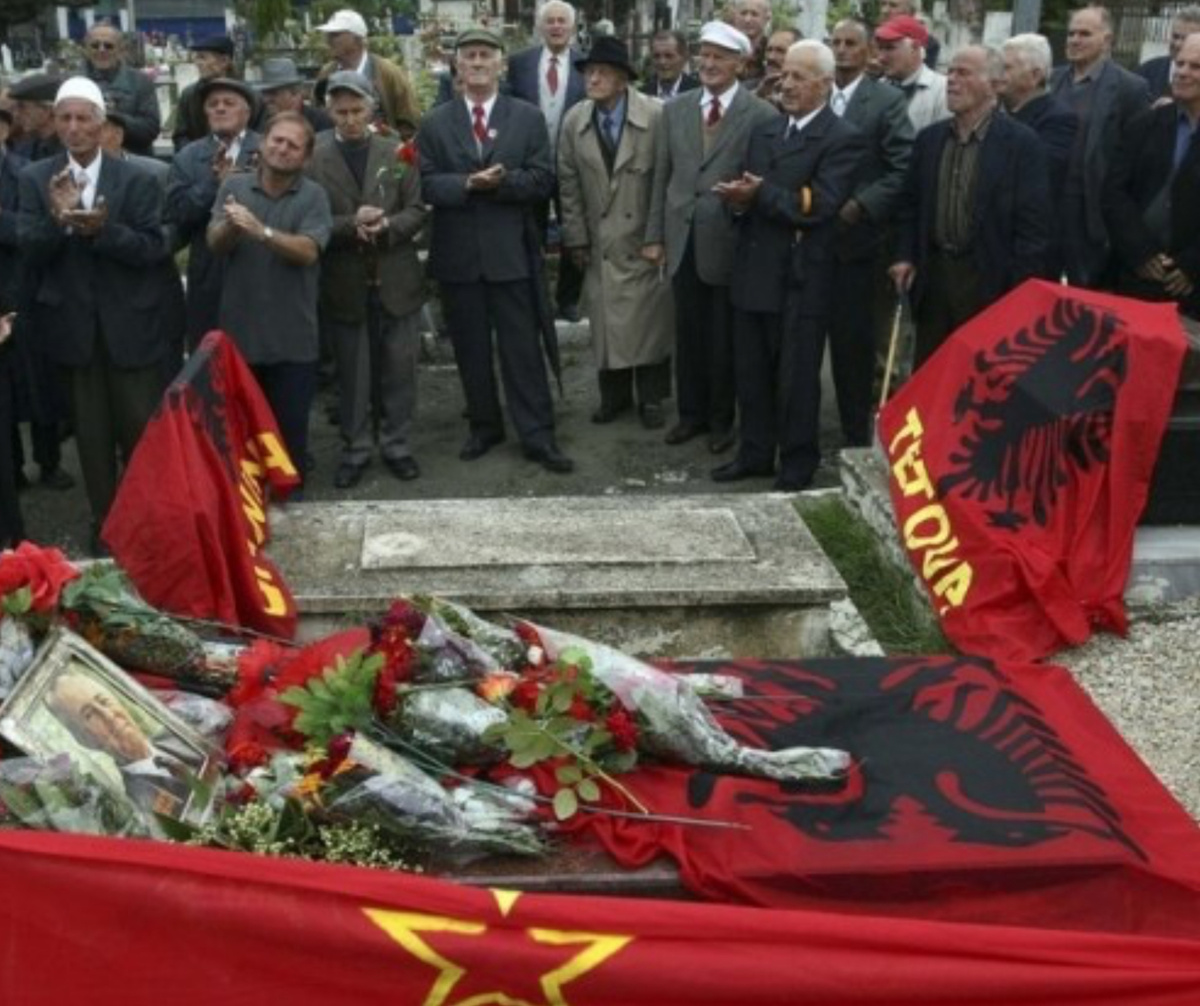
In April 1985, Enver Hoxha died from complications related to diabetes and heart disease. Power passed to Ramiz Alia, one of his closest associates.
Alia understood that the system was no longer sustainable. The economy was deteriorating. Through Italian television and foreign radio broadcasts, younger generations had learned that life beyond Albania was very different. Gorbachev’s reforms in the Soviet Union increased pressure across the socialist world.
Yet Alia feared rapid change. His reforms were cautious and incomplete—sufficient to accelerate collapse, but insufficient to manage a controlled transition.
In 1990, Albanians began entering foreign embassies in Tirana in large numbers, demanding the right to emigrate. Western governments found themselves in an unusual situation: technically, their embassies had been occupied, but the people inside wanted neither money nor political concessions. They simply wanted to leave the country.
In August 1991, tens of thousands of Albanians seized ships in the ports of Durrës and Vlorë and crossed the Adriatic to Italy. Italians were stunned by the scale of the exodus and ultimately accepted most of the refugees.
The regime did not fall because of a dramatic revolution. It simply exhausted itself and ceased to function.
What Remains Today
The most visible legacy of the regime is still the bunkers. They remain scattered across the landscape, gradually being reclaimed by vegetation but refusing to disappear.
Some have found new uses. In Tirana, one bunker was transformed into an art gallery. Others serve as storage facilities, basements, or even occasional rural housing.
The psychological legacy is more complicated. A society where two generations lived under conditions of total control, distrust, and isolation does not recover quickly. Habits of secrecy, suspicion, and distrust of institutions survived long after 1991.
Albania joined NATO in 2009 and continues its path toward closer integration with Europe. It is fundamentally different from the country that existed under Hoxha. Yet traces of those forty-one years remain visible.
Hoxhaist Albania was the most isolated country in twentieth-century Europe—not by accident, but as the result of the deliberate choices of one man who pursued a vision of total self-sufficiency and total control. The ban on religion, restrictions on private life, the prohibition on free travel, the repeated breakups with allies, and 173,000 bunkers built against largely imaginary enemies were all parts of a single system. It was a system sustained by fear, and when fear stopped working, the system collapsed with it.
About the Creator
Enjoyed the story? Support the Creator.
Subscribe for free to receive all their stories in your feed.
Comments
There are no comments for this story
Be the first to respond and start the conversation.