
The Little Mosque at the Seven Tombs
Where history, faith, and memory quietly met.
It's amazing how, Sometimes the smallest places preserve the greatest memories.
There are journeys we plan for sightseeing, and there are journeys we make to find a part of ourselves.
Our trip to Hyderabad in 2023 was the latter.
Although my brothers and sisters and I had each returned to Hyderabad over the years, life had taken us to different countries and different responsibilities. We had not all come back together as one family since 1988, the year I was married. Thirty-five years had passed.
This time, we wanted to experience our city together again.
Along with my wife and my siblings, we planned a day to revisit some of Hyderabad’s most treasured landmarks, not simply as tourists, but as children returning to the city that had raised us.
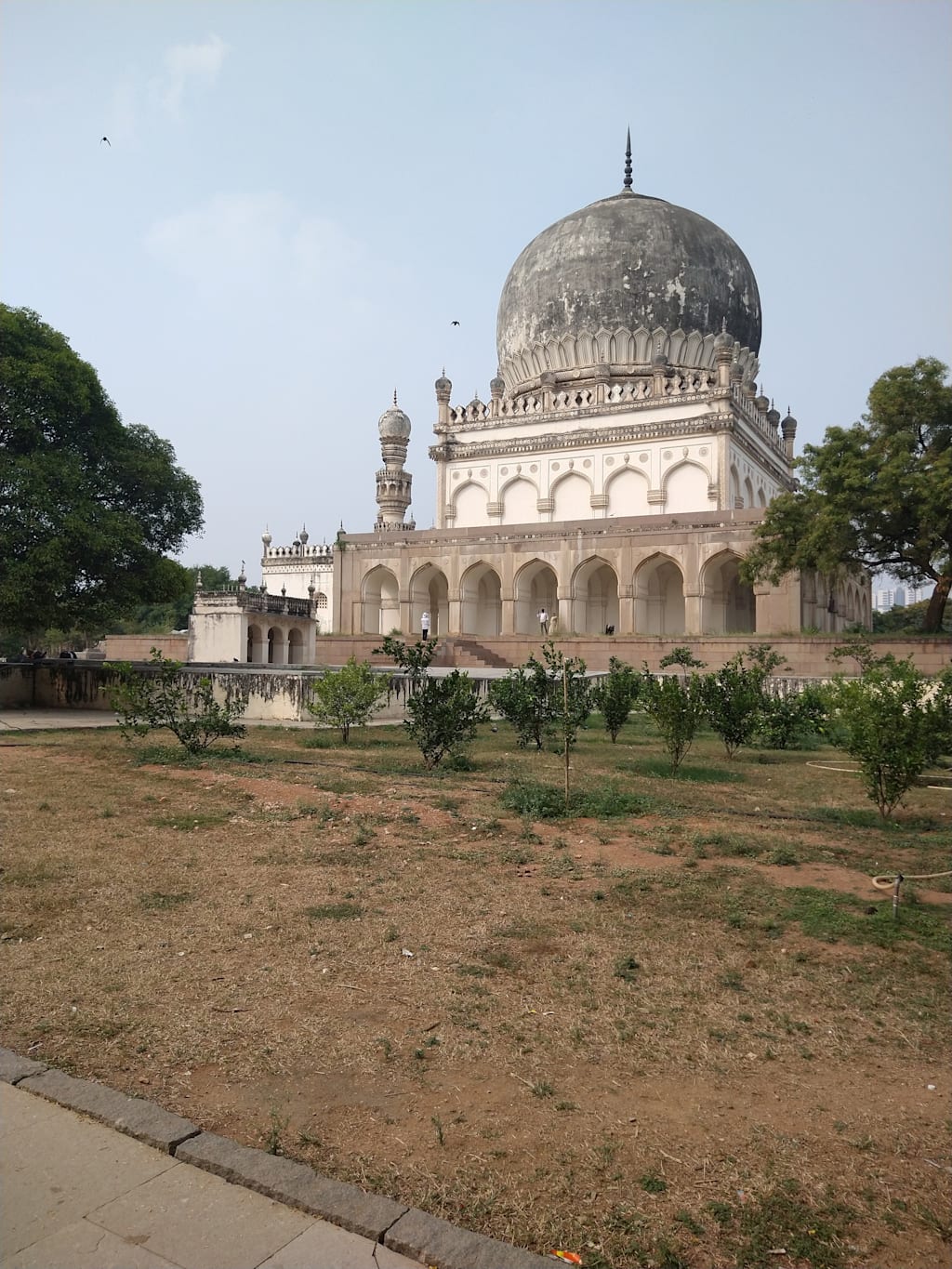
One of those places was the Qutb Shahi Tombs, affectionately known to Hyderabadis as the Seven Tombs.
Walking through the sprawling complex, surrounded by the magnificent mausoleums of the Qutb Shahi kings, memories seemed to come alive with every step.
We admired the architecture, paused for photographs, and reflected on the remarkable history that had unfolded there more than four centuries ago.
Then something unexpected caught my attention.
Near one of the great tombs stood a tiny stone mosque.
It was so small that perhaps only nine or ten people could stand shoulder to shoulder for prayer. In the shadow of the grand royal mausoleums, it would have been easy to walk past without noticing it.
Curious, I walked over.
A plaque near the entrance explained the significance of the little mosque. According to the inscription, after the fall of Golconda in 1687, the Mughal emperor Aurangzeb came here to offer prayers of thanksgiving before entering the fort in victory.
I read the plaque once.
Then I read it again.
Suddenly, the little mosque was no longer just another old structure among many. It had become a silent witness to one of the defining moments in the history of the Deccan.
I quietly removed my shoes and stepped inside.
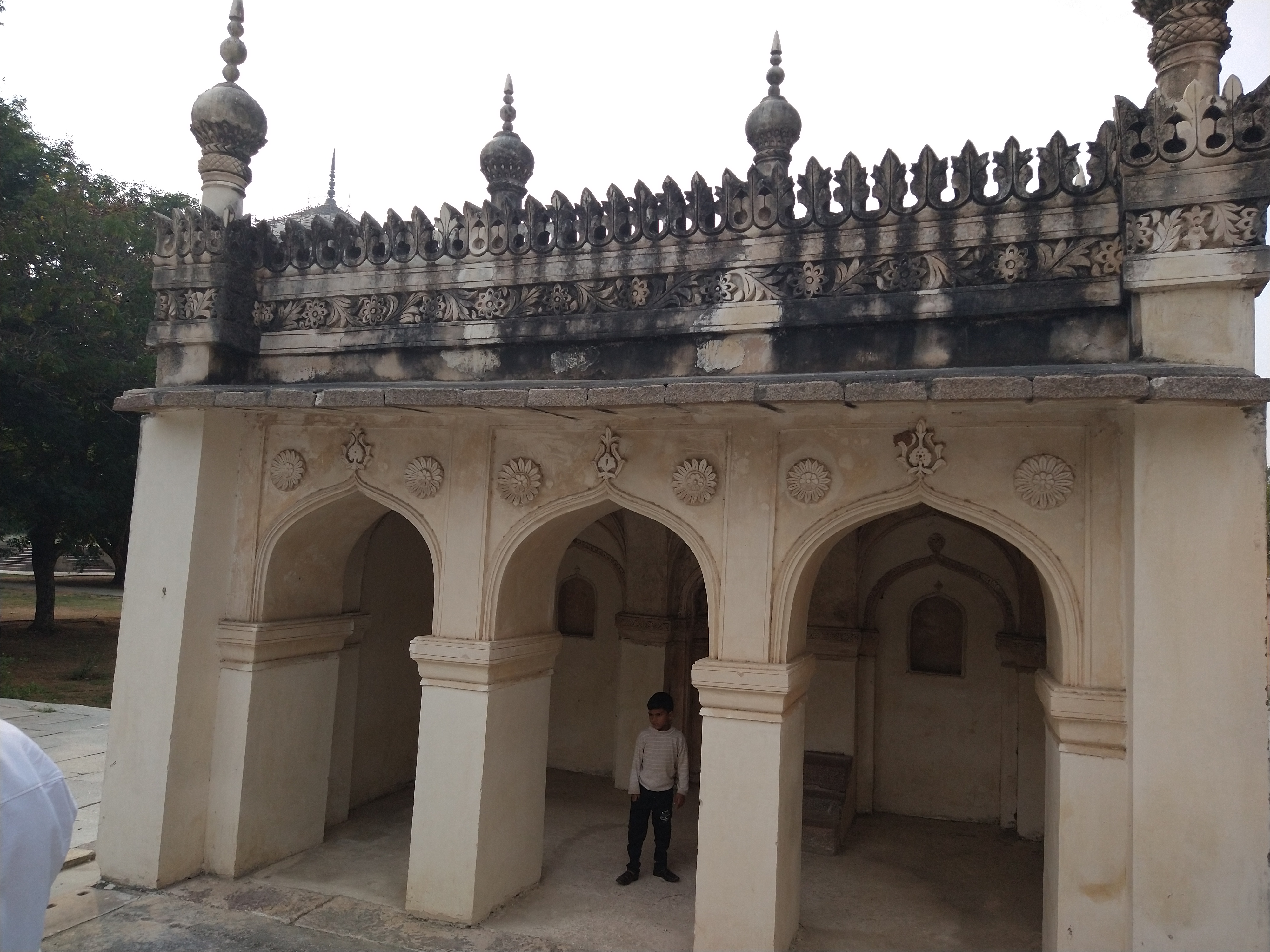
The mosque was simple. No elaborate decoration. No crowds.
Only cool stone, quiet walls, and a profound sense of peace.
I stood there for several minutes.
Looking back now, I honestly cannot remember whether I prayed two rak’ahs of Nafl prayer or simply stood in silent reflection. It is curious how memory works. Sometimes we forget what we did, yet we never forget how a place made us feel.
As I looked down at the worn stone beneath my feet, a thought came over me.
Perhaps I was standing where Aurangzeb himself had once stood.
It was humbling to think that these very stones may have witnessed his prayers more than three centuries earlier.
Whether that exact spot can ever be known is beside the point.
For one quiet moment, the distance between 1687 and 2023 simply disappeared.
History was no longer confined to books. It was beneath my feet.
Outside, my family continued exploring the tombs of kings. Inside that little mosque, time itself seemed to stand still.
Eventually, I stepped back outside, slipped on my shoes, and rejoined my family.
As we continued our walk through the Seven Tombs, I realized that our journey had become much more than a family outing or a visit to historical monuments.
It was a reunion with our roots.
After thirty-five years, we had returned together to the city that had shaped our childhood, our faith, and so many of our earliest memories.
“Among the grand tombs of kings, it was not the largest monument that stayed with me. It was the smallest”.
A humble little mosque, almost hidden from view, where history, faith, and memory quietly came together, and where, for a few unforgettable moments, I felt connected not only to Hyderabad’s past, but to my own.
About the Creator
Akram Mohammed
From a four-decade IT career to storytelling, I write about South Indian Islamic history, memoirs, faith, philosophy, cultural heritage, and nature, uncovering overlooked perspectives and meaningful human connections.
Enjoyed the story? Support the Creator.
Subscribe for free to receive all their stories in your feed.
Comments
There are no comments for this story
Be the first to respond and start the conversation.