


Early English kings were powerful rulers whose authority was both vast and heavily reliant on the support of the church and nobility. Their primary duties were to protect the realm from invaders, maintain law and order, and secure the kingdom's prosperity through taxation and the administration of justice.
Core Powers of Early Kings
Legislative and Judicial Power: The King was the ultimate source of law and justice. He could issue new laws, mint coinage, and resolve high-level disputes.
Military Command: A king was the supreme military commander. He held the authority to levy taxes (such as the geld) and raise a national army (the fyrd) to defend the realm.
Foreign Policy: Kings directed international relations, negotiated treaties, and managed foreign alliances.
Land Ownership: The King owned vast amounts of royal land (demesne) and could grant estates to loyal nobles and bishops in exchange for military service and counsel.
Duties
Defense: The foremost duty of a monarch was to protect his subjects from external threats, such as Viking or Norman invasions, which often required leading troops into battle.
Upholding Order: Monarchs were expected to maintain the "King’s Peace," ensuring that subjects could travel and conduct business safely under a unified legal system.
Consultation and Governance: Although they held theoretical absolute power, kings were required to govern in consultation with the Witan (an advisory council of bishops, nobles, and elders).
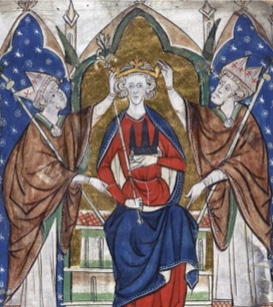
Coronation and Religion: The King had a duty to protect the church. In return, the church provided divine legitimacy through the coronation ceremony, which consecrated the monarch.
Evolution of Royal Power
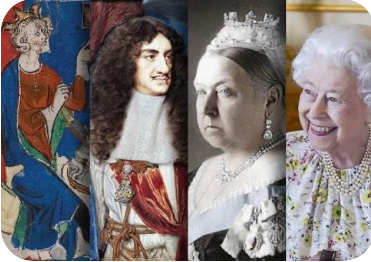
Early English kingship was not strictly hereditary; the Witan could elect strong candidates from the royal family. Because the king's court was itinerant (traveling from region to region to collect food rents and settle disputes), the monarch stayed highly visible to the populace.
This absolute rule shifted drastically after the Norman Conquest in 1066, which introduced feudalism and centralized royal administration. Later, monarchs faced severe limits on their unchecked power following the signing of the Magna Carta in 1215, which forced the king to govern alongside established councils and respect the law.
As a constitutional monarch, the British King is Head of State, providing stability and continuity, with roles that are largely ceremonial rather than political. Key duties include appointing the Prime Minister, opening Parliament, granting Royal Assent to legislation, and serving as Head of the Armed Forces and Head of the Commonwealth.
Core Constitutional & Parliamentary Duties
Appointing the Government: The King appoints the Prime Minister (typically the leader of the majority party) following a general election.
Opening Parliament: The King formally opens new parliamentary sessions through the State Opening of Parliament and reads the King's Speech, which outlines the government's agenda.
Royal Assent: Laws passed by Parliament require the King's formal approval, known as Royal Assent, before they become law.
Privy Council & Red Boxes: The King holds monthly Privy Council meetings and receives daily "red boxes" containing state papers for information, approval, and signature.
Dissolving Parliament: The King has the power to dissolve Parliament before a general election.
Ceremonial & National Duties
Head of State & Nation:
Head of the Commonwealth:
Head of the Church of England:
Patronage & Community:
Royal Roles & Responsibilities
Head of State: Acts as the living embodiment of the nation, providing a sense of stability and continuity, as detailed in the Royal Family's guide to the role.
Diplomatic Role: The King receives incoming/outgoing ambassadors and plays a significant role in international relations.
Honours: The King grants honors such as knighthoods to recognize public service and excellence.
King Charles 111 is the current reigning monarch of the United Kingdom (since 2022), following Queen Elizabeth II (1952–2022) and George VI (1936–1952). The monarchy has evolved from the Anglo-Saxon kings (starting with Athelstan) and the 1066 Norman conquest to the modern House of Windsor, which has reigned since 1901.
The Normans: William I (1066–1087) to Stephen (1135–1154).
Plantagenets: Henry II (1154–1189) to Richard II (1377–1399).
Key Monarchs (1066–Present)
The Normans: William I (1066–1087) to Stephen (1135–1154).
Plantagenets: Henry II (1154–1189) to Richard II (1377–1399).
House of Lancaster & York: Henry IV (1399–1413) to Richard III (1483–1485).
Tudors: Henry VII (1485–1509) to Elizabeth I (1558–1603).
Stuarts: James I (1603–1625) to Anne (1702–1714).
Hanoverians: George I (1714–1727) to Victoria (1837–1901).
Saxe-Coburg-Gotha / Windsor: Edward VII (1901–1910) to Charles III (2022-present).
Recent Timeline
George V (1910–1936)
Edward VIII (1936 – abdicated)
George VI (1936–1952)
Elizabeth II (1952–2022)
Charles III (2022–present)
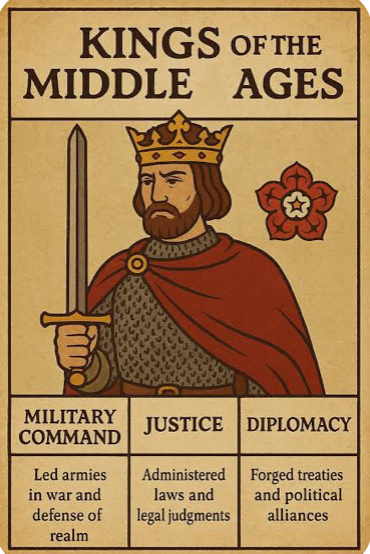
History of The kingdom of England.
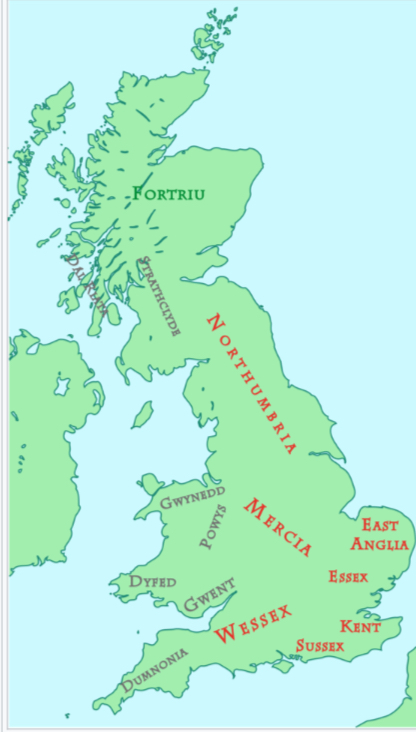
This list of kings and reigning queens of the Kingdom of England begins with Alfred the Great, who initially ruled Wessex, one of the seven Anglo-Saxon kingdoms which later made up modern England. Alfred styled himself king of the Anglo-Saxons from about 886, and while he was not the first king to claim to rule all of the English, his rule represents the start of the first unbroken line of kings to rule the whole of England, the House of Wessex.
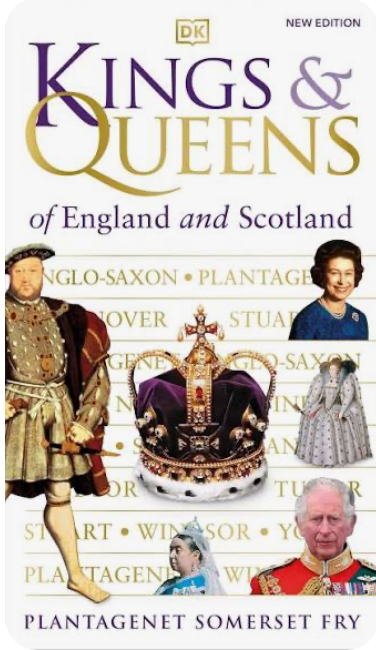
Arguments are made for a few different kings thought to have controlled enough Anglo-Saxon kingdoms to be deemed the first king of England. For example, Offa of Mercia and Egbert of Wessex are sometimes described as kings of England by popular writers, but it is no longer the majority view of historians that their wide dominions were part of a process leading to a unified England. The historian Simon Keynes states, for example, "Offa was driven by a lust for power, not a vision of English unity; and what he left was a reputation, not a legacy." That refers to a period in the late 8th century, when Offa achieved a dominance over many of the kingdoms of southern England, but it did not survive his death in 796. Likewise, in 829 Egbert of Wessex conquered Mercia, but he soon lost control of it.
It was not until the late 9th century that one kingdom, Wessex, had become the dominant Anglo-Saxon kingdom. Its king, Alfred the Great, was the overlord of western Mercia and used the title King of the Angles and Saxons though he never ruled eastern and northern England, which was then known as the Danelaw and had been conquered by the Danes, from southern Scandinavia. Alfred's son Edward the Elder conquered the eastern Danelaw. Edward's son Æthelstan became the first king to rule the whole of England when he conquered Northumbria in 927. Æthelstan is regarded by some modern historians as the first true king of England. The title "King of the English" or Rex Anglorum in Latin, was first used to describe Æthelstan in one of his charters in 928. The standard title for monarchs from Æthelstan until John was "King of the English". In 1016, Cnut the Great, a Dane, was the first to call himself "King of England". In the Norman period, "King of the English" remained standard, with occasional use of "King of England" or Rex Anglie. From John's reign onwards, all other titles were eschewed in favour of "King" or "Queen of England".
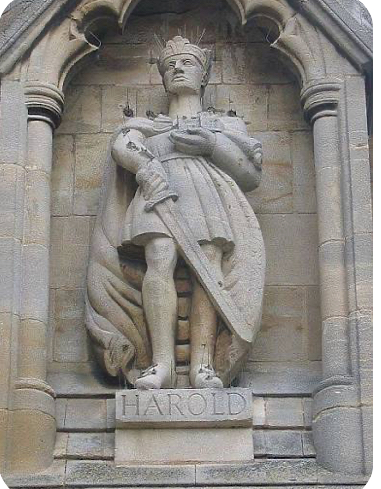
The Principality of Wales was incorporated into the Kingdom of England under the Statute of Rhuddlan in 1284, and in 1301, King Edward I invested his eldest son, the future King Edward II, as Prince of Wales. Since that time, the eldest sons of all English monarchs, except for King Edward III, have borne this title.
After the death of Queen Elizabeth I in 1603, her cousin King James VI of Scotland inherited the English crown as James I of England, joining the crowns of England and Scotland in personal union. By royal proclamation, James styled himself "King of Great Britain", but no such kingdom was created until 1707, when England and Scotland united during the reign of Queen Anne to form the new Kingdom of Great Britain, with a single British parliament sitting at Westminster. That marked the end of the Kingdom of England as a sovereign state.
so now you are up to date on the royal family of Britain and where they came from. Long live the king.
About the Creator
Guy lynn
I’m interested in history, space travel and the possibilities, Americana,( where I live now), Africa (Southern Africa, where I was born and raised), and I write about things that interest me ( bead history) and I hope will interest you.
Enjoyed the story? Support the Creator.
Subscribe for free to receive all their stories in your feed.
Comments
There are no comments for this story
Be the first to respond and start the conversation.