
The Key of Life: Ankh in Ancient Egypt
The Key of Life: Unraveling the Secrets of the Ankh in Ancient Egypt
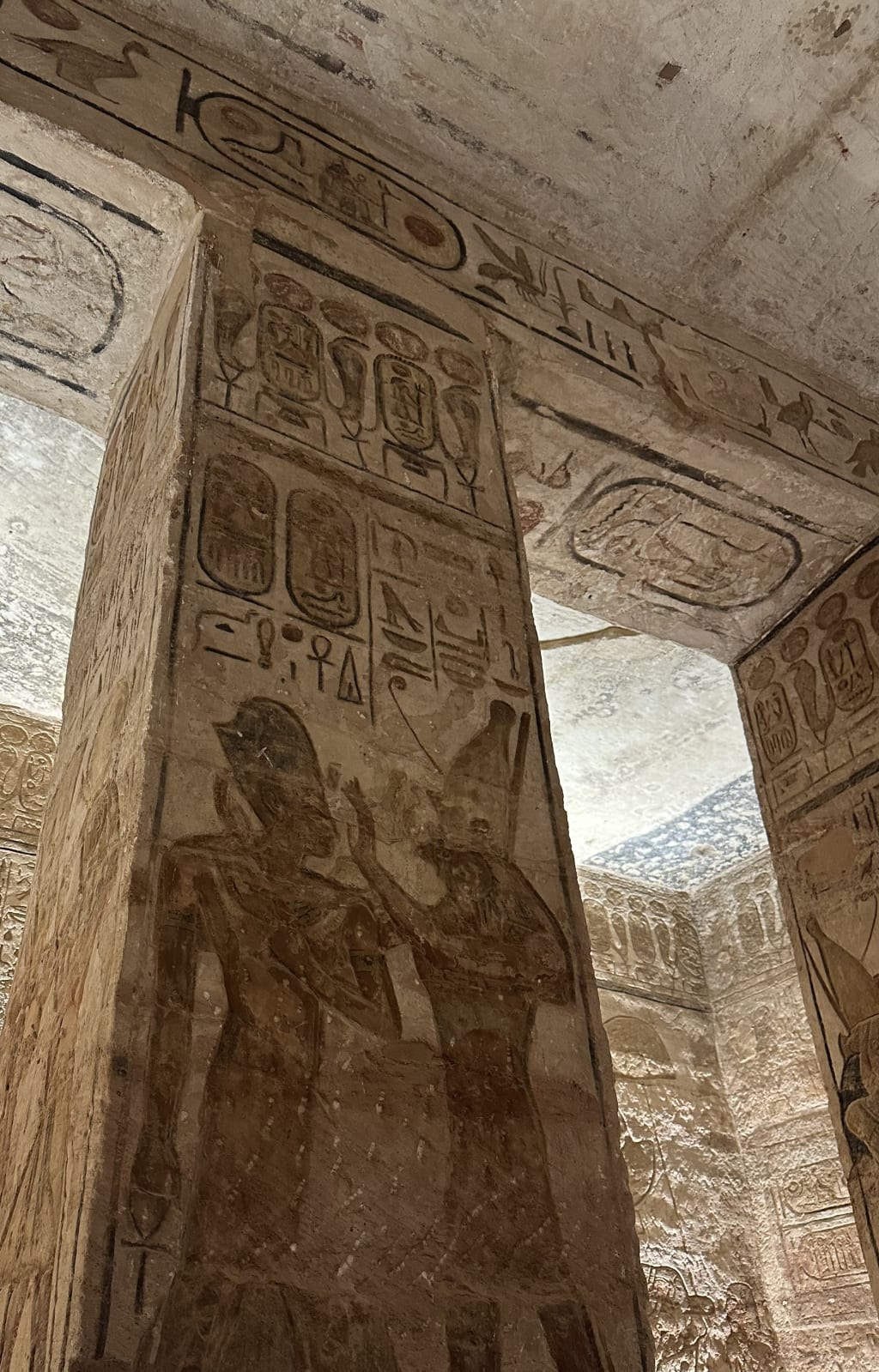
The ancient Egyptian civilization, known for its profound philosophical and architectural achievements, gave the world many enduring symbols, among which the Ankh, or "Key of Life," stands out. This hieroglyphic representation, resembling a cross with a loop at the top, conveys eternal life, divine energy, and cosmic balance. While widely recognized as a religious icon, the Ankh's significance extends into metaphysics, sociocultural identity, and structural symbolism.
Linguistic and Structural Origins of the Ankh
The Ankh is linguistically linked to the Egyptian word for "life" and frequently appears in funerary texts, temple carvings, and artifacts. Scholars debate its structural derivation, with theories suggesting:
A stylized sandal strap, represents movement and the journey of life.
A union of the male and female principles, signifying fertility and regeneration.
A solar symbol, where the loop represents the sun rising over the horizon, indicative of divine resurrection.
The symbol is integrally tied to Osiris (god of the afterlife), Isis (goddess of magic and life), and Ra (the sun god), reinforcing its role in cosmic balance and divine intervention.
The Ankh in Theological and Architectural Contexts
The Ankh was not merely a symbolic artifact; it played a crucial role in theological doctrine and architectural integration:
Funerary Texts & Pyramid Carvings: Hieroglyphic texts such as the Pyramid Texts of Saqqara depict the Ankh being offered by deities to deceased pharaohs, ensuring their passage to the afterlife.
Architectural Alignment with the Cosmos: The Ankh was incorporated into temple designs, often positioned in sacred spaces aligned with celestial cycles to reinforce its metaphysical connection to eternity.
Energy Distribution in Temples: The Ankh’s presence in pillars, friezes, and lintels of Karnak and Abu Simbel suggests a deeper link to energy flow and structural harmony.
Modern-Day Archaeological Sites Featuring the Ankh
Egypt remains a premier destination for those wishing to witness the Ankh in its historical context. Key sites include:
Karnak and Luxor Temples: Extensive carvings of the Ankh being bestowed upon rulers illustrate the divine mandate of kingship.
Valley of the Kings: Intricate wall reliefs show gods handing the Ankh to pharaohs, signifying their eternal existence.
The Egyptian Museum, Cairo: Houses artifacts such as the golden mask of Tutankhamun, where the Ankh is embedded in the regalia, emphasizing its role in protection and divinity.
Scientific and Philosophical Interpretations of the Ankh
While historically a religious emblem, the Ankh has inspired cross-disciplinary studies:
Quantum Symbolism: Some theorists link the Ankh to energy circuits in the human body, akin to the concept of prana or chi in Eastern traditions.
Electromagnetic Resonance: Ancient Egyptian temples, many adorned with Ankh imagery, were constructed with materials like granite and quartz, which are known to conduct electromagnetic energy.
Bioenergetic Theories: Some researchers speculate that the Ankh served as an ancient key to understanding the human body’s vibrational frequencies, possibly influencing healing practices.
The Ankh’s Influence in Contemporary Culture and Global Symbolism
Beyond ancient Egypt, the Ankh has found resonance in various cultural and spiritual traditions:
Coptic Christianity: The Ankh evolved into the Coptic cross, signifying resurrection and divine protection.
Afrocentric and Esoteric Movements: The Ankh is widely used in African spiritual practices and holistic healing as a symbol of life force and universal energy.
Pop Culture and Fashion: From tattoos to jewelry, the Ankh remains a symbol of individuality, enlightenment, and mysticism in contemporary culture.
Conclusion: The Ankh as a Timeless Conduit of Knowledge
The Ankh transcends mere symbolism; it serves as a bridge between ancient wisdom and modern scientific inquiry. Whether studied from a theological, architectural, or metaphysical standpoint, its presence remains a testament to Egypt’s enduring legacy of knowledge, spirituality, and cosmic balance. Exploring the Ankh in temples, texts, and artifacts offers profound insights into humanity’s eternal pursuit of life, energy, and the divine.
About the Creator
Siboli Mukherjee
I decode innovation's human side. From ancient ingenuity to modern tech, I uncover how culture shapes progress. Join me in exploring the stories, ideas, and journeys that connect creativity, logic, and discovery.
Enjoyed the story? Support the Creator.
Subscribe for free to receive all their stories in your feed.
Comments
There are no comments for this story
Be the first to respond and start the conversation.