
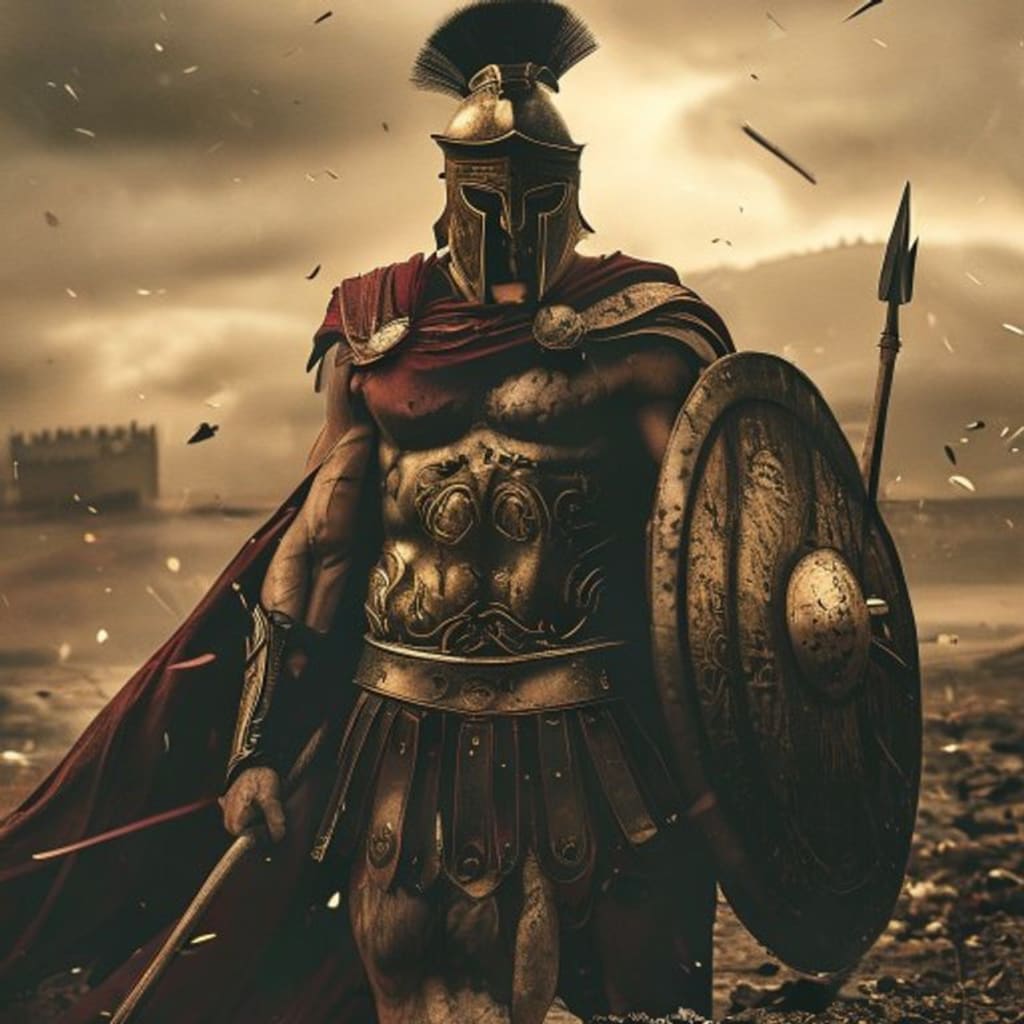
Beyond the myth, discover how the legend of Achilles reveals the universal truth about strength, weakness, and the humanity in between.
There’s a secret I’ve carried with me since childhood, a quiet fascination with the stories that define us. Not just the triumphant narratives, but the ones where glory meets its inevitable, often painful, end. And among them all, one figure looms largest, a warrior whose name has become synonymous with insurmountable power, yet also with a single, devastating truth: Achilles.
I remember first hearing his name, a whispered legend of a hero so magnificent, so utterly invulnerable, that he seemed carved from the very fabric of godhood. But then came the twist, the tiny detail that unravelled everything. The heel. That solitary, unprotected spot, the very source of his undoing. It struck me then, and it resonates with me still today: even overwhelming strength can hide one small flaw.
This isn't just an ancient tale from dusty tomes; it's a profound, personal reminder that vulnerability isn't just a weakness – it's an intrinsic part of the human condition, even for those touched by divinity. In this piece, I want to take you on a journey through the epic life and tragic fall of Achilles, and explore why his story, particularly the infamous "Achilles' heel," continues to define our understanding of strength and susceptibility.
The Invulnerable Warrior: A Baptism in the Styx
Let’s rewind to the beginning, to the origins of this legendary figure. Achilles, son of the mortal king Peleus and the sea nymph Thetis, was destined for greatness from birth. But greatness, especially in Greek mythology, often comes hand-in-hand with immense peril. His mother, Thetis, knew this all too well and desperately sought to protect her child from a mortal fate.
According to a poignant account often cited by sources like Britannica, Thetis took her infant son to the underworld’s boundary, to the dark, mystical waters of the River Styx. This wasn't a casual dip; it was an act of profound, desperate love. The river, believed to grant invulnerability, offered a glimmer of hope against the harsh realities of a hero's life.
- The Mother's Desperation: Thetis's act highlights the universal parental desire to shield their children from harm, even if it means bending the rules of mortality.
- The Waters of Immortality:The Styx, a boundary between worlds, was said to make anything immersed in it impervious to harm.
- The Unintended Consequence: In her haste and desperate grip, Thetis held Achilles by one heel. That tiny, human point of contact remained untouched by the sacred waters.
It was a seemingly insignificant oversight, a brief moment of human contact in a divine ritual. Yet, this single point of vulnerability would, tragically, shape his entire destiny and etch his name into eternity not just for his strength, but for his singular weakness.
"The story of Achilles' dipping in the Styx serves as a powerful metaphor: our greatest strengths often emerge from our most profound vulnerabilities, and sometimes, the very act of seeking perfection can leave us exposed."
The Mighty Myrmidon: Unrivaled on the Battlefield
As Achilles grew, so did his prowess. He was trained by the centaur Chiron, a legendary teacher who also tutored Hercules. Achilles emerged as the greatest warrior of the Achaeans, the very embodiment of physical perfection and battlefield ferocity. When the Trojan War erupted, sparked by Helen's abduction, Achilles was an indispensable force.
His participation wasn't guaranteed. Thetis, foreseeing his death at Troy, attempted to hide him, dressing him as a girl among the daughters of King Lycomedes. But cunning Odysseus saw through the disguise, and Achilles, driven by destiny and the allure of eternal glory, joined the Greek expedition.
His rage, his skill, his almost supernatural strength – these were the hallmarks of Achilles in battle. He cut down countless Trojan warriors, his very presence striking terror into the hearts of his enemies. He was fast, strong, and seemingly indestructible.
- A Force of Nature: Achilles’ battle skills were legendary, making him the Greek army’s most formidable asset.
- The Rage of Achilles:His temperament was as potent as his spear, often leading to devastating consequences for his enemies, and sometimes, for his allies.
- The Price of Glory: He knew his fate – a short, glorious life, or a long, unremarkable one. He chose glory.
I find myself drawn to the contrast here: a man whose body was practically impervious, yet whose emotions were volatile, easily wounded, and could lead to decisions as destructive as any arrow. His *psychological* heel was perhaps as significant as his physical one, a point that is often overlooked in the simple retelling of the myth.
The Weight of Destiny and the Cost of Greatness
Achilles' story is deeply intertwined with prophecy. He was presented with a choice: live a long, obscure life or a short, glorious one. He chose the latter, understanding that his fame would be eternal. This conscious decision to embrace a predetermined, tragic end gives his life an almost unbearable poignancy. He marched towards glory, knowing it was also marching towards his doom.
His internal struggles were just as epic as his battles. When Agamemnon, the commander of the Greek forces, dishonored him by taking Briseis, a war prize, Achilles withdrew from battle. This act of stubborn pride, this Achilles' of ego, led to devastating losses for the Greeks. It showed that even the mightiest warriors could be brought low not just by a physical blow, but by a blow to their honor.
It was only the death of his beloved Patroclus, donned in Achilles' own armor, that dragged him back into the fray, consumed by a grief-fueled rage that knew no bounds. He sought vengeance, mercilessly killing Hector, the greatest Trojan warrior, and desecrating his body – an act that even in that brutal age was considered extreme.
As Homer masterfully describes in the Iliad, "Sing, O goddess, the rage of Achilles son of Peleus—that murderous rage which inflicted countless sufferings on the Achaeans..."
This period of his story, for me, is where the hero truly becomes human. He is not just a killing machine; he is a man capable of immense love, profound grief, and terrifying wrath. His invulnerability, then, becomes a facade, thinly veiling the deep human emotions that ultimately drive his actions and seal his fate.
The Heel Revealed: A Tragic Irony
The inevitable came, as it always does for heroes in Greek tragedy. The great city of Troy was almost within the Achaeans' grasp, yet Achilles continued to be a seemingly insurmountable obstacle. It was during a furious battle, near the Scaean Gates, that his destiny finally caught up to him.
Paris, guided by the god Apollo (who held a grudge against Achilles), fired an arrow. It wasn't just any arrow; it was aimed with divine precision, straight for the only unprotected part of Achilles' body: his heel.
- The Divine Intervention:Apollo's guidance underscores the role of the gods in Greek mythology, often manipulating mortal destinies.
- The Fatal Strike:The arrow, perhaps poisoned, found its mark, piercing the very spot his mother had held as she dipped him in the Styx.
- The Fall of a Legend: The greatest warrior, the "Invulnerable Warrior," fell, brought down not by brute force, but by a singular, tiny vulnerability.
I can't help but feel the profound irony here. The very act meant to save him ultimately defined his weakness and caused his death. It’s a stark reminder that even the most elaborate precautions can have an unforeseen loophole, a tiny crack in the armor of invincibility. It humanizes him, brings him down from the realm of the gods to the level of mortals, all of whom possess their own hidden flaws.
More Than a Myth: The Enduring "Achilles' Heel"
Achilles' story, of course, didn't end with his death. His legend transcended the ancient world, weaving its way into the fabric of our language and culture. Today, the phrase "Achilles' heel" is instantly recognized, a powerful idiom that perfectly encapsulates the central theme of his myth.
- A Universal Metaphor: It’s a term we use daily, describing a fatal weakness in an otherwise strong individual, system, or plan.
- From Legend to Lexicon: Its adoption into common parlance highlights the enduring power and universality of the myth.
- Examples in Modern Life: From a brilliant politician with a weakness for scandal to a robust cybersecurity system with one overlooked vulnerability, the "Achilles' heel" is everywhere.
Think about it. We see "Achilles' heels" in our businesses (a groundbreaking product with poor customer service), in our personal lives (a highly disciplined person with a sweet tooth), and in global affairs (a powerful nation with a critical dependence on a single resource). The concept is so deeply ingrained because it speaks to a fundamental truth about existence: nothing is truly flawless.
What Does Achilles Teach Me About Vulnerability?
For me, Achilles isn't just a character in an epic poem; he's a mirror. His story challenges my own perceptions of strength and perfection. I, like many others, often strive to present an image of capability, of having it all together. But the truth, as Achilles subtly reminds us, is that everyone has their "heel."
- Embracing Imperfection: The myth encourages us to acknowledge that flaws are not just acceptable, but inherent.
- Understanding Our Own Limits: Identifying our vulnerabilities isn't about shame; it's about self-awareness and growth.
- The Power in the Flaw: Sometimes, it’s through understanding our weakest points that we truly understand our greatest strengths.
When I look at Achilles, I see the danger of striving for an unattainable invincibility. It’s a noble pursuit, but ultimately a futile one. His story encourages me to look inward, to identify my own hidden weaknesses not as defects to be hidden, but as areas for careful consideration, protection, and sometimes, even acceptance.
Lessons for Today: Finding Strength in Acknowledgment
The legend of Achilles persists because it strips away the grandiosity of heroism and reveals a profound, human truth. It's a powerful narrative that encourages us to look beyond the surface, to understand that even the most overwhelming strength can harbor a small, critical flaw.
So, the next time you hear someone speak of an "Achilles' heel," remember the invulnerable warrior, the mother’s desperate love, and the fateful dip in the River Styx. Remember the man whose legendary power was only surpassed by the enduring power of his vulnerability.
What's your Achilles' heel? What seemingly insignificant weakness might be your most profound truth? It’s a question worth asking ourselves, for within those answers lies not just susceptibility, but also the blueprint for true strength and resilience.
---
If you found this exploration of Achilles' enduring legacy insightful, consider subscribing to my Vocal page for more deep dives into history, mythology, and the stories that shape our world. A small tip goes a long way in supporting independent creators like me!
About the Creator
A. Tr.
Decoding the Ordinary
Knowledge is heavy; stories are weightless. My writing bridges the past and present through Narrative Learning.
History isn’t a subject; it’s a story.
Enjoyed the story? Support the Creator.
Subscribe for free to receive all their stories in your feed.
Comments
There are no comments for this story
Be the first to respond and start the conversation.