
The History of Bamiyan and the Kushans: Afghanistan's Legacy of Greatness and Cultural Heritage
The Taliban's Destruction and Global Response
### **The History of Bamiyan and the Kushans: Afghanistan's Legacy of Greatness and Cultural Heritage**
#### **1. Historical Significance and Location of Bamiyan**
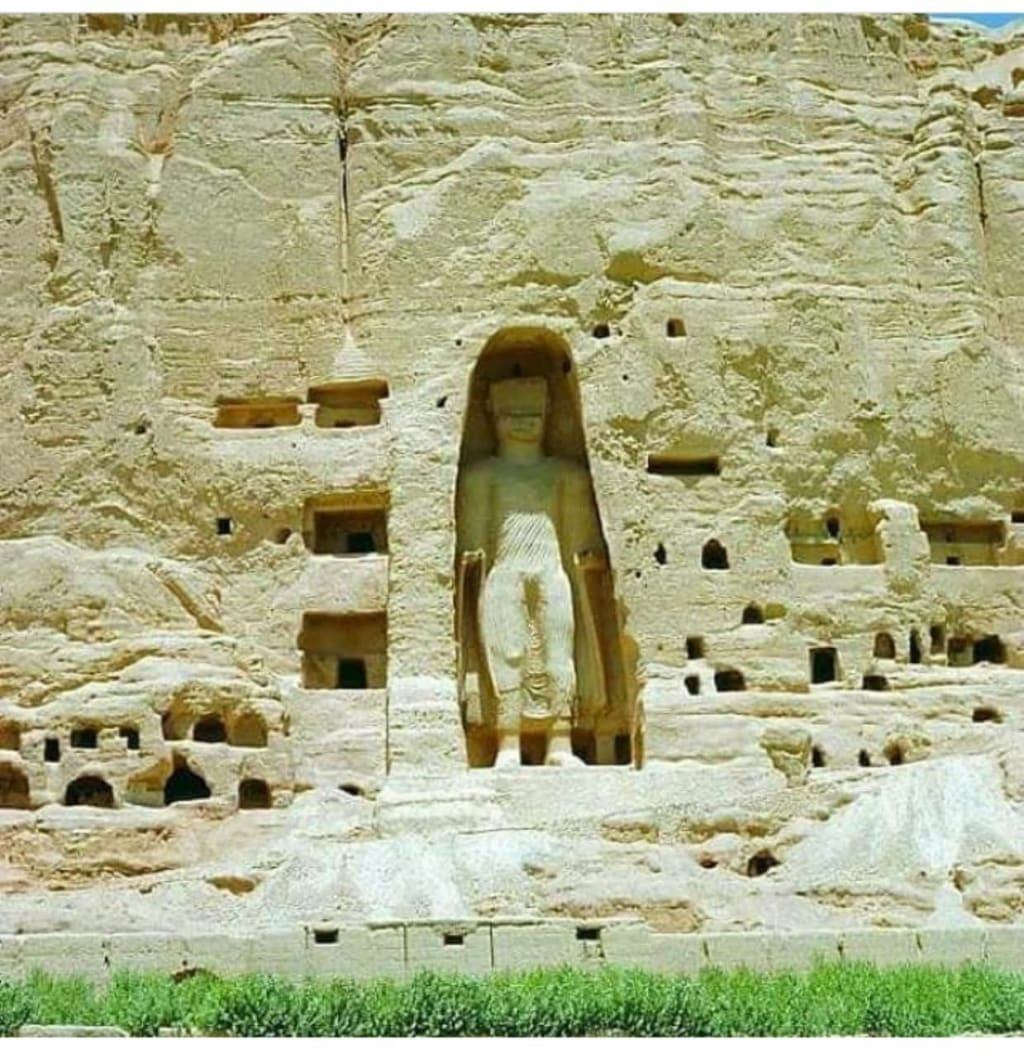
Bamiyan, nestled in the **Hindu Kush mountains**, is one of Afghanistan's most significant historical and cultural regions. Strategically positioned along the **Silk Road**, this area served as a crossroads for diverse civilizations since ancient times. Bamiyan was a major center of **Buddhist civilization**, home to the awe-inspiring **55-meter and 38-meter tall Buddha statues** - global heritage masterpieces carved during the **Golden Age of the Kushan Empire**, often regarded among the wonders of the ancient world.
#### **2. The Kushan Empire and Its Era**
The Kushans were a **Tocharian people** who established their empire from **Bactria** (northern Afghanistan). Their most renowned ruler, **Emperor Kanishka the Great** (127-151 CE), presided over the empire's zenith, fostering trade connections between **India, China, and Rome**. The Kushan capitals at **Puruṣapura** (Peshawar) and **Kapisa** (modern Begram) flourished as hubs of art, culture, and commerce.
#### **3. Cultural Connections Between Bamiyan and the Kushans**
- **Center of Buddhist Art:** The Bamiyan Buddhas exemplify Kushan artistic mastery through **Gandhara Art** - a unique fusion of Greek, Indian, and Buddhist artistic traditions.
- **Silk Road Nexus:** Bamiyan's strategic location enabled the Kushans to facilitate cultural exchanges across Eurasia.
#### **4. Kushan Legacy and Influence**
✅ **Art:** The Gandhara school gained worldwide acclaim for blending Hellenistic and Indian styles
✅ **Coinage:** Kushan coins featured remarkable synthesis of Greek, Persian and Indian iconography
✅ **Religion:** While promoting Buddhism, they embraced Zoroastrian and Hindu elements
#### **5. The Taliban's Destruction and Global Response**
On **March 2-12, 2001**, the Taliban destroyed the Buddhas using **artillery, dynamite and anti-tank mines**. UNESCO condemned this as **"cultural genocide."**
#### **6. Preservation Efforts**
- UNESCO-led cave restoration
- German/Japanese-funded conservation
- Digital reconstruction projects
#### **7. The Legend and Reality of Zahhak City**
Located 12km east of Bamiyan, Zahhak City features:
- **Legend:** Associated with the tyrant Zahhak from Persian mythology
- **History:** A 3rd-7th century Sassanian fortress with distinctive eye-shaped walls
- **Current Status:** On UNESCO's tentative World Heritage list
#### **8. The Legend of Kaveh the Blacksmith: Symbol of Freedom Against Zahhak**
**1. Historical Basis**
Kaveh the Blacksmith is a legendary hero from **Persian and Kurdish folklore** who led a revolt against **Zahhak**, a tyrannical king. The story is detailed in **Ferdowsi's Shahnameh**.
**2. Brief Narrative**
- **Zahhak**, who had two snakes growing from his shoulders, came to power with **Ahriman's** (the devil) help
- He sacrificed two youths daily to feed his snakes
- **Kaveh**, a simple blacksmith, had sixteen sons executed by Zahhak
- When his last son was taken, Kaveh raised his **leather apron** as a standard of revolt
**3. Key Revolt Stages**
1. **Raising the Banner:** Kaveh hoisted his apron on a spear as the people's flag
2. **Mobilizing the People:** He exposed Zahhak's cruelties
3. **Alliance with Fereydun:** Joined forces with noble prince Fereydun
4. **Zahhak's Fall:** The tyrant was overthrown and Fereydun became king
**4. Symbolic Meaning**
- **The Apron:** Symbol of people's uprising and unity
- **Zahhak:** Representation of oppression and tyranny
- **Fereydun:** Hope for justice and prosperity
**5. Connection to Zahhak City**
| Aspect | Kaveh the Blacksmith | Zahhak City |
|--------|----------------------|------------|
| **Period** | Mythological | Sassanian (Historical) |
| **Connection** | Center of Zahhak's rule | Probable location of mythical kingdom |
| **Significance** | Symbol of freedom | Fusion of historical and mythical heritage |
#### **9. Conclusion: A Living Tapestry of Heritage**
Though the Buddhas were destroyed, Afghanistan's multicultural legacy endures through:
- Bamiyan's caves and frescoes
- Gandharan art masterpieces
- Kushan numismatic heritage
- Zahhak's legendary fortress
- Kaveh's enduring symbol of resistance
About the Creator
Enjoyed the story? Support the Creator.
Subscribe for free to receive all their stories in your feed.
Comments
There are no comments for this story
Be the first to respond and start the conversation.