


Earth is most commonly divided into seven continents, ordered here from largest to smallest by landmass
Asia: The largest and most populous continent, home to countries like China, India, and Japan.
Africa: The second-largest continent, containing 54 countries and the world's largest hot desert, the Sahara.
North America: Comprises 23 countries, including the United States, Canada, and Mexico.
South America: Known for the Amazon River and rainforest, containing 12 sovereign countries.
Antarctica: The southernmost continent, which is largely uninhabited except for research stations.
Europe: Home to 44 countries, highly interconnected culturally and economically.
Australia (Oceania): The smallest continent, consisting of mainland Australia and surrounding island nations.
But there is really is an eighth continent attached to Earth: the moon.
The Moon is Earth's only natural satellite, a rocky body that orbits our planet, held by gravity, and is tidally locked so it always shows the same face to Earth. It's the fifth-largest satellite in the Solar System and is crucial for stabilizing Earth's axial tilt, which helps regulate seasons and weather, and is the primary driver of ocean tides. Formed from debris after a Mars-sized object collided with early Earth, the Moon lacks a significant atmosphere and has a cratered, rocky surface.
Key characteristics
Orbit: Orbits Earth at an average distance of about 384,400 km (238,900 mi).
Tidal Locking: Its rotation period is synchronized with its orbital period, meaning one side always faces Earth.
Formation: Believed to have formed from debris after a giant impact with Earth about 4.5 billion years ago.
Atmosphere: Has a very thin atmosphere called an exosphere, not breathable.
Surface: A solid, rocky body with a heavily cratered surface from impacts.
Importance to Earth
Tides: Its gravitational pull is the main cause of Earth's ocean tides.
Stability: Helps stabilize Earth's axial wobble, preventing extreme climate shifts.
Seasons: Its gravitational interaction helps maintain stable seasons.
Other facts
"Moons of moons": No natural satellites orbiting other moons (submoons) have been discovered, though some systems might theoretically be stable.
Exploration: The only celestial body beyond Earth visited by humans, and currently only Americans. With the Artemis programs being planned and executed by NASA, the USA will be the first country to have a permanent settlement on the moon continuously inhabited, initially by researchers, scientists and the military.
The Moon is the Planet Earth’s only natural satellite. This means that it is the only satellite not put into Earth’s orbit by humankind. Planets can have more than one moon. For example, Jupiter has 79 known moons orbiting it. Planet Earth just has one moon that often goes by the name of “Luna.” ( derived Latin).The Moon is located approximately 384,633 km away from Earth, and has a diameter that is just 1/81 of Earth’s diameter. This may sound tiny, but it makes it the largest moon in the solar system relative to the size of the planet that it orbits. Humankind visited the Moon for the first time in 1969 with the Apollo missions and now, fifty years later, there are plans to return with the Artemis missions.(2028).
How was the Moon formed?
There are a variety of hypotheses about how the Moon was formed. The most widely accepted hypothesis suggests that another astronomical body, similar to the size of Mars, collided with the Earth in the early days of its formation. The body that the Earth collided with has been named Theia. It is proposed that the collision led to rock and dust being ejected into Earth’s orbit. This rock and dust likely then coalesced to form the Moon, in a similar way to how the dust and gaseous material of the Solar Nebula formed the planets of the solar system.
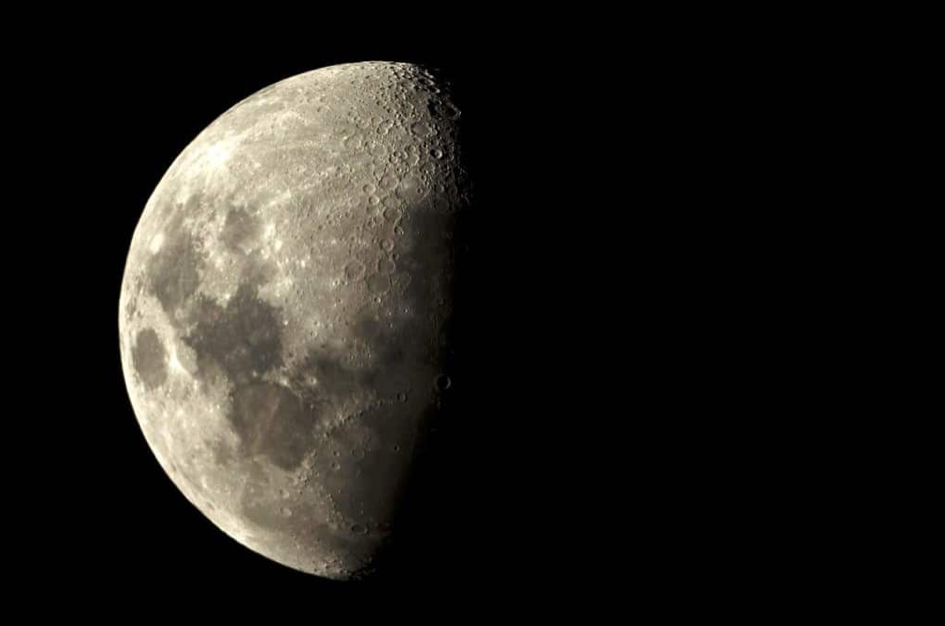
The tidal rhythms on Planet Earth can be attributed to the gravitational attraction of the Moon to the Earth. The Moon experiences a stronger gravitational attraction to the side of the Earth which it is nearest, and a weaker gravitational attraction to the side of the Earth from which it is furthest. This gravitational interaction of the Moon with the Earth produces the ocean tides. When you are at the beach and it is low tide allowing you to walk along the sand, you have the Moon to thank!
Planet Earth is tilted on its axis and this is what gives us the seasons of autumn, winter, spring and summer. Without the Moon, Planet Earth would wobble on its axis as a result of the gravitational “tug” of other planets such as Venus and Jupiter. This could cause unstable and rapidly changing weather patterns, making it harder for life to survive. Luckily we have the Moon which is close enough to balance the gravitational pull of other astronomical objects. Thus, Planet Earth only experiences a very small wobble and the seasons are stable enough to support life.
A Stepping Stone to Mars
NASA have made plans to return to the Moon with the Artemis missions. Artemis is the Goddess of the Moon in Greek mythology, and is the sister of Apollo. The NASA Artemis missions aim to land the first woman and next man on the Moon by 2028. The Artemis missions also aim to use exploration of the Moon as a stepping stone to interplanetary space travel. Setting up more permanent exploration of the Lunar surface could provide a pathway to Mars.
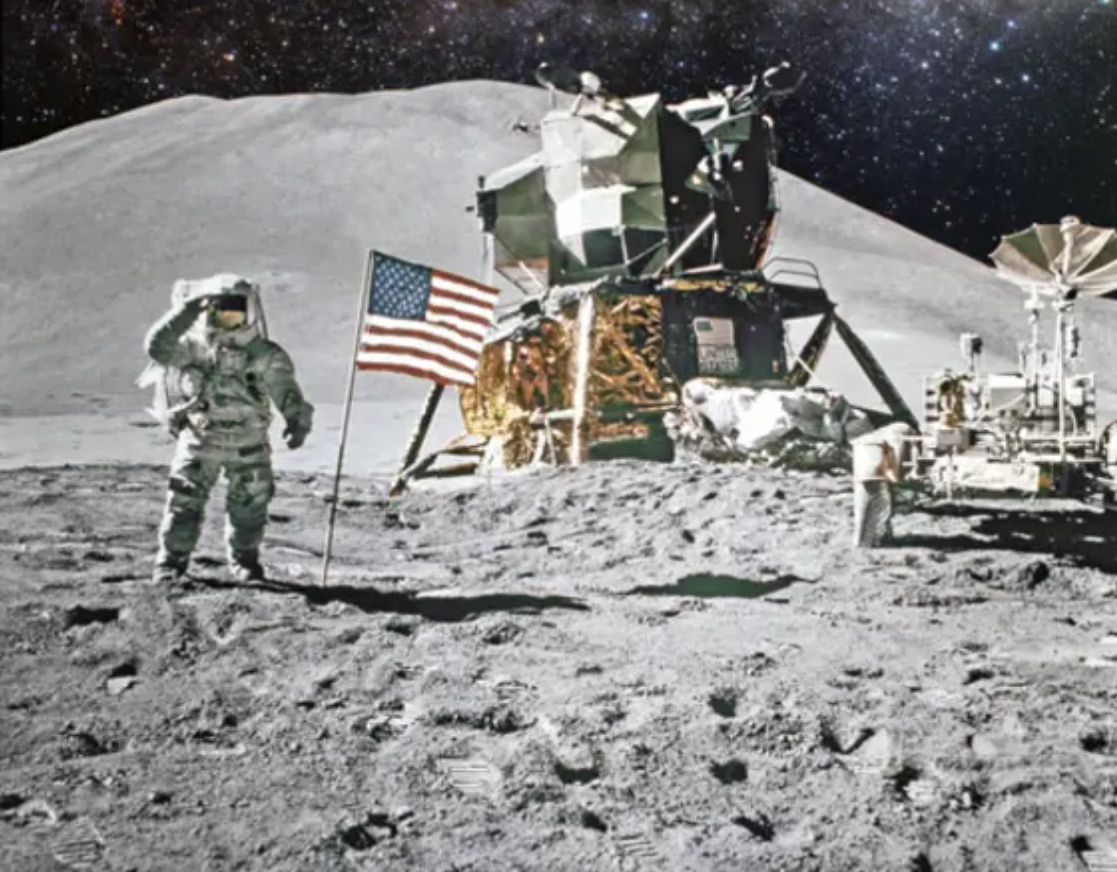
1972, Apollo 17 was the last manned expedition at a time when U.S. interest in lunar landings was fading fast. We'd been there, and now it was time for the next big space adventure.
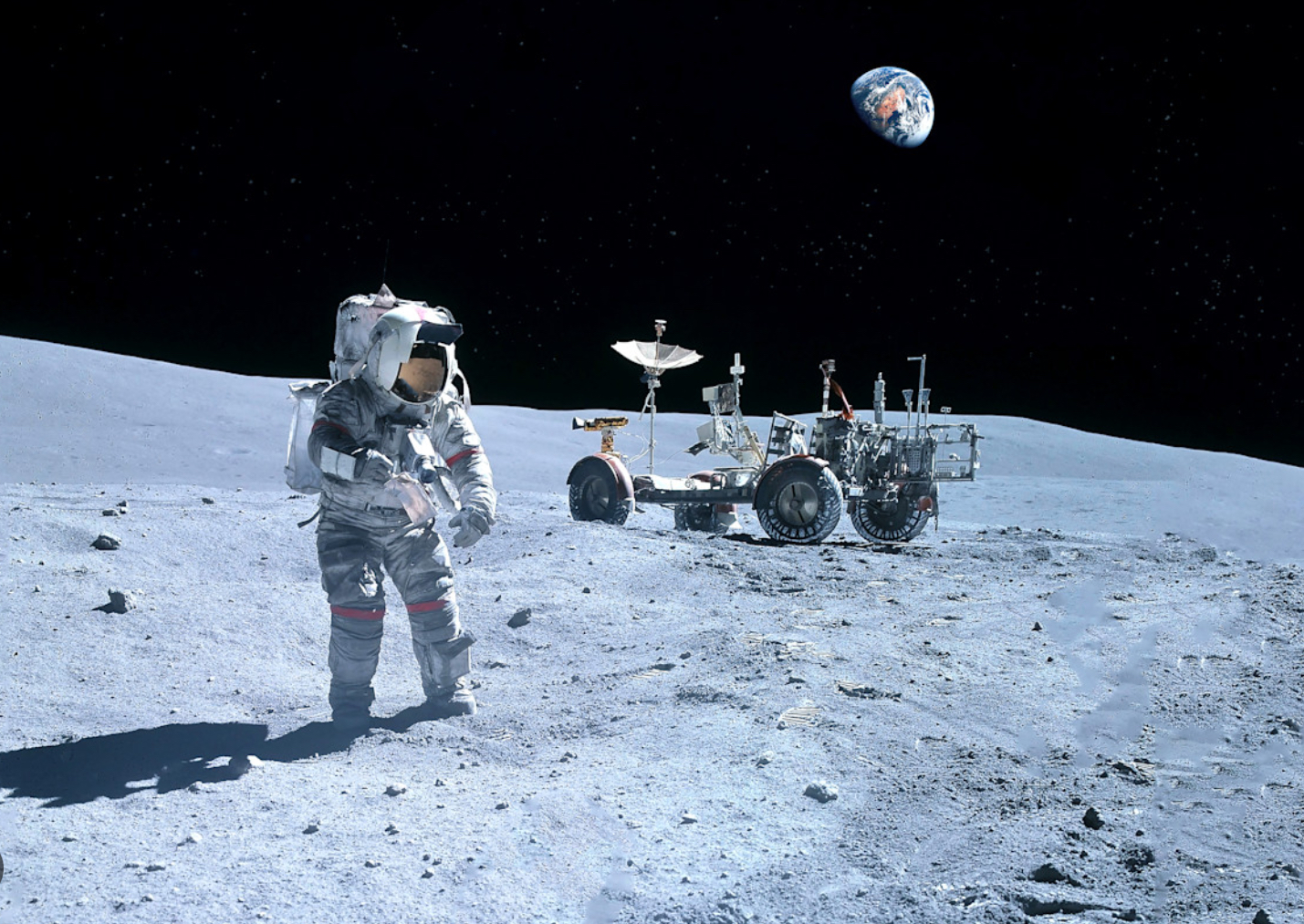
But now, half a century later, scientists have a renewed interest in what we can learn from the moon. According to NASA, the moon continues to be a "treasure trove of science," one that might in the future allow for habitation. Another reason for the renewed interest in going back to the moon is the space race competition the USA has with China who has expressed ambitions for permanently inhabiting the moon with a moon village colony.
Artemis III was set to be the first crewed spacecraft to make a lunar landing on the moon's mysterious South Pole in a mission that's currently planned for 2025, but now probably a test run and therefore an unmanned landing. Atemis IV is planned for a manned landing in 2028, according to news reports issued by NASA.
There Is Water on the Moon?
We already know there is water on the moon, but scientists are anxious to find out how much water can be found. Unmanned shuttles like India's Chandrayaan-1 and NASA's Cassini and Deep Impact have shown evidence of water in the form of oxygen and hydrogen molecules, and we know that the poles are frozen with ice because of their high reflectance.
How Much Water Is on the Moon?
Still, we don't know how much water is present, which matters because hydration would be a boon for future lunar habitation, and transporting it such a distance is cost-prohibitive to living there long term.
It is an exciting time for humans, and for me, as I will see us become space travelers and interplanetary dwellers in my life Time. It’s not just science fiction, it’s reality.
About the Creator
Guy lynn
I’m interested in history, space travel and the possibilities, Americana,( where I live now), Africa (Southern Africa, where I was born and raised), and I write about things that interest me ( bead history) and I hope will interest you.
Enjoyed the story? Support the Creator.
Subscribe for free to receive all their stories in your feed.
Comments
There are no comments for this story
Be the first to respond and start the conversation.