
The Dragon and the Eagle: China vs. USA Tensions Heat Up Ahead of Historic Trump-Xi Summit:
As Trump prepares for a high-stakes summit in Beijing, the world’s two superpowers edge toward a dangerous new chapter in their escalating rivalr :

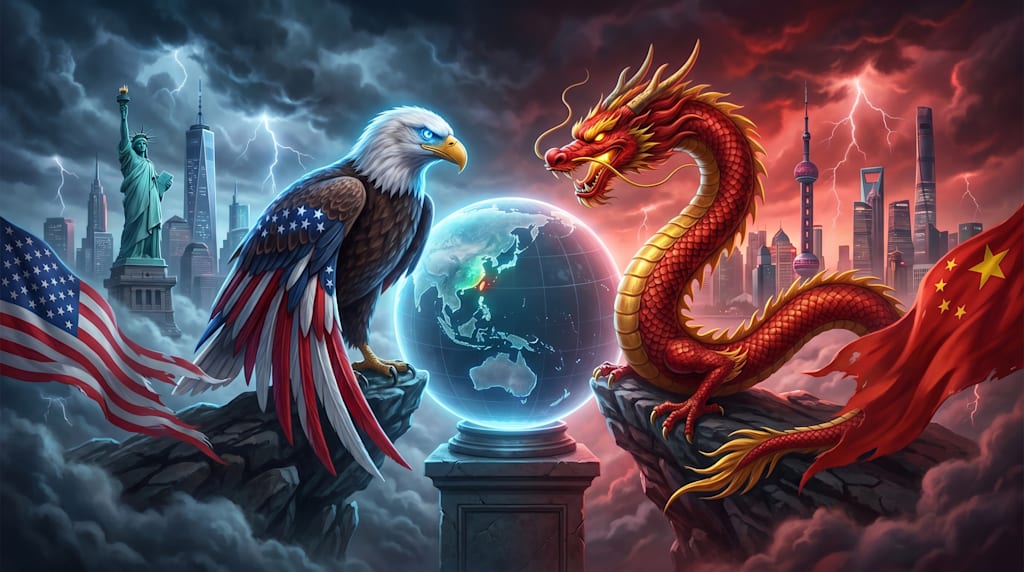
As of May 1, 2026, the world’s two largest economies stand at a delicate crossroads. With U.S. President Donald Trump scheduled to visit Beijing on May 14-15 for his first trip to China in his second term—and the first by a sitting U.S. president in nearly a decade—the stage is set for high-stakes diplomacy amid simmering trade frictions, technological rivalry, supply chain battles, and lingering geopolitical flashpoints. A fragile truce forged in late 2025 after months of tariff escalation is holding, but new Chinese measures and American strategic concerns threaten to unravel it. This is not just another chapter in the ongoing great-power competition; it is a test of whether Washington and Beijing can manage their differences without plunging the global economy into fresh turmoil.Weforum
Background: From Tariff War to Fragile Truce
The current chapter opened in early 2025 when the Trump administration unleashed a wave of “reciprocal” tariffs on Chinese goods, at one point pushing combined duties well above 100% on key sectors. Beijing retaliated in kind. Chinese exports to the United States plunged—by as much as 20% in some months—and bilateral trade volumes dropped sharply, with some estimates citing a 39.9% decline at peak tension. The pain was mutual: American businesses faced higher costs, disrupted supply chains, and uncertainty, while Chinese manufacturers grappled with lost market access.Facebook
In October 2025, Trump and Chinese President Xi Jinping met in Busan, South Korea, and struck a deal. The United States agreed to lower certain tariffs in exchange for Beijing’s commitments on curbing fentanyl precursors, resuming large-scale purchases of U.S. agricultural products like soybeans, and maintaining the flow of critical rare earth minerals. The truce was designed to last roughly one year, expiring around November 2026. Communication channels on trade, defense, and other issues were reopened. For a time, the temperature cooled. Yet underlying structural issues—technological decoupling, military posturing in the Indo-Pacific, and competing visions of global order—never disappeared.Reuters
By early 2026, analysts described the relationship as one of “managed uncertainty” or a “cold peace.” Both sides recognized the enormous costs of full-blown economic war, yet neither was willing to make fundamental concessions on core interests: the U.S. push for supply-chain “derisking” and technological leadership, versus China’s drive for self-reliance (“technological indigenization”) and strategic autonomy.Thediplomat
Today’s Flashpoint: China’s New Trade Rules and Supply-Chain Leverage
The most immediate tension making headlines this week centers on new regulations rolled out by Beijing in April 2026. These rules establish a legal framework for punishing foreign companies—particularly those shifting production or sourcing away from China in line with U.S. “derisking” or “friend-shoring” policies. American businesses operating in or reliant on China have expressed alarm, warning that the measures could raise costs, create compliance nightmares, and undermine efforts to diversify critical supply chains in semiconductors, pharmaceuticals, rare earths, and advanced manufacturing.Reuters
Analysts interpret the timing as deliberate: just weeks before Trump’s arrival in Beijing. Beijing appears to be signaling resolve and testing Washington’s appetite for confrontation. By strengthening its retaliatory toolkit—including expanded controls on critical technologies and supply chains—China is positioning itself to counter any new U.S. pressure. The White House response so far has been notably muted. Officials have avoided direct public criticism, with one spokesman emphasizing America’s determination to safeguard national and economic security without escalating rhetoric. This restraint contrasts with the more combative tone of 2025 and reflects the administration’s focus on other priorities, including the ongoing situation in the Middle East.Reuters
U.S. firms, through groups like the American Chamber of Commerce in China, have voiced “concern” and called for clarity on implementation. Rare earth elements—where China dominates roughly 90% of global production—remain a particularly sensitive lever. Any disruption here could ripple through U.S. defense, electronics, and green energy sectors. At the same time, Washington continues to urge companies to reduce dependency on Chinese supply chains, a policy that Beijing’s new rules directly challenge.France 24
China has also launched investigations into certain U.S. trade practices in response to recent American moves, further illustrating the tit-for-tat dynamic that never fully subsided.Thestar
Broader Arenas of Competition
Technology and AI: The rivalry has shifted beyond tariffs into artificial intelligence, semiconductors, quantum computing, and biotechnology. The Trump administration has accused China of large-scale efforts to extract American AI intellectual property. Export controls on advanced chips remain a flashpoint, though inconsistent signals—such as approvals for certain high-end AI semiconductor sales followed by security warnings—have drawn criticism even from U.S. hawks. China, meanwhile, is pouring resources into domestic innovation, announcing increased military spending (up 7% this year) and five-year plans aimed at reducing reliance on Western technology.Economic Times
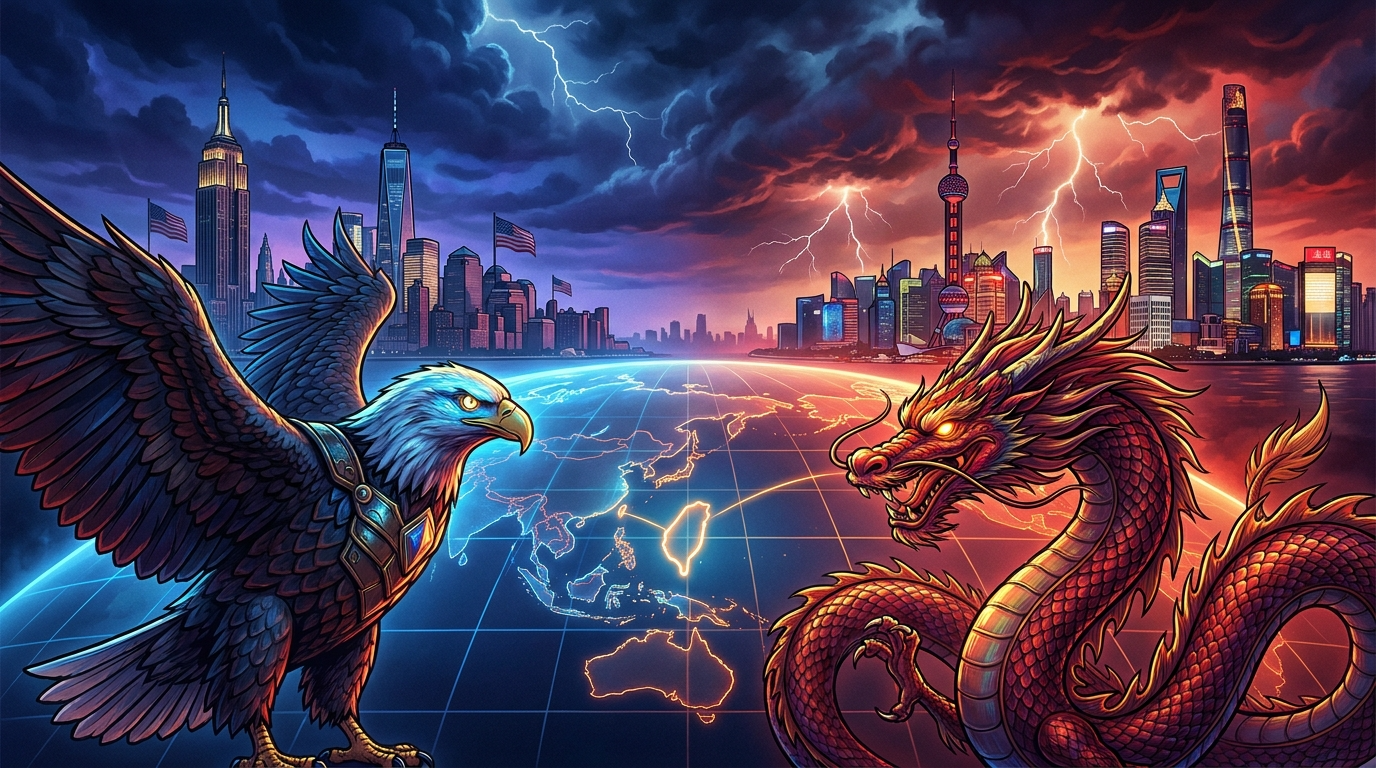
Supply Chains and Economic Resilience: U.S. efforts to reshore or diversify have met mixed results. While some production has moved to Vietnam and Southeast Asia, full “reshoring” to America has been slower than hoped. China has used the truce period to broaden its own economic toolkit, including legal and regulatory measures that make decoupling more painful for foreign firms. Both economies face vulnerabilities: the U.S. worries about dependencies in defense supply chains, while China seeks to insulate itself from potential sanctions or export bans.Cryptobriefing
Taiwan and Military Posturing: Taiwan remains the most dangerous potential flashpoint. Chinese military exercises around the island continue, and Beijing consistently describes the issue as its “core interest” and the most sensitive in bilateral ties. Recent diplomatic calls, including between Chinese Foreign Minister Wang Yi and U.S. Secretary of State Marco Rubio, have reiterated warnings against any moves that could destabilize the status quo. The U.S. maintains strong unofficial ties with Taiwan under the Taiwan Relations Act, sells defensive weapons, and emphasizes deterrence in the Indo-Pacific. Bipartisan voices in Congress continue to push for stronger military posture and support for allies in the region.YouTube
Global Context: The ongoing conflict involving Iran has complicated dynamics. It delayed earlier summit plans and diverted U.S. attention, while raising questions about potential Chinese involvement in energy markets or indirect support. Oil prices, supply disruptions, and broader Middle East instability add layers of risk to U.S.-China calculations. China has positioned itself as a reliable trading partner to U.S. allies feeling the effects of American tariffs, courting nations in Europe and beyond.Fox11online
What to Expect from the May Summit
Expectations for the May 14-15 Trump-Xi meeting are tempered. Few analysts anticipate a “grand bargain.” Instead, the summit is likely to focus on stabilizing the existing truce, addressing immediate irritants like rare earth flows, agricultural purchases, and fentanyl cooperation, and setting the tone for further engagements—including a possible Xi visit to the United States later in 2026, plus meetings at the G20 and APEC.Businesstimes
Trade will dominate the agenda, but Taiwan, technology controls, and regional security will loom large behind closed doors. Chinese state media and officials have spoken of hopes for 2026 as a “landmark year” of mutual respect and win-win cooperation. The Trump administration, while pragmatic in its deal-making style, faces domestic pressure from lawmakers on both sides of the aisle who favor a tougher line on China—protecting intellectual property, strengthening alliances, and maintaining technological edge.Nbcwashington
Bipartisan resolutions in the U.S. Senate emphasize priorities such as military deterrence in the Indo-Pacific, fair trade practices, and leadership in emerging technologies. Critics argue that Trump’s improvisational approach and occasional policy reversals have sometimes confused allies and undercut U.S. leverage. Supporters counter that pragmatic engagement prevents worse outcomes and delivers tangible economic wins.Notus
Looking Ahead: Managed Competition or Renewed Conflict?
The U.S.-China relationship in 2026 is defined by structural competition tempered by mutual interest in stability. Full decoupling remains unrealistic and enormously costly for both sides and the global economy. Yet incremental “decoupling” or “derisking” in sensitive sectors continues, reshaping global supply chains, investment flows, and technological standards.
China is betting on its manufacturing depth, domestic market, and technological self-reliance to weather pressure. The United States is leveraging its alliances, innovation ecosystem, financial markets, and military advantages. Neither side wants open conflict, but miscalculation—particularly over Taiwan or a sudden escalation in trade or tech restrictions—could rapidly change the equation.
Global observers watch closely. Emerging and middle powers are hedging, diversifying partnerships to avoid over-reliance on either giant. Multinational corporations face tough choices on where to invest, produce, and source. Consumers worldwide feel the effects through prices, availability of goods, and broader economic uncertainty.
As Trump prepares to land in Beijing, the world holds its breath. The summit offers an opportunity to extend the truce, clarify red lines, and perhaps identify narrow areas of cooperation—such as climate, global health, or counter-narcotics—amid the rivalry. Yet the fundamental contest for economic, technological, and strategic primacy will persist well beyond 2026.
History shows that great-power relations are rarely linear. Today’s tensions reflect deep differences in governance models, national ambitions, and visions for the international order. Skillful diplomacy, clear communication, and pragmatic restraint will be essential to prevent competition from spiraling into confrontation.
The dragon and the eagle are circling each other warily. Whether they clash or find a way to share the skies will shape the 21st century. For now, the May summit in Beijing represents a critical moment of negotiation rather than resolution—a chance to manage rather than escalate one of the most consequential rivalries in human history.
About the Creator
@HiddenHistory
"I’m a passionate storyteller who loves exploring every topic
Enjoyed the story? Support the Creator.
Subscribe for free to receive all their stories in your feed.
Comments
There are no comments for this story
Be the first to respond and start the conversation.