
The Day the Sky Burned
A Chronicle of Hiroshima’s Darkest Hour

The morning began like any other in Hiroshima—quiet, warm, and filled with the usual summer haze. Twelve-year-old Kenji Nakamura woke early, just before sunrise. The cicadas outside his window sang their relentless song as he stretched and peered out over the rooftops of the city. His school uniform was neatly folded by the door, and his wooden lunchbox had already been packed by his mother: rice, pickled plum, and a small piece of grilled mackerel.
“Kenji, eat before it gets cold!” his mother called from the kitchen. She was always up early, humming to herself as she cooked breakfast for the family.
His father, a civil servant, sat reading the newspaper at the low table. “The war is almost over,” he said with a sigh. “At least, I hope so. We can’t take much more.”
Kenji’s younger sister, Aiko, just six years old, clung to her doll and asked if she could walk him to school. She loved following him, even though she wasn’t old enough to attend school yet. Kenji ruffled her hair and smiled. “Maybe tomorrow, okay?”
The clock on the wall struck 8:00 a.m. The day was just beginning.
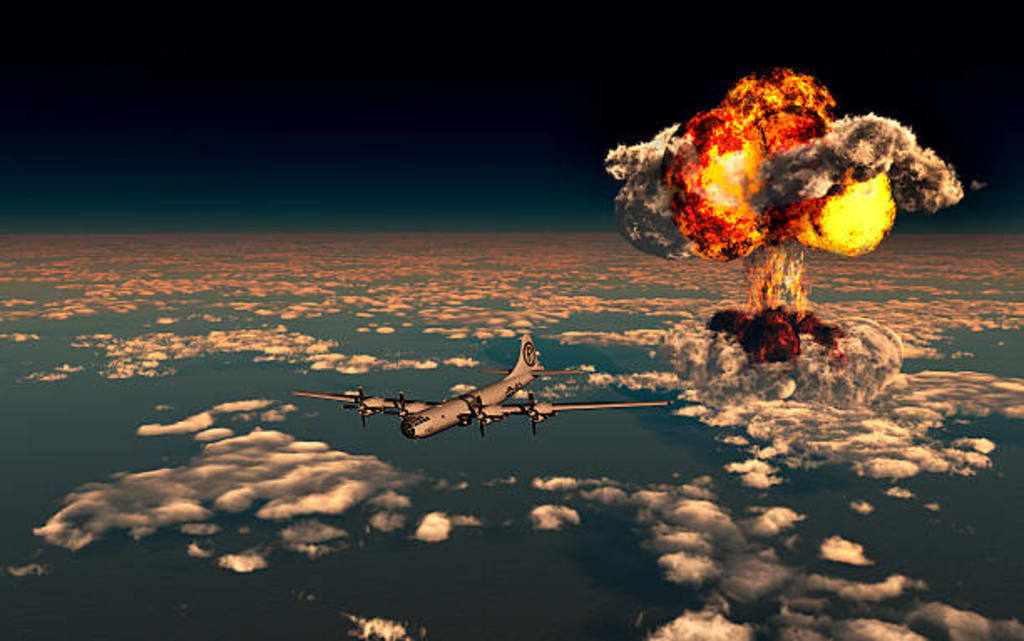
At 8:15 a.m., the sky exploded.
A flash of white light, brighter than anything Kenji had ever seen, lit up the world. For a second, everything stood still. Then came the sound—a roaring, ripping blast that shattered windows, collapsed walls, and set the air itself on fire.
Kenji didn’t know what had happened. One moment he was stepping into the street on his way to school, and the next he was flying through the air, slammed against a wooden fence that instantly caught fire.
His ears rang. His eyes burned. Smoke filled his lungs.
He stumbled up, dazed, bleeding from his forehead. The house—his home—was gone. Where it once stood was now rubble and flame. His mother. His sister. He screamed their names, over and over, but there was no answer. Only fire. Only ash.
All around him, the city burned.
People ran through the streets—many without clothes, their garments ripped from their bodies by the blast. Skin hung from arms like ragged paper. Faces were blackened, bleeding. Some walked silently, their eyes blank. Others moaned, cried, screamed for help that could not come.
Kenji stumbled through the ruins, calling for his family. The air was thick with dust and smoke. The river, usually calm and beautiful, now swelled with bodies. People had jumped in to escape the fire. Some had drowned. Others floated lifelessly, their hands still reaching.
He passed what had once been a school. Children lay on the ground, unmoving. A young girl, burned and trembling, whispered for her mother. He knelt beside her, took her hand, but she stopped breathing moments later.
Kenji was twelve. But that day, he aged a lifetime.
That night, he found shelter in the shell of a train station. Dozens of others were there—survivors, all in pain. Some were dying slowly. A doctor, himself injured, moved among them with a single bag of medicine and a torn cloth for bandages.
A woman handed Kenji a rice ball, her own face blistered and swollen. He took it, though he wasn’t hungry. Grief had replaced his appetite. Somewhere, he thought, his mother and sister were still calling for him.
He didn’t sleep. Instead, he sat against the wall and stared at the sky. The stars were bright. There were no more city lights to block them.
He wondered if the world outside Hiroshima knew what had happened. If they had felt the ground shake. If they had heard the cries.
The word “bomb” meant nothing to him before that day. Now it meant everything. Destruction. Fire. Silence.
In the weeks that followed, sickness spread. People who had seemed fine at first began to bleed from their gums, lose their hair, grow weak and collapse. The older ones called it “radiation sickness,” though no one truly understood it yet.
Kenji helped dig graves. He folded white paper into cranes and placed them near the burial sites, a gesture of peace, of remembrance.
Eventually, he was taken in by an elderly couple who had lost their own son in the war. They gave him food, a place to sleep, and something else: hope.
Years passed.
Kenji grew into a quiet, thoughtful man. He never forgot that day. He could still smell the smoke, still hear the silence after the explosion. But he chose not to be consumed by hate.
Instead, he became a teacher. He told his students the truth—not just about war, but about peace. About what had happened in Hiroshima and why it should never happen again.
Each August 6th, he visited the Peace Memorial Park. He placed a single crane at the base of the cenotaph and whispered the names of his mother and sister.
“The world must remember,” he would say. “Because forgetting is the first step to repeating.”
And when his students asked him what the bomb felt like, he would pause, close his eyes, and say:
“It was like the sun fell to the earth and turned everything to shadow. But we are the ones who must bring back the light.”
About the Creator
Enjoyed the story? Support the Creator.
Subscribe for free to receive all their stories in your feed.
Comments
There are no comments for this story
Be the first to respond and start the conversation.