

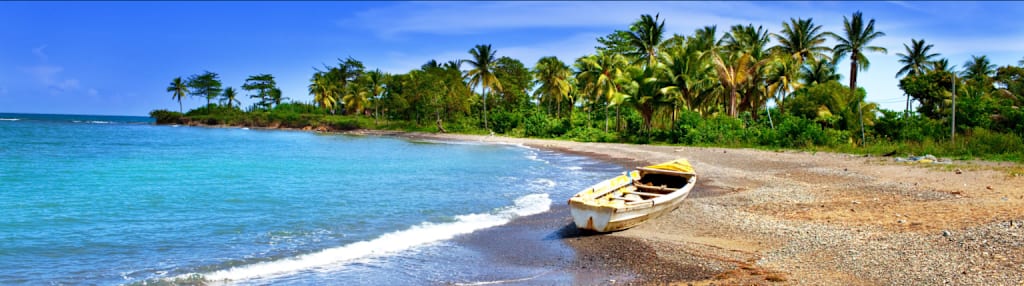
The Caribbean is a diverse region consisting of over 7,000 islands, islets, and reefs, organized into 13 independent countries and various dependencies. Located southeast of North America, it is renowned for its tropical climate, coral reefs, and distinct, vibrant cultures. Popular destinations include Jamaica, the Dominican Republic, Barbados, and Aruba.Key Caribbean Regions are the Greater Antilles: The largest islands, including Cuba, Jamaica, Hispaniola (Haiti/Dominican Republic), and Puerto Rico.Lesser Antilles: An arc of smaller islands, including the Leeward Islands (e.g., Antigua) and Windward Islands (e.g., St. Lucia).Lucayan Archipelago: Includes The Bahamas and Turks and Caicos.ABC Islands: Aruba, Bonaire, and Curaçao, located just off the coast of South America.
My favourite country to visit is Jamaica. The main reason is the music - reggae. The most famous artist is world known - Bob Marley.
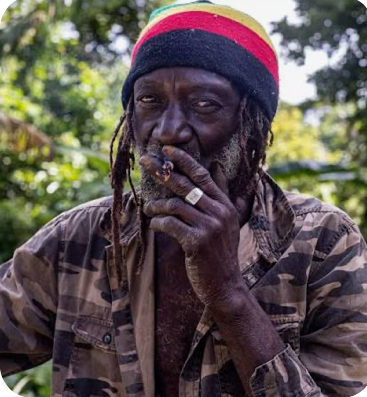
‘Jamaica is also known for Rastafari,an Abrahamic, Afrocentric spiritual movement that emerged in 1930s Jamaica, centering on the divinity of Ethiopian Emperor Haile Selassie I. Core beliefs include worshipping "Jah" (God), advocating for black liberation, and viewing Africa (Zion) as the promised land. Adherents, known as Rastas, practice "livity" (natural living), including strict vegetarian "Ital" diets, wearing dreadlocks, and sacramental smoking of marijuana (ganja).
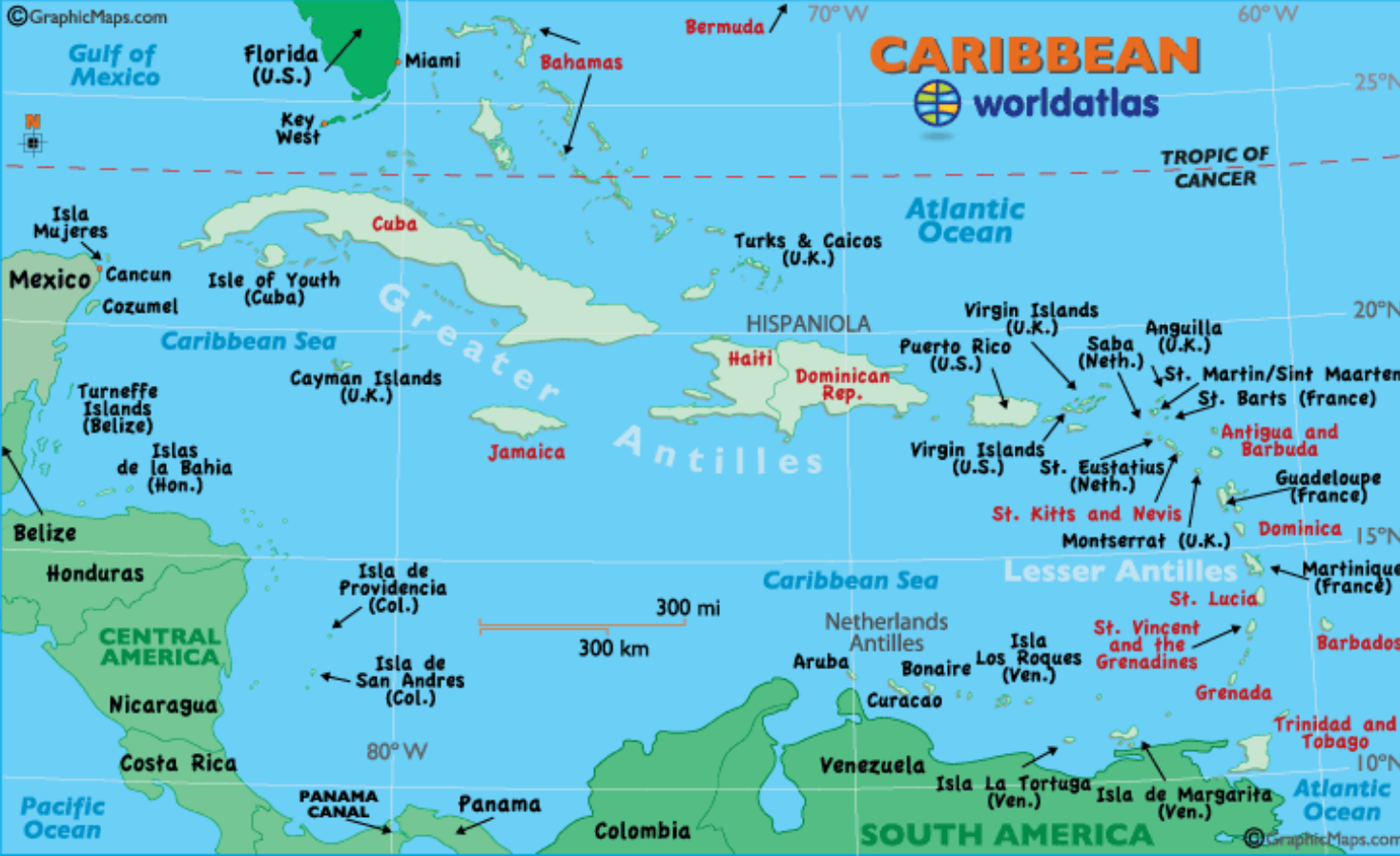
Major islands: Cuba, Jamaica, Hispaniola (Haiti and the Dominican Republic).
U.S. Territories: Puerto Rico, U.S. Virgin Islands.
British Territories: Bahamas, Cayman Islands, British Virgin Islands, Turks and Caicos.
Dutch Territories: Aruba, Bonaire, Curaçao (ABC islands).
French Territories: Guadeloupe, Martinique.
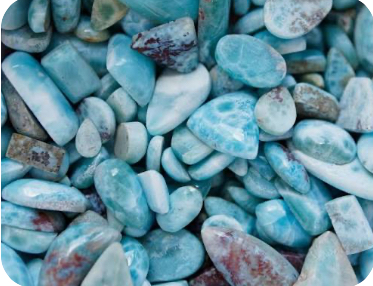
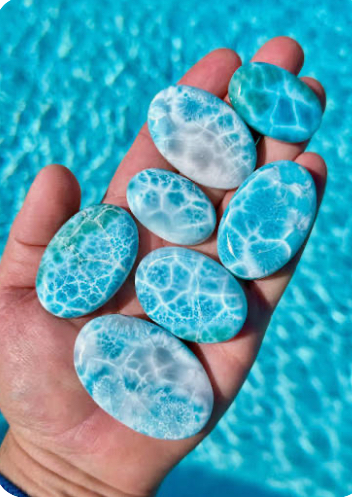
The other cool country is the Dominican Republic, known for the gemstone found only there - Larimar, the only stone mined under water.
I sell Larimar beads and cabochons in my bead business Wildthingsbeads.com.
The Caribbean consists of 13 sovereign nations and numerous dependent territories located in the Caribbean Sea. The 13 independent countries are Antigua and Barbuda, The Bahamas, Barbados, Cuba, Dominica, Dominican Republic, Grenada, Haiti, Jamaica, Saint Kitts and Nevis, Saint Lucia, Saint Vincent and the Grenadines, and Trinidad and Tobago.
Independent Caribbean Countries and their capitals:
Antigua and Barbuda: (St. John's)
The Bahamas: (Nassau)
Barbados: (Bridgetown)
Cuba: (Havana)
Dominica: (Roseau)
Dominican Republic: (Santo Domingo)
Grenada: (St. George's)
Haiti: (Port-au-Prince)
Jamaica: (Kingston)
Saint Kitts and Nevis: (Basseterre)
Saint Lucia: (Castries)
Saint Vincent and the Grenadines: (Kingstown)
Trinidad and Tobago: (Port of Spain)
Major Dependent Territories and Overseas Departments The region also includes many dependencies associated with the UK, France, Netherlands, and the USA:
UK: Anguilla, British Virgin Islands, Cayman Islands, Montserrat, Turks & Caicos Islands.
France: Guadeloupe, Martinique, Saint Barthélemy, Saint Martin.
Netherlands: Aruba, Bonaire, Curaçao, Saba, Sint Eustatius, Sint Maarten.
USA: Puerto Rico, U.S. Virgin Islands.
The Caribbean, long referred to as the West Indies, includes more than 7,000 islands; of those, 13 are independent island countries (shown in red on the map), and some are dependencies or overseas territories of other nations.
In addition, that large number includes islets ( very small rocky islands); cay's (small, low islands composed largely of coral or sand) and a few inhabited reefs.
In geographical terms the Caribbean area includes the Caribbean Sea and all of the islands located to the southeast of the Gulf of America, east of Central America and Mexico, and to the north of South America. Some of its counted cay's, islands, islets and inhabited reefs front the handful of countries that border the region.
The Bahamas and Turks and Caicos are not considered a part of the Caribbean, however, I show them here because of their cultural, geographical and political associations with the Greater Antilles and other Caribbean Islands.
At the beginning of the 15th century the population of the Caribbean was estimated to be nearly 900,000 indigenous people immediately before European contact.
Then in 1492, Christopher Columbus, the Italian explorer began his exploration of the Caribbean, becoming the first European to venture into the area. After reportedly landing in the eastern Bahamas, Columbus named these islands the Indies, because he thought he had finally reached Asia (and the East Indies).
Numerous explorers followed in his path, then tens of thousands of settlers arrived from the Americas, China, European countries and India. Included in that mix were religious outcasts and a small army of pirates.
Across the Caribbean, slaves from Africa were imported in great numbers to work the sugar and tobacco plantations.
By then the indigenous populations of the islands (known collectively as Carib) were in severe decline as exposure to disease and brutal genocide wiped out much of their number.
Great military powers continually fought for control of the islands, and finally, a blended mix of African and European cultures and languages transformed this large group of islands and its peoples into one of the premier tourist destinations on the planet.
Long called the West Indies, the overall area is now commonly referred to as the Caribbean, a name that became popular after World War II.
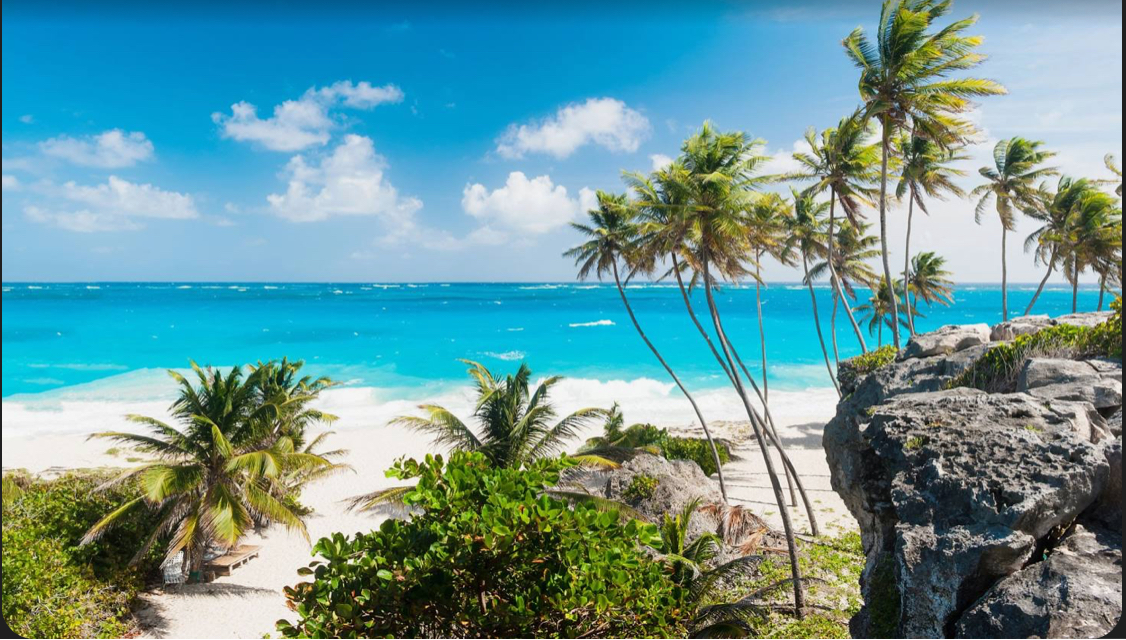
Over the last few decades legions of travelers have journeyed to the Caribbean to enjoy the amenities. They frequently arrive in cruise ships that sail in and out, from ports in Florida and Puerto Rico. Overall the Caribbean is a magical place of palm trees, white sand beaches, turquoise waters and sunshine, all blessed with a climate that consistently offers a much-needed break for those stuck in the cold weather doldrums of the north.
If you haven't been, you should, and if you've been here more than once, you will come again, as these islands, these beach-ringed, jungle-covered rocks are home to thousands of historical surprises and activities galore.
So come wiggle you toes in the sand, and eat and sleep under the stars in the Caribbean. You won't be disappointed.
The United States maintains diplomatic relations with nations across the Caribbean including: Antigua and Barbuda, the Bahamas, Barbados, Dominica, the Dominican Republic, Grenada, Guyana, Haiti, Jamaica, Saint Lucia, St. Kitts and Nevis, St. Vincent and the Grenadines, Suriname, and Trinidad and Tobago. The U.S. maintains a strong presence in the region through our embassies in: Bridgetown, Santo Domingo, Georgetown, Port-au-Prince, Kingston, Paramaribo, Port of Spain and the U.S. Consulate in Curaçao. U.S. diplomats also conduct diplomacy with the Caribbean embassies located in Washington, D.C. Engagement occurs under the U.S.-Caribbean 2020 Engagement Strategy through the pillars of education, diplomacy, prosperity, security, energy, health and disaster resilience.
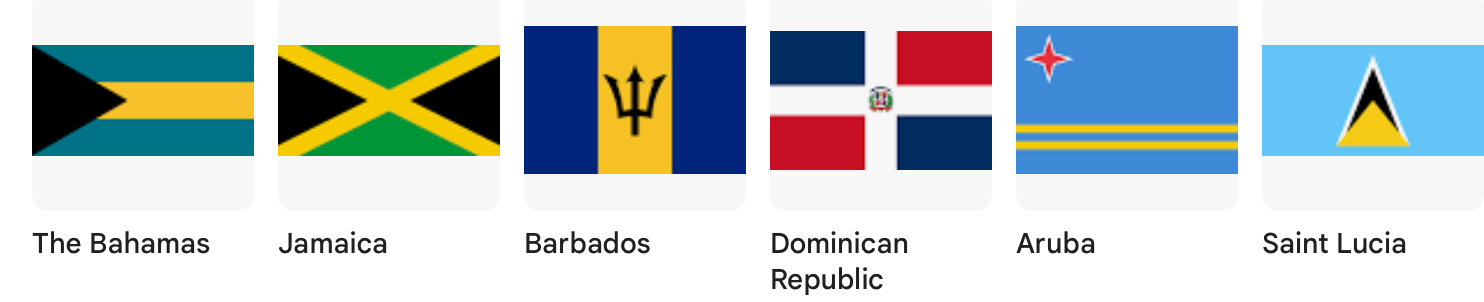
Flags of the countries.

Kalinago (Carib) people.
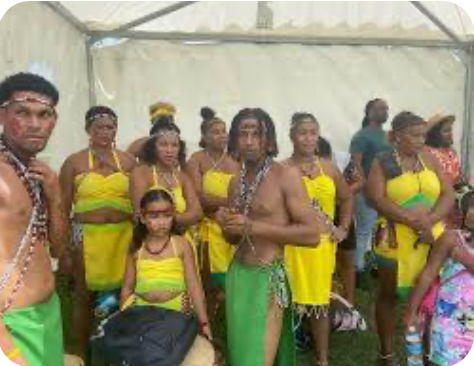
The Kalinago (Carib) people are indigenous inhabitants of the Lesser Antilles, known for their seafaring skills, historical warrior tradition, and cultivation of cassava. Primarily residing in Dominica, approximately 3,000–3,500 Kalinago live on a designated territory. They are distinct from mainland South American Carib speakers (Kalina). Originating from South America, they migrated to the Lesser Antilles, displacing earlier inhabitants (Arawak). Christopher Columbus recorded them in 1492, noting their defensive resistance to colonization. They faced severe population declines due to conflict and disease. “Carib" is an exonym used by European explorers, while they refer to themselves as Kalinago or Kalipuna. Traditionally, they lived in small, autonomous settlements with a leader managing community activities and military affairs. The traditional diet was based on agriculture, particularly cassava, along with fishing and hunting. They were known as skilled sailors and fierce warriors, using large dugout canoes to travel between islands. Modern, as well as traditional, culture includes weaving and creating handicrafts, which are now vital for tourism. Early beliefs focused on personal deities, ancestor worship, and spiritual rituals associated with daily life events. Historical accounts suggest a unique aspect where men and women sometimes used different dialects or even languages, influenced by the absorption of Arawak populations. The majority of the remaining Kalinago reside in the Carib Territory (Kalinago Territory) on the east coast of Dominica. The territory is managed under the 1978 Carib Act, electing a Chief and a Council of Advisors. Around 3,000 to 3,500 individuals live on the island of Dominica, maintaining cultural identity through, for example, the use of canoes and cassava.
About the Creator
Guy lynn
I’m interested in history, space travel and the possibilities, Americana,( where I live now), Africa (Southern Africa, where I was born and raised), and I write about things that interest me ( bead history) and I hope will interest you.
Enjoyed the story? Support the Creator.
Subscribe for free to receive all their stories in your feed.
Comments
There are no comments for this story
Be the first to respond and start the conversation.