
The Beale Cipher: A Treasure Worth Millions or the Most Successful Hoax of the Nineteenth Century?
How an anonymous nineteenth-century pamphlet turned three number ciphers into one of America’s longest-running treasure mysteries.
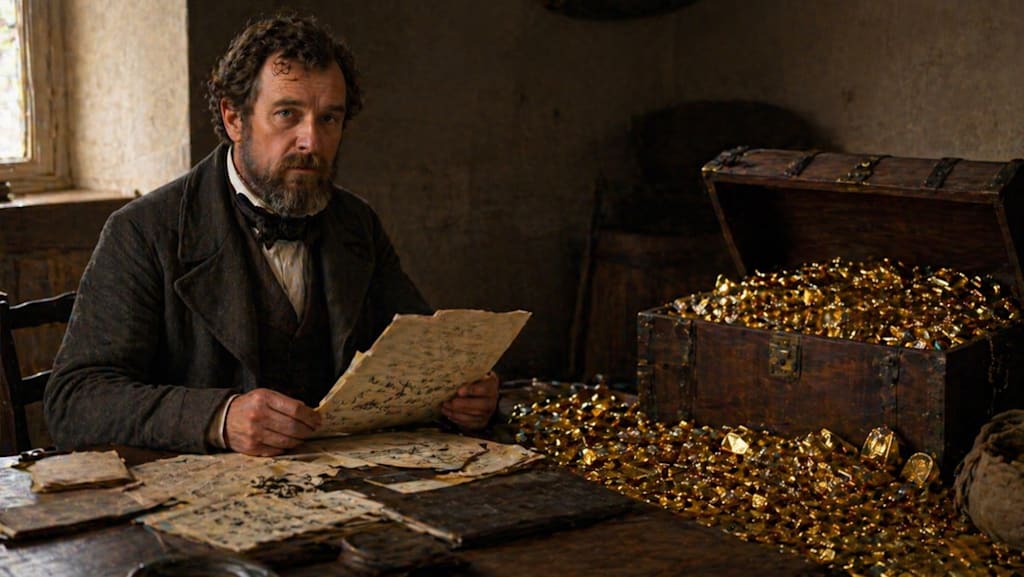
A story that began with an anonymous pamphlet
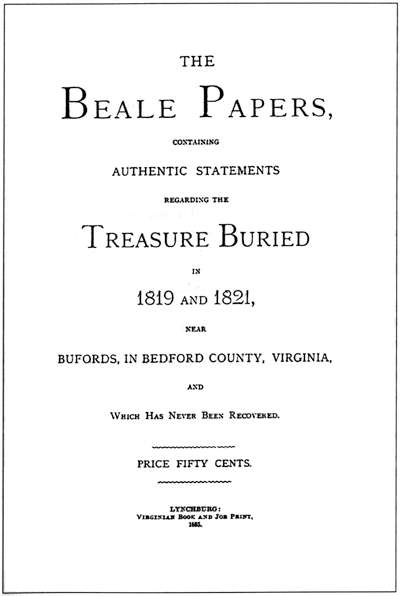
In 1885, a small pamphlet appeared in the city of Lynchburg, Virginia, under the title The Beale Papers. Its author was not named, but inside it told a story that quickly turned into one of America’s most enduring mysteries.
According to the text, a man named Thomas J. Beale had hidden an enormous treasure somewhere in the state of Virginia in the 1820s. This was not supposed to be a minor stash, but a truly colossal hoard: gold, silver, and jewels allegedly found during an expedition into the western United States.
By the pamphlet’s own estimate, the total value of the treasure amounted to millions of dollars even at that time. Today, it would be worth tens of millions.
Three ciphers and one key
Cipher No. 1 — the location of the vault
The central intrigue of the story is not the treasure itself, but the way Beale supposedly encrypted it. He left behind three encrypted texts: — the first describes the location of the treasure — the second describes the contents of the hoard — the third lists the heirs
Copies of all three ciphers have survived, but only one of them — the second — has ever been deciphered. And even that did not happen right away.
According to the legend, Beale entrusted a box of documents to an innkeeper named Robert Morriss, with instructions to open it after ten years if Beale did not return. Beale never came back. Years later, Morriss opened the box and found three sets of numbers — the ciphers. But there was no key.
How one of the codes was deciphered
Decades later, one researcher guessed that the United States Declaration of Independence might serve as the key.
It turned out that the second cipher was what is known as a book cipher. Each number pointed to a word in the Declaration, and the first letter of that word could be used to assemble the hidden message.
The decoded text described the treasure: thousands of pounds of gold, silver, and jewels hidden in an underground vault in Virginia.
But the problem is that the other two ciphers — the one with the location and the one with the names — remain undeciphered to this day.
Why many people consider it a hoax
The story looks almost too perfect, and that is exactly what makes researchers suspicious.
First, there is not a single confirmed historical document proving that Thomas Beale himself ever existed. His name does not appear in censuses, archives, or other contemporary records.
Second, the pamphlet appeared decades after the events it describes supposedly took place, and its author is unknown. One theory suggests that it was written by the publisher James Ward in order to attract attention and profit from sales.
Third, the style of the text and the language of the ciphers feel more consistent with the late nineteenth century than with the 1820s. That suggests the whole story may have been invented.
But people are still searching for the treasure
Despite the skepticism, people have continued searching for Beale’s treasure for more than 150 years. The area around Lynchburg has repeatedly been dug up by treasure hunters, sometimes even with machinery and ground-penetrating radar.
Interest in the story is fueled by one important fact: the second cipher really was deciphered, and it gives a perfectly coherent description of the treasure. That makes some people believe the other codes also contain real meaning — the key to them simply has not yet been found.
Why the mystery survives
The secret of the Beale cipher’s popularity lies in the fact that it stands exactly on the border between reality and fiction.
On the one hand: — there are real documents, the ciphers themselves — one of them has been deciphered — the setting is concrete and specific
On the other: — there is no proof that Beale existed — no treasure has ever been found — and there is still no key to the most important ciphers
That is the perfect formula for a legend: enough truth to make it believable, and enough mystery to keep people searching.
So does the treasure exist?
The honest answer is that no one knows. Most historians lean toward the view that it was a carefully constructed literary hoax of the nineteenth century.
But as long as at least one cipher remains unsolved and the treasure has not been found, the story will continue to live. And perhaps that is exactly what makes it stronger than any fully proven truth.
About the Creator
Enjoyed the story? Support the Creator.
Subscribe for free to receive all their stories in your feed.
Comments
There are no comments for this story
Be the first to respond and start the conversation.