
The Atlanta Olympic Bombing, 30 Years Later: What Really Happened to Richard Jewell?
The security guard who helped save lives during the 1996 Atlanta Olympics was quickly transformed from a national hero into the FBI's most public suspect. Thirty years later, his story remains a powerful lesson about justice, media scrutiny, and the cost of public assumptions.

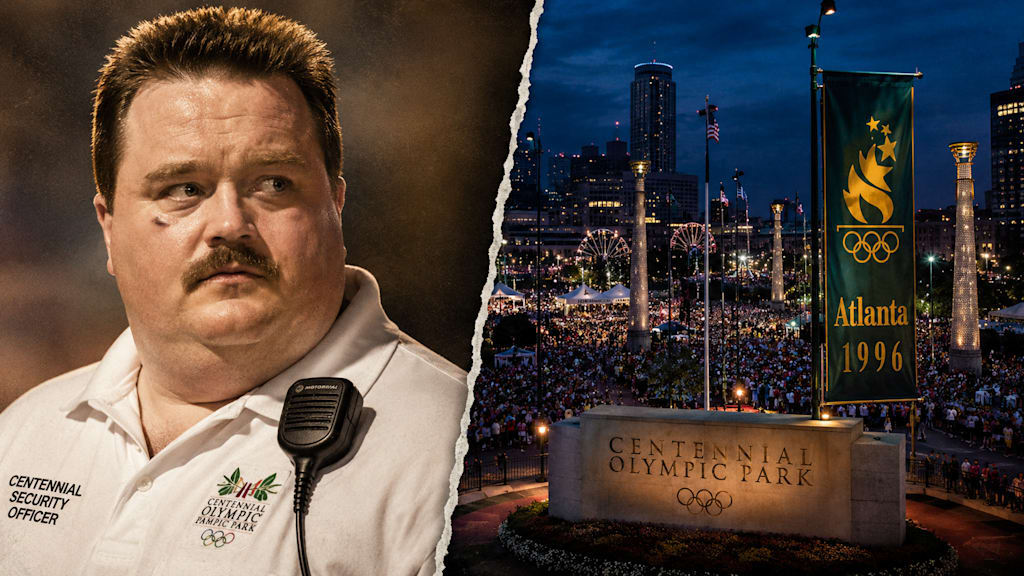
Imagine Saving Lives Only to Become America's Most Famous Suspect
Imagine discovering a suspicious bag in a crowded public park.
You alert authorities. People are evacuated. Minutes later, a bomb explodes.
Hundreds of lives may have been saved because of your quick thinking.
Now imagine waking up days later to discover that the entire country believes you might be the bomber.
That nightmare became reality for Richard Jewell.
As the world marks nearly three decades since the Atlanta Olympic bombing, the story remains one of the most extraordinary and troubling chapters in modern American history. It is a story of heroism, tragedy, media pressure, and a man whose life changed forever because he did the right thing.
A Summer of Celebration in Atlanta
In the summer of 1996, Atlanta was the center of the world.
The city hosted the Centennial Olympic Games, celebrating one hundred years since the first modern Olympics. Millions of visitors arrived from across the globe. Centennial Olympic Park became a gathering place filled with music, entertainment, and Olympic excitement.
The atmosphere was electric.
Families gathered to celebrate. Athletes chased lifelong dreams. For many Americans, the Atlanta Olympics symbolized national pride and international unity.
No one expected the celebration to become the scene of a terrorist attack.
The Night Everything Changed
Shortly after midnight on July 27, 1996, Richard Jewell was working as a security guard at Centennial Olympic Park.
While monitoring the crowd, he noticed an unattended military-style backpack beneath a bench.
Rather than ignoring it, Jewell followed protocol.
He immediately alerted law enforcement officers and helped begin evacuating the surrounding area.
Minutes later, a pipe bomb hidden inside the backpack exploded.
The blast killed one person directly and injured more than one hundred others. Another individual later died from a heart attack linked to the incident.
The attack shocked the nation.
However, investigators later acknowledged that the evacuation likely prevented a much greater loss of life.
Richard Jewell's actions had almost certainly saved dozens—if not hundreds of people.
The Hero America Celebrated
In the days following the bombing, Richard Jewell became a national hero.
Television networks praised his vigilance.
Newspapers highlighted his courage.
Law enforcement officials publicly credited him with helping prevent a larger disaster.
For a brief moment, Jewell represented the kind of ordinary citizen whose actions make an extraordinary difference during a crisis.
But that recognition would not last long.
When the Hero Became the Suspect
Only days after the bombing, reports emerged that federal investigators were examining Richard Jewell as a possible suspect.
The theory suggested that he may have planted the bomb himself in an effort to gain recognition as a hero.
There was one major problem.
No evidence publicly supported the claim.
Nevertheless, leaked information quickly spread through television broadcasts, newspapers, and radio programs.
The public narrative changed almost overnight.
The man once praised for saving lives suddenly found himself portrayed as the likely perpetrator.
Trial by Media
The investigation became one of the most visible examples of media overreach in American history.
News crews camped outside Jewell's apartment.
Helicopters followed his movements.
National headlines speculated about his guilt before any charges were filed.
For weeks, the public watched as journalists analyzed every aspect of his life.
The pressure was overwhelming.
Although Richard Jewell had not been arrested, many Americans had already concluded he was responsible.
His reputation suffered devastating damage.
The case became an early example of what many now call "trial by media."
The Search for the Real Bomber
As investigators continued their work, evidence failed to support the case against Richard Jewell.
Months later, federal authorities officially cleared him.
No charges were ever filed.
Yet public perception is often slower to change than official findings.
Many people remembered the accusation.
Far fewer remembered the exoneration.
Meanwhile, investigators continued searching for the real attacker.
The Truth Finally Emerges
Years later, authorities identified the actual bomber: Eric Rudolph.
Rudolph carried out a series of bombings motivated by extremist beliefs and anti-government ideology.
After years as a fugitive, he was captured in 2003.
He later admitted responsibility for the Atlanta Olympic bombing.
The confession confirmed what Richard Jewell had maintained from the beginning.
He was innocent.
The man many Americans had viewed with suspicion had actually helped save lives during one of the nation's most frightening public attacks.
Caption: Today, the park stands as a reminder of both tragedy and resilience.
Why Richard Jewell's Story Still Matters Today
Thirty years later, the Richard Jewell story feels more relevant than ever.
In today's world, information travels faster than facts.
Social media can transform accusations into global headlines within minutes.
Public opinion often forms long before investigations are complete.
The lessons from the Atlanta Olympic bombing remain remarkably timely:
- Evidence matters.
- Presumption of innocence matters.
- Responsible journalism matters.
- Reputations can be destroyed long before the truth emerges.
Jewell's experience serves as a warning about the dangers of rushing to judgment.
It reminds us that being investigated is not the same as being guilty.
Most importantly, it highlights how difficult it can be to restore a reputation once public opinion has turned against someone.
Richard Jewell's Lasting Legacy
History remembers Richard Jewell differently today than it did in 1996.
Rather than a suspect, he is increasingly recognized as a hero whose quick thinking helped prevent a far deadlier tragedy.
His story has become a case study in journalism schools, law enforcement training programs, and discussions about media ethics.
While the Atlanta Olympic bombing remains one of the darkest moments in Olympic history, it also produced an enduring lesson about justice and fairness.
Three decades later, Richard Jewell's name stands as a reminder that truth often takes longer to emerge than headlines.
But when it does, it has the power to reshape history.
FAQs
Who was Richard Jewell?
Richard Jewell was a security guard who discovered a suspicious backpack containing a bomb during the 1996 Atlanta Olympics and helped evacuate the area before the explosion.
Was Richard Jewell ever charged?
No. He was investigated but never charged with any crime related to the bombing.
Who committed the Atlanta Olympic bombing?
Eric Rudolph later admitted responsibility for the bombing and several other attacks.
Why is the Richard Jewell case important?
The case is widely regarded as a major example of media overreach, public assumptions of guilt, and the importance of due process.
Sources
FBI historical records
U.S. Department of Justice archives
Olympic Park bombing investigation records
Contemporary news reports and court documents
About the Creator
Hardik Barot
Hardik Barot is a technology enthusiast and writer passionate about AI, emerging technologies, startups, digital innovation, and future tech trends. He creates engaging content that simplifies complex topics for modern readers.
Enjoyed the story? Support the Creator.
Subscribe for free to receive all their stories in your feed.
Comments