World History
The Israel-Palestine conflict: a brief, simple history
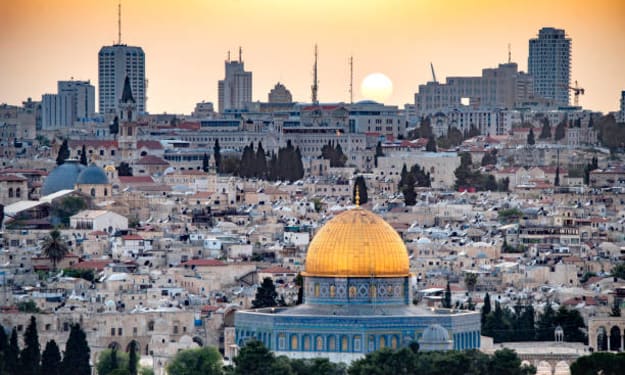
The Israel-Palestine Conflict: Unraveling the Myths and History The Israel-Palestine conflict is often shrouded in misconceptions, with some falsely believing it to be an age-old feud rooted in religious hatred. In reality, this complex issue primarily revolves around two groups vying for the same land, a struggle that emerged just over a century ago in the early 1900s. At that time, the region we now refer to as Israel-Palestine was under Ottoman rule, encompassing a diverse population of Muslims, Christians, and a small Jewish minority, coexisting relatively peacefully. Amidst these dynamics, two significant shifts were unfolding. First, the people of the region started to develop a distinct national identity, transforming from ethnic Arabs into Palestinians. Simultaneously, the Zionist movement gained traction among Jews in Europe, asserting that Judaism was not solely a religion but a nationality deserving of a homeland. After enduring centuries of persecution, many Jews saw a Jewish state as their only safeguard, with the Middle East serving as their historic homeland. The early 20th century saw a substantial influx of European Jews into the region, especially after World War One and the collapse of the Ottoman Empire. The British Mandate for Palestine was established, and tensions escalated as Jewish immigrants settled into farming communities. This influx led to mounting friction between Jews and Arabs, culminating in acts of violence perpetrated by both sides. The British, initially allowing Jewish immigration, began to limit it in response to escalating tensions. The Holocaust, a tragic event that galvanized global support for a Jewish state, further intensified the conflict. In 1947, the United Nations approved a partition plan, envisioning separate Jewish and Arab states, with Jerusalem designated as an international zone. Israel declared independence, and neighboring Arab states, viewing the plan as another form of colonialism, declared war in a bid to establish a unified Arab Palestine. Despite prevailing against the odds, Israel's territorial expansion beyond the UN-designated borders and the displacement of Palestinians created a refugee crisis. The Arab-Israeli conflict was born, with Israel controlling most of the territory, except for Gaza and the West Bank. The 1967 war led to Israel's occupation of these Palestinian territories, including Jerusalem, further deepening the divide. The subsequent years saw the establishment of the Palestinian Liberation Organization (PLO), initially aiming to eliminate Israel but later accepting the idea of a two-state solution. Violence erupted, and the Intifada, meaning "uprising" in Arabic, brought both Palestinians and Israelis to the brink. In this tumultuous era, Hamas emerged in Gaza, advocating for Israel's destruction and further complicating the situation. The Oslo Accords in the early 1990s marked a significant step towards peace, establishing the Palestinian Authority to govern certain areas. However, hard-liners on both sides sabotaged progress, and the failure of peace negotiations led to a more pessimistic outlook. The Second Intifada, marked by intensified violence, shaped a new reality. Israel's focus shifted from solving the conflict to managing it through walls and checkpoints, while Palestinians felt trapped under a growing occupation. Israel's withdrawal from Gaza in 2005 gave rise to Hamas, further fragmenting Palestinian leadership. Gaza was subjected to a stifling blockade, contributing to soaring unemployment and deteriorating living conditions. Today, settlements continue to expand in the West Bank, stifling Palestinian communities and generating tension, while periodic conflicts between Gaza-based groups and Israel result in devastating losses for Palestinians. While the majority of Israelis have grown apathetic to the ongoing conflict, the occupation remains a festering wound that cannot be ignored forever. The current status quo is unsustainable, with the occupation's instability foreshadowing a potentially darker future. The conflict's trajectory is uncertain; it may lead to a Third Intifada or a collapse of the Palestinian Authority. Nevertheless, one thing is clear: the status quo cannot persist, and the need for a resolution is more pressing than ever. In conclusion, the Israel-Palestine conflict is not an ancient feud driven by religious animosity, but rather a modern struggle rooted in a century-old clash of identities and national aspirations. The evolution of this conflict has seen numerous turning points, from the emergence of distinct national identities to failed peace negotiations and the persistent challenge of managing the occupation. As the conflict persists, the urgency for a comprehensive and lasting solution becomes increasingly evident, and the world watches with bated breath to see what the future holds for this deeply entrenched and complicated situation.
By Shubham Bajaj3 years ago in History
Why America still uses Fahrenheit?
"Alexa, what's the weather today?" If you're in the US, you're likely to receive a response in Fahrenheit. While virtually every country on Earth has embraced Celsius for temperature measurements, the US still holds onto Fahrenheit. This peculiar choice often prompts raised eyebrows and bemused comments. But it's not just a matter of meteorological semantics. The Fahrenheit system has deep historical roots that have both shaped and hindered progress. Let's delve into the tale of Fahrenheit, its origins, its global impact, and the ongoing debate over adopting the metric system. The Birth of Fahrenheit: In the early 18th century, measuring temperature was a disorganized affair. It was a German scientist, Gabriel Fahrenheit, who brought order to this chaos by inventing the mercury thermometer in 1714. Fahrenheit devised a scale that assigned freezing and boiling points to water at specific numbers, with the freezing point at 32 degrees and the boiling point at 212 degrees. He even added the average human body temperature at 96 degrees. This scale gained popularity, particularly after Fahrenheit's formal induction into the British Royal Society, where it found its place as a standard within the British Empire's extensive territories. Metric System's Rise: As the British Empire expanded, it carried the Fahrenheit system along with other Imperial measurements across the globe. Meanwhile, the metric system gained traction during the French Revolution, driven by the need for national unification. By the mid-20th century, Celsius, a unit of the metric system, gained favor in many English-speaking countries. In 1975, the US attempted to make the switch, enacting the Metric Conversion Act. This led to initiatives like the Interstate 19 metric highway sign, connecting Arizona to Mexico. However, resistance and a lack of enforcement eventually led to the disbandment of the United States Metric Board in 1982. The Struggle to Change: Despite attempts to promote metrication, the US clung to its familiar Fahrenheit system. This resistance persists, even as the global community increasingly embraces the metric system. The US's dual-system approach poses challenges for education, where students must learn two sets of measurements, and for businesses that must manufacture products for both domestic and metric markets. The consequences are more serious than mere inconvenience—medical dosage errors caused by conversion mistakes lead to thousands of unintentional medication overdoses every year. The Economic Conundrum: The argument for adopting the metric system is compelling—streamlined education, simplified commerce, and enhanced public health. Yet, the US hesitates due to the perceived financial burden of change. The cost of converting infrastructure, education materials, and public understanding is substantial. Without concrete evidence of economic benefits, the reluctance to transition remains strong. The question lingers: Is the expense of conversion justified by the potential gains? As the US continues to straddle two measurement systems, the debate over Fahrenheit versus Celsius persists. The historical legacy of Fahrenheit's invention and its integration into the British Empire has cemented its place in American culture. However, the global momentum towards the metric system raises questions about the costs and benefits of holding onto the Fahrenheit scale. While Celsius may seem more intuitive and widespread, the financial implications of change require careful consideration. So, for now, 77°F remains 25°C only in the eyes of those who choose to convert. Whether the US will eventually join the rest of the world in adopting the metric system remains a decision yet to be made. Like what you read? Consider liking and subscribing for more! :)
By Shubham Bajaj3 years ago in History
From spy to President: Rise of Mr. Putin
To truly grasp the extent of Putin's influence, we must rewind to a tumultuous era in Russian history – the aftermath of the Soviet Union's collapse. As the Berlin Wall crumbled, a young Putin found himself serving as an undercover spy in East Germany for the Soviet security agency, the KGB. The disintegration of the Soviet Union birthed 15 new nations, including the Russian Federation, which Putin viewed as a staggering loss of two million square miles of territory. He lamented the displacement of countless compatriots beyond Russian borders, labeling it a profound geopolitical calamity.
By Shubham Bajaj3 years ago in History
Tale of Akomfo Anokye (Golden Stool)
Akomfo Anokye: Weaver of Legends and Miracle-Maker In the heart of the Ashanti kingdom, where the rhythms of the drum echoed through the bustling markets and the air was filled with the scent of spices and stories, there lived a man whose name would become synonymous with legends and miracles. This man was Akomfo Anokye, a sage and a spiritual leader whose presence could command the attention of both the living and the spirit world.
By Khadijah Salia3 years ago in History
Unprecedented Naval Collaboration by China and Russia Raises Alarms Near US Coast"
In an unexpected turn of events, China and Russia have embarked on a joint naval operation that has set off ripples of concern. With a fleet of 11 ships positioned in proximity to the coast of the United States, the move has ignited debates about the potential implications and escalating tensions in international waters.
By Nicole Miller3 years ago in History
History of chocolate
History of Chocolate: From Ancient Cacao Rituals to Modern Sweet Indulgence Introduction Chocolate, with its rich and delectable taste, has delighted our taste buds for centuries. But its journey from bitter cacao seeds to the irresistible treat we know today is a fascinating tale that spans cultures, continents, and time. In this article, we will delve into the captivating history of chocolate, tracing its origins, transformations, and impact on societies throughout history.
By Ashir Hassan3 years ago in History
Single brave Mother🫀
Once upon a time, in a small town, there lived a strong and determined woman named Sarah. Sarah was a single mother who had been through many challenges in her life but never lost hope. She had a beautiful daughter named Emily, who was the light of her life.
By Janneh jallow3 years ago in History
Rohtas Fort. Content Warning.
Introduction: Nestled amidst the undulating landscape of northern Pakistan, Rohtas Fort stands as a testament to the confluence of history, architecture, and military strategy. Overlooking the city of Jhelum in the Punjab province, this UNESCO World Heritage Site serves as a monumental tribute to the vision of its creator, Sher Shah Suri. today we embark on an immersive journey into the heart of Rohtas Fort, unraveling its historical significance, the reasons behind its construction, the meticulous building process, and the indelible legacy it has left behind.
By Shams Ul Qammar3 years ago in History