World History
The Muslim Math a Christian Emperor Refused to Reject
1225, Southern Italy. A Christian emperor sits across from a mathematician trained in the Islamic world. He asks a question about numbers. What happens in the next hour will quietly reshape Europe—though no one in that room realizes it yet.
By Olga Angelucci10 months ago in History
Empire in Ashes
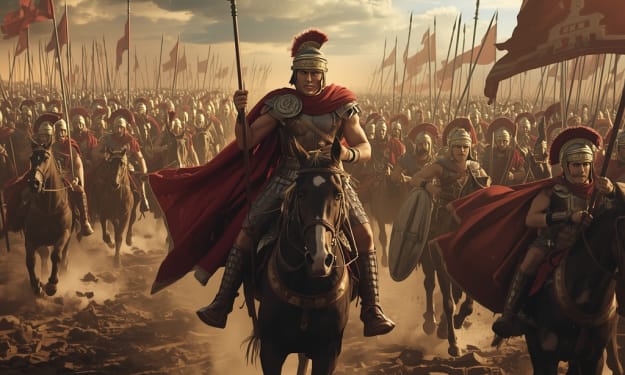
In late summer of the year 476, the Western Roman Empire was already a shadow of its former self, but its final hours still carried the weight of a thousand years of power. Rome no longer ruled the Mediterranean world; its emperors were puppets, its armies filled with foreign mercenaries, its treasury nearly empty. In Ravenna, the imperial capital, the teenage emperor Romulus Augustulus waited behind palace walls while events moved beyond his control. Real authority rested with Orestes, his father and commander of the army, who had seized power only a year earlier. But the soldiers who kept the empire standing had grown restless. They were foederati—Germanic troops who fought for Rome in exchange for land—and they now demanded what had long been promised. When Orestes refused, their leader, a seasoned warrior named Odoacer, turned against him. Within days, Odoacer’s forces marched across northern Italy, crushing resistance with alarming ease. Orestes was captured near Piacenza and executed, and the road to Ravenna lay open. As the final seventy-two hours began, Ravenna was tense but strangely quiet. The once-mighty empire had no legions left to defend its emperor, only thin walls and fading prestige. Odoacer’s army surrounded the city, not with the fury of a sack, but with the confidence of inevitability. Inside the palace, Romulus Augustulus—named after Rome’s legendary founder and its first emperor—stood as a tragic symbol of decline. He was young, inexperienced, and powerless, ruling an empire that existed more in memory than in reality. There was no dramatic last stand, no desperate counterattack. Negotiations replaced battles, and survival replaced pride. When Odoacer entered Ravenna, he did not burn it. He deposed the boy emperor peacefully, an act that was both merciful and final. Romulus was spared, granted a pension, and sent into exile, likely to live out his life in obscurity while history moved on without him. In the final hours, the symbols of empire were quietly dismantled. The imperial regalia—the crown, the purple robes, the insignia of supreme authority—were gathered and prepared for a journey east. Odoacer made a calculated decision that marked the true end of Western Roman rule: he did not name a new emperor. Instead, he sent the imperial insignia to Constantinople, acknowledging the Eastern Roman Emperor, Zeno, as the sole ruler of the Roman world. The message was clear and unprecedented. The West no longer needed its own emperor. What had once been the heart of a global empire was now a kingdom ruled by a barbarian king in Roman clothing. As the seventy-two hours closed, no single moment announced the fall. There were no collapsing walls or burning palaces, only the quiet disappearance of an institution that had shaped Europe, North Africa, and the Mediterranean for centuries. The Roman Senate still existed. Roman laws were still enforced. Cities still stood. But the idea of a Western Roman Emperor—an unbroken line stretching back to Augustus—was gone. The world did not end in 476, but it undeniably changed. Power fragmented, trade routes weakened, and Western Europe slowly entered a new era of competing kingdoms and shifting identities. Rome, once the ruler of the known world, became a memory, a symbol, and eventually a legend. The final seventy-two hours of the Western Roman Empire were not marked by chaos, but by quiet acceptance. Its fall was not a sudden collapse, but the last breath of a long decline. Yet even in ashes, Rome endured. Its language, laws, architecture, and ideas survived its emperors, shaping civilizations long after the crown was laid down. The empire died not with a roar, but with a whisper—leaving behind a legacy that still defines the modern world.
By Talhamuhammad10 months ago in History
The Demanding Factors That Created Alexander the Great’s Path to Victory
1. The Foundation Laid by Philip II of Macedon One of the most important factors behind Alexander’s victories was the groundwork laid by his father, King Philip II of Macedon. Philip transformed Macedonia from a weak kingdom into a dominant military power. He reorganized the army, introduced the Macedonian phalanx, and armed soldiers with the long sarissa spear, which gave them a decisive advantage over traditional Greek hoplites.
By Say the truth 10 months ago in History
The Net Worth of the Peacock Throne: Valuing the World’s Most Luxurious Lost Treasure. AI-Generated.
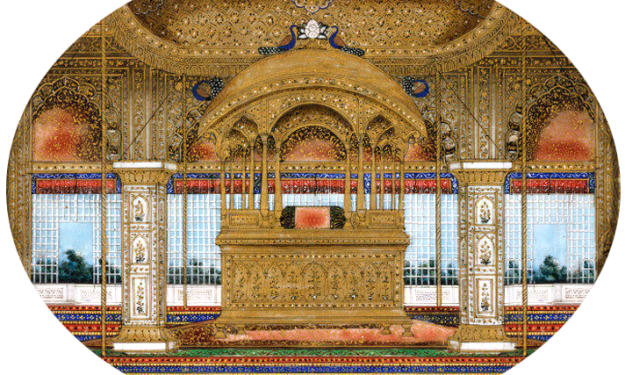
What Was the Peacock Throne? The Peacock Throne was completed around 1635 CE and placed in the Mughal imperial court at Delhi. It was constructed almost entirely of solid gold and covered with some of the most valuable gemstones known to humanity. At its center stood two jewel-encrusted golden peacocks, their tails raised high and spread wide, symbolizing royalty, immortality, and divine authority. Above the throne rose a golden canopy studded with gems, designed to represent the heavens. The emperor, seated at the center, symbolized the axis between heaven and earth. This symbolism alone elevated the throne from an object of luxury to a cosmic statement of power. Gold Content: The Foundation of Its Value Contemporary records suggest the Peacock Throne contained over 100 kilograms of pure gold, possibly much more. Even by conservative modern standards: 100 kg of gold × current average gold price ≈ $6–7 million USD (gold value alone) However, this figure represents only the raw metal value—not craftsmanship, rarity, or historical importance. The true value of the throne lay in what was mounted upon it. Gemstones That Redefined Wealth The Peacock Throne was famously encrusted with some of the most legendary gemstones in history, including: Koh-i-Noor diamond Darya-i-Noor diamond Massive emeralds from Colombia Burmese rubies Sapphires and pearls in the hundreds Today, single gemstones of this caliber are valued at hundreds of millions of dollars individually. For example: The Koh-i-Noor alone is considered priceless, with estimates ranging from $400 million to over $1 billion USD The Darya-i-Noor is valued between $200–500 million USD When all gemstones are combined, experts estimate the jewel value of the Peacock Throne would exceed $1.5–2 billion USD in today’s market. Craftsmanship and Artistic Value The Peacock Throne was created by the finest artisans of the Mughal Empire, blending Persian, Indian, and Central Asian artistic traditions. Thousands of labor hours, master jewelers, goldsmiths, and engineers were involved. In modern valuation terms, this places the throne in the same category as the world’s greatest artworks—such as the Mona Lisa or crown jewels—which are considered irreplaceable. Estimated craftsmanship and artistic value: $300–500 million USD Historical and Political Premium Objects associated with major historical turning points carry an additional historical premium. The Peacock Throne was not just decorative—it was the seat from which emperors ruled one of the richest empires in the world. The Mughal Empire at its peak controlled nearly 25% of the world’s GDP. The throne symbolized that dominance. Historians agree that such symbolic power alone adds at least: $500 million–$1 billion USD in intangible value The Persian Loot and Loss In 1739, Persian ruler Nader Shah invaded Delhi and looted the Mughal treasury. When he encountered the Peacock Throne, he reportedly declared it a “mountain of light.” He seized it and transported it to Persia along with vast quantities of treasure. After Nader Shah’s assassination in 1747, the throne disappeared from records. Most scholars believe it was dismantled, its gold melted down and gemstones redistributed among Persian rulers. This destruction ironically increased its mythical and historical value. If the Peacock Throne Existed Today If the original Peacock Throne were to resurface intact today and legally enter the market (a purely hypothetical scenario), experts believe it would become the most expensive man-made object ever sold. Estimated modern auction value: Conservative estimate: $2 billion USD High estimate: $3–4 billion USD Extreme private-collector estimate: $5+ billion USD This would surpass: The most expensive paintings ever sold The British Crown Jewels (individual items) Any single royal artifact on Earth Cultural Net Worth Beyond Money Beyond monetary valuation, the Peacock Throne holds enormous cultural net worth. It represents: The peak of Mughal artistic achievement India’s historical wealth before colonial decline The fragility of power and empire Museums, documentaries, books, and digital media continue to generate value from its story. In this sense, the Peacock Throne remains economically productive even in absence. Comparing the Peacock Throne to Other Treasures When compared with other legendary treasures: Tutankhamun’s mask: ~$2 billion (estimated) British Crown Jewels: ~$4–6 billion (collection) Codex Gigas (Devil’s Bible): ~$100–200 million Peacock Throne: $2–5+ billion (single object) This comparison reinforces its status as the most valuable throne in history. Conclusion: The World’s Richest Throne The Peacock Throne’s net worth cannot be reduced to gold weight or gemstone count alone. Its true value lies in the rare convergence of material wealth, artistic genius, and imperial symbolism. Even though the throne no longer exists, its estimated net worth—$2 to $5 billion USD—makes it the richest lost royal treasure ever known. More importantly, it remains a powerful reminder that the greatest riches of history often vanish, but their legends only grow stronger with time.
By Say the truth 10 months ago in History
The Net Worth of the First United Chinese Empire’s Treasure: Wealth of the Qin Dynasty
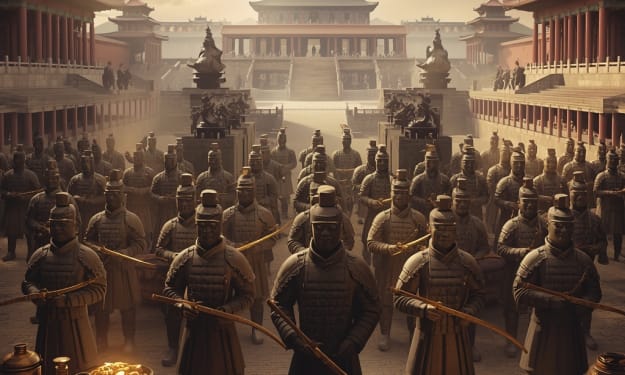
What Do We Mean by “Treasure” of the First United Empire? The Qin Empire’s treasure comprised several layers: Royal treasury assets (gold, silver, bronze, jade) Weaponry and military stores produced at industrial scale Land and taxation systems newly centralized Monumental projects (roads, canals, walls, palaces) Imperial burial wealth, including the mausoleum of Qin Shi Huang Unlike earlier feudal states, Qin centralized ownership. Wealth flowed into the state, not dispersed among nobles. This centralization is crucial to understanding the empire’s net worth. Precious Metals and Materials: A Conservative Valuation Archaeological finds from Qin sites reveal extensive use of bronze, gold, silver, and jade. Gold was not as dominant as in some Western empires, but jade held immense ritual and political value—often exceeding gold symbolically. Bronze: Tens of thousands of bronze weapons and tools have been excavated, many standardized and mass-produced. If valued today (material + craftsmanship), these alone could reach $5–10 billion USD. Gold and Silver: Direct quantities are unknown, but records suggest large royal reserves. A conservative modern estimate places precious metals at $10–20 billion USD. Jade: High-grade ancient jade artifacts today sell for millions per piece. The Qin court’s jade holdings—ritual disks, seals, burial objects—could conservatively be valued at $15–30 billion USD. Subtotal (materials only): $30–60 billion USD The Terracotta Army: Military Wealth Frozen in Clay The Terracotta Army is often discussed as art, but it also represents military capital. Each figure mirrors real soldiers, officers, chariots, and horses of the Qin army. Over 8,000 soldiers Hundreds of chariots and cavalry Originally equipped with real bronze weapons If this were valued as: Artistic heritage Military representation Technological achievement …the Terracotta Army alone would be worth $50–100 billion USD, comparable to the most valuable cultural assets on Earth. Importantly, this is just one component of the emperor’s burial complex. Infrastructure as Treasure: Roads, Canals, and Walls The Qin Empire invested heavily in infrastructure, which in modern economics is a core component of national net worth. Imperial road system spanning thousands of kilometers Early versions of what later became the Great Wall Canals enabling troop movement and trade Standardized measurements, coinage, and writing If these projects were valued as state assets today, similar to highways, dams, and defense systems, their worth would exceed $100–150 billion USD. This is “hidden treasure”: wealth not stored in vaults, but embedded in the empire itself. Weapons and Industrial Output The Qin state operated state-run workshops producing weapons at an industrial scale centuries ahead of its time. Mass-produced swords, crossbows, arrowheads Advanced metallurgy and quality control Stockpiles sufficient to conquer all rival states Valued as a military-industrial complex, these assets could add another $20–40 billion USD to the empire’s net worth. Land, Taxation, and Human Capital Perhaps the largest source of Qin wealth was land and people. By unifying China, the Qin emperor effectively controlled: Tens of millions of acres of agricultural land Millions of taxpayers Forced labor systems for state projects In modern economic terms, this is equivalent to state GDP control. When translated conservatively, the annual productive value of Qin-controlled land and labor could equate to hundreds of billions of dollars today. Even if we limit this to a single-year snapshot, it would add $100–200 billion USD to the empire’s net worth. The Mausoleum of Qin Shi Huang: The Ultimate Hidden Treasure Historical texts describe the emperor’s tomb as containing: Rivers of mercury simulating China’s geography Palaces, towers, and treasure chambers Traps to prevent looting Modern scientific surveys confirm abnormally high mercury levels, suggesting these accounts may be partly true. If fully excavated (which it has not been, for preservation reasons), the mausoleum could rival or exceed Egyptian royal tombs in value. Estimated potential value of the mausoleum contents: $50–100+ billion USD Total Estimated Net Worth of the First United Chinese Empire’s Treasure Combining conservative estimates: Precious materials & artifacts: $30–60 billion Terracotta Army: $50–100 billion Infrastructure assets: $100–150 billion Weapons & industry: $20–40 billion Land & productive control: $100–200 billion Imperial mausoleum: $50–100 billion 👉 Estimated total net worth: $350–650 billion USD This figure rivals or exceeds the estimated wealth of many modern nations and places the Qin Empire among the wealthiest political entities in human history. Conclusion: Wealth Beyond Gold The true net worth of the first united Chinese empire cannot be measured by gold alone. Its real treasure was centralization, standardization, and control—systems that outlived the dynasty itself and shaped China for over two millennia. While the Qin Dynasty was short-lived, its accumulated wealth—material, structural, and symbolic—was immense. Even today, as artifacts continue to be uncovered, the empire’s net worth continues to rise, not in bank accounts, but in historical value and global fascination.
By Say the truth 10 months ago in History
When the Circus Came to Town
Long before stadium tours, streaming premieres, or “limited engagement” billboards glowing along the interstate, there was a different kind of announcement. It arrived quietly... Sometimes on a handbill tacked to a feed store, sometimes by rumor passed between kids at school.
By The Iron Lighthouse10 months ago in History
South Asia on Edge: Why Small Crises Carry Big Global Risks
South Asia on Edge: Why Small Crises Carry Big Global Risks South Asia is one of the most sensitive regions in the world today. It is home to a very large population and includes countries with strong militaries and nuclear weapons. Because of this, even small problems can turn into serious crises very quickly. Tensions, mistrust, and long history make the region fragile, and the whole world watches closely when situations become tense.
By Wings of Time 10 months ago in History
Coordinated Attacks and Regional Stability: Why Pakistan’s Security Situation Matters Globally
Coordinated Attacks and Regional Stability: Why Pakistan’s Security Situation Matters Globally How internal security challenges, regional rivalry, and geopolitics are deeply connected
By Wings of Time 10 months ago in History
The Net Worth of the Golden River: Measuring the Value of History’s Greatest Myth
So what is the net worth of the Golden River? While it cannot be calculated like a bank account or a gold reserve, its value can be estimated through economic loss, potential mineral wealth, cultural impact, and historical influence. When all these dimensions are considered, the Golden River may be worth more than any physical treasure ever discovered. Understanding “Net Worth” in a Mythical Context Net worth usually refers to assets minus liabilities. In the case of the Golden River, there is no confirmed physical asset—but there is a massive historical and economic footprint. To calculate its net worth, historians and economists consider: The gold believed to exist in river systems linked to the legend The wealth spent and lost chasing it The empires enriched or ruined by the belief The cultural and media value that still generates income today In short, the Golden River’s net worth is a mix of imagined wealth and real-world consequences. Estimated Physical Gold Value South America is one of the richest gold-bearing regions on Earth. Rivers across the Andes and Amazon basin contain real alluvial gold deposits. Some modern mining regions linked historically to El Dorado legends have produced hundreds of tons of gold. If the Golden River were interpreted as a symbolic reference to multiple gold-rich rivers combined, modern geological estimates suggest that these river systems may have yielded gold worth over $100–150 billion USD across centuries. This does not mean all of it belonged to a single river—but it shows that the legend was not born from nothing. Small truths were exaggerated into a myth of infinite wealth. Cost of Expeditions: The Wealth Lost Chasing the River The Spanish Empire, followed by English and Portuguese explorers, spent enormous sums chasing the Golden River. Ships, weapons, horses, supplies, and manpower Decades of military funding Loss of thousands of lives Failed colonies and abandoned settlements Historians estimate that hundreds of millions of dollars (in today’s value) were wasted directly on failed Golden River expeditions. When adjusted for inflation and economic opportunity loss, this figure may exceed $10–20 billion USD. Ironically, the river that promised infinite wealth instead drained the wealth of empires. Net Worth in Human Lives and Power Another uncomfortable but real dimension of net worth is human cost. Thousands of indigenous people were enslaved or killed as explorers forced them to reveal the “location” of the Golden River. Entire ecosystems were damaged, and cultures were erased. Empires rose and fell based on belief in this legend. Sir Walter Raleigh lost his fortune and eventually his life pursuing it. Spanish commanders destroyed their reputations chasing a river that never delivered. From a historical perspective, the Golden River’s “net worth” includes: Political power gained and lost Colonial expansion Cultural destruction These impacts alone place its value beyond traditional economics. Cultural and Intellectual Net Worth Today, the Golden River is worth more as an idea than as a resource. Books, documentaries, films, video games, tourism, and academic research continue to generate revenue from the legend. The El Dorado myth alone has inspired billions of dollars in global entertainment and educational industries. Museums, travel content, YouTube channels, and historical platforms profit from the mystery. Writers and creators earn ongoing income by retelling and reimagining the Golden River. In the digital age, the intellectual net worth of the Golden River may exceed $1–2 billion USD, and it continues to grow. Theoretical Market Value If It Were Real If a single river flowing with massive quantities of gold were discovered today, its value would be almost impossible to contain. Gold price (average): ~$65 million per ton Even 1,000 tons of gold = $65 billion USD Control of such a resource would alter global markets If the Golden River truly existed as described, its net worth could rival or exceed the largest national gold reserves in the world. This hypothetical value is one reason the legend never dies. Psychological and Symbolic Value The Golden River’s greatest asset is human obsession. It represents: The promise of effortless wealth The danger of greed The mystery of the unknown
By Say the truth 10 months ago in History