World History
If War Had Erupted Between Ashoka and the Three Kings of South India: An Alternate History Scenario
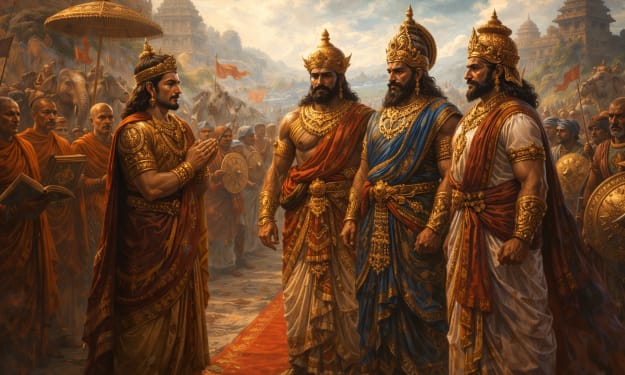
In reality, no direct war occurred between Ashoka and these southern kingdoms. But if circumstances had been different—if diplomacy had failed and war had erupted—the consequences would have been profound, reshaping Indian history in dramatic ways. This article explores a hypothetical scenario: what might have happened if Ashoka had gone to war against the three southern kings. The Causes That Could Have Triggered War Several factors could have pushed Ashoka toward conflict: Breakdown of diplomatic relations Disruption of trade routes between North and South India Rebellion in southern frontier regions Pressure from Mauryan military commanders seeking expansion Resistance to Ashoka’s moral policies or Buddhist missions Had any of these escalated, Ashoka—still possessing one of the world’s largest armies—might have chosen military intervention. Military Strength: Maurya vs Southern Kingdoms Ashoka’s Mauryan Army was unmatched in scale: Hundreds of thousands of infantry Tens of thousands of cavalry Thousands of war elephants Advanced logistics and centralized command The Southern Kings, however, had their own strengths: Highly motivated regional armies Expert knowledge of local terrain Strong naval forces and coastal control Guerrilla-style warfare tactics Unlike the open plains of northern India, South India’s forests, rivers, hills, and monsoon climate would pose severe challenges to a Mauryan invasion. Phase One: The Mauryan Advance South If war began, Ashoka’s forces would likely advance past the Vindhya Mountains, securing central India before pushing into the Deccan plateau. Early Mauryan victories would be likely due to sheer numbers and disciplined formations. However, supply lines would stretch dangerously long. Monsoon rains, tropical diseases, and unfamiliar terrain would slow progress. Southern armies would avoid direct confrontation, instead targeting Mauryan camps, supply convoys, and communication lines. Phase Two: Resistance of the Three Kings The Chola, Chera, and Pandya kings—though rivals among themselves—would likely form a temporary confederation against the common threat. The Cholas would dominate river plains and fortify urban centers The Cheras would use forest warfare and mountain ambushes The Pandyas would control southern trade routes and ports Their unity, even if temporary, would significantly increase resistance. The Mauryan elephants—so effective in northern warfare—would struggle in dense jungles and narrow passes. Human Cost and Ashoka’s Inner Conflict As battles intensified, casualties would rise sharply—among soldiers and civilians alike. Villages would be destroyed, agriculture disrupted, and temples and cities damaged. For Ashoka, this would trigger a second moral crisis, possibly even deeper than Kalinga. Witnessing suffering once again, Ashoka’s commitment to Dharma might clash violently with imperial ambition. At this point, Ashoka might: Halt the campaign mid-way Seek immediate peace talks Replace generals who pushed aggressive strategies Possible Outcomes of the War Scenario 1: Mauryan Military Victory If Ashoka persisted and won: South India would come under Mauryan political control Massive administrative challenges would follow Frequent rebellions would weaken the empire Ashoka’s moral legacy would be permanently damaged Such an empire would likely fragment after Ashoka’s death. Scenario 2: Stalemate and Treaty More realistically, the war would end in a stalemate: Neither side achieves complete dominance A treaty recognizes southern autonomy Trade routes are restored Mauryan forces withdraw This outcome would preserve southern independence while reinforcing Ashoka’s preference for peace. Scenario 3: Strategic Withdrawal by Ashoka Ashoka could choose to abandon the campaign: Publicly renounce the war Declare Dharma victory over conquest Strengthen diplomatic ties instead This would elevate Ashoka’s reputation as a moral ruler even further. Long-Term Impact on Indian Civilization A full-scale war would delay: Cultural flowering of Sangam literature Spread of Buddhism through peaceful means Economic growth via maritime trade South India’s unique identity might be altered under northern administration. Alternatively, resistance could strengthen southern unity earlier in history. Why War Ultimately Did Not Happen
By Say the truth 8 months ago in History
Ashoka and the Three Kings of South India: Power, Diplomacy, and Moral Conquest
Unlike his northern campaigns, Ashoka did not wage a full-scale war against these southern powers. Instead, his interaction with them reveals a unique blend of political realism, military restraint, and ideological influence. The Mauryan Empire at Its Peak By the mid-3rd century BCE, the Mauryan Empire under Ashoka stretched from Afghanistan in the northwest to Bengal in the east, and from the Himalayas in the north to the Vindhya ranges in central India. After the devastating Kalinga War (c. 261 BCE), Ashoka experienced profound remorse over the human cost of warfare. This event marked a turning point in his reign. Though Ashoka remained a powerful emperor with a massive standing army, he consciously chose a different path—Dhamma (Dharma)—a policy emphasizing moral governance, tolerance, non-violence, and welfare. The Three Kings of South India During Ashoka’s reign, South India was ruled by three ancient and powerful dynasties: The Cholas – Dominant in the fertile Kaveri delta The Cheras – Ruling parts of present-day Kerala and western Tamil Nadu The Pandyas – Based in the Madurai region These kingdoms were culturally rich, economically strong, and politically independent. They controlled important trade routes, especially maritime commerce with Rome, Southeast Asia, and Sri Lanka. Was There a War Between Ashoka and the Southern Kings? Historical evidence strongly suggests that Ashoka did not conduct a direct military invasion of the Cholas, Cheras, or Pandyas. This is significant, considering Ashoka’s immense military capability. In Ashoka’s 13th Rock Edict, he explicitly mentions the southern kingdoms: “The Cholas, the Pandyas, the Satiyaputras, the Keralaputras…” This inscription confirms that these kingdoms lay outside Mauryan political control, yet were fully acknowledged by Ashoka. Instead of war, Ashoka pursued diplomacy, cultural influence, and moral authority. Why Ashoka Did Not Invade South India Several reasons explain Ashoka’s restraint: Geographical Challenges Dense forests, rivers, and mountain ranges made southern campaigns logistically difficult. Economic Pragmatism The southern kingdoms were key trade partners. War would disrupt commerce and revenue. Post-Kalinga Transformation Ashoka’s conversion to Buddhism led him to renounce aggressive warfare. Stable Southern Powers The Cholas, Cheras, and Pandyas were well-organized and not weak targets. Moral Conquest Instead of Military Conquest Ashoka introduced the concept of “Dhamma-Vijaya” (Victory through Dharma), replacing “Dig-Vijaya” (Victory through War). This ideological conquest aimed to win hearts rather than territories. Ashoka sent: Buddhist missionaries Medical aid Herbal and animal welfare knowledge Moral teachings on tolerance and compassion These efforts extended to South India, where Buddhism gradually gained influence without coercion. Cultural Exchange and Religious Influence Although South India did not become politically Mauryan, Ashoka’s reign contributed to: The spread of Buddhism in Tamil regions Construction of stupas and monasteries Growth of ethical governance ideals Archaeological findings in Tamil Nadu and Kerala suggest early Buddhist presence, likely supported by Ashoka’s missionary policy. The Strength of the Southern Kings It is important to recognize that the southern kings were not passive recipients of Ashoka’s influence. Sangam literature portrays them as: Brave warriors Skilled administrators.
By Say the truth 8 months ago in History
Chandragupta Maurya vs the Greek Empire: The Clash That Reshaped Ancient India
Background: Alexander’s Invasion and Its Aftermath The roots of the conflict trace back to Alexander the Great’s invasion of India in 326 BCE. Although Alexander defeated King Porus at the Battle of Hydaspes, his army refused to advance further east. Upon his return westward and his death in 323 BCE, Alexander’s vast empire fractured among his generals, known as the Diadochi. In northwestern India, Greek governors and satraps were left behind to maintain control over regions such as Punjab, Gandhara, Arachosia, and parts of present-day Afghanistan. These territories were unstable, and Greek authority was weak, creating an opportunity for a rising Indian leader. Rise of Chandragupta Maurya Chandragupta Maurya, guided by his brilliant strategist Chanakya (Kautilya), overthrew the unpopular Nanda Dynasty around 321 BCE and established the Mauryan Empire with its capital at Pataliputra (modern Patna). Unlike previous Indian rulers, Chandragupta aimed to unify the entire subcontinent under a centralized administration. Recognizing the vulnerability of the Greek-held territories in the northwest, Chandragupta moved swiftly to reclaim them. His ambition brought him into direct conflict with Seleucus I Nicator, one of Alexander’s most powerful successors and founder of the Seleucid Empire. The Greek Empire Under Seleucus I Nicator Seleucus I controlled vast lands stretching from Asia Minor to Persia and parts of Central Asia. However, his eastern territories were distant, difficult to govern, and constantly threatened by local uprisings. When Chandragupta began advancing into Greek-controlled regions, Seleucus was forced to personally lead an expedition to reassert control. This led to a full-scale war between the Mauryan Empire and the Greek Empire around 305 BCE. The War: Strategy and Military Strength
By Say the truth 8 months ago in History
The Bells That Rang Before the Fire
The city slept beneath stone and shadow, unaware that it was already remembered. Before dawn, the bells of Notre-Dame were still. They would not ring for hours. Paris lay hushed along the Seine, its bridges resting like old thoughts between two halves of itself. The cathedral rose at the heart of it all—familiar, immovable, trusted the way only ancient things are.
By LUNA EDITH8 months ago in History
The Surgeon Who Restored Dignity
The sixteenth century was a time of profound transition in Europe’s medical history. Anatomy, surgery, and the scientific study of the human body were gaining momentum, yet the restoration of the human face remained an almost impossible dream. In this fragile balance between tradition and innovation, an Italian physician and surgeon named Gaspare Tagliacozzi (1546–1599) emerged as a pioneer. His groundbreaking method of reconstructing the nose was not only centuries ahead of its time but also laid the foundation for what we now call modern plastic surgery.
By Salman Writes8 months ago in History
GIVE PEACE A CHANCE
Give Peace a Chance I remember the day John Lennon was shot. It was December 8, 1980, and the news hit the world like a devastating storm. But it wasn’t just the loss of a singer or songwriter; it felt like the silencing of a philosopher, a man who used music to speak truth to power and feed the souls of millions.
By ♿ V+ Marie381Uk 8 months ago in History
The Calvine Photo: Best UFO Picture Ever Taken... or the Best-Kept Secret?
Picture this: It's a crisp August evening in 1990, deep in the Scottish Highlands near the tiny hamlet of Calvine. Two young guys-let's call them friends out for a simple hike, nothing fancy-are trudging along a quiet road, probably chatting about the weather or where to grab a pint later. The sun's dipping low, casting long shadows over the rolling hills. Then, out of nowhere, a low humming sound starts. Not mechanical exactly. More like... something alive, but silent in a way that makes the hair on your arms stand up.
By KWAO LEARNER WINFRED8 months ago in History
Wealth Reserves and Economic Power of the Madurai Rulers during the First Sangam Age. AI-Generated.
The Madurai rulers of the Sangam Age possessed immense wealth derived from trade, agriculture, tribute, and natural resources, making them among the richest monarchs of ancient India.
By Say the truth 8 months ago in History
The Chola Dynasty and the Legend of the Hundred-Elephant-Slaying Warrior. AI-Generated.
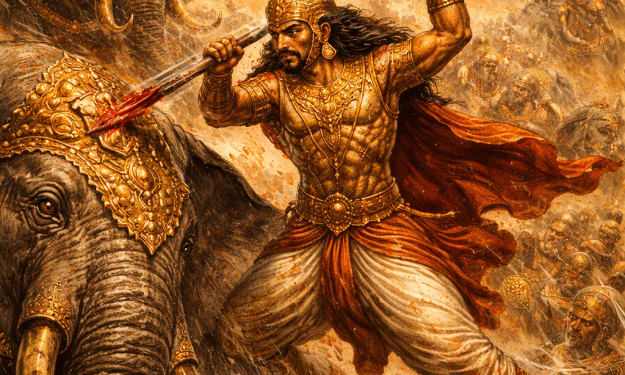
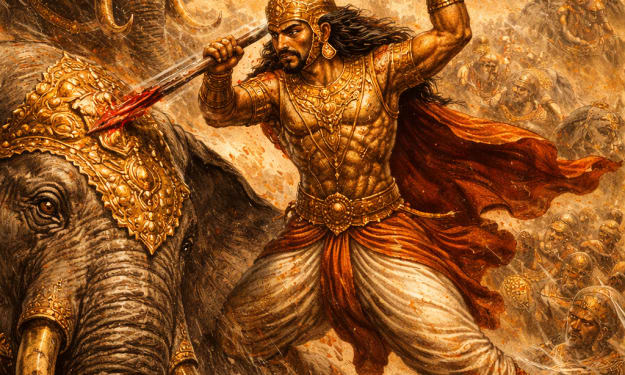
Among the many heroic traditions associated with the Cholas is the legendary account of a warrior said to have slain one hundred war elephants in battle—a symbol of unmatched courage, strength, and battlefield mastery. Though this account blends history and legend, it reflects the martial culture of the Chola era and the extraordinary challenges faced by warriors during medieval warfare. Rise of the Chola Dynasty
By Say the truth 8 months ago in History
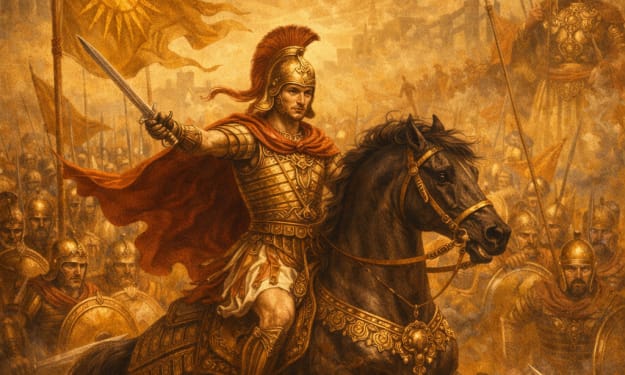
Alexander the Great’s Body Preservation Method: History, Mystery, and Science
Ancient historians describe Alexander’s corpse as remaining uncorrupted for several days, even weeks, which led many to believe he was divine. The method used to preserve his body has intrigued historians, scientists, and medical scholars for centuries.
By Say the truth 8 months ago in History