World History
5 Mysterious Artifacts No One Can Explain
Our understanding of our ancestors and ancient civilizations is derived from historical documents, art, books, artifacts, architecture, and even myths and legends. While we piece together ideas and theories about life thousands of years ago, it's crucial to acknowledge that our knowledge is incomplete. Despite our inclination to feel superior to those who lived in the past, there are aspects of their creations that still elude us. Take, for instance, the mysterious pyramid in China's Qinghai Province, near Mount Baigong—an area historically not known to have had inhabitants. In this region, three caves contain pipes leading to a nearby saltwater lake. The bizarre pipes, varying in size with some smaller than a toothpick, puzzle researchers. The Beijing Institute of Geology estimates that these formations were created approximately 150,000 years ago. The enigma surrounding such ancient structures underscores the gaps in our understanding of the past.
By Džonas Peterson3 years ago in History
Fairy Circles of Namibia
Millions of circular patches, each a few meters wide, are found in the coastal desert region of Namib, around 80 to 140km from the Atlantic shoreline. Fairy circles are striking regularly sized and spaced, bare circles surrounded by Stipagrostis grasses.
By Rahab Kimondo3 years ago in History
The Roanoke Colony.
The Roanoke Colony was England's first colony in North America, North Carolina, USA. Established in 1585 CE, abandoned and then resettled in 1587 CE, The Lost Colony is the popular name given to the English colony of approximately 150 men, women, and boys that settled on Roanoke Island in July 1587 under the leadership of artist John White.
By Rahab Kimondo3 years ago in History
Was India the first country to invent plane
"When did mankind first create airplanes and space shuttles? Recent history tells us that the Wright brothers launched the first successful flight in 1903, and the first space shuttle was built in 1976. But what if planes and space shuttles existed thousands of years ago? Not only that, but they were much more advanced than what we have today.
By NICHOLAS MURIUNGI3 years ago in History
Miracle of the twin babies
INTRODUCTION Kodinhi, a small village nestled in the picturesque Malappuram district of Kerala, has earned a distinctive moniker – the "Twin Town." What makes this village stand out is an unusual demographic phenomenon that has intrigued scientists, researchers, and the general public alike. Kodinhi is renowned for an unusually high number of twin births, capturing attention both locally and internationally. The story of Kodinhi's remarkable twinning rate is as fascinating as it is mysterious. This phenomenon came to the forefront when the villagers noticed an extraordinary prevalence of twins within their community. It's essential to understand that the global average for twin births is around 1 in 80 pregnancies. However, in Kodinhi, this rate appears to be significantly higher. The village, with its lush greenery and serene surroundings, became a subject of scientific inquiry. Researchers from various disciplines, including genetics, medicine, and anthropology, have sought to unravel the mystery behind Kodinhi's high twinning rate. One prevailing theory is that the unique genetic makeup of the population might contribute to the increased likelihood of twin births. Genetic studies have been conducted to explore whether there are specific genes within the community that could be responsible for this phenomenon. The initial findings, however, have not provided a conclusive explanation. Environmental factors have also been considered in the quest to understand the high twinning rate. Some researchers have explored the impact of diet and lifestyle on the occurrence of twins in Kodinhi. The villagers' dietary habits, which include locally grown fruits, vegetables, and grains, have been scrutinized for potential links to the increased rate of twinning. The close-knit nature of the community adds another layer to the mystery. The villagers, proud of their unique demographic characteristic, often share stories and experiences related to twins. Families with twins are not uncommon, and the village cherishes its reputation as the "Twin Town." Despite the scientific curiosity surrounding Kodinhi, the village itself remains a tranquil and idyllic setting. The villagers, while aware of the attention their community has garnered, continue with their daily lives, deeply rooted in the rich cultural traditions of Kerala. The global fascination with Kodinhi has led to increased tourism, as visitors from far and wide come to witness the unique phenomenon. The village has become a symbol of the enigmatic aspects of human biology and the mysteries that persist even in our modern, scientifically advanced world. As of my last knowledge update in January 2022, the mystery of Kodinhi's high twinning rate persists, and ongoing research aims to shed light on the underlying factors. The village continues to be a testament to the complexities of genetics, lifestyle, and environmental influences on human health. In conclusion, Kodinhi's tale of twin babies is a captivating blend of science and mystery, highlighting the enduring enigma that captivates both the scientific community and the curious traveler. The village stands as a testament to the wonders of nature and the intricacies of the human experience, inviting us to ponder the mysteries that lie within the fabric of our existence. It's important to note that, despite the unusual demographic pattern, Kodinhi remains a regular and functioning village in Kerala, and there is no substantial evidence to support claims of paranormal activity in the area. The focus on Kodinhi is more on the scientific and sociological aspects of the high twinning rate rather than ghost stories or haunted tales. The phenomenon has attracted both scientific interest and curiosity from the general public.
By History of shadows3 years ago in History
History of entire church
Christianity, the world's largest religion, is nearly 2,000 years old and exhibits significant diversity. At times, it takes various forms, each with its distinct characteristics and beliefs. The journey of Christianity is marked by historical events, theological debates, and cultural shifts, contributing to its multifaceted nature.
By NICHOLAS MURIUNGI3 years ago in History
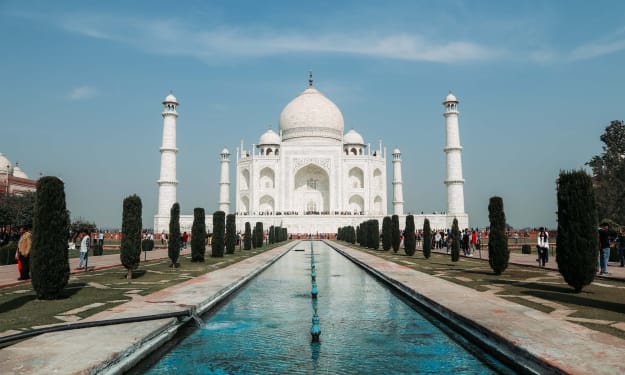
The Mysterious SEALED Temple Door NO ONE Can Open: Last Door of Padmanabhaswamy
The Mysterious SEALED Temple Door NO ONE Can Open: Last Door of Padmanabhaswamy In a world that has been around for millennia, with endless individuals that have traveled every which way, it's gullible to feel that there aren't things that those individuals abandoned. Our progenitors have passed down to the cutting edge as much data as possible however what might be said about those antiquated information that have been lost through time? Is it our obligation as current occupants of the world to uncover those insider facts? Or on the other hand did they get covered under the sand of time which is as it should be? Maybe one of those antiquated mysteries is the Sri Padmanabhaswamy sanctuary. This sanctuary is however old as the confidence that may be rehearsed in it, Hinduism. Situated in Kerala, India, this sanctuary is named the most extravagant sanctuary in the entire world. One glance at the wonderful design parts with the distinction, for the whole construction is canvassed in real gold. This old sanctuary is perfectly constructed and is a great representation of a mix of Keralan and Dravidian design, styles that are well known among Hindu sanctuaries particularly in the territory of Kerala. In any case, the Padmanabhaswamy sanctuary has something about it that makes it stand apart among the rest. It's not the brilliant outside yet something different, something undeniably more strange. It is expressed that under this antiquated Hindu sanctuary might be one of the best fortune known to man. The Sri Padmanabhaswamy sanctuary's set of experiences returns to 500 B.C. what's more, 300 A.D. at the point when it was referenced in a few texts during India's Sangam Time of writing. Basically, similar to any sanctuary it fills in as spot of love for a specific god and explicitly for the Padmanabhaswamy sanctuary, its essential god is Vishnu which is addressed by the nominal Sri Padmanabha. It's one of the 108 Vaishnavite altars that exist and access to it is simply conceded to Hindus. There is no precise date with respect to when this sanctuary was fabricated however one thing is without a doubt, it's been there for quite a while and it will remain there long after the greater part of us are no more. It is a direct result of this rich however lost history that the Indiana Jones inside us all put the Padmanabhaswamy sanctuary's secretive presence free from the profundities of dead Hindu information and into the 21st 100 years. With a request for the Indian High Court in 2011, the six known vaults under the sanctuary were investigated and what was found inside them shook the whole world. The vaults that were opened held incredible fortune, further solidifying the sanctuary's title. They contained valuable stones and metals, old relics, however in particular, gold. Gold coins dated around 200 B.C., brilliant pieces of jewelry and crowns, and, surprisingly, a strong gold sculpture of the god of the sanctuary, Padmanabha. The fortune viewed was all assessed as worth billions of dollars. This was supposed to be one of the greatest fortune finds in history and that is all's not even the most thrilling part, out of the six vaults of the sanctuary, just five were totally opened. The last vault, named Vault B by the Indian High court, contains an entryway that prompts another chamber. The entryway, similar to the sanctuary, is delightfully decorated, while possibly not somewhat startling. Cut on the entryway, are two monster cobras, said to be alerts to anybody who needs open it and uncover the privileged insights inside. There are no hooks or bolts, not so much as a keyhole, no different method for passage with the exception of a custom performed by a "sadhus" or Hindu priest who should be sufficiently strong to play out the "Garuda Mantra" or serenade. There is as of now no known individual prepared to do such. That is the reason this internal sanctum has been fixed for quite a long time and nobody knows precisely exact thing's inside. Much data about the sanctuary and its vaults is lost on the sanctuary authorities, in any event, for the Travancore illustrious family whose trust the sanctuary is under. Notwithstanding, assuming the significant measure of abundance from different vaults is of any sign, then, at that point, it would be sensible to feel that this vault also will carry treasure with it… and perhaps more, in the event that the cobras' admonition on the entryway of the internal vault had any reality to them. The apprehension that the admonition has accumulated perhaps one reason why the vaults of this sanctuary has stayed immaculate by time yet the 2011 High Court request didn't simply come from unadulterated interest of would-be treasure trackers and archeologists yet in addition something not so much puzzling but rather more pragmatic. In 2007, a claim that blamed the Travancore family for sanctuary fumble and involving the sanctuary's abundance for their own was recorded by Ananda Padmanabhan, a legal counselor from Trivandrum, Kerala. Padmanabhan, a man enthusiastic ever, was educated of the historical backdrop of the sanctuary. Since its foundation, royals of India would sumptuous wealth upon wealth out of appreciation for the god of the sanctuary. Services would try and be held wherein maharajas would give in gold the heaviness of the sovereigns who were moving toward adulthood. He accepted that the fortunes were still inside the sanctuary and he dreaded it very well may be abused by the illustrious family. With his claim, the Indian government requested a stock on the sanctuary treasures. In any case, it appears to be that this is isn't whenever the Indian government first has attempted to investigate the sanctuary. As per a movement guide of Travancore, an old Indian realm that is currently important for cutting edge Kerala, composed by an eminent English creator, the 2011 disclosure was not the first, however it was the one that found the most fortune. In 1908, there was a bombed endeavor to open the vaults on the grounds that the wayfarers immediately left when they found the loads pervaded with cobras. Notwithstanding, in 1931, when the territory of Kerala was monetarily out of luck, one more endeavor was made to break the vaults, and this time it was fruitful, with something like one of the vaults opened and adequate fortune found. Concerning different vaults, it would be 80 years until their fortunes would be found however not Vault B which has stayed shut and keeps on being to the rest of the world. At present, the public authority of India is as yet attempting to open the fixed entryway inside Vault B. The Travancore illustrious family, alongside numerous strict fans, have pursued the public authority's structure for one more investigation of the leftover vault. A custom called Devaprasnam was held to know the god's desire on the destiny of the sanctuary and its fortunes. In the custom, a little fellow who might act as the instrument through which the god would collaborate and convey his desires. After the Devaprasnam, the god was clearly not satisfied, wishing the fortunes not to be upset and the last vault not to be opened or the consequences will be severe. As indicated by the crystal gazers who played out the custom, the launch of the internal chamber will cause untold disastrous occasions of prophetically calamitous extents. A fight in court is as yet being pursued in the courts of India. There are numerous sentiments in how to manage the fortune found. Some say it ought to be utilized to help individuals of Trivandrum, the city in Kerala where the sanctuary lives, however strict enthusiasts would agree in any case. For them it isn't correct that the public authority dunk their hands in the sanctuary money chests for comparative episodes of the public authority attempting to stock the abundance of Christian houses of worship in the state was halted in light of serious resistance. So for what reason would it be a good idea for it not be no different for the Padmanabhaswamy? Something else is, since the fortune was given to the god, it should stay with the divinity. In India, divinities can really possess property, but they are viewed as minors and should have "grown-ups" who will direct it. It is consequently that the Travancore family reasserts their legitimate obligation to supervise the sanctuary and its fortune. For the present, the destiny of the Sri Padmanabhaswamy sanctuary stays up in the air. The god of the sanctuary himself has given his feelings yet in this present day and age and in a country that is needing funds to cure their monetary issues, what weight do these legends and alerts have? Will common sense prevail upon religion and strange notion? Anything that choice will be made, it should be the right one on the grounds that the entire world is watching and perhaps, quite possibly, even Vishnu himself, and nobody, absolutely not for individuals of Kerala, needs an end times on their hands.
By Varshini H3 years ago in History
"Muhammad bin Qasim: The Teen General Who Changed History"
Muhammad bin Qasim, a young and ambitious general, played a crucial role in the early Islamic expansion into the Indian subcontinent during the 8th century. His conquests are primarily associated with the region that is now part of Pakistan. The story of Muhammad bin Qasim's conquest of Sindh is a significant chapter in the history of the Indian subcontinent.
By urooj fatima3 years ago in History
Charles Babbage's Odyssey to the Analytical Engine
A determined thinker labored against the limitations of his time in the dimly lighted chambers of early 19th-century London, where the air was thick with the aroma of ink and candles cast long shadows upon heaps of mathematical manuscripts. At the beginning of his journey, Charles Babbage—a name hardly known in history—set out on an adventure that would completely transform the field of computation.
By Tracy Kotze3 years ago in History