World History
The Other Side of Ottoman Empire
The imperial palace of the Ottoman Empire housed a secluded and mysterious world known as the harem. Within its walls, hundreds of women from both within and beyond the empire served as personal slaves to the sultan. These women, who were primarily non-Turkish and often captured by slave hunters, were predominantly of Christian faith. In a peculiar incident, a mechanic from London, dispatched by Queen Elizabeth, was tasked with installing an organ within the imperial harem. To his surprise, he witnessed the sultan's concubines engaging in a game of ball, initially mistaking them for young men. Despite the potential for loneliness, the harem, also referred to as the abode of felicity, provided its inhabitants with all the means of happiness. This was the reality of the imperial harem in 16th-century Istanbul.
By Isaac Ekow Anyidoho2 years ago in History
Five Unsolved Mysteries of Ancient China that are being glossed over
Perhaps the most mysterious legacy of past civilizations on Earth is rightfully considered to be the pyramids, which can be found in different parts of the world. In one of my videos, I already told you about many questions that the pyramids of Egypt pose to specialists, but at least as many questions are raised by the pyramids built in China. While the Egyptian pyramids are more or less accessible for research, the Chinese ones remain closed to the general public to this day.
By Vitalii Petrov2 years ago in History
Discovering the Fascinating History of Cat Worship at Chicago’s ISAC Museum
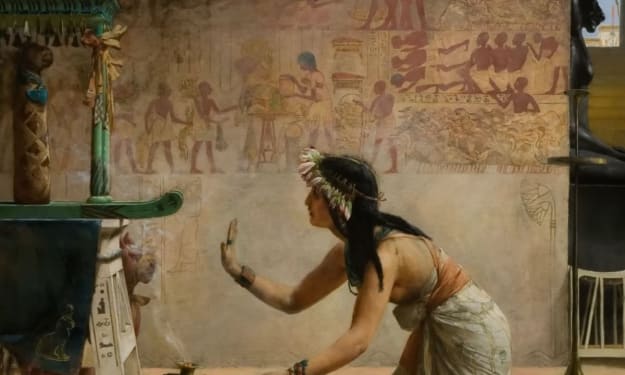
Discovering the Rich History of Cat Worship at Chicago’s Institute for the Study of Ancient Cultures Exploring ancient cultures is a fascinating journey, especially when it involves the intriguing history of cat worship in ancient Egypt. One of the best places to embark on this adventure is the Institute for the Study of Ancient Cultures (ISAC) at the University of Chicago. This hidden gem, located on the university's campus, offers a deep dive into the ancient world, with a special focus on the Middle and Near East, including the entire Nile Valley. Unveiling the Museum ISAC, previously known as the Oriental Institute, houses an impressive collection of approximately 350,000 artifacts. Despite only displaying about 2% of its collection, the museum provides a rich experience for visitors. Dr. Marc Maillot, the museum’s chief curator, explains that the museum covers everything from prehistory to the Early Middle Ages, including the newly integrated Islamic collection display. This vast chronological range ensures that visitors can explore an extensive array of historical periods. Highlights of the Collection Among the museum's treasures is a remarkable wooden painted stela from the Third Intermediate Period. This piece features the divine priestess of Amun, Djed-Khonsu Amun, presenting an offering to the god Ra-Horakhty. The artist's skill in creating a sense of transparency in the costume without mastering perspective is particularly noteworthy. This piece, like many others in the museum, helps bridge the gap between ancient and modern worlds, showing that ancient people shared many of the same feelings and experiences we do today. The Fascination with Cats A significant part of ISAC’s collection focuses on the religious and cultural importance of cats in ancient Egypt. Cats were revered not only as pets but also for their religious significance. The ancient Egyptian word for cat was "miu," a term that evokes a sense of affection. There are accounts, such as those by Herodotus, describing how Egyptians would go to great lengths to save cats, even running into burning buildings. Cat Worship in Ancient Egypt Ancient Egyptian religion often intertwined with economic and social practices. Statues of cats, like those depicting the lioness goddess Sekhmet and the gentler goddess Bastet, reveal the dual nature of feline deities. Sekhmet, known for her fierce nature, was believed to protect her father Ra, the sun god. In contrast, Bastet represented a more nurturing aspect. The myths surrounding these goddesses highlight the importance of balance and duality in Egyptian beliefs. The Darker Side of Cat Worship While many cats lived as cherished pets, archaeological evidence shows a more somber side to their story. Temples dedicated to cat deities had large pens where cats were raised. Priests would sometimes cull the herds, taking kittens as young as three or four months old, and mummify them as offerings to the gods. This practice was believed to ensure the gods' favor, which in turn would bring prosperity to Egypt. The Business of Cat Mummies The mummification of cats was a significant industry in ancient Egypt. Cat mummies, often placed in elaborate coffins, were used as offerings to deities. The practice was so widespread that large quantities of cat mummies were found in cat cemeteries, or "catacombs." In the late 1800s, about 180,000 cat mummies from a single site were exported to the UK for use as fertilizer, highlighting the vast scale of this practice. Amulets and Modern Connections The museum also features amulets, small protective charms often worn by people or placed on mummies. These amulets, made from a quartz-based pottery called faience, depict various deities, including feline ones. Today, many people still wear cat-themed jewelry, showing a continued fascination with these mystical animals. Reflecting on the Past ISAC not only preserves ancient artifacts but also engages with the ethical considerations of how these collections were acquired. The museum focuses on partnerships and education to ensure a respectful and collaborative approach to studying ancient cultures. This commitment helps bridge the gap between past and present, making the museum a place of learning and reflection. Conclusion The Institute for the Study of Ancient Cultures is a treasure trove of history, offering insights into the ancient world and its connection to our modern lives. Whether you are a cat lover or a history enthusiast, a visit to this museum promises an enriching experience that highlights the enduring bond between humans and their feline companions.
By Rabiul Molla2 years ago in History
History of the formation of Islam
The history of the formation of Islam Is a profound narrative that spans the life of the Prophet Muhammad (peace be upon him), the revelations he received, and the early development of the Muslim community. Here’s an overview of the key events and stages in the formation of Islam:
By Hari Deviyana2 years ago in History
The charisma of the prophets when spreading Islam
The charisma of the prophets when spreading Islam The charisma of the prophets, particularly Prophet Muhammad (peace be upon him), when spreading Islam was multifaceted and deeply rooted in their exceptional character, wisdom, and approach to teaching. Here are some key aspects of their charisma that made their message compelling and influential:
By Hari Deviyana2 years ago in History
Jewish life before the establishment of the State of Israel
Jewish life before the establishment of the State of Israel in 1948 is characterized by a rich and diverse history spanning millennia. This history includes various periods, regions, and cultural contexts, which contributed to the development of Jewish traditions, practices, and communities. Here are some key highlights:
By Abdullah Rajon2 years ago in History
Samurai Warriors in the Sengoku Period
At the end of the 16th century, Japan was on the brink of an imminent civil war. At that time, the Ashikaga shogunate ruled, the second feudal military regime established by the shoguns of the Ashikaga clan around the year 1336. However, after the collapse of this central power in 1573 following a series of civil wars and military conflicts, the central authority fragmented, dividing into numerous feudal states governed by warlords. For all these reasons, the Sengoku period literally means “Warring States.” Without a central power to govern everything, the feudal lords and the military or warrior caste sought absolute control of the territory. This very circumstance fueled the wars between different clans and factions from all regions of the Japanese nation. Some of the most prominent and influential clans of that period include the Takeda clan, the Uesugi clan, the Oda clan, the Tokugawa clan, the Hojo clan, the Mori clan, among others. These clans had powerful leaders and significant territories, making them key players in the struggles for power and control in Japan.
By Agustín Badariotto2 years ago in History
Why Dubai's Islands May Be a Sinking Venture
Why Dubai's Islands May Be a Sinking Venture Dubai, a city inseparable from aggressive design projects and rich ways of life, has caught worldwide consideration with its man-made islands. From the famous Palm Jumeirah to the aggressive The World, these counterfeit archipelagos stand as images of Dubai's fast turn of events and its craving to set up a good foundation for itself as a head extravagance objective. Nonetheless, regardless of their underlying charm, there are developing worries that Dubai's islands may be a sinking speculation. Here's the reason:
By robail shahzadi2 years ago in History
The Woman Who Survived the Titanic. AI-Generated.
The story of the Titanic is one of the most well-known tragedies of the 20th century, but within this catastrophe are the remarkable tales of individual survival. One of the most extraordinary stories is that of Violet Jessop, a woman who not only survived the Titanic disaster but also two other significant maritime accidents.
By Julio Javier2 years ago in History
That's Why People Don't Fly to the Moon! What Astronauts and Scientists Are Silent About
The public has yet to receive clear explanations as to why people stopped flying to the Moon. The lunar programs developed by both the Americans and the Soviet Union were closed in the early 1970s. While the Soviet Union, after the successful flight of the American spacecraft Apollo 11 to the Moon, simply admitted its defeat in this critical race, the Americans unexpectedly and sharply abandoned further flights, brushing off questions with a rather primitive response, claiming they saw no significant scientific value in Moon missions to justify the enormous budget expenditure. But then why do people not even plan to go to the Moon now? After all, technology has advanced so much that Elon Musk, with his MCT program, plans a manned mission to Mars with a surface landing as early as 2025.
By Vitalii Petrov2 years ago in History