World History
VIETNAM WAR - The Harsh Reality of Ambush Warfare
Blood and Betrayal: The Harsh Reality of Ambush Warfare I'll just you from here Only a tree or bush could hide an enemy ready to annihilate them. Ambushes were the order of the day and they always ended in a shower of blood for both sides. In this new installment of military history, we're going to reconstruct in great detail three important offensives carried out by the Viet Cong (VC), a series of surprise attacks in which the powerful United States Army was totally humiliated by local guerrillas. Put on your bulletproof vest, grab your M16, and let's get started.
By KiNGuyenHigh2 years ago in History
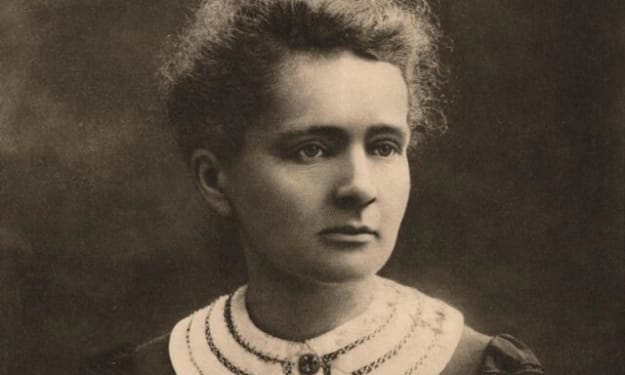
Marie Curie: The Trailblazing Scientist Who Revolutionized Science and Medicine
# Marie Curie: The Pioneering Scientist Who Changed the World Marie Curie is one of the most influential figures in the history of science. Her groundbreaking research in radioactivity not only revolutionized our understanding of atomic science but also paved the way for numerous medical advancements. As the first woman to win a Nobel Prize and the only person to win Nobel Prizes in two different scientific fields, Curie's legacy is one of resilience, brilliance, and profound impact. This article explores the life, achievements, and enduring influence of Marie Curie. ## Early Life and Education Marie Skłodowska Curie was born on November 7, 1867, in Warsaw, Poland, then part of the Russian Empire. Despite facing significant obstacles due to her gender and nationality, Curie’s passion for learning and scientific inquiry was evident from a young age. ### Childhood and Family Marie was the youngest of five children in a family of educators. Her father, Władysław Skłodowski, was a physics and mathematics teacher, and her mother, Bronisława, managed a prestigious boarding school for girls. Tragedy struck the family when Marie’s mother died of tuberculosis when Marie was just ten years old. Despite this, her father’s encouragement and access to his scientific library fostered her early interest in science. ### Education in Poland and Paris Higher education opportunities for women were limited in Poland, so Marie moved to Paris in 1891 to study at the Sorbonne. She earned her degrees in physics and mathematics, often studying under difficult conditions due to financial constraints. Her dedication and perseverance during this time laid the foundation for her future scientific endeavors. ## Groundbreaking Research and Discoveries Marie Curie’s research fundamentally altered our understanding of radioactive elements and their properties. Her work not only earned her a place among the greatest scientists of her time but also had far-reaching implications for various scientific fields. ### Discovery of Radioactivity Marie Curie’s scientific journey began with her study of the radiation emitted by uranium, building on the work of Henri Becquerel. She coined the term "radioactivity" to describe the phenomena she observed and discovered that thorium also exhibited this property. ### Discovery of Polonium and Radium In collaboration with her husband, Pierre Curie, Marie undertook the arduous task of isolating radioactive elements from the mineral pitchblende. Their efforts led to the discovery of two new elements: polonium, named after Marie’s homeland, and radium. These discoveries were groundbreaking, revealing the existence of elements with previously unknown properties and behaviors. ### Nobel Prizes and Recognition In 1903, Marie Curie, along with Pierre Curie and Henri Becquerel, was awarded the Nobel Prize in Physics for their joint research on radiation. This recognition made her the first woman to receive a Nobel Prize. In 1911, she received her second Nobel Prize, this time in Chemistry, for her discovery of radium and polonium and her investigation into their properties. Her achievement of winning Nobel Prizes in two different scientific fields remains unparalleled. ## Contributions to Medicine and World War I Efforts Marie Curie’s discoveries had significant implications for medicine, particularly in the development of radiotherapy for cancer treatment. Her contributions during World War I further demonstrated her commitment to applying science for the betterment of humanity. ### Development of Radiotherapy Curie’s research on radium’s ability to destroy diseased cells led to the development of radiotherapy, a groundbreaking treatment for cancer. Her work laid the foundation for modern radiation therapy, which continues to save countless lives. ### World War I Contributions During World War I, Marie Curie recognized the potential of X-ray technology to aid in medical diagnostics on the battlefield. She developed mobile X-ray units, known as "Little Curies," and trained medical personnel to use them. Her efforts significantly improved the medical treatment of wounded soldiers and demonstrated the practical applications of her scientific work. ## Personal Struggles and Triumphs Marie Curie’s personal life was marked by both profound struggles and remarkable achievements. Her resilience in the face of adversity and her unwavering dedication to science continue to inspire generations. ### Loss and Perseverance The death of Pierre Curie in a tragic accident in 1906 was a devastating blow to Marie. Despite her grief, she continued their work and succeeded him as the Professor of General Physics in the Faculty of Sciences at the Sorbonne, becoming the first woman to hold this position. ### Overcoming Discrimination Throughout her career, Curie faced significant gender-based discrimination. Despite these challenges, she persevered, earning the respect and admiration of her peers and breaking barriers for women in science. Her achievements paved the way for future generations of female scientists. ## Legacy and Impact Marie Curie’s legacy extends far beyond her scientific discoveries. Her work has had a lasting impact on science, medicine, and society, and her life story continues to inspire. ### Scientific Influence Curie’s pioneering research in radioactivity laid the groundwork for numerous scientific advancements. Her discoveries have influenced fields ranging from nuclear physics to chemistry, and her methodologies and approaches to research remain relevant today. ### Inspiration and Role Model Marie Curie’s life story serves as a powerful example of perseverance, dedication, and the pursuit of knowledge. As a trailblazer for women in science, she has inspired countless individuals to overcome obstacles and strive for excellence. ### Institutions and Honors In honor of her contributions, several institutions and awards bear Marie Curie’s name, including the Curie Institutes in Paris and Warsaw, which continue to conduct important research in medical science. Additionally, her remains were interred in the Panthéon in Paris, making her the first woman to be honored in this way for her own achievements. ## Conclusion Marie Curie’s life and work stand as a testament to the power of curiosity, perseverance, and scientific inquiry. Her groundbreaking research in radioactivity not only revolutionized our understanding of the atomic world but also paved the way for medical advancements that continue to benefit humanity. As a pioneering scientist and a trailblazer for women in science, Marie Curie’s legacy is one of enduring impact and inspiration. Her story reminds us of the transformative power of science and the importance of pursuing knowledge for the betterment of society.
By Mbeha maliwa 2 years ago in History
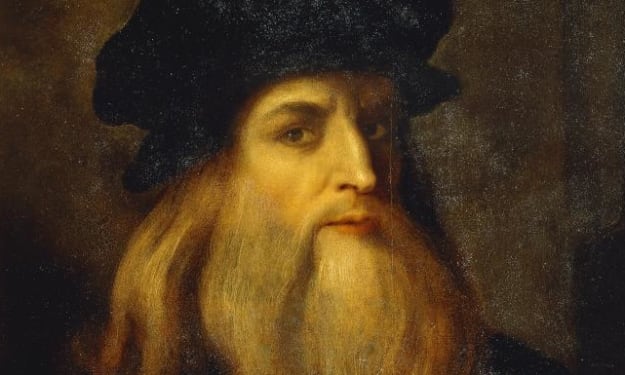
Leonardo da Vinci: The Polymath Who Redefined Art and Science. AI-Generated.
# Leonardo da Vinci: The Renaissance Man Who Changed the World Leonardo da Vinci is a name synonymous with genius. Born in 1452 in the small town of Vinci in Italy, Leonardo’s insatiable curiosity and inventive mind made him one of the most influential figures of the Renaissance. His contributions spanned a multitude of fields, including art, science, engineering, and anatomy. This article explores the life and legacy of Leonardo da Vinci, highlighting his remarkable achievements and enduring influence. ## Early Life and Education Leonardo was born on April 15, 1452, as the illegitimate son of a wealthy notary, Ser Piero, and a peasant woman, Caterina. Despite his illegitimacy, he received a basic education in reading, writing, and mathematics. His artistic talent was evident from a young age, and he was apprenticed to the renowned artist Andrea del Verrocchio in Florence around the age of 15. ### Apprenticeship with Verrocchio At Verrocchio’s workshop, Leonardo honed his skills in various artistic disciplines, including painting, sculpture, and metalworking. He also gained exposure to scientific and engineering concepts. This period was crucial in shaping Leonardo’s multifaceted approach to learning and creation. ## Artistic Masterpieces Leonardo da Vinci is perhaps best known for his contributions to art. His masterpieces, characterized by their detail, realism, and innovative techniques, have left an indelible mark on the history of art. ### The Last Supper Painted between 1495 and 1498, "The Last Supper" is one of Leonardo’s most famous works. This mural, located in the Convent of Santa Maria delle Grazie in Milan, depicts the moment Jesus announces that one of his disciples will betray him. Leonardo’s use of perspective, composition, and emotional expression revolutionized religious art. ### Mona Lisa The "Mona Lisa," painted between 1503 and 1506, is arguably the most famous painting in the world. Housed in the Louvre Museum in Paris, this portrait of Lisa Gherardini is celebrated for its enigmatic expression, masterful use of sfumato (a technique for blending colors and tones), and intricate details. The "Mona Lisa" exemplifies Leonardo’s ability to capture the complexity of human emotion and personality. ## Scientific and Engineering Innovations Leonardo’s contributions extend far beyond the realm of art. His scientific inquiries and engineering designs demonstrate his visionary thinking and profound understanding of the natural world. ### Anatomical Studies Leonardo’s fascination with the human body led him to conduct extensive anatomical studies. He dissected numerous corpses to understand the structure and function of muscles, bones, and organs. His detailed anatomical drawings, including the famous Vitruvian Man, provided unprecedented insights into human physiology and influenced medical science for centuries. ### Engineering and Invention Leonardo’s notebooks are filled with designs for various machines and devices, many of which were centuries ahead of their time. His sketches include concepts for helicopters, tanks, submarines, and mechanical looms. While many of these inventions were never built, they showcase Leonardo’s remarkable foresight and creativity. ### Scientific Observations Leonardo made significant contributions to fields such as optics, hydrodynamics, and geology. He studied the behavior of light and shadow, the movement of water, and the formation of fossils. His meticulous observations and recordings laid the groundwork for future scientific discoveries. ## The Renaissance Man Leonardo da Vinci embodies the ideal of the Renaissance man—a person whose expertise spans multiple disciplines. His ability to integrate art, science, and engineering into a cohesive body of work set him apart from his contemporaries and solidified his legacy as one of history’s greatest polymaths. ### Holistic Approach to Knowledge Leonardo’s holistic approach to knowledge allowed him to make connections between seemingly unrelated fields. He believed that understanding the natural world required both artistic sensitivity and scientific rigor. This interdisciplinary mindset enabled him to achieve breakthroughs that were not confined to any single domain. ### Influence on Future Generations Leonardo’s influence extends far beyond his lifetime. His works have inspired countless artists, scientists, and engineers. Figures such as Michelangelo, Galileo, and Isaac Newton built upon Leonardo’s ideas, pushing the boundaries of human knowledge and creativity. ## Personal Life and Legacy Despite his immense contributions, much about Leonardo’s personal life remains shrouded in mystery. He never married and had no known children, and his personal relationships are largely undocumented. However, his work and legacy speak volumes about his character and intellect. ### Later Years In the final years of his life, Leonardo worked for King Francis I of France, who provided him with a comfortable residence at the Château du Clos Lucé. There, he continued to work on his projects and studies until his death on May 2, 1519. ### Enduring Legacy Leonardo da Vinci’s legacy is one of boundless curiosity, relentless pursuit of knowledge, and extraordinary creativity. His contributions to art, science, and engineering continue to inspire and influence modern thought and innovation. As a true Renaissance man, Leonardo’s life exemplifies the power of interdisciplinary learning and the enduring impact of human ingenuity. ## Conclusion Leonardo da Vinci’s life and work remind us of the limitless potential of the human mind. His ability to merge art and science, his visionary inventions, and his profound understanding of the natural world have left an indelible mark on history. As we continue to explore new frontiers of knowledge and creativity, Leonardo’s legacy serves as a timeless inspiration to strive for excellence and to see the world through a lens of curiosity and wonder.
By Mbeha maliwa 2 years ago in History
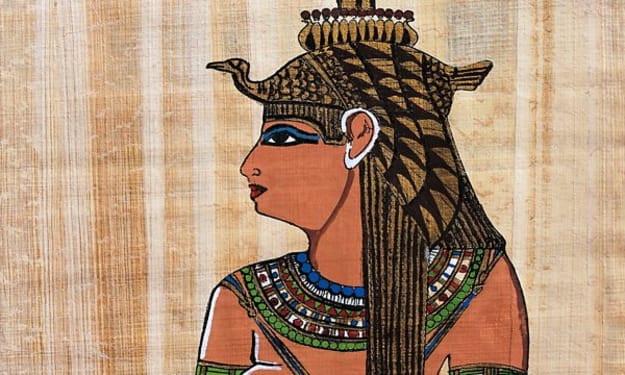
Cleopatra: The Last Pharaoh and Her Enduring Legacy. AI-Generated.
# The Enigmatic Cleopatra: Queen, Diplomat, and Icon Cleopatra VII Philopator, commonly known simply as Cleopatra, is one of the most renowned figures of ancient history. Her life, marked by power, romance, and tragedy, has captivated historians, writers, and filmmakers for centuries. As the last active ruler of the Ptolemaic Kingdom of Egypt, Cleopatra's legacy is a blend of myth and reality. This article delves into the life of Cleopatra, exploring her rise to power, her political acumen, her relationships with Julius Caesar and Mark Antony, and the enduring impact of her legacy. ## Early Life and Rise to Power Cleopatra was born in 69 BCE to the Ptolemaic dynasty, a Greek family that ruled Egypt after the death of Alexander the Great. The Ptolemies had adopted many Egyptian customs and traditions, but they remained culturally Greek. Cleopatra's full name, Cleopatra Thea Philopator, means "Cleopatra the Father-Loving Goddess." ### Education and Intelligence Cleopatra was exceptionally well-educated for her time. She spoke several languages, including Greek, Egyptian, Hebrew, and Latin, among others. Her linguistic skills and deep understanding of various cultures were crucial to her diplomatic endeavors and helped solidify her reputation as a shrewd and intelligent leader. ### Ascension to the Throne Cleopatra ascended to the throne in 51 BCE, following the death of her father, Ptolemy XII Auletes. Initially, she co-ruled with her younger brother, Ptolemy XIII, as was customary in the Ptolemaic tradition. However, tensions between the siblings quickly escalated, leading to a civil war. Cleopatra fled to Syria but soon returned with an army to reclaim her throne. ## The Alliance with Julius Caesar Cleopatra's quest for power took a dramatic turn when she allied herself with Julius Caesar, one of Rome's most powerful figures. Their relationship was both political and romantic, and it significantly influenced the course of Egyptian and Roman history. ### The Famous Encounter According to historical accounts, Cleopatra famously smuggled herself into Alexandria, wrapped in a rug or a linen sack, to meet Caesar. Her bold move impressed the Roman general, and they quickly formed a strategic alliance. Cleopatra's charm, intelligence, and political acumen won Caesar's support in her struggle against Ptolemy XIII. ### Restoration to Power With Caesar's military backing, Cleopatra was restored to the throne. Ptolemy XIII drowned in the Nile while trying to escape after a defeat. Cleopatra then co-ruled with her younger brother, Ptolemy XIV, whom she later married as per custom, though she effectively held the reins of power. ### Birth of Caesarion Cleopatra and Caesar's relationship bore a son, Ptolemy XV Philopator Philometor Caesar, commonly known as Caesarion. Cleopatra hoped that Caesarion would eventually be recognized as Caesar's legitimate heir, which would secure her dynasty's future. ## Cleopatra and Mark Antony After Caesar's assassination in 44 BCE, Cleopatra's political landscape shifted dramatically. She soon allied herself with another powerful Roman figure, Mark Antony, one of Caesar's loyal supporters and a member of the Second Triumvirate. ### The Alliance and Romance Cleopatra met Mark Antony in 41 BCE, and their meeting marked the beginning of both a political alliance and a legendary romance. Antony needed Cleopatra's financial support and military aid to secure his position in Rome, while Cleopatra sought to protect Egypt's sovereignty and her throne. ### The Donations of Alexandria In 34 BCE, Antony and Cleopatra celebrated a grand ceremony known as the Donations of Alexandria. During this event, Antony declared Cleopatra the "Queen of Kings" and granted various territories to her and their children. This act was controversial in Rome and fueled the animosity between Antony and Octavian, Caesar's adopted heir and future Emperor Augustus. ### The Final Conflict with Rome The rivalry between Antony and Octavian culminated in the Battle of Actium in 31 BCE. Cleopatra and Antony's combined forces were decisively defeated by Octavian's fleet. Following their defeat, Antony and Cleopatra retreated to Alexandria, where they made a final stand. ## The Death of Cleopatra Cleopatra's life ended in a dramatic and tragic manner, adding to her enduring legend. After Antony's defeat, he committed suicide, believing that Cleopatra had already done the same. Faced with the prospect of being paraded in a Roman triumph and losing her kingdom, Cleopatra chose to end her own life. ### The Method of Suicide The exact method of Cleopatra's suicide remains a topic of debate among historians. According to the most popular account, Cleopatra allowed an asp, a venomous snake, to bite her. Other theories suggest she may have used a poisonous ointment or a sharp implement. Regardless of the method, Cleopatra's death marked the end of the Ptolemaic dynasty and the beginning of Roman rule in Egypt. ## Cleopatra's Legacy Cleopatra's legacy is a complex blend of historical facts, romanticized stories, and cultural depictions. Her life and reign have inspired countless works of art, literature, and film, making her one of history's most iconic and enduring figures. ### A Powerful Female Ruler Cleopatra remains a symbol of female power and intelligence. She navigated the treacherous waters of politics and diplomacy with skill and determination, securing her place in history as one of the most formidable leaders of her time. ### Cultural Depictions Cleopatra's story has been retold and reimagined in various cultural forms. Shakespeare's play "Antony and Cleopatra," and the 1963 film starring Elizabeth Taylor, are just a few examples of how her life has captured the popular imagination. ### Modern Interpretations In recent years, scholars have sought to reexamine Cleopatra's life and legacy, moving beyond the stereotypes and misconceptions that have often overshadowed her true accomplishments. These modern interpretations highlight her political acumen, her efforts to protect Egypt's independence, and her role as a bridge between the ancient Egyptian and Greco-Roman worlds. ## Conclusion Cleopatra VII Philopator's life was marked by extraordinary achievements, dramatic events, and enduring mysteries. As the last Pharaoh of Egypt, she navigated a complex political landscape, forging alliances with some of Rome's most powerful figures. Her intelligence, charisma, and determination left an indelible mark on history. Today, Cleopatra remains an enigmatic and captivating figure, symbolizing the intricate interplay of power, politics, and personal ambition in the ancient world.
By Mbeha maliwa 2 years ago in History
The Hidden Challenge: How Overthinking Sabotages Hitters and How to Overcome It. AI-Generated.
# The Common Pitfalls of Hitters: Understanding Their Biggest Mistake Hitting in baseball is an intricate blend of skill, strategy, and mental fortitude. It's an art form that requires years of practice and unwavering dedication. Despite this, even the best hitters can fall into traps that hinder their performance. One of the most significant mistakes hitters make involves a fundamental aspect of the game that often gets overlooked. This article will explore this critical error, examine its causes, and provide strategies to help hitters overcome it. ## The Biggest Mistake: Overthinking at the Plate One of the most common and detrimental mistakes hitters make is overthinking at the plate. Overthinking can lead to hesitation, indecision, and a lack of confidence, all of which negatively impact performance. This mental barrier can prevent hitters from reacting instinctively, resulting in missed opportunities and reduced effectiveness. ### The Causes of Overthinking Overthinking can stem from various sources, including pressure to perform, fear of failure, and a lack of confidence. These factors can create a mental block that prevents hitters from executing their natural swing and responding to the pitch as it comes. #### Pressure to Perform Hitters often face immense pressure to perform, whether it’s from coaches, teammates, or their own expectations. This pressure can lead to a heightened sense of anxiety, causing them to overanalyze every aspect of their swing and approach. #### Fear of Failure Fear of failure is another significant contributor to overthinking. The desire to avoid making mistakes can make hitters overly cautious, leading them to second-guess their decisions at the plate. #### Lack of Confidence A lack of confidence in their abilities can also cause hitters to overthink. When hitters doubt their skills, they may focus too much on the mechanics of their swing rather than trusting their instincts. ### The Impact of Overthinking Overthinking can have several detrimental effects on a hitter’s performance. It can slow down their reaction time, disrupt their timing, and reduce their ability to make solid contact with the ball. #### Slowed Reaction Time When hitters overthink, their reaction time slows down. Instead of reacting instinctively to the pitch, they may hesitate, trying to analyze the situation. This delay can cause them to miss pitches they would otherwise be able to hit. #### Disrupted Timing Overthinking can also disrupt a hitter’s timing. Baseball is a game of milliseconds, and even a slight hesitation can throw off a hitter’s rhythm. This can result in swinging too early or too late, leading to missed opportunities. #### Reduced Contact Quality When hitters are overthinking, they may focus too much on the mechanics of their swing rather than making solid contact with the ball. This can result in weak hits or swings and misses. ## Strategies to Overcome Overthinking Fortunately, there are several strategies hitters can use to overcome overthinking and improve their performance at the plate. ### Develop a Routine Having a consistent pre-at-bat routine can help hitters stay focused and calm. This routine can include practices such as deep breathing, visualization, and positive self-talk. #### Deep Breathing Deep breathing can help hitters relax and reduce anxiety. Taking a few deep breaths before stepping into the batter’s box can help clear the mind and improve focus. #### Visualization Visualization is another powerful tool for reducing overthinking. Hitters can visualize themselves making successful contact with the ball, which can build confidence and prepare the mind for success. #### Positive Self-Talk Positive self-talk can help hitters stay confident and focused. Reminding themselves of their strengths and past successes can help combat negative thoughts and reduce overthinking. ### Trust Your Preparation Hitters need to trust the work they’ve put in during practice and believe in their abilities. Confidence in their preparation can help them stay relaxed and focused at the plate. #### Focus on the Process Focusing on the process rather than the outcome can help hitters stay in the moment and reduce overthinking. Concentrating on things they can control, such as their approach and swing mechanics, can help them stay grounded and perform better. #### Embrace Failure Embracing failure as a part of the game can help reduce fear and anxiety. Understanding that even the best hitters fail more often than they succeed can help put things in perspective and reduce overthinking. ### Simplify Your Approach Simplifying their approach at the plate can help hitters reduce overthinking and improve performance. Focusing on a few key principles rather than trying to do too much can make a big difference. #### Stay Selective Hitters should focus on being selective and waiting for pitches they can drive. This can help reduce pressure and prevent them from swinging at bad pitches. #### Focus on Making Contact Rather than trying to hit home runs or make perfect swings, hitters should focus on making solid contact with the ball. This can help reduce overthinking and improve overall performance. ## The Role of Coaches and Mentors Coaches and mentors play a crucial role in helping hitters overcome overthinking. They can provide guidance, support, and strategies to help hitters stay focused and confident. ### Provide Positive Reinforcement Positive reinforcement can help build confidence and reduce anxiety. Coaches should focus on highlighting hitters’ strengths and successes rather than dwelling on mistakes. ### Create a Supportive Environment Creating a supportive and positive environment can help reduce pressure and anxiety. Coaches should foster a team culture that encourages growth, learning, and resilience. ### Offer Constructive Feedback Constructive feedback can help hitters improve without increasing pressure or anxiety. Coaches should provide specific, actionable advice that focuses on improvement rather than criticism. ## Conclusion Overthinking is one of the most common and detrimental mistakes hitters make at the plate. It can lead to hesitation, disrupted timing, and reduced contact quality. However, by developing a routine, trusting their preparation, simplifying their approach, and seeking support from coaches and mentors, hitters can overcome this mental barrier and improve their performance. Understanding and addressing the causes of overthinking can help hitters stay focused, confident, and successful at the plate.
By Mbeha maliwa 2 years ago in History
Bangladesh
In the heart of the Indian subcontinent, nestled along the lush, fertile plains and the serpentine rivers of Bengal, lies a land of profound beauty and resilience—Bangladesh. The story of its birth is not just a tale of political struggle; it is a saga of a people's undying spirit, a nation's fight for its identity, and the sacrifices of countless souls who dreamed of freedom.
By Aminu Muhammad2 years ago in History
Salute to America 250: HONOR and GLORY
1. Introduction The 250th anniversary of America is a time for celebration and reflection. It's a moment to honor the past, acknowledge the present, and look forward to the future. But what does it mean to salute America on this significant milestone? How do we encapsulate the honor and glory of 250 years? Let's explore the journey of a nation that has continually strived for greatness.
By AJAY KUMAR2 years ago in History
End Bad Government In Nigeria
The cry to end bad governance in Nigeria is not merely a political slogan; it is the heart-wrenching plea of millions yearning for dignity, justice, and a chance at a better life. It is the silent scream of a nation burdened by decades of corruption, inefficiency, and broken promises. It is the collective voice of a people who have endured too much for too long, standing at the precipice of despair yet holding on to the fragile hope of change.
By Aminu Muhammad2 years ago in History
The Genesis of Microsoft:
In the mid-1970s, the world was on the cusp of a technological revolution. A young Bill Gates, a Harvard dropout with a relentless passion for computers, and his childhood friend, Paul Allen, stood at the forefront of this transformation. Their shared dream of a future where computers were accessible to everyone ignited a journey that would change the world forever. In 1975, in a modest Albuquerque motel room, they founded Microsoft, a name that would soon become synonymous with personal computing.
By Aminu Muhammad2 years ago in History