World History
History of india
## THE HISTORY OF INDIA: A JOURNEY THROUGH TIME India, a land of incredible diversity, has a history that stretches back thousands of years. Its story is one of rich cultural heritage, dynamic empires, religious developments, and significant contributions to science, art, and philosophy. The history of India is a tapestry woven with the threads of many civilizations, each contributing to the country's unique identity. ### PREHISTORIC AND ANCIENT INDIA The history of India begins with the emergence of the first known civilizations in the region, dating back to the Indus Valley Civilization around 2500 BCE. This Bronze Age civilization, located in what is now Pakistan and northwest India, was one of the world's earliest urban cultures. The cities of Harappa and Mohenjo-Daro were noted for their advanced urban planning, impressive architecture, and sophisticated system of weights and measures. The decline of the Indus Valley Civilization around 1900 BCE coincided with the arrival of the Indo-Aryans, who migrated into the Indian subcontinent from Central Asia. This period, known as the Vedic Age (1500-500 BCE), is named after the Vedas, the oldest sacred texts of Hinduism, which were composed during this time. The Vedic Age laid the foundations for Indian society, religion, and culture. The caste system, which became a defining feature of Indian social organization, began to take shape during this era. ### THE RISE OF EMPIRES AND RELIGIONS The first significant empire to unify much of India was the Maurya Empire (322-185 BCE), founded by Chandragupta Maurya. Under the rule of Emperor Ashoka, the Maurya Empire reached its zenith. Ashoka, after a bloody conquest of Kalinga, converted to Buddhism and became a patron of the religion, promoting its spread throughout Asia. His reign is marked by the propagation of Buddhist values and the erection of the famous Ashokan pillars, inscribed with edicts on governance and moral conduct. Following the decline of the Maurya Empire, the Indian subcontinent saw the rise of the Gupta Empire (circa 320-550 CE), often referred to as the "Golden Age" of India. Under rulers like Chandragupta I and Samudragupta, the Gupta Empire achieved remarkable advancements in science, mathematics, astronomy, literature, and art. The concept of zero, the decimal system, and significant works in Sanskrit literature, such as Kalidasa's plays, were products of this period. Hinduism experienced a revival during the Gupta era, and many of the religious and cultural practices that define Indian society today were solidified during this time. ### MEDIAEVAL INDIA AND THE ARRIVAL OF ISLAM The fall of the Gupta Empire led to a period of fragmentation, with numerous regional kingdoms vying for power. This era saw the rise of powerful dynasties such as the Chalukyas, Pallavas, Cholas, and Rashtrakutas in the south, and the Rajputs in the north. The period was also marked by the arrival of Islam in India, beginning with the Arab conquest of Sindh in 711 CE. The establishment of the Delhi Sultanate in 1206 CE marked the beginning of Muslim rule in India. The Sultanate, ruled by a series of Turkic and Afghan dynasties, was a period of significant cultural synthesis. Persian art, architecture, and administrative practices were introduced, blending with Indian traditions to create a unique Indo-Islamic culture. The Sultans of Delhi were also instrumental in spreading Islam across the Indian subcontinent, particularly through the influence of Sufi saints. The Delhi Sultanate eventually gave way to the Mughal Empire in 1526, founded by Babur, a descendant of Timur and Genghis Khan. The Mughal Empire, under rulers like Akbar, Jahangir, Shah Jahan, and Aurangzeb, became one of the most powerful and culturally rich empires in the world. Akbar's policy of religious tolerance and his efforts to integrate Hindus and Muslims into the administration fostered a sense of unity in a diverse society. The Mughal era is also renowned for its architectural achievements, including the construction of the Taj Mahal by Shah Jahan, a symbol of India's cultural heritage. ### COLONIAL INDIA AND THE STRUGGLE FOR INDEPENDENCE The decline of the Mughal Empire in the 18th century coincided with the rise of European colonial powers, particularly the British. The British East India Company initially came to India as traders but gradually expanded its control through a combination of military conquest and political manipulation. By the mid-19th century, the British Crown had taken direct control of India, marking the beginning of the British Raj. The colonial period was a time of profound change in India. The British introduced Western education, legal systems, and infrastructure, but their policies also led to the exploitation of India's resources and the impoverishment of its people. The growing discontent with British rule culminated in the Indian Rebellion of 1857, also known as the First War of Independence. Although the rebellion was suppressed, it marked the beginning of a nationalistic movement that would eventually lead to India's independence. The late 19th and early 20th centuries saw the rise of Indian nationalism, led by figures like Mahatma Gandhi, Jawaharlal Nehru, and Subhas Chandra Bose. Gandhi's philosophy of non-violent resistance, or Satyagraha, became the cornerstone of the Indian independence movement. The struggle for independence was marked by mass protests, civil disobedience, and significant sacrifices by the Indian people. After decades of struggle, India finally achieved independence from British rule on August 15, 1947. ### POST-INDEPENDENCE INDIA The partition of India in 1947, which led to the creation of Pakistan, was a traumatic event that resulted in widespread violence and displacement. Despite these challenges, India emerged as the world's largest democracy, committed to a secular and socialist framework. The early years of independence were marked by efforts to build a self-sufficient economy, promote social justice, and maintain unity in a diverse and multi-ethnic society. Under the leadership of Prime Ministers like Jawaharlal Nehru, Indira Gandhi, and Atal Bihari Vajpayee, India made significant strides in various fields, including agriculture (through the Green Revolution), space exploration, and information technology. India also became a major player on the global stage, advocating for the rights of developing countries and promoting non-alignment during the Cold War. ### MODERN INDIA In recent decades, India has undergone rapid economic transformation, emerging as one of the world's largest economies. The liberalization of the Indian economy in the 1990s led to unprecedented growth, but also brought challenges such as income inequality and environmental degradation. India today is a nation of contrasts, where traditional practices coexist with modern technology, and ancient philosophies influence contemporary thought. India's diversity, reflected in its numerous languages, religions, and cultural practices, remains one of its greatest strengths. The country continues to grapple with complex issues such as poverty, corruption, and social inequality, but its vibrant democracy and resilient society offer hope for the future. In conclusion, the history of India is a testament to the enduring strength and adaptability of its people. From ancient civilizations to modern-day achievements, India's journey through time is a remarkable story of resilience, innovation, and cultural richness. As the nation continues to evolve, it carries forward a legacy that has shaped not only its own destiny but also the course of world history.
By Mridul Kushwah2 years ago in History
The Death of a King
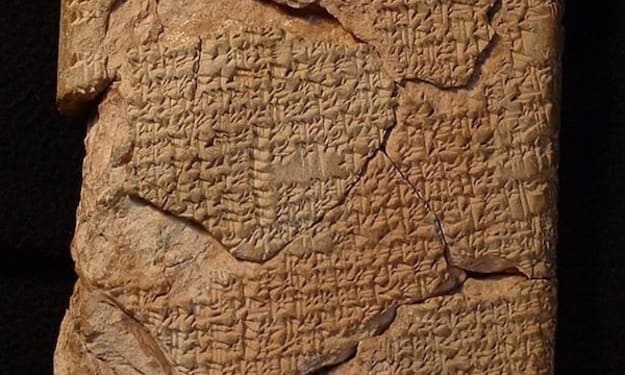
This image displays a cuneiform tablet that has been decoded by the researchers. Researchers have successfully interpreted ancient cuneiform tablets, dating back 4,000 years, which were discovered over a century ago in what is currently known as Iraq. These tablets detail how certain lunar eclipses were believed to foretell death, devastation, and disease.
By Kevin MacELwee2 years ago in History
The Most Important Invention Of The Middle Ages
An investigation into the brilliance of the printing press. Constructing a medieval printing press to explore the historical and technological advancements of the 15th century. Grasping the effectiveness and significance of movable type in the printing mechanism. Gutenberg's invention of the printing press transformed both technology and culture. This innovation facilitated the mass production of books, disseminating new ideas throughout Europe. The Gutenberg Bible marked the dawn of a new information era in Europe. Mastering the use of a chisel for carving is essential; utilizing approximately one-third of the chisel enhances control. It is preferable to carve at a shallow depth rather than excessively deep; adjustments can be made manually for precision. The early life and physical characteristics of Johann Gutenberg remain largely unknown. It is estimated that he was born around 1400, a period that bridged the medieval and Renaissance eras. Limited information exists regarding Gutenberg's formative years, although it is probable that he attended a university and engaged with books. Printing technology transformed the production of accurate book copies and their distribution. While church authorities held a monopoly on education, they acknowledged the influence of a widely accepted Bible version. Gutenberg was an engineer, merchant, and scholar, responding to the increasing demand for books, which presented the opportunity for significant wealth. His printing press was developed from the wine presses utilized in the German wine industry.
By Isaac Ekow Anyidoho2 years ago in History
And the Sun Disappeared
A Catastrophic Climate Event transpired, characterized by a dimming sun, blood rain, dust storms, and a prolonged winter lasting two years, followed by drought, famine, disease, and widespread mortality. Research conducted by David Keys indicates that this event significantly influenced historical trajectories, drawing upon expert consultations and the examination of ancient records. Analysis of tree rings has provided insights into historical climatic conditions, revealing variations in width that correspond to periods of favorable and adverse weather. A specialized computer program has been employed to correlate tree ring patterns for accurate dating and analysis. The year 536 is noted for its exceptionally cold temperatures and diminished sunlight, which led to agricultural failures. The small and widely scattered vessels from that year suggest damage due to frost. Archaeological findings, along with the construction of crannogs in Ireland, corroborate the severe conditions resulting from this climatic upheaval. The sun experienced an unprecedented dimming during 535-536 AD, with various accounts indicating darkness that persisted for 18 months, causing widespread alarm among the populace. Historians have documented climatic disturbances, including cold springs, insufficient rainfall, and failing crops. A significant impact from a large comet or asteroid could have triggered such a climatic disaster, necessitating an object approximately four kilometers wide for an asteroid or six kilometers for a comet to induce substantial climatic changes. The aftermath of such an impact would have produced a brilliant fireball and a deafening sound; however, no contemporary civilization recorded any such occurrence. The investigation into the potential for a comet or asteroid impact in 536 AD remains ongoing.
By Isaac Ekow Anyidoho2 years ago in History
The Evolution of Music: From Classical Music to Contemporary Genres
Introduction Music has always held a special place in human culture, serving not only as a form of entertainment but also as a means of expression and communication. From the sophisticated melodies of classical music to the energetic rhythms of rock and the complex digital productions of today, the evolution of music tells the story of humanity through its notes. In this article, we will explore how music has transformed over the centuries, influenced by social, technological, and cultural changes, and how it continues to evolve in an increasingly diverse musical landscape.
By Fabio Smiraglia2 years ago in History
The Legacy of "Ravana": A Comprehensive Study of Sri Lankan History and Mythology
Introduction Ravana, the demon king of Lanka, is a figure of immense significance in South Asian mythology, particularly within the context of the Ramayana, one of Hinduism's most revered epics. In this ancient narrative, Ravana is depicted as the principal antagonist who abducts Sita, leading to a monumental struggle between the forces of good and evil. However, Ravana’s impact transcends the confines of the Ramayana, particularly within Sri Lankan culture where he is regarded with a complex blend of reverence and critique. This article explores the multifaceted legacy of Ravana, examining his historical context, cultural significance, and enduring influence in Sri Lankan heritage.
By Ashen Asmadala2 years ago in History
Top 10 Bizarre Ancient Cultures That Balanced Tradition and Transformation
1. The Padaung Tribe: The Mesmerizing World of Neck Stretching The Padaung tribe, a subgroup of the Kayan people in Myanmar, is globally renowned for their unique practice of neck stretching using brass rings. This visually striking tradition, also known as the "long-necked women," is more than just an aesthetic choice—it carries deep cultural and symbolic significance. For centuries, the Padaung have adhered to this practice as a rite of passage and a symbol of beauty and social status. Young girls begin wearing the rings at a young age, gradually adding more as they grow older, leading to elongated necks that become a defining feature of their identity. Despite the influx of modern influences and changing times, the Padaung continue to uphold this ancient custom, demonstrating a remarkable balance between preserving their heritage and adapting to contemporary life. This blend of tradition and modernity highlights the Padaung’s commitment to maintaining their cultural practices while navigating the challenges of the modern world. 2. The Ancient Egyptians: Preserving Heritage Amidst Innovation Ancient Egypt, one of the most iconic civilizations in history, is famous for its monumental achievements, including the construction of the pyramids. The Egyptians were pioneers in many fields, including engineering, medicine, and art. Their ability to incorporate new technologies and ideas while preserving their rich cultural traditions is a testament to their innovative spirit. The construction of the pyramids involved advanced engineering techniques that were ahead of their time. The use of precise measurements and the development of tools to move massive stone blocks demonstrate their ingenuity. Simultaneously, the Egyptians maintained a strong cultural identity through their art, religious practices, and hieroglyphic writing. They blended traditional religious beliefs with new scientific knowledge, creating a civilization that could adapt and thrive over millennia. This balance between innovation and tradition allowed Ancient Egypt to leave a lasting legacy that continues to captivate and inspire modern audiences. 3. The Ancient Greeks: A Fusion of Philosophy and Adaptation The Ancient Greeks are renowned for their profound contributions to philosophy, theatre, and art. They established foundational concepts in Western thought and culture that continue to influence us today. Greek culture was marked by a dynamic fusion of ideas, as they absorbed and adapted influences from neighboring civilizations such as the Phoenicians, Egyptians, and Persians. Greek philosophy, as developed by thinkers like Socrates, Plato, and Aristotle, was deeply rooted in critical thinking and exploration of fundamental concepts. Their advancements in theatre, exemplified by playwrights like Sophocles and Aristophanes, introduced dramatic forms and storytelling techniques that are still studied and performed. The Greeks were also adept at incorporating artistic influences from other cultures, enriching their own traditions and creating a vibrant cultural landscape. Their ability to blend traditional Greek values with external influences demonstrates a remarkable adaptability that contributed to their enduring legacy. 4. The Ancient Romans: Integrating Greek Culture The Roman Empire is often recognized for its vast territorial expanse and its innovations in law, engineering, and governance. One of the most significant aspects of Roman culture was their integration of Greek traditions and ideas. The Romans adopted many elements of Greek culture, including their gods, architecture, and literature, and made them a central part of Roman life. Roman architecture, including the construction of aqueducts, baths, and amphitheaters, drew heavily from Greek architectural principles. The Romans also adapted Greek literature and philosophy, with Roman authors such as Virgil and Ovid incorporating Greek influences into their works. Despite these adaptations, the Romans maintained a unique cultural identity through their own legal systems and governance structures, such as the Roman Senate and the Twelve Tables. This integration of Greek culture with Roman innovations allowed the Romans to build a powerful empire while preserving and enhancing their distinct cultural heritage. 5. The Ndebele People: The Art of Beadwork and Neck Stretching The Ndebele people of South Africa are celebrated for their vibrant beadwork and distinctive neck stretching practices. Beadwork is an integral part of Ndebele culture, used to create intricate patterns and designs that carry cultural significance. Neck stretching, achieved by wearing coils of beads and wires, is a traditional practice associated with beauty and social status. Ndebele women use beads to adorn their bodies and create elaborate patterns on their clothing, which serve as symbols of identity and social status. The neck stretching practice involves wearing a series of rings that gradually elongate the neck over time. Despite the pressures of modernization, the Ndebele have continued to uphold these traditions, integrating them into their contemporary lives while preserving their cultural heritage. This ability to maintain traditional practices amidst changing times reflects the Ndebele’s commitment to their cultural identity and artistic expression. 6. The Aztecs: Rituals and Adaptations The Aztecs, known for their elaborate rituals and complex society, performed numerous ceremonies to appease their gods and ensure cosmic order. Rituals, including human sacrifices, were central to Aztec religion and societal structure. These practices were believed to maintain balance in the universe and secure favor from the gods. In addition to their religious rituals, the Aztecs demonstrated remarkable adaptability in agriculture. The use of chinampas, or floating gardens, allowed them to cultivate crops efficiently and support a large population in the challenging environment of the Valley of Mexico. This combination of traditional religious practices with innovative agricultural techniques highlights the Aztecs’ ability to adapt and thrive. Their cultural and technological advancements contributed to their success as a powerful civilization. 7. The Mayans: Astronomy and Cultural Continuity The Mayans are renowned for their advanced knowledge of astronomy and mathematics, which they integrated into their cultural and religious practices. The Mayan calendar, with its intricate calculations and predictions, is a testament to their sophisticated understanding of celestial movements. Mayan civilization is also marked by impressive architectural achievements, including the construction of pyramids and observatories. These structures were aligned with astronomical events and used for ritualistic purposes. The Mayans preserved their cultural practices while embracing new knowledge, creating a society that balanced scientific advancements with traditional beliefs. Their ability to maintain cultural continuity while integrating scientific discoveries reflects their profound understanding of the cosmos and their place within it. 8. The Celts: Warrior Traditions and Roman Influence The Celts, known for their warrior traditions and intricate art, faced significant changes with the Roman conquest of their territories. Despite the influence of Roman culture, the Celts managed to preserve many aspects of their own traditions, including their oral storytelling and artistic practices. Celtic art is characterized by detailed patterns and symbolism, reflecting their cultural values and beliefs. The Celts maintained their warrior ethos and social structures even as they adapted to Roman influences. This cultural amalgamation is evident in the artifacts and practices found in archaeological sites across Europe. The Celts’ ability to retain their identity while integrating elements of Roman culture demonstrates their resilience and adaptability in the face of external pressures. 9. The Inuit: Survival and Cultural Adaptation The Inuit people of the Arctic regions have long adapted to one of the planet’s harshest environments. Their traditional practices, such as hunting and igloo-building, are well-suited to the Arctic climate and have been crucial for their survival. In recent times, the Inuit have incorporated modern technologies and tools into their traditional ways of life. This integration has enhanced their ability to navigate and thrive in their environment while maintaining their cultural practices. The Inuit’s adaptability and commitment to preserving their heritage reflect their resourcefulness and resilience in the face of changing circumstances. 10. The Maoris: Haka and Modern Integration The Maori people of New Zealand are known for the haka, a traditional war dance that has become a symbol of their cultural identity. The haka, performed by groups during ceremonies and events, reflects the Maori’s rich heritage and communal spirit. In addition to their traditional practices, the Maori have successfully integrated into modern society while preserving their language, art, and customs. The Maori have navigated the challenges of modernization while maintaining a strong cultural identity, demonstrating their resilience and adaptability. Their ability to balance traditional practices with contemporary influences highlights their enduring cultural significance and their ongoing contribution to New Zealand’s diverse society. Conclusion Balancing tradition and transformation has been crucial for the survival and success of ancient cultures. The ability to preserve cultural heritage while adapting to new influences has allowed these civilizations to create lasting legacies that continue to impact us today. By understanding how these cultures navigated the challenges of change, we gain valuable insights into the dynamics of cultural preservation and innovation, enriching our appreciation of both the past and the present.
By Karan Bathole2 years ago in History
THE INDEPENDENCE DAY 15th AUGUST
### INDEPENDENCE DAY: A CELEBRATION OF FREEDOM, UNITY, AND PROGRESS On August 15th, 1947, India awoke to life and freedom. After centuries of colonial rule, our nation reclaimed its sovereignty, and with it, the dreams and aspirations of millions of Indians were set free. Independence Day is not just a celebration of our freedom; it is a day of reflection, of remembering the sacrifices made, and of recognizing the journey that we continue to undertake as a nation. #### THE STRUGGLE FOR FREEDOM The road to independence was neither easy nor quick. It was a path paved with the sacrifices of countless individuals who believed in the vision of a free India. Leaders like Mahatma Gandhi, Jawaharlal Nehru, Sardar Vallabhbhai Patel, Subhas Chandra Bose, and countless others rallied the people of India under the banner of non-violence, civil disobedience, and determined resistance. The freedom struggle was not just a political movement; it was a social and cultural awakening. It brought together people from different regions, religions, languages, and social strata, all united in their desire for freedom. The independence movement taught us the value of unity in diversity, a principle that continues to guide our nation today. #### THE SIGNIFICANCE OF AUGUST 15th Independence Day is a symbol of our resilience and determination. It marks the culmination of decades of struggle against colonial oppression and the dawn of a new era where we, the people of India, took control of our own destiny. On this day, the tricolor was unfurled, and the air was filled with the sounds of joy, hope, and the promise of a better future. But independence was not just the end of British rule; it was the beginning of a new challenge. The challenge of nation-building. As we gained freedom, we were also faced with the task of creating a united and prosperous India, a task that continues to this day. #### THE CHALLENGES OF NATION-BUILDING Post-independence, India faced a myriad of challenges. The partition of the country brought about unimaginable pain and suffering, with millions of people displaced and communities torn apart. The newly independent nation also faced economic challenges, with widespread poverty, illiteracy, and underdevelopment. However, the leaders of independent India, guided by the principles of democracy, secularism, and social justice, laid the foundation for a modern and progressive nation. The adoption of the Constitution in 1950 was a monumental step in this direction. It enshrined the values of justice, liberty, equality, and fraternity, and established the framework for a democratic polity where every citizen has the right to participate in the governance of the country. Over the decades, India has made significant strides in various fields. From being a largely agrarian economy, we have transformed into a diversified economy with a strong industrial base, a thriving services sector, and a growing digital economy. India is now one of the fastest-growing major economies in the world, and our achievements in science, technology, space exploration, and medicine are recognized globally. #### THE ROLE OF CITIZENS IN A DEMOCRACY As we celebrate Independence Day, it is important to remember that the success of our nation depends on the active participation of its citizens. Democracy is not just about the right to vote; it is about being informed, being engaged, and holding those in power accountable. It is about ensuring that the voices of all sections of society, especially the marginalized and the vulnerable, are heard and respected. The Preamble to our Constitution begins with the words, "We, the people of India," signifying that the ultimate power lies with the people. It is a reminder that each of us has a role to play in the progress of our nation. Whether it is through community service, social activism, entrepreneurship, or simply by being a responsible citizen, we all contribute to the shaping of our country’s future. #### THE IMPORTANCE OF UNITY AND DIVERSITY One of the greatest strengths of India is its diversity. We are a nation of multiple languages, religions, cultures, and traditions. This diversity is not a weakness but a source of strength. It is this diversity that enriches our culture, broadens our perspectives, and makes us a unique nation. However, maintaining unity in such diversity requires continuous effort. We must remember that the essence of our nation lies in the principle of "unity in diversity." It is this principle that binds us together as one nation, despite our differences. On this Independence Day, let us reaffirm our commitment to this principle and work towards building an inclusive and harmonious society where every individual, regardless of their background, feels valued and respected. #### LOOKING AHEAD: THE FUTURE OF INDIA As we celebrate 77 years of independence, it is also a time to look ahead. The world is changing rapidly, and with it, the challenges and opportunities for India are evolving. The global landscape is marked by technological advancements, environmental challenges, and shifting geopolitical dynamics. In this context, it is crucial for India to be forward-looking, innovative, and resilient. The youth of our nation, who make up a significant portion of our population, hold the key to our future. They are the torchbearers of the vision that our freedom fighters had for a progressive and prosperous India. It is essential that we empower them with the right education, skills, and opportunities so that they can lead our nation to new heights. Moreover, as we progress, we must ensure that our development is sustainable and inclusive. Economic growth should go hand in hand with social equity and environmental responsibility. The principles of social justice, as enshrined in our Constitution, must guide our policies and actions so that the benefits of development reach every section of society. #### CONCLUSION: A DAY OF REFLECTION AND RENEWAL Independence Day is a day of celebration, but it is also a day of reflection. It is a time to remember the sacrifices of those who fought for our freedom and to renew our commitment to the values that form the foundation of our nation. It is a day to celebrate our achievements, but also to acknowledge the challenges that lie ahead. As we unfurl the tricolor on this day, let us be reminded of the responsibilities that come with freedom. Let us pledge to work towards a stronger, more united, and prosperous India. Let us celebrate our past, but more importantly, let us work together to build a future that is worthy of the dreams and aspirations of every Indian. Jai Hind!
By Mridul Kushwah2 years ago in History