World History
The countries that have Love symbols
A love that transcends culture, time, and borders cannot be contained. Every country has its unique way of representing love through symbols, landmarks, and traditions celebrating affection and connection. Whether it’s a romantic monument or a cultural icon, these symbols carry deep significance for people worldwide. Let’s explore some countries where symbols of love are celebrated.
By Zinnat ara Begum2 years ago in History
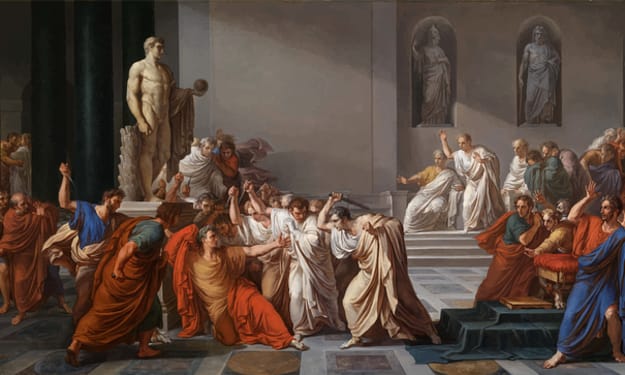
"The Twilight of an Empire: The Fall of Rome."
The collapse of the Roman Empire is one of history's most captivating and divisive events. It was a steady fall over centuries, marked by internal instability and external forces, rather than a catastrophic collapse. By the time Romulus Augustulus, the last Roman emperor, was ousted in 476 CE, the empire had long since lost its lustre as the strong institution that previously ruled over broad parts of Europe, the Middle East, and North Africa.
By rino ingenito2 years ago in History
Spiritual Versus Religion
The terms spirituality and religion are often used interchangeably but are considered quite different in most aspects. Both represent the way to understand higher explanations of life, such as who we are, why we are here, and what happens after this life. However, their approaches, practices, and meanings can differ significantly.
By Taviii🇨🇦♐️2 years ago in History
Gunnar Kaasen and Balto: Heroes of the 1925 Serum Run to Nome
In the harsh winter of 1925, the remote town of Nome, Alaska, faced a life-threatening outbreak of diphtheria. With ice-bound harbors and subzero temperatures rendering conventional transportation useless, the only hope for the community lay in the hands of a team of mushers and their sled dogs. Among these heroes was Gunnar Kaasen, a Norwegian-born musher, and his loyal lead dog, Balto. Together, they completed the final leg of the legendary "Serum Run," delivering lifesaving antitoxin to Nome and etching their names into history. The Crisis in Nome Diphtheria is a highly contagious and often fatal bacterial infection that primarily affects children. In January 1925, the only doctor in Nome, Dr. Curtis Welch, identified the disease among his patients. Nome’s population, which included many Indigenous Alaskans who lacked immunity to the disease, was at dire risk. Dr. Welch's supply of diphtheria antitoxin had expired, and the situation was critical. The nearest fresh supply of the serum was in Anchorage, nearly 1,000 miles away. With the town completely isolated by snow and ice, conventional transport methods such as planes or ships were impossible. The only solution was a relay of dog sled teams to transport the serum across the treacherous Alaskan wilderness. The Relay Begins The relay, known as the "Great Race of Mercy," began on January 27, 1925. Over 20 mushers and their dog teams braved blizzards, gale-force winds, and temperatures plunging to -60°F (-51°C). The journey required immense physical and mental endurance, with mushers and dogs risking frostbite, exhaustion, and death. The serum was transported in a small, insulated cylinder to prevent it from freezing. The goal was to pass the cylinder from musher to musher in a seamless relay, covering over 674 miles in just five and a half days—an astonishing feat under such conditions. Gunnar Kaasen and Balto Gunnar Kaasen, a musher originally from Burfjord, Norway, was tasked with the final leg of the relay. Despite the perilous conditions, Kaasen and his team of sled dogs took on the challenge with unyielding determination. Balto, one of Kaasen's two lead dogs, played a pivotal role in navigating the treacherous terrain. Although Kaasen's original lead dog, Fox, was often the primary choice for such missions, Balto stepped up and proved his mettle. Together, they traversed 53 miles through blinding snowstorms and biting winds to deliver the serum safely to Nome in the early hours of February 2, 1925. The final stretch was particularly harrowing. At one point, Kaasen and his team encountered whiteout conditions so severe that visibility was reduced to mere inches. Balto's exceptional sense of direction and unyielding drive ensured that the team stayed on course, ultimately reaching their destination without losing a single vial of the precious serum. The Aftermath and Legacy The serum reached Nome just in time to prevent a full-blown epidemic. Thanks to the heroic efforts of Kaasen, Balto, and the other relay participants, countless lives were saved. The event captured the imagination of the world, and the mushers and their dogs were hailed as heroes. Balto, in particular, became a symbol of resilience and loyalty. A statue of him was erected in New York City's Central Park later that year, bearing the inscription: "Endurance, Fidelity, Intelligence" Balto and Kaasen toured the United States following the relay, further cementing their place in history. However, the fame was bittersweet. Kaasen often emphasized that the relay was a team effort, and he was just one of many who risked their lives to save Nome. Gunnar Kaasen: The Unsung Hero Although Balto often receives much of the credit, Gunnar Kaasen's role in the relay should not be overlooked. Born on March 11, 1882, in Burfjord, Norway, Kaasen moved to Alaska during the height of the gold rush. Like many mushers of his time, he developed an intimate bond with his sled dogs, treating them as partners rather than mere tools. After the Serum Run, Kaasen continued to live a quiet life, working in various roles, including as a miner and musher. He passed away on November 27, 1960, leaving behind a legacy of courage and determination. The Enduring Symbolism of the Serum Run The 1925 Serum Run stands as a testament to the indomitable spirit of humans and animals working together to overcome impossible odds. It highlights the importance of teamwork, trust, and resilience in the face of adversity. Today, the story of Gunnar Kaasen and Balto serves as a reminder of the power of ordinary individuals to achieve extraordinary feats. The Serum Run is commemorated annually through the Iditarod Trail Sled Dog Race, which traces a portion of the original route. Conclusion The colorized photo of Gunnar Kaasen holding Balto is more than just an image—it’s a window into a moment of human and animal triumph. Their journey was not merely a race against time but a race for life itself, embodying the best of what humanity and its loyal companions can achieve together. As we reflect on this incredible story, we are reminded of the enduring bond between humans and animals and the courage it takes to make a difference in the world.
By Deji Akomolafe2 years ago in History
"WW2 Uncovered: Secrets & Shocking Truths You Never Knew About the Greatest Conflict!"
World War II: A Global Conflict and its Enduring Legacy World War II was one of the deadliest conflicts in history, with an estimated total of over 70 million people losing their lives. This staggering number represents roughly 3% of the world’s population at the time. The war left nations shattered and plunged the world into a new era marked by unprecedented change. Its influence is felt even today, as we analyze its causes, key events, and lasting effects. The Road to War: Causes and Tensions The Treaty of Versailles and its Consequences The Treaty of Versailles, signed in 1919, imposed heavy reparations on Germany, amounting to about $132 billion. This led to deep resentment among Germans, who felt humiliated and economically strained. The loss of territories like Alsace-Lorraine and significant military restrictions only added to the instability in Europe, setting the stage for future conflict. The Rise of Fascism and Nazism Amidst the economic turmoil, totalitarian regimes began to gain power. In Italy, Benito Mussolini promoted fascism, while Adolf Hitler's Nazi Party rose in Germany. These regimes shared expansionist desires, aiming for military conquest. Early acts of aggression included Germany’s remilitarization of the Rhineland in 1936 and Italy’s invasion of Ethiopia in 1935, which showcased their ambitions. Appeasement and the Failure of Diplomacy Britain and France adopted a policy of appeasement, hoping to avoid war by conceding to some of Hitler's demands. A key example is the Munich Agreement of 1938, where they allowed the annexation of Sudetenland. This approach ultimately failed, as it only emboldened Hitler to further aggression. The Major Players and Theaters of War The Axis Powers The Axis powers consisted of Germany, Italy, and Japan. Germany, with over 4 million soldiers, led groundbreaking military strategies like Blitzkrieg, focusing on speed and surprise. Casualties for the Axis were staggering, with millions perishing by war’s end. The Allied Powers The Allies, including Britain, the United States, and the Soviet Union, fought bravely against the Axis. For example, by 1943, the U.S. had amassed over 12 million soldiers. The Allies suffered immense losses, with Soviet casualties alone estimated at around 27 million, showcasing the brutal nature of warfare. Major Battles and Turning Points Significant battles marked crucial shifts in the war. The Battle of Stalingrad (1942–1943) saw the USSR defeat Germany, turning the tide on the Eastern Front. In 1944, the D-Day invasion at Normandy involved over 156,000 Allied troops landing on the beaches of France, demonstrating remarkable strategy. General Dwight D. Eisenhower famously stated, "The eyes of the world are upon you," emphasizing the operation's importance. The Holocaust and War Crimes The Systematic Persecution of Jews and Other Groups The Holocaust stands as one of the most horrific chapters of WWII. Approximately 6 million Jews, alongside millions of others including Romani, disabled individuals, and political dissidents, fell victim to Nazi policies. Propaganda depicted these groups as threats, justifying their persecution. War Crimes and Atrocities Alongside the Holocaust, numerous war crimes occurred. The brutal occupation of Poland saw widespread executions and forced labor. The Rape of Nanking in 1937 involved horrific atrocities committed by Japanese troops against Chinese civilians, highlighting the cruelty of war. The Nuremberg Trials Following the war, the Nuremberg Trials were held to prosecute Nazi war criminals. These landmark trials established the principle of accountability, with figures like Justice Robert H. Jackson stating, "The wrongs which we seek to condemn and punish have been so calculated and so malignant." They laid the groundwork for modern international law. The End of the War and its Aftermath The Atomic Bombings of Hiroshima and Nagasaki In August 1945, the United States dropped atomic bombs on Hiroshima and Nagasaki, resulting in over 200,000 deaths. The decision to use these weapons was aimed at hastening Japan's surrender but sparked ongoing debates about morality and necessity. The Surrender of Japan and Germany Germany surrendered unconditionally on May 8, 1945, after relentless Allied pressure. Japan followed suit on September 2, 1945, with Emperor Hirohito stating, "The war situation has developed not necessarily to Japan's advantage,” marking the end of the conflict. The Beginning of the Cold War The aftermath of WWII led to the emergence of the Cold War. Tensions rose between the United States and the Soviet Union, as each sought to expand its influence. This divide resulted in decades of political conflict and military preparedness. The Enduring Legacy of World War II Geopolitical Shifts and the Formation of the UN WWII resulted in significant geopolitical changes. The formation of the United Nations aimed to prevent future conflicts. The new organization emphasized international cooperation and diplomacy, reflecting lessons learned from the war. Technological Advancements and Their Impact The war accelerated technological advances, including radar, jets, and medical innovations like antibiotics. Many inventions continued to shape industries and everyday life in the decades following the war. Remembering and Learning from the Past To truly grasp the impact of WWII, engaging with history is vital. Resources for deeper understanding include: Books: "The Second World War" by Antony Beevor Documentaries: "The World at War" Museums: United States Holocaust Memorial Museum Conclusion World War II reshaped the world in countless ways. By examining its causes, major events, and aftermath, we gain vital insights into our past. Understanding this conflict helps us navigate today's complex global landscape, reminding us of the importance of peace and diplomacy. Reflecting on these lessons allows for meaningful actions toward preventing future conflicts.
By Story silver book 2 years ago in History
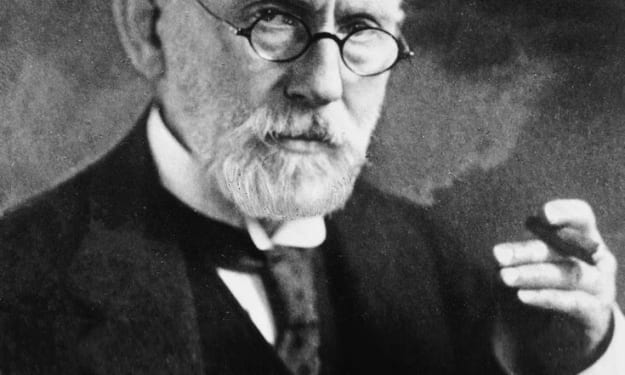
Paul Ehrlich: A Pioneer in Medicine and Immunology
Paul Ehrlich: A Pioneer in Medicine and Immunology Paul Ehrlich (1854–1915) was a German physician and scientist whose groundbreaking work in immunology, hematology, and chemotherapy revolutionized modern medicine. Widely regarded as a pioneer, his discoveries laid the foundation for many therapeutic advancements and scientific methodologies. Below is an overview of his life, career, and significant contributions to science.
By Mahalakshmi2 years ago in History
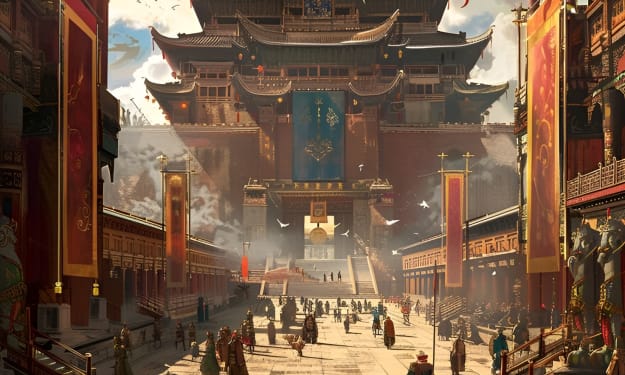
The Origins of an Enduring Civilization
The narrative of ancient China is one of perseverance, creativity, and enduring cultural heritage. As one of the world's oldest civilizations, its history spans millennia, characterized by significant advancements in governance, science, and philosophy. Beginning in the Neolithic era and progressing through the emergence of powerful dynasties such as the Xia, Shang, and Zhou, ancient China established the foundations for a nation that would transform into a contemporary global leader. Join us as we delve into the intriguing beginnings of this remarkable civilization.
By A História2 years ago in History
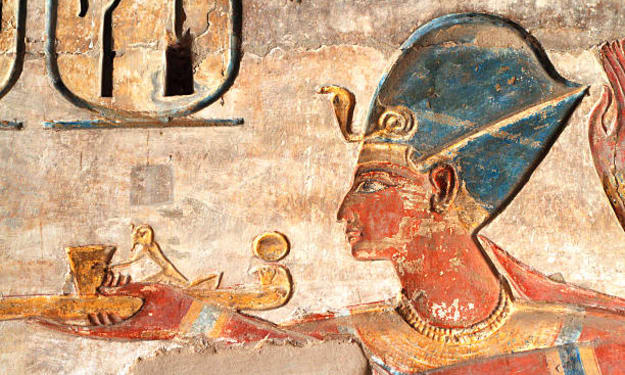
Tles from ancient Egypt
Let me introduce you to Ramses III. He had many enemies. He fought off invading armies from the Middle East to protect Egypt. But the real trouble came from within his own kingdom. His wife, Queen Tami, wanted their son to take the throne. So, she devised a plot to assassinate Ramses.
By myriamadam2 years ago in History