World History
Exploring Agra, India: A Timeless Journey Through History and Culture
Agra is a city in the northern state of Uttar Pradesh, India. This city is known for housing the Taj Mahal; thus, a rich history, beautiful architectural designs, and a lively culture hold a prominent place, marking it as a destination for any traveler interested in beauty and significance in history.
By Golu Kumar2 years ago in History
"The Vatican's Hidden Vault of Mysteries"
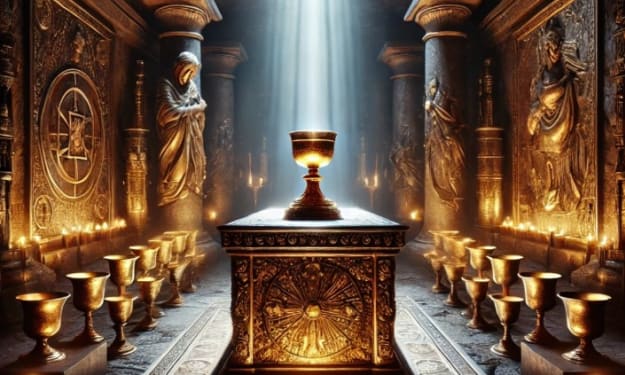
Journey into Mystery and Faith Vatican City, the smallest independent state in the world, stands as the spiritual and administrative heart of the Catholic Church. Within its borders lie architectural marvels like St. Peter’s Basilica, the Sistine Chapel, and the Vatican Museums, but there’s a more elusive aspect to this revered city-state—a legend that whispers of hidden treasures buried deep within its confines. These aren’t just gold coins or gems, but a collection of ancient artifacts, manuscripts, and secrets that could change our understanding of history, religion, and humanity. This article delves into the captivating mystery of the hidden treasures of Vatican City—a tale steeped in history, faith, and fantasy. The Origins of the Mystery For centuries, the Vatican has been shrouded in an aura of secrecy. As the seat of the papacy, it has amassed untold wealth through donations, conquests, and the patronage of the faithful. Much of this wealth is visible in its priceless art collections and religious relics, but rumors suggest that the Vatican hides treasures far beyond what the public sees. The intrigue begins with the Vatican Library and its secret archives. Founded in the mid-15th century, the library houses tens of thousands of manuscripts, some dating back over 2,000 years. These texts are said to contain lost knowledge, forbidden gospels, and records of human history that contradict mainstream narratives. Some theorists believe that these archives hold maps leading to ancient treasures, relics from early Christianity, and even evidence of extraterrestrial life. What Treasures Might Be Hidden? The mystery of Vatican City’s hidden treasure can be divided into three main categories: spiritual artifacts, historical documents, and material wealth. Spiritual Artifacts Among the legends is the belief that the Vatican possesses items of immense spiritual significance. These might include the Holy Grail, the Ark of the Covenant, or relics of saints whose powers could inspire faith—or fear. Some claim that the spear believed to have pierced Jesus Christ’s side, known as the Holy Lance, is secretly housed in the Vatican’s vaults. Historical Documents The Vatican’s secret archives are said to contain texts that challenge conventional history. From the true story of the Knights Templar to hidden teachings of Jesus Christ, these documents could rewrite entire chapters of humanity’s past. Some even speculate that the archives include letters between early popes and figures like Leonardo da Vinci, Galileo, or even rulers of ancient civilizations. Material Wealth As a repository of religious offerings and conquests, the Vatican is rumored to have hoards of gold, jewels, and artifacts acquired over centuries. During the Crusades, for instance, treasures from Jerusalem and Constantinople may have been brought to the Vatican for safekeeping. Some believe these treasures are hidden in underground catacombs or secret chambers. Legends and Theories Numerous stories add to the allure of the Vatican’s hidden treasures. One legend speaks of a secret chamber beneath St. Peter’s Basilica, said to contain treasures looted from Jerusalem’s Second Temple during the Roman conquest in 70 CE. This chamber, known as the “Treasure of the Temple,” is believed to hold the Menorah, sacred vessels, and scrolls of immense religious value. Another theory involves the lost documents of the Knights Templar. The Templars, a medieval Christian military order, were known for their wealth and alleged discovery of hidden knowledge during their time in Jerusalem. When the order was disbanded in the 14th century, some believe that the Vatican acquired their treasures and secrets. The Secretive Nature of the Vatican The Vatican’s secrecy only fuels speculation about its hidden treasures. Access to the secret archives is highly restricted, granted only to qualified researchers and clergy, and even then, limited to specific documents. The catacombs beneath Vatican City remain largely unexplored by outsiders, leaving their contents a mystery. This secrecy isn’t without reason. The Vatican sees itself as the custodian of faith, charged with protecting artifacts and knowledge that could destabilize religious or political systems if mishandled. Critics, however, argue that this secrecy prevents humanity from understanding its true history and heritage. The Treasure Hunt: Fact or Fiction? While the Vatican’s hidden treasures remain a tantalizing mystery, evidence for their existence is largely circumstantial. Skeptics point out that the Vatican is already wealthy and influential—why would it need to hide anything? Yet, history shows that institutions often conceal information and artifacts for protection, control, or fear of misuse. Treasure hunters and conspiracy theorists continue to speculate, but no definitive proof has emerged. Despite this, the idea of Vatican City as a repository of untold secrets continues to capture the imagination of the world. A Story of Faith and Mystery The allure of the hidden treasures of Vatican City is as much about what they represent as what they might be. They symbolize the enduring mystery of faith, the intersection of religion and history, and humanity’s eternal quest for truth. Whether these treasures are physical objects, lost knowledge, or something else entirely, their legend reminds us of the power of the unknown. As the smallest country in the world, Vatican City holds an outsized influence over millions of lives. Its treasures—real or imagined—reflect the complexity of a place that serves as both a spiritual sanctuary and a keeper of secrets. Whether we ever uncover the truth about its hidden wealth, one thing is certain: the Vatican will continue to fascinate and inspire for generations to come.
By Say the truth 2 years ago in History
The Sodder Children
The Sodder Children: A Christmas Eve Mystery That Still Haunts Every family has their share of holiday drama, but nothing compares to the bizarre and heartbreaking mystery that befell the Sodder family on Christmas Eve in 1945. The tale of their five missing children has baffled investigators, spawned countless theories, and kept armchair detectives busy for decades. It’s a story where the facts are as unsettling as the unanswered questions—and it all began with a fire.
By Albert Acromond2 years ago in History
The Great Train Robbery of 1963
The Great Train Robbery of 1963: Britain’s Most Daring Heist It’s not every day that a group of criminals manages to stop a Royal Mail train, haul off millions in cash, and instantly enter the pantheon of criminal folklore. But the Great Train Robbery of 1963 wasn’t just another heist—it was an audacious, almost cinematic caper that could’ve been the plot of a Hollywood blockbuster. The difference? This one actually happened, and it’s still talked about to this day with equal parts astonishment and disbelief.
By Albert Acromond2 years ago in History
10 Smallest Wars in Human History
Throughout history, wars have been waged for various reasons, including territorial disputes, political conflicts, and even personal grievances. While some wars span decades and involve millions of people, others are surprisingly brief and involve minimal casualties. These "smallest" wars often stand out for their brevity, limited scale, or unique circumstances. Here’s a closer look at ten of the smallest wars in human history. 1. The Anglo-Zanzibar War (1896) – The Shortest War in History The Anglo-Zanzibar War holds the record for being the shortest war ever recorded, lasting only 38 minutes. The conflict arose when Sultan Khalid bin Barghash took the throne of Zanzibar after the death of Sultan Hamad bin Thuwaini, against British approval. Britain, favoring a different successor, issued an ultimatum to Khalid to step down. When Khalid refused, British forces bombarded the palace. The Sultan's forces quickly surrendered, leaving 500 casualties on their side, while the British suffered just one minor injury. 2. The Six-Day War (1967) Though relatively larger in scope, the Six-Day War between Israel and neighboring Arab states (Egypt, Jordan, and Syria) is notable for its brevity. Lasting from June 5 to June 10, 1967, the war resulted in a decisive victory for Israel, which captured significant territories including the Sinai Peninsula, Gaza Strip, West Bank, and Golan Heights. The conflict reshaped the Middle East and highlighted Israel's military efficiency, despite its short duration. --- 3. The War of the Stray Dog (1925) This peculiar conflict between Greece and Bulgaria was sparked by a stray dog. A Greek soldier chasing his dog across the border was shot by Bulgarian forces, leading to heightened tensions. Greece responded by invading Bulgarian territory. The League of Nations intervened swiftly, and the conflict was resolved in a matter of days. Casualties were minimal, and Greece was ordered to pay reparations to Bulgaria. --- 4. The Cod Wars (1958–1976) The Cod Wars were a series of confrontations between Iceland and the United Kingdom over fishing rights in the North Atlantic. While the conflicts spanned years, individual skirmishes were brief and involved minimal violence. The disputes were largely settled diplomatically, with Iceland emerging victorious, expanding its exclusive fishing zone to 200 nautical miles. --- 5. The Football War (1969) The Football War, or the Soccer War, was a brief military conflict between El Salvador and Honduras, lasting just 100 hours. Tensions had been brewing over immigration issues and a series of contentious World Cup qualifying matches. The war began on July 14, 1969, but ended on July 18 after intervention by the Organization of American States. Although short, it resulted in over 2,000 deaths and deepened animosity between the nations. --- 6. The Falklands Conflict (1982) The Falklands War between Argentina and the United Kingdom lasted 74 days. Argentina invaded the Falkland Islands, a British territory, on April 2, 1982, prompting the UK to send a naval task force. The conflict ended on June 14, 1982, with a British victory. Although brief, the war claimed nearly 900 lives and had lasting political implications for both nations. --- 7. The Indo-Pakistani War of 1971 (December Conflict) The Indo-Pakistani War of 1971 is primarily remembered for the liberation of Bangladesh (formerly East Pakistan). The main conflict lasted just 13 days, from December 3 to December 16, 1971. India's decisive military action led to Pakistan's surrender and the creation of Bangladesh. While short, the war significantly altered South Asia's geopolitical landscape. --- 8. The Kettle War (1784) The Kettle War was a minor skirmish between the Holy Roman Empire and the Dutch Republic over control of the Scheldt River. It began and ended in a single day when a Dutch ship fired a single cannonball, hitting an Austrian ship’s kettle. The Austrians surrendered without further resistance, making this one of history's least violent wars. --- 9. The Moldovan-Transnistrian War (1992) This conflict between Moldova and the breakaway region of Transnistria lasted roughly four months, from March to July 1992. The war resulted from ethnic tensions and political differences following the dissolution of the Soviet Union. Despite its brevity, the conflict left several hundred dead and established Transnistria as a de facto independent region, though it remains unrecognized internationally. --- 10. The Aroostook War (1838–1839) The Aroostook War, also known as the "Pork and Beans War," was a bloodless boundary dispute between the United States and British Canada over the Maine-New Brunswick border. Both sides sent troops, but no battles occurred, and the conflict was resolved diplomatically with the signing of the Webster-Ashburton Treaty in 1842. --- Why Do Small Wars Matter? Small wars, despite their limited scale, often have significant historical, political, and social implications. They can alter national boundaries, influence international relations, and highlight the effectiveness of diplomacy. Additionally, they often serve as reminders of how even minor incidents can escalate into conflicts. Conclusion The smallest wars in human history demonstrate the diverse causes and outcomes of conflicts. From a stray dog to a soccer match, these wars remind us of the fragility of peace and the importance of resolving disputes peacefully. While their brevity and scale set them apart from larger conflicts, their lessons remain universal.
By Dipayan Biswas2 years ago in History
Jesse Owens
Jesse Owens: The Sports Legend Who Defied Racism and Shattered Records Jesse Owens, a name forever linked to extraordinary athletic achievements and the fight against racial injustice, is one of the greatest athletes in history. Owens was not just a fast runner; he was a symbol of determination and excellence in the face of adversity. In this article, we will explore the life of Jesse Owens, his athletic accomplishments, and his profound impact on challenging racism and breaking social barriers.
By 💓 Pulse of Stories 💓2 years ago in History
The Enigma of the Sea Peoples
Throughout history, tales of grand empires and civilizations have been punctuated by stories of conquest and upheaval. Among these narratives, the enigmatic Sea Peoples stand out as a formidable force that reshaped the Mediterranean landscape at the twilight of the Bronze Age.
By A História2 years ago in History
The Mysterious Case of the Dyatlov Pass Incident
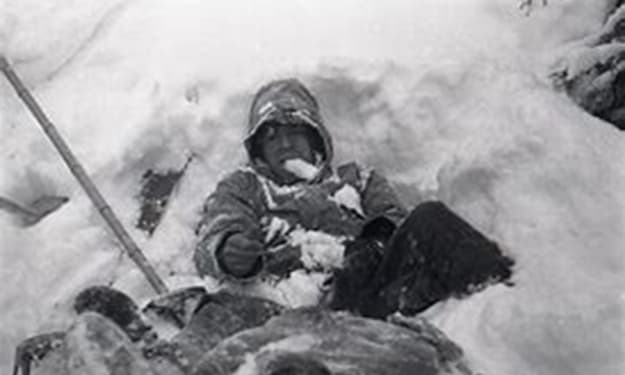
The Mysterious Case of the Dyatlov Pass Incident: The Russian Expedition That Ended in Tragedy In the frigid wilderness of the Ural Mountains, something happened in 1959 that continues to baffle and intrigue the world. A group of experienced hikers, led by Igor Dyatlov, set out on what should have been a routine expedition. But when they were found dead under mysterious circumstances, their tragic fate would give birth to one of the most enduring unsolved mysteries in history: The Dyatlov Pass Incident.
By Albert Acromond2 years ago in History